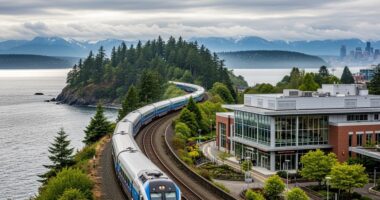
Taking the train from Los Angeles to San Francisco isn’t as straightforward as it sounds. The Coast Starlight departs LA Union Station at 9:51 AM but only reaches Emeryville—not San Francisco itself. Passengers must catch a connecting bus for the final stretch into the city, adding another 30-45 minutes to the 12-hour journey. Only one daily departure means booking ahead is essential. The scenic route offers stunning Pacific views, though delays are common. There’s more to reflect on before making this cross-state trek.
Flying might seem like the obvious choice between Los Angeles and San Francisco, but Amtrak’s Coast Starlight tells a completely different story. This isn’t some cramped commuter line—we’re talking about a 1,377-mile journey that stretches from Seattle all the way down to Los Angeles, serving as Amtrak’s main artery for L.A.–San Francisco travel.
Here’s where things get a bit tricky: you won’t actually roll into downtown San Francisco. The Coast Starlight stops at Emeryville, which means you’ll need to catch Amtrak’s Thruway Bus Service for that final stretch. The entire trip clocks in around 12 hours by train, then tack on another 30-45 minutes by bus. Speed clearly isn’t the selling point here.
Departure from Los Angeles Union Station happens around 9:51 AM, and you’ll reach Emeryville by 10:04 PM. With only one daily departure in each direction, booking ahead isn’t just smart—it’s absolutely necessary. Miss that train, and you’re stuck waiting until the next day.
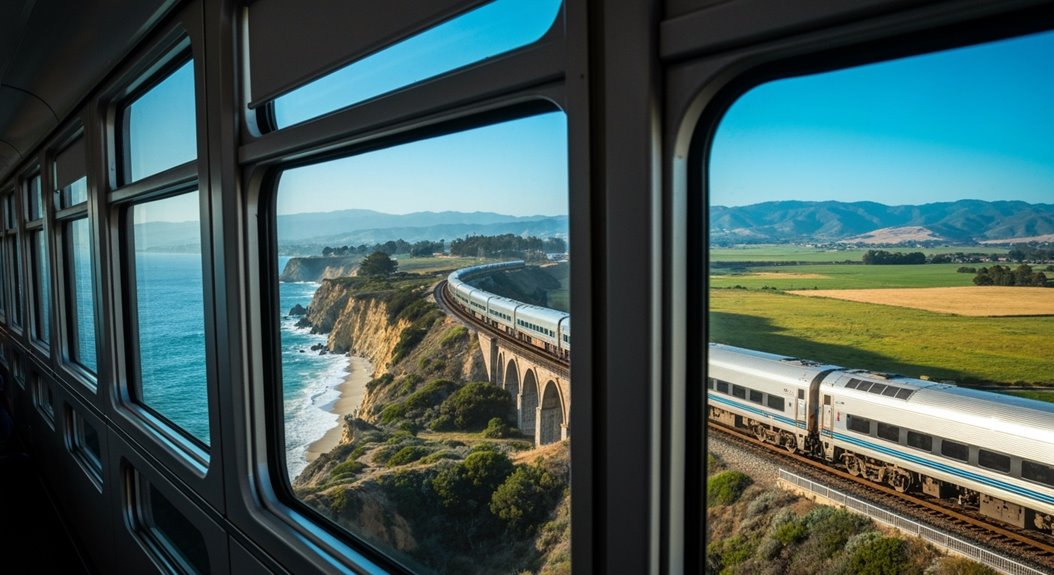
The route makes key stops at Burbank, Van Nuys, Santa Barbara, San Luis Obispo, San Jose, and Oakland before hitting Emeryville. What makes this journey special appears to be those sweeping Pacific coast views, plus mountains, forests, and farmland that unfold through the massive windows of Superliner double-decker cars.
The Coast Starlight transforms travel into spectacle, trading speed for sweeping Pacific vistas through oversized windows of double-decker cars.
Your ticket options start with basic Coach class and its reserved seating, then move up to Business class with roomier seats and extra perks. Sleeping car accommodations like Roomettes and Bedrooms offer private space and meals, though they’ll likely cost you significantly more.
Onboard, you’ll find reclining seats, power outlets, restrooms, an observation lounge car, café car, and dining service for sleeper passengers. Free Wi-Fi exists, but honestly, don’t bank on it working reliably. Delays seem to happen pretty regularly—freight traffic, weather, and track conditions all play a role.
You can buy through-tickets that cover both the train and bus portions directly through Amtrak’s website. That said, the connecting bus from San Francisco typically leaves around 7:00 AM, timing things so you reach Emeryville for the Coast Starlight departure. Bags can be checked at Emeryville up to 45 minutes before you leave.
The Coast Starlight is widely considered one of America’s most scenic train routes. The journey passes through famous agricultural regions including the garlic capital at Gilroy, where the distinctive aroma often reminds passengers of the area’s signature crop. The service has faced various disruptions recently, including reduced frequency during COVID-19 pandemic periods when daily operations temporarily dropped to just three trains per week. Amtrak’s comprehensive route network connects over 500 destinations across 46 states, making it the primary passenger rail service throughout the United States. Whether all that beautiful scenery justifies the extended travel time? That really depends on what matters most to you.
Did You Know
Can I Bring My Pet on the Train From Los Angeles to San Francisco?
Unfortunately, no. Amtrak doesn’t allow pets on routes longer than 7 hours, and LA to San Francisco definitely exceeds that limit.
The pet policy is pretty strict about this time restriction. Small dogs and cats under 20 pounds can travel on shorter routes for $26-29, but cross-state trips like this one are off-limits.
Service animals are exempt from these rules, though.
What Food and Dining Options Are Available During the Train Journey?
Passengers get café car service with standard fare like hot dogs, burgers, and pizza. Nothing fancy.
Dining cars with chef-prepared meals exist on some long-distance routes, but not all LA-SF trains have them.
Beer runs $6.50-$7.50, wine comes free with dinner sometimes.
Smart travelers bring their own food anyway—it’s allowed and probably tastes better than train pizza.
Is Wifi Available on Trains Traveling Between Los Angeles and San Francisco?
The Coast Starlight, the main LA-to-SF train, doesn’t offer onboard WiFi.
Travelers are stuck using their own cellular data or hotspots.
That’s pretty rough for a long journey.
The Pacific Surfliner has free WiFi but doesn’t go directly to San Francisco.
Cellular service can be spotty through rural and mountainous areas along the route, so downloading content beforehand is smart.
How Much Luggage Am I Allowed to Bring on the Train?
Passengers get one personal item and two carry-on bags.
Personal items max out at 25 pounds, carry-ons hit 50 pounds each.
Two checked bags come free, up to 50 pounds and 75 linear inches.
Want more? Pay $20 per extra bag.
Overweight stuff gets rejected until repacked.
Oversized checked bags cost extra too.
Basically, pack smart or pay up.
Are There Discounts Available for Seniors, Students, or Military Personnel?
Yes, discounts exist. Seniors 65+ get 10% off rail fares with valid ID.
Military personnel, spouses, and dependents also receive 10% with proper military identification.
Students? That’s trickier—no permanent national discount, just occasional promotional offers that come and go.
All discounts apply only to base rail fare, not sleeper upgrades or fancy accommodations.
Advance purchase typically required, and you’ll need proper ID throughout your journey.
Parting Shot
Taking the train from LA to San Francisco isn’t exactly rocket science, but it’s not a straight shot either. The Coast Starlight runs daily, takes about 12 hours, and costs roughly $50-150 depending on your seat choice. Sure, it’s slower than flying or driving, but passengers get scenic views and can actually stretch their legs. Amtrak handles the route competently enough. Just don’t expect bullet train speeds—this is America, after all.