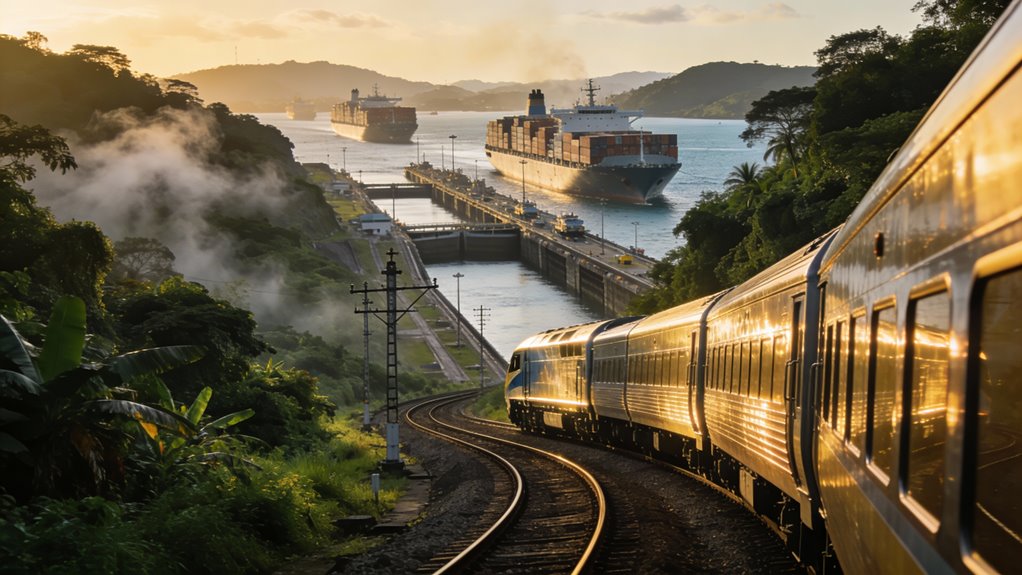
The Panama Canal Railway: earns global recognition because it operates the world’s first transcontinental railroad route connecting the Atlantic Ocean to the Pacific Ocean across 47.6 miles.
Historical Significance Creates Tourism Appeal
The Panama Canal Railway Company completed construction in 1855. The route transported $700 million in California Gold Rush treasure. Engineers built 170 bridges through deadly terrain that claimed 12,000 workers’ lives during construction.
Key Features That Define This Rail Adventure:
- The Biological Corridor: carries passengers through Soberanía National Park, home to 300 documented bird species, three-toed sloths, and howler monkeys across one of Earth’s densest rainforest ecosystems
- The Vintage Rolling Stock: features restored 1938 dome observation cars manufactured by Pullman Standard, equipped with panoramic windows and open-air viewing platforms for wildlife observation
- The Ocean-to-Ocean Transit: completes the journey from Colón on the Caribbean Sea to Panama City on the Pacific coast in sixty minutes, paralleling the Panama Canal’s shipping lanes
Modern Operations Preserve Heritage Experience
The Panama Canal Railway Company operates daily departures from Corozal Station. Most heritage railways traverse European farmland or American prairie. This route cuts through active tropical wilderness where cargo ships transit alongside passenger trains. The railway moves 3,500 containers daily while maintaining tourist service.
Fun Activity To Try: Book the morning departure from Colón to spot toucans and Geoffrey’s tamarins during peak wildlife activity hours, then explore Casco Viejo’s colonial architecture in Panama City before taking the evening return train.
Panama Canal Railway Spans Atlantic to Pacific in Just 47 Miles
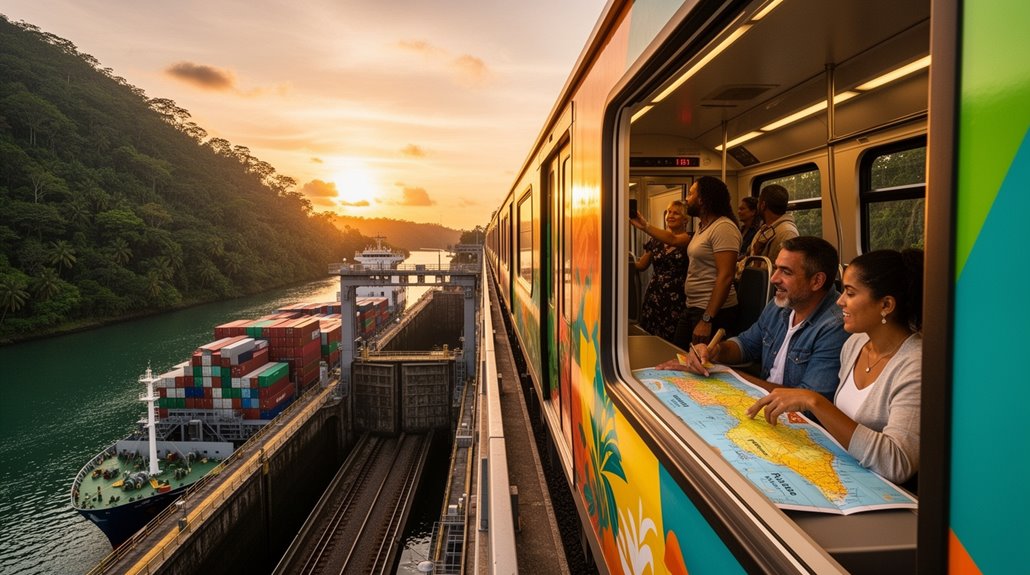
The Panama Canal Railway doesn’t mess around—it covers the entire isthmus in just 47.6 miles.
The Panama Canal Railway cuts straight across the isthmus—47.6 miles of no-nonsense engineering connecting two oceans.
That’s ocean to ocean in roughly an hour, which is pretty wild when you think about it. Built back in 1855, it was actually the world’s first transcontinental railroad, though calling it “transcontinental” might be a stretch given how compact the route is.
Even so, it remains one of those heritage routes where you get genuine cultural immersion. The scenic train voyage is short but delivers more drama per mile than just about any railway tourism experience out there.
You’d be hard-pressed to find scenic routes that pack this much engineering history into such a compact distance. The railroad revolutionized global traffic and commerce, opening access to indigo, rubber, and coffee from the Pacific coast while transforming trade flows to Europe. At eight million dollars, it earned its reputation as the most expensive railroad project of its era.
While neighboring Costa Rica’s rail system focuses on commuter services connecting cities like San José with Heredia and Cartago, Panama’s railway stands as a unique transcontinental achievement.
Discover the Engineering Marvels Conquering Continental Divide Terrain
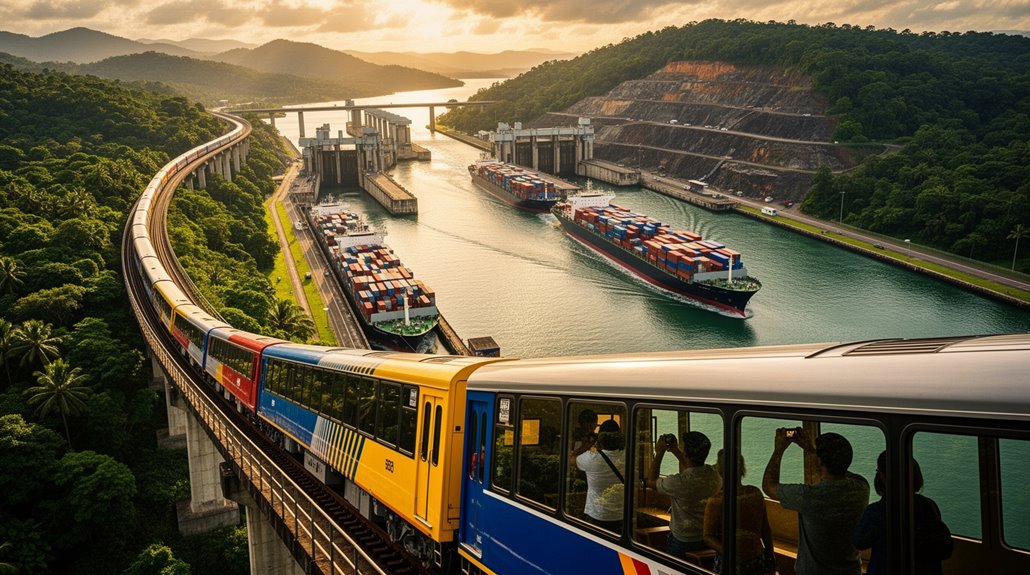
Engineering nightmares come in all shapes and sizes. The Continental Divide crossing at Panama, though, threw just about every possible challenge at builders—steep slopes, unstable soil, rivers everywhere, and tropical heat that turned metal tools into burners.
These engineering marvels conquered the route geography through massive structural and hydraulic works. That said, the scale of what was accomplished is staggering.
Railway excursions today follow transcontinental routes that were perfected by 115 locomotives and steam shovels, machines that literally moved mountains. The sophisticated operation coordinated 320 trains daily to remove excavated material, maintaining an unprecedented frequency of movement. The canal’s construction machinery operated on approximately 1,500 electric motors, a massive electrification effort that powered everything from cableways to cement mixers. Modern travelers seeking similar epic rail adventures can experience journeys like The Canadian, which traverses 2,762 miles of diverse Canadian landscapes from coast to coast. It’s a historic railway preservation experience that still captures the imagination.
What Makes Ocean to Ocean Transit Through Pristine Rainforest So Rare?
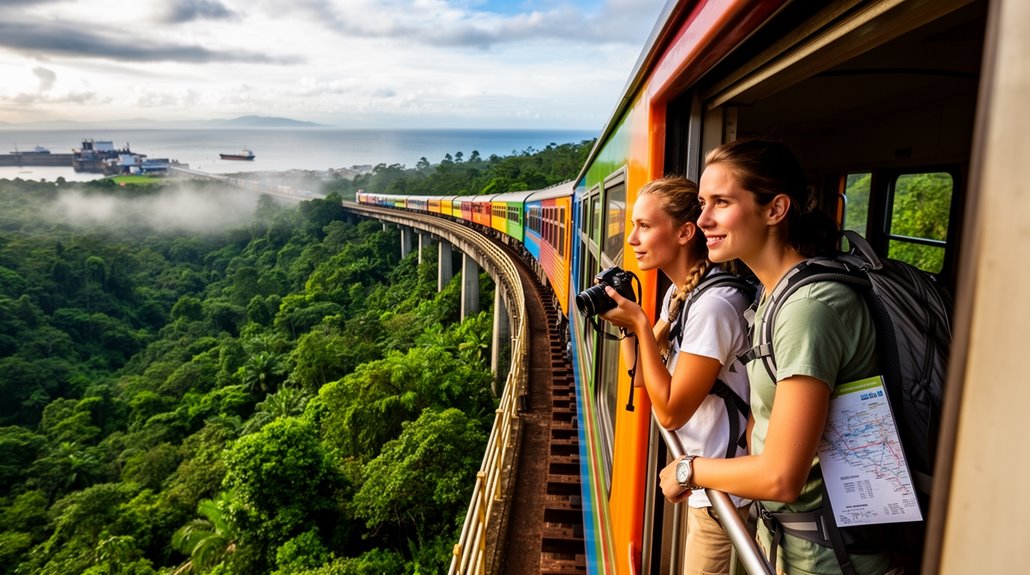
Conquering mountains is impressive, sure—but crossing from one ocean to another through unbroken jungle? Now that’s genuinely rare.
The Panama Canal Railway‘s ocean-to-ocean rail cuts through actual tropical rainforest for 47.6 miles. Atlantic to Pacific in sixty minutes. Heritage locomotives haul passengers past cultural landmarks and remote wilderness most coastal scenic train routes simply can’t touch.
No seasonal operations needed, either. The jungle stays lush year-round, soaking up three meters of rain annually. That kind of consistency is hard to find.
Even so, it’s worth noting that “pristine” might be stretching it—this is, after all, one of the world’s busiest shipping corridors, and the railway itself has been carving through the landscape since the 1850s. The line predates the canal by half a century, originally built to serve Gold Rush traffic when crossing Panama was the fastest route to California’s goldfields.
History leaves its mark—even paradise comes with a shipping schedule and 170 years of rail traffic.
Still, what remains is remarkable. Unbroken canopy, howler monkeys in the distance, and the odd glimpse of something most travelers only see in documentaries. Unlike Canada’s transcontinental overnight trips that require multiple days of travel, this route delivers its ocean-to-ocean promise in a single hour. Modern upgrades allow the railway to move 1,500 containers per day between coasts, functioning as both a tourist attraction and a critical distribution network.
Since 1855: Vintage Rolling Stock Still Operating on Original Routes
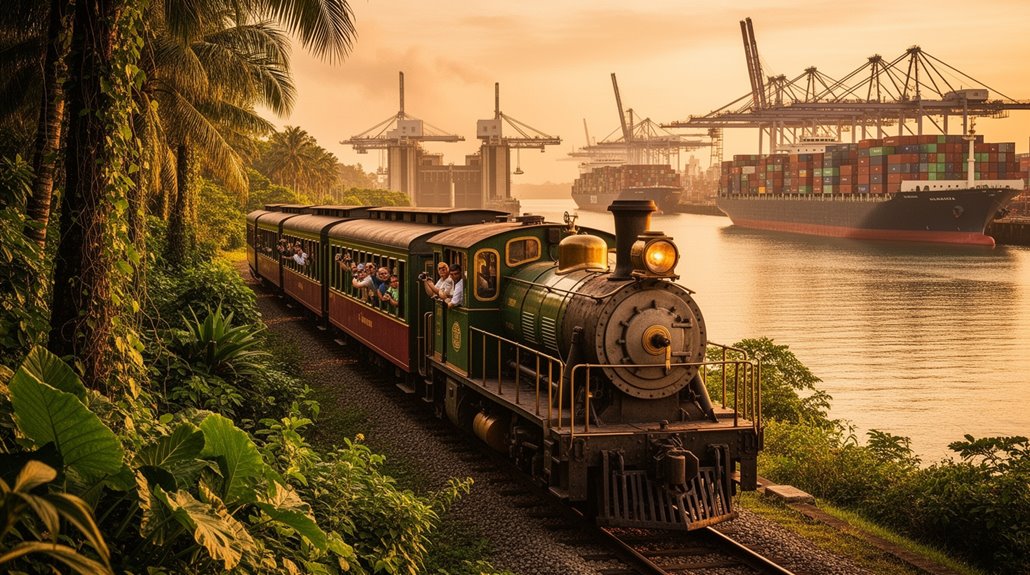
One hundred seventy years. That’s how long this route has been running—though whether every piece of vintage rolling stock truly dates back that far is harder to pin down.
Still, PCRC #102, a 1938 Southern Pacific dome car, does operate scheduled departures on the same Atlantic-to-Pacific corridor, joined by refurbished heritage coaches that appear to maintain their authentic carbody profiles.
These observation cars aim to blend luxury sleeper comfort with period authenticity.
That said, calling it an “ocean-crossing” journey daily feels like a stretch—scenic railways, yes, but the Atlantic-to-Pacific route crosses a continent, not oceans.
Even so, what you get are real passenger amenities without the heritage steam locomotive tour gimmicks that tend to dominate nostalgia trips elsewhere.
Like other compelling train journeys worldwide, this route combines spectacular natural views with cultural experiences that showcase the region’s historic significance as a vital transcontinental link. scenic train routes in Switzerland offer travelers an unparalleled way to experience the breathtaking landscapes of the Swiss Alps. With panoramic windows and comfortable seating, passengers can fully immerse themselves in the stunning vistas of lush valleys and towering peaks. Each journey not only provides a visual feast but also connects tourists to charming villages steeped in rich traditions and history.
The California Gold Rush Lifeline That Became a Heritage Rail Adventure
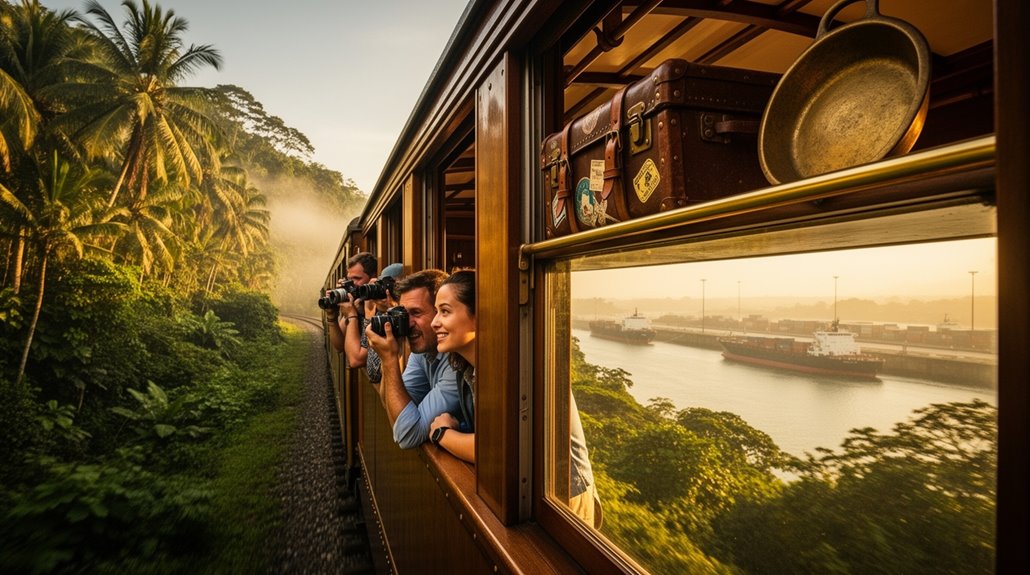
Those heritage coaches owe their existence to something far grittier than nostalgia tourism.
The Panama Canal Railway started as transcontinental rail built for gold rush traffic. Desperate prospectors paid fifty cents per mile—on unfinished tracks, no less—back in 1851. That emergency cash appears to have saved the entire project from collapse.
Over $700 million in California gold crossed this route. On top of that, travel logistics simply beat mule trains hands down.
Route planning centered on speed, which made sense when fortunes were at stake. The railway expedited travel compared to the treacherous overland routes, transforming what had been a grueling journey into a commercial transit corridor. Workers faced harsh conditions and disease while constructing the line between 1850 and 1855. Even so, it’s worth noting that what drove this railway wasn’t grand vision but raw necessity—people needed to move, and move fast.
Now it’s a heritage rail adventure with serious historical significance, though one could argue the “adventure” label sanitizes what was originally a brutal, profit-driven operation. While today’s travelers seek scenic rail journeys for their natural landscapes and cultural experiences, the Panama Canal Railway’s origins were purely about survival and speed during one of America’s most frenzied economic periods.
Canal Zone Cultural Landmarks Reveal Construction Era History
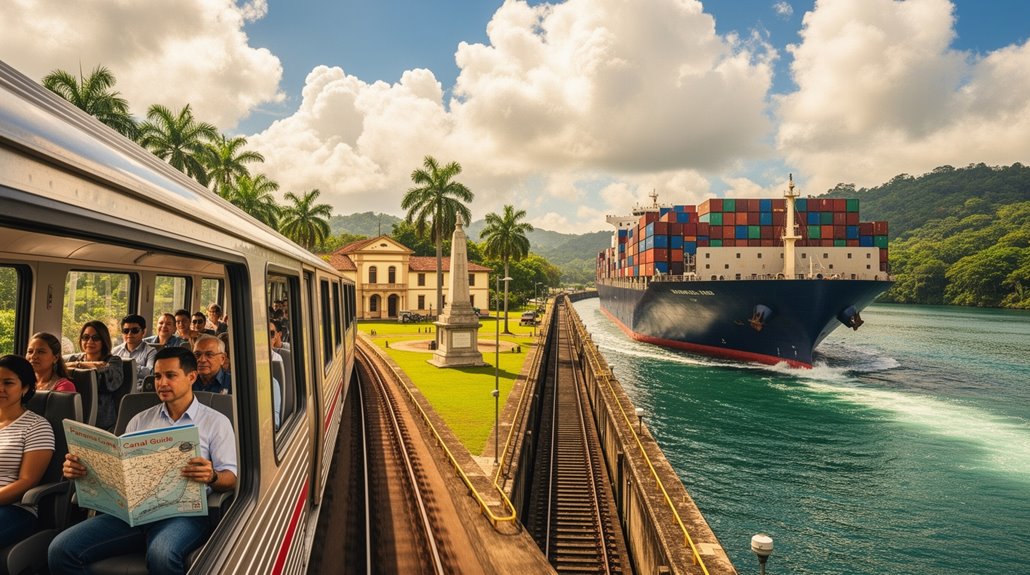
The Canal Zone left more than just waterways and locks—it scattered an entire colonial administrative apparatus across the isthmus.
Train stops on rail expeditions pass Balboa’s hilltop administration buildings. You’ll see segregated worker townsites too. The ticket classes still mirror what used to be the “gold roll” hierarchy.
Even the train tickets carry traces of the old colonial caste system—gold roll versus silver roll, frozen in fare classes.
Destination guides point out coastal tracks near Fort Sherman’s gun emplacements, though the context isn’t always spelled out clearly. Like many rail networks around the world, advance reservations can help travelers secure better seating and avoid disappointment during peak travel periods.
These panoramic views from mountain railway excursions? They turn adventure itineraries into something like accidental history lessons. The railway itself became operational in 1855, long before the canal, originally serving gold rush traffic heading to California.
On top of that, they reveal quite a bit about American imperial ambition—even if that’s not what travelers signed up for.
Three Hundred Bird Species Along Tropical Jungle Terrain Make This Route Unique
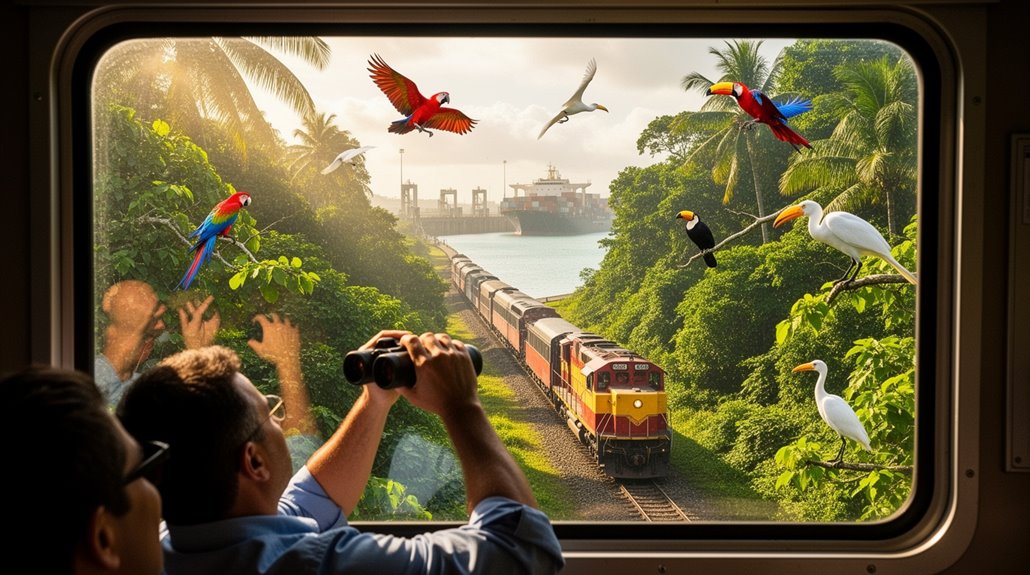
No other passenger train cuts through a biological corridor this dense—roughly 300 documented bird species packed into a narrow, hour-long journey.
This cross-border rail expedition compresses an unusual range of habitats into just 47.6 miles: lowland rainforest, wetlands, and canal edges all crowded along tropical jungle terrain. That density may be what sets it apart from typical bird tours, which tend to sprawl across larger areas with fewer species per mile.
Locomotive tours built around seasonal scenic railway exploration can’t really compete here. High-altitude rail routes, even picturesque ones, lack the Neotropical specialists that thrive in these lowland conditions. The elevation alone makes a difference—species composition changes fast as you climb, and what flourishes at sea level often disappears higher up. Beyond the wildlife experience, choosing this rail journey over driving produces significantly lower carbon emissions, making it an environmentally conscious way to explore biodiversity hotspots. Panama has recorded 1021 total bird species as of July 2023, making it one of the most diverse birding destinations in Central America.
Even so, it’s worth noting that “outpacing” other bird tours depends on what you’re measuring: sheer species count in a short window, yes, but some birders may prefer the slower pace and deeper observation that longer expeditions allow. Key locations along the route include Gamboa and Soberania National Park, which have historically yielded sightings of nearly 596 species during organized birdwatching tours.
Frequently Asked Questions
What Are the Current Ticket Prices for Tourist Class Passengers?
Standard one-way tourist-class fares are US$25 per person. Special Saturday trains in February 2025 cost US$40 for adults and US$20 for children. Some panoramic dome-car options are priced at US$50 for adults.
How Many Daily Departures Operate Between Panama City and Colon?
Regular public passenger service currently operates one scheduled departure each direction on weekdays—Panama City to Colón at 07:15 and return at 17:15—though recent reports indicate frequent suspensions, with service mainly available for chartered groups.
Can Passengers Book Reserved Seating in Advance for Specific Trains?
Passengers can book tickets in advance for specific trains, but individual seat reservations are not prominently offered. Dome car upgrades may be reserved separately, yet precise seat assignments typically occur at boarding rather than during purchase.
What Accessibility Features Does the Railway Provide for Disabled Passengers?
The railway provides wheelchair-accessible spaces with restraints, ramps and elevators at stations, staff boarding assistance, accessible restrooms onboard, and designated seating near exits. Passengers requiring accommodations should contact the company in advance to guarantee availability.
Are Connecting Transportation Options Available at Both Terminal Stations?
Yes, both terminals offer extensive connections. Colón provides buses, taxis, and cruise port access. Corozal links to Panama City’s Metro, MiBus network, Albrook terminal, taxis, and ride-sharing services, plus ample parking for private vehicles.
Parting Shot
The Panama Canal Railway isn’t trying to be your typical tourist train—it just happens to connect two oceans in under an hour while cutting through some of the planet’s densest jungle. That’s it. No other railway pulls that off. It’s been doing this since 1855, back when everyone was rushing to California for gold. The route works because geography made it possible here and basically nowhere else. Simple as that.