
Getting to Nova Scotia by train isn’t exactly straightforward—there’s no direct service from most U.S. cities. Travelers need to connect through Montreal, then hop on VIA Rail’s historic “Ocean” train for the 22-hour journey to Halifax. This vintage route, operating since 1904, runs just three times weekly and costs between $150-$210 for economy class. Total travel time ranges from 37-47 hours depending on connections. The scenic coastal views and cultural stops make the extended journey worthwhile for those seeking adventure beyond typical transportation.

Getting to Nova Scotia by train isn’t exactly a hop, skip, and a jump—though that’s probably understating things. There’s no direct service, which means you’re looking at a journey filled with transfers and connections. Every itinerary requires at least one transfer, sometimes more, depending on where you’re starting from.
The route typically winds through major cities like Montreal, Toronto, Saint-Lambert, and Schenectady. VIA Rail‘s “Ocean” train serves as the lifeline from Montreal to Halifax, and it’s basically your only shot at reaching Nova Scotia by rail. This train has been chugging along since 1904, making it the oldest named passenger train in North America. That’s either impressive or mildly concerning, depending on how you look at it.
If you’re starting in the United States, Amtrak can get you to Montreal from various cities, and that’s where the real adventure begins. You’ll transfer to VIA Rail for the final push to Halifax—a segment that takes approximately 22 hours and 36 minutes. The “Ocean” only runs three times per week, so timing matters quite a bit. For travelers starting from Chicago specifically, Amtrak trains depart from Chicago Union Station towards Halifax with the Schenectady transfer taking about 15h 45m.
Total travel time from major U.S. cities appears to clock in between 37 and 47 hours. Layovers and transfer times can stretch that duration even further, especially if you’re not departing from major hubs. Some itineraries even throw bus segments into the mix, because why not complicate things further?
Ticket prices range from $209 to $700 for the complete journey. VIA Rail’s “Ocean” economy class costs $150 to $210 for the Montreal-Halifax leg, while Amtrak segments add another $80 to $230. Budget-conscious travelers might find “Economy Escape Advanced Booking” fares between $120 and $190, if they’re lucky enough to snag them. Bus-train combinations can drop costs to $210-$350 but will likely increase your travel time. Unlike European routes that offer restaurant cars and premium amenities, North American train travel focuses more on basic transportation needs.
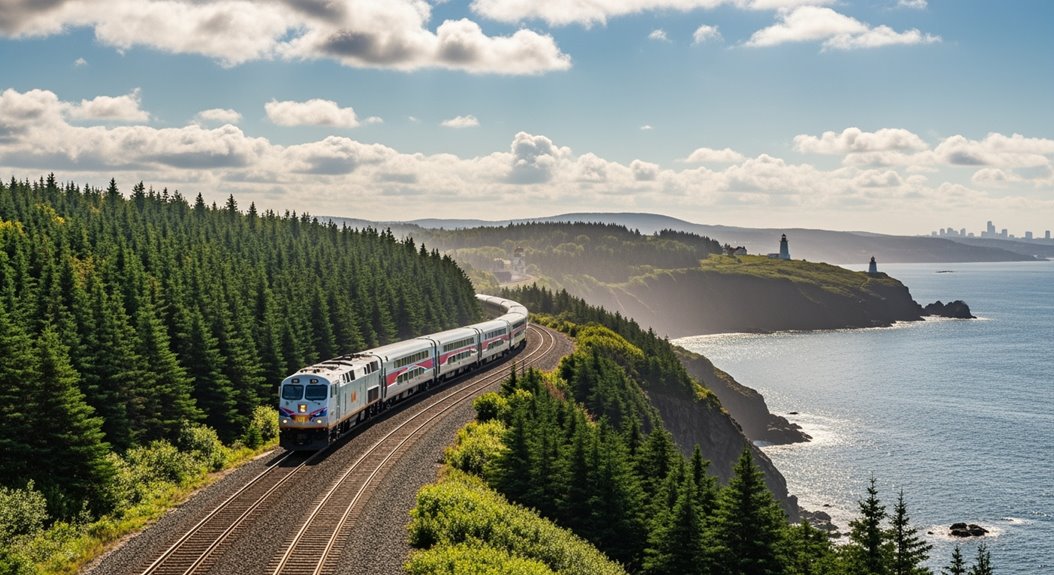
That said, the route does offer some compensation for all that hassle. You’ll get scenic views of the Canadian Maritimes, Cape Breton landscapes, and coastal scenery that you simply can’t see from a plane.
Halifax boasts five UNESCO World Heritage Sites and two national parks, which may suggest the destination is worth the journey. The mild maritime climate makes year-round travel comfortable, even so. Some organized tours feature local music and storytelling, adding a cultural element to the trip. The journey offers glimpses of small communities along the route, each showcasing distinct cultural heritage that reflects the region’s diverse history.
Whale watching and lighthouse spotting can enhance the experience, though results may vary depending on the season. On top of that, regional buses supplement rail services east of Moncton, because apparently the adventure never really ends.
Did You Know
What Is the Baggage Allowance for Train Travel to Nova Scotia?
Train passengers get two checked bags up to 50 pounds each, plus one carry-on and a personal item.
Economy travelers can bring a medium bag weighing up to 50 pounds. Sleeper passengers get limited cabin storage, so most stuff needs checking.
Extra bags cost $40 each. Overweight or oversized items? Another $40 surcharge.
Check baggage 45 minutes early at terminals, 30 minutes at stops.
Are Pets Allowed on Trains Traveling to Nova Scotia?
Pets aren’t allowed in passenger cars on trains to Nova Scotia.
VIA Rail only permits pets in carriers on their Windsor-Quebec City Corridor routes. The Ocean train to Nova Scotia is long-distance, so regular pets are banned from passenger areas.
Some long-distance trains offer checked baggage transport for pets in approved cages, but availability isn’t guaranteed.
Service animals are always welcome though.
Do I Need to Make Reservations in Advance for Nova Scotia Trains?
Yes, reservations are definitely needed for Nova Scotia trains.
VIA Rail’s Ocean route sells out months ahead, especially June through September.
Sleeper cabins? Forget about it without advance booking—they’re gone 6-12 months early during peak season.
Economy seats fill up too. Booking opens 11 months out, and waiting until the last minute means paying more for whatever’s left, if anything.
What Food and Dining Options Are Available on the Train?
The Ocean route to Nova Scotia offers full dining car service for Sleeper Plus and Prestige passengers.
Four entrée choices per meal, including vegetarian options. Breakfast, lunch, dinner served at assigned tables—strangers become dinner companions.
Onboard chefs prepare fresh meals in a moving kitchen. No frying, obviously.
Business Class gets catered meals.
Economy passengers? Sandwiches and snacks.
Are There Discounts Available for Seniors or Students on Train Tickets?
Yes, VIA Rail offers 10% discounts for both seniors and students on Nova Scotia routes.
Seniors need to be 60 or older with government-issued ID. Students aged 12-25 or full-time students over 25 qualify with valid student cards.
The catch? You can’t stack these with other promotions or sale prices. Discounts apply to most classes but come with blackout dates during peak times.
Parting Shot
Taking the train to Nova Scotia isn’t rocket science, but it’s not exactly convenient either. The Ocean runs three times weekly from Montreal to Halifax. That’s it. No other options. The journey takes about 22 hours, assuming everything goes smoothly. Which it doesn’t always. Budget travelers and train enthusiasts will find the experience worthwhile. Everyone else might want to contemplate flying. The scenic route has its charm, but patience is required.