
5 How to Validate Train Ticket in Europe Steps Using Platform Validation Machines****
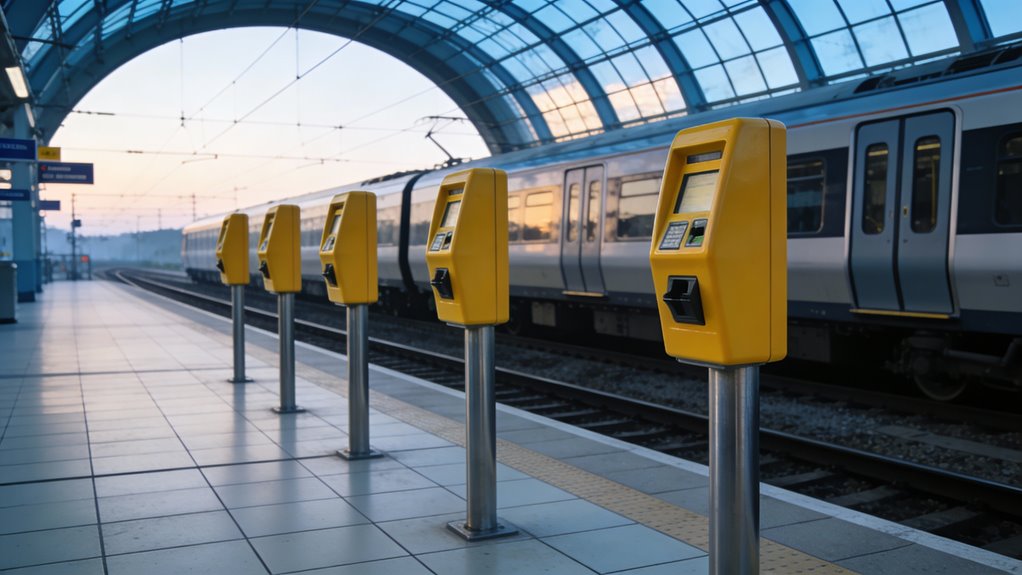
Platform validation machines: these yellow devices stamp paper tickets with date-time codes at European train stations.
Trenitalia, SNCF, and Deutsche Bahn require validation before boarding. Unstamped tickets trigger fraud penalties. Conductors issue fines starting at €50 in Italy, €60 in Germany, and amounts exceeding €200 for repeat violations.
- Obliteratrice machines — Trenitalia positions these yellow validators near platform entrances at Roma Termini and Milano Centrale
- Composteur devices — SNCF installs these stamp machines throughout Gare de Lyon and Gare du Nord in Paris
- Entwerter units — Deutsche Bahn places validators at Frankfurt Hauptbahnhof and München Hauptbahnhof platform access points
The validation process takes seconds. Insert ticket face-up. Wait for the click. Check the printed timestamp. The stamp shows station code, date, and time.
Regional carriers like Italo, Ouigo, and Thalys accept electronic tickets. Paper tickets from local tabacchi shops or station kiosks need physical validation. Self-service machines from Faiveley Transport and Scheidt & Bachmann dominate most European terminals.
Travelers find validators between ticket halls and platforms. Station staff at information desks provide directions. The Eurail app marks validator locations at major hubs.
Fun Activity To Try: Challenge yourself to validate tickets at three different European railway stations—Roma Termini, Gare de Lyon, and Frankfurt Hauptbahnhof—and photograph each unique timestamp as a travel souvenir collection.
Key Points
- Locate yellow validation machines near station entrances, platform access points, or ticket offices before boarding your train.
- Insert your paper ticket face-up into the slot until you hear an audible click confirming successful stamping.
- Check the printed date and time stamp immediately to ensure it’s legible and correctly recorded.
- Complete validation before boarding since regional tickets become valid only after stamping at platform machines.
- Avoid fines ranging from €50–€200 by always validating paper tickets; unvalidated tickets are treated as fraud.
Step #1 — Locate Yellow Platform Validation Machines Near Station Entrances or Track Access
Before anyone even thinks about boarding a regional train in Italy or France, there’s an essential pit stop that catches tourists off guard every single day.
Ticket validation isn’t optional—it’s the first rule of regional rail travel that too many visitors learn the hard way.
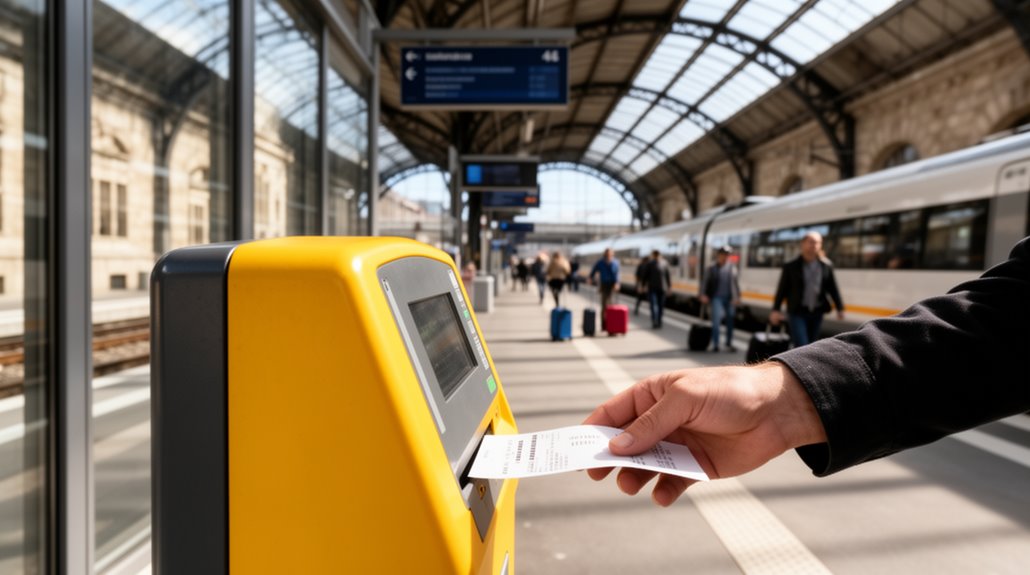
Those yellow validator boxes—you’ve probably walked right past them without realizing their importance.
They tend to sit near station entrances and wherever you access the platforms, though their exact placement can vary a bit from station to station.
Spotting them is straightforward enough: just look for that distinctive yellow color.
The station layout itself usually offers clues too.
Most stations appear to have multiple units scattered around, which makes sense when you think about the foot traffic during rush hour.
That said, you’ll typically find them clustered near track access points rather than tucked away in random corners.
Some machines are positioned on small platforms, while others sit near the ticket office or in underpass areas.
Many visitors from turnstile-based systems like New York’s subway find this setup confusing since European stations often let you walk straight to the platform without any barriers.
This validation requirement typically applies to regional train tickets rather than high-speed trains like the Frecciarossa, which require seat reservations and electronic validation.
The actual stamping process? It takes all of a few seconds.
Quick, painless—assuming you remember to do it in the first place.
Step #2 — Insert Your Paper Ticket Face-Up Into the Validator Slot Until Stamped
Sliding that paper ticket into the validator sounds simple enough, yet travelers manage to botch it with impressive regularity.
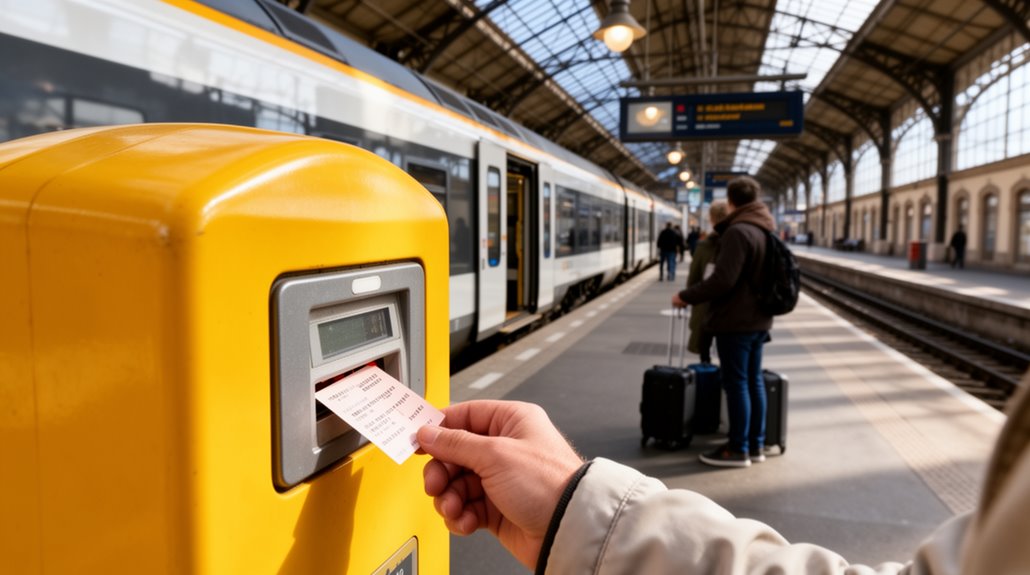
The orientation matters—face-up, leading edge first. Push it in until those yellow machines grab hold.
How deep you insert it appears to trigger the date and time stamp activation, though honestly, you’ll feel when it catches. Then you wait.
Maybe two seconds, give or take. Listen for that audible click—your confirmation the stamp actually took. When you pull the ticket out, you’ll see the validation print shows date and time to prove it worked. Once stamped, your paper ticket is typically valid for four hours from that moment. This validation process applies primarily to regional train tickets rather than high-speed or advance-purchase fares that come with fixed departure times. That’s it. Platform validation machines aren’t exactly rocket science, even if the number of confused tourists standing in front of them might suggest otherwise.
Step #3 — Complete Validation Before Boarding Because Trains Depart Without Warning
That satisfying click from the validation machine? It means absolutely nothing if the train pulls away while you’re still fumbling around on the platform.
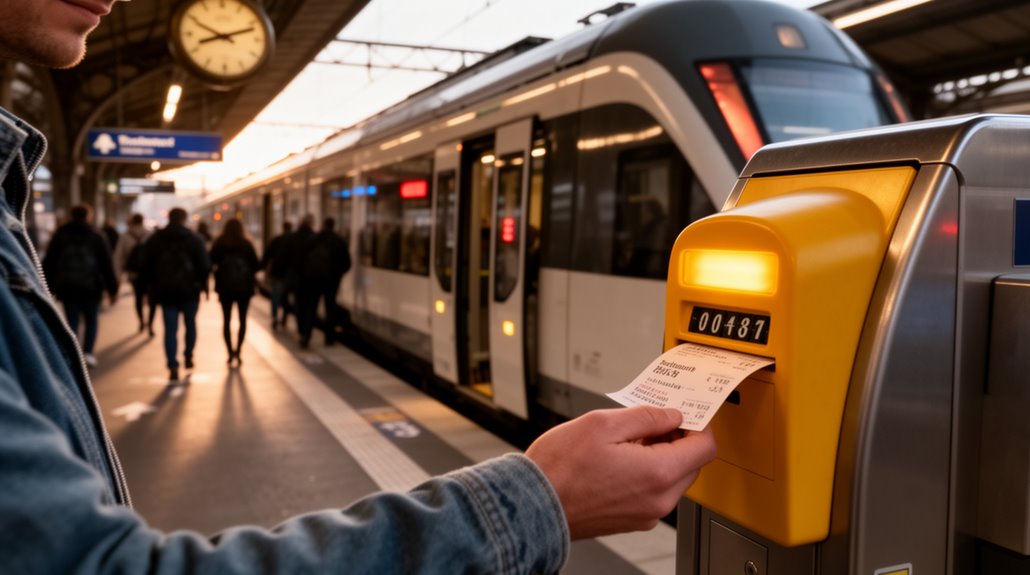
Pre-boarding validation requirements exist for a reason, and regional train rules demand your ticket gets stamped *before* those doors close. For Trenitalia regional tickets purchased online, failure to validate results in a fine.
Validate your ticket before boarding—regional trains won’t wait, and the rules don’t bend for anyone still searching for the stamp machine.
You’ve probably noticed the yellow validator boxes scattered across the station platform—hit them early. Really early. These time-stamp machines are usually located near the ticket machines in stations where stamping is required. While high-speed trains like the Frecciarossa require seat reservations with date-specific validity, regional trains operate differently and depend on that physical stamp.
Validation timing matters here, and trains appear to depart without any real warning. No announcements, as far as most travelers can tell. No mercy.
That said, boarding compliance and getting yourself ready for conductor inspection comes down to something pretty simple: stamp first, ask questions later.
Step #4 — Confirm the Date and Time Stamp Printed Matches Your Intended Travel Day
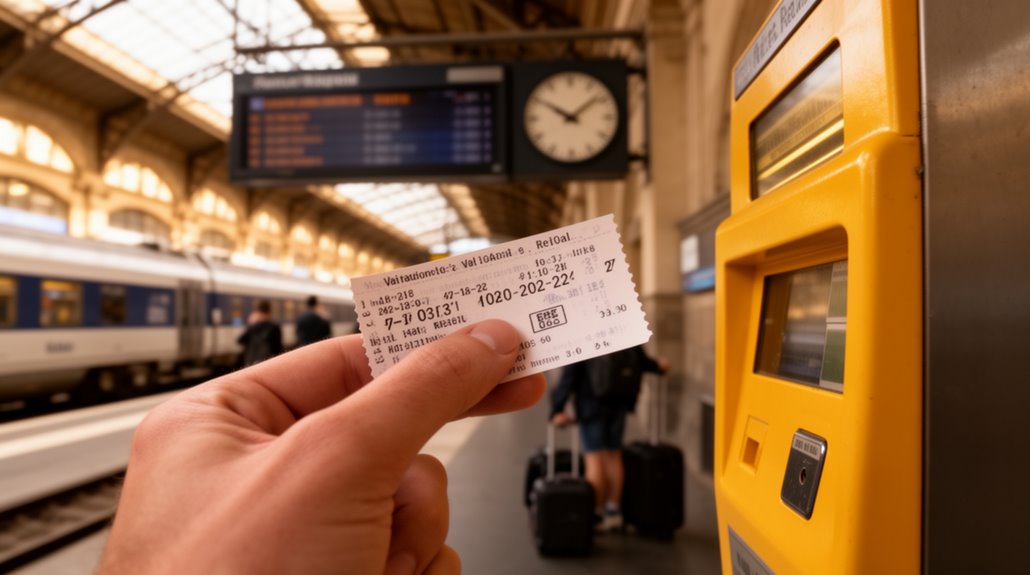
Once that ticket slides back out of the machine, you’re not quite finished. Give the date stamp and time stamp a quick look—does what’s printed actually match the day you’re planning to travel?
If it doesn’t, that’s a problem. Same goes for a stamp that’s smudged or barely readable. Regional train tickets are valid from midnight of the travel day until departure, but they must still be validated before you board. Using real-time train information apps can help you double-check your departure details against your stamped ticket.
This whole verification thing takes maybe two seconds, tops. Skip it, though, and things tend to get awkward when the conductor comes around asking questions. Since trains run on schedule over 90% of the time, there’s little excuse for missing your validated departure window.
Now, revalidation can fix a mistake if you catch it, but only before you step onto the train. After that, the window’s closed. The clock starts ticking the moment that stamp hits the paper.
Step #5 — Avoid €50-200 Penalty Fines by Validating Before Conductor Inspections Begin
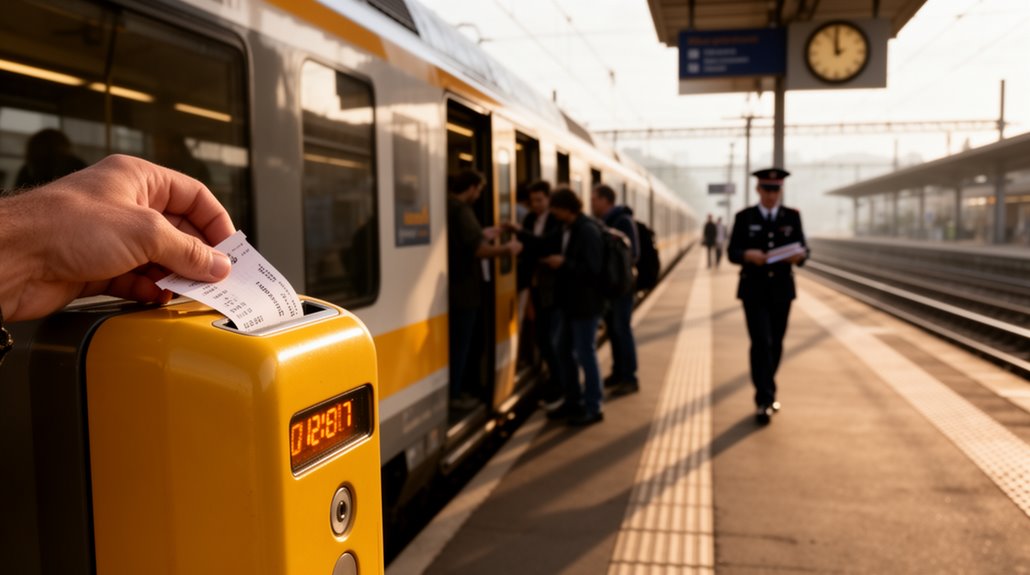
Skipping the validation machine might not feel like a big deal in the moment. European rail operators, though, tend to see it differently. Ticket inspectors will often treat an unvalidated paper ticket as a fraud attempt—whether that’s entirely fair or not is another question, but it’s the reality you’re working with. The whole process takes maybe two seconds. The fines? Those have a way of lingering. Even if police intervene at the scene and seem sympathetic, you may still receive a citation by post later, so the police statement at the time doesn’t guarantee you’re in the clear. Adding to the stress, dealing with fines and inspections can make train journeys exhausting when you’re already navigating unfamiliar stations and schedules. If you’re traveling with a mobile pass instead, you can skip the stamping machines entirely since validation only applies to paper tickets.
| Country | Initial Fine | Escalated Fine |
|---|---|---|
| Italy | €50 | €100+ |
| France | €50 | Collection fees |
| Germany | €60 | Additional penalties |
Frequently Asked Questions
Do High-Speed Trains Like TGV or Frecciarossa Require Platform Ticket Validation?
High-speed trains like TGV and Frecciarossa do not require platform ticket validation. These services use reserved-seat, e-ticket systems where conductors scan QR codes onboard. Platform validation machines are only necessary for regional and local trains.
Can I Validate My Ticket After Boarding if I Forgot?
Generally, validation after boarding is not permitted. However, passengers who proactively inform conductors immediately upon boarding may receive a reduced surcharge rather than the full penalty fine for traveling with an unvalidated ticket.
What Happens if the Validation Machine Is Broken or Missing?
Passengers should seek another validator nearby, visit the ticket office for manual validation, or immediately inform the conductor upon boarding. Documenting the broken machine (time, location, machine number) helps contest potential fines later.
Do Electronic or Mobile Tickets Need to Be Validated at Platform Machines?
Electronic and mobile tickets typically do not require platform validation machines. These tickets are validated digitally through QR codes, app check-ins, or automatically at purchase. Travelers should verify specific requirements in their ticket confirmation email.
Which European Countries Still Require Mandatory Platform Ticket Validation Today?
Italy, France, Spain, and Belgium still require mandatory platform ticket validation for paper regional tickets. Germany, Austria, and Switzerland maintain this requirement selectively through local transport association rules for specific zone-based tickets.
Parting Shot
Ticket validation takes two seconds. That’s it. Two seconds versus a potential €200 fine. The math isn’t complicated. Those yellow machines exist for a reason, and conductors don’t care about tourist confusion or language barriers. They’ve heard every excuse. The stamp proves payment. No stamp, no proof. European rail travel has quirks. This happens to be one of them.