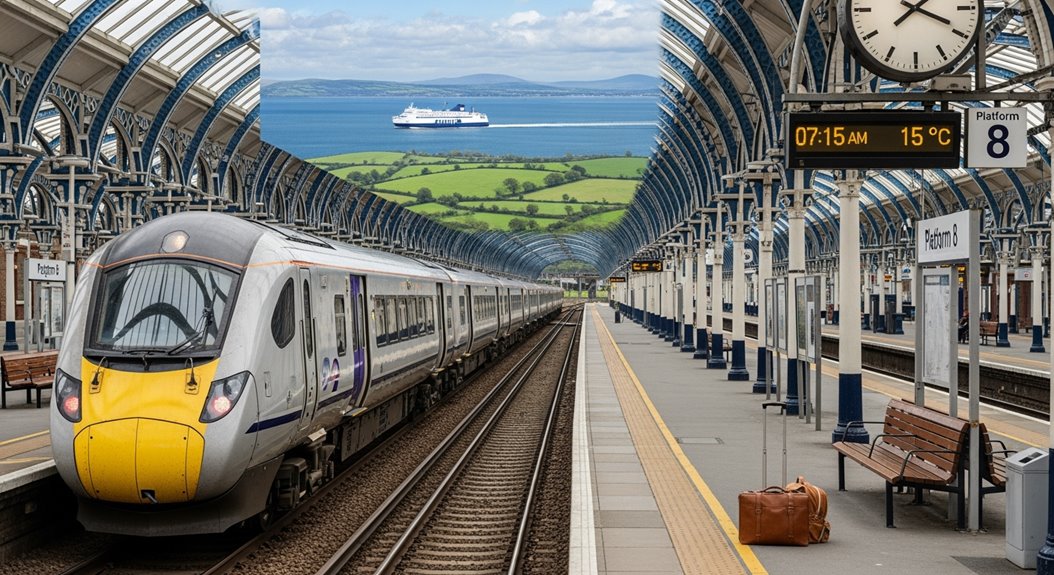

Traveling from London to Dublin by train involves a Rail & Sail journey that’s basically a fancy way of saying “train plus ferry.” The trip starts at London Euston on an Avanti West Coast train, takes about three hours and thirty-seven minutes to reach Holyhead, Wales. From there, passengers hop on a ferry for the Irish Sea crossing to Dublin Port. The entire journey lasts six to ten hours, depending on ferry operator and connections, but offers scenic views and a more relaxed alternative to flying for those with time to spare.

Why would anyone choose a train over a quick flight from London to Dublin? Maybe they enjoy the scenic route. Or perhaps they’re terrified of flying. Either way, the Rail & Sail journey exists for those brave enough to tackle six to ten hours of travel.
Your adventure kicks off at London Euston station, where you’ll board an Avanti West Coast train bound for Holyhead in Wales. This leg takes about three hours and thirty-seven minutes, though delays can happen. Smart passengers sit on the right side for ideal views of English countryside and the North Wales coast.
Trains run roughly every hour, so missing one isn’t catastrophic—just annoying.
At Holyhead, the real adventure begins. The ferry terminal sits conveniently next to the train station, which eliminates the nightmare of dragging luggage across town. Two ferry operators run this route: Irish Ferries and Stena Line. Irish Ferries appears to be the speedier option, getting you to Dublin Port in two hours. Stena Line takes a more leisurely three hours and fifteen minutes.
Both companies operate year-round because apparently, the Irish Sea doesn’t take vacation days.
Here’s where things get interesting. SailRail tickets, which combine train and ferry fares, typically start around £53.40. That’s cheaper than booking separately, though not by much. There’s a catch, of course. National Rail suspended SailRail ticket sales in 2025, though Stena Line still sells them by phone.
Irish Ferries offers online booking with tickets mailed to customers—technology meets old-school postal service.
The ferry portion offers stunning Irish Sea views and potential marine wildlife sightings, assuming the weather cooperates. Both ships feature open decks, dining options, and observation areas. Travelers can bring their own food and drinks because ferry prices probably rival airport concessions. The journey delivers impressive environmental benefits, reducing CO2 emissions by up to 73% compared to flying.
Luggage travels freely throughout the journey, a luxury air travelers rarely enjoy. Bikes cost an extra £10 on ferries, which seems reasonable. This seamless travel experience eliminates the typical hassles of coordinating separate transportation modes. Unlike the Vienna to Salzburg route where passengers can enjoy modern Railjet trains with restaurant cars and free WiFi, the London to Dublin journey combines multiple transportation modes.
Children under five ride free on SailRail products, which seems fair considering they’ll likely complain the entire time anyway.
This route may appeal most to environmentally conscious travelers and those who prefer reliability over speed. Weather rarely disrupts ferry operations, unlike flights that get canceled when clouds look threatening.
Even so, sometimes the scenic route wins—if you’ve got the time to spare.
Did You Know
Can I Bring My Bicycle on the Train From London to Dublin?
Yes, but it’s complicated.
There’s no direct train anyway—travelers take a train to Holyhead, then ferry to Dublin. Full-size bikes need advance reservations on UK trains and are banned during peak hours.
Folding bikes work fine, no booking required. Ferries usually take bikes for free or cheap.
Dublin trains also restrict full-size bikes during rush hours. Folding bikes remain the hassle-free option throughout.
Are There Dining Cars Available During the London to Dublin Train Journey?
No proper dining cars exist on this route.
The London-Holyhead leg offers basic trolley service with pre-packaged snacks. First Class gets complimentary light meals, while standard class pays for everything.
The ferry portion saves the day with actual restaurants and hot food during the three-hour crossing.
Irish Rail’s final leg? Mostly nothing, except water stations in Dublin.
Traditional dining cars are basically extinct here.
What’s the Baggage Allowance for Trains Traveling From London to Dublin?
Baggage allowances vary by train segment on the London-Dublin route.
Eurostar allows 2-3 pieces plus hand luggage depending on ticket class.
Irish Rail permits two large bags up to 85cm plus one small item per passenger.
UK rail segments allow up to 3 pieces including one large suitcase.
Everything must fit in designated spaces without staff help.
Excess baggage fees range €50-€150.
Do I Need a Passport to Travel by Train From London to Dublin?
Yes, travelers need a passport for the London-to-Dublin train journey. Well, mostly. British and Irish citizens can sometimes use official photo ID instead, but ferry operators have their own rules.
Non-EU nationals? Definitely need a passport. Ferry companies like Irish Ferries and Stena Line check documents at boarding. Rail operators might not always check, but why risk it?
Passport’s the safest bet.
Are There Overnight Sleeper Trains Available From London to Dublin?
No overnight sleeper trains run directly from London to Dublin. Zero.
The UK’s sleeper services only go to Scotland and Cornwall, not Ireland. Travelers wanting to sleep en route need to book separate hotel accommodation in Holyhead or Dublin.
The standard rail-ferry journey takes 6-10 hours during daytime. No through berths, no onboard cabins, no announced plans for future sleeper service to Dublin.
Parting Shot
Taking the train from London to Dublin isn’t actually possible. Trains don’t float. The Irish Sea gets in the way. Sure, there’s a rail-and-sail option involving Holyhead, but that’s really just a train to a ferry to another train. It’s not one seamless journey. Travelers looking for a true train experience will be disappointed. The romance of rail travel dies at the water’s edge. Sometimes geography wins.