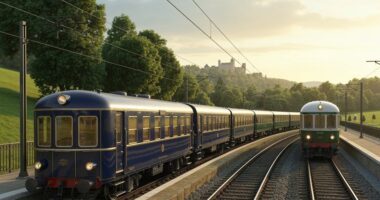
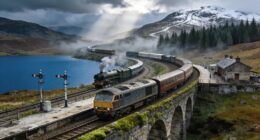
Train travel to San Francisco requires some creative thinking since no passenger trains actually enter the city. Amtrak stops at Emeryville, requiring a bus transfer to reach San Francisco proper. The California Zephyr, Coast Starlight, and other major routes all terminate there. Once in the Bay Area, Caltrain is the only rail service into the city, ending at 4th and King Station. Heavy bags make transfers particularly annoying. Future developments promise better options ahead.

While most major cities boast grand central stations with direct rail connections from across the country, San Francisco takes a different approach. The city apparently decided that having Amtrak actually enter its borders would be too conventional, or perhaps too expensive. Instead, trains stop at Emeryville in the East Bay. This means passengers have to hop on Amtrak Thruway buses for the final stretch into the city.
This arrangement isn’t exactly convenient, though it does work. The California Zephyr, Coast Starlight, Capitol Corridor, and San Joaquins all terminate at Emeryville. From there, frequent buses shuttle passengers to central San Francisco, including the Salesforce Transit Center. The upside? Passengers can buy combined bus-train tickets, which makes the connection theoretically seamless—though anyone who’s lugged heavy bags between modes might question how seamless it really feels.
For actual rail service into San Francisco, Caltrain remains the only game in town. This commuter line runs directly into the city and terminates at 4th and King Street Station in the SoMa district. The station opened in 1975, replacing an earlier structure. It features 13 tracks exclusively for terminating trains and sits just one block from Oracle Park—which means extra service on game days for baseball fans.
Caltrain connects San Francisco to San Jose and Gilroy, serving Peninsula cities along the way. The service uses a zone-based fare system, with 4th and King located in Zone 1. You’ll need to purchase tickets before boarding from vending machines or mobile apps. Clipper Cards work too. That said, conductors check tickets routinely, so fare-dodging isn’t advisable.
The station also serves as a transfer hub for Muni light rail lines N Judah, T Third, and E Embarcadero. Multiple bus routes stop there as well—the 15, 30, 45, and night owl services. On top of that, taxis, rideshare, and bike-share stations cluster around the depot. As a central hub for Caltrain services, the station supports increased foot traffic that benefits local businesses in the surrounding area. Passengers can also make use of complementary bus connections for reaching various destinations throughout the region. Future plans include an underground station as part of the Portal project, which will be built adjacent to the current station on the Townsend Street side.
Looking ahead, changes appear to be coming. California High-Speed Rail plans to reach San Francisco eventually, initially serving 4th and King before extending to the Salesforce Transit Center. Dreamstar Lines promises overnight service between Los Angeles and San Francisco starting in 2025. Until then, travelers must navigate the current patchwork of trains and buses to reach the city by rail.
Did You Know
What Food and Dining Options Are Available on Trains to San Francisco?
Trains to San Francisco offer traditional dining cars with white tablecloth service on long-distance routes like California Zephyr and Coast Starlight.
Chef-prepared meals include breakfast, lunch, and three-course dinners. Think flat iron steak, pan-roasted chicken, grilled salmon.
Sleeping car passengers get meals included in their fare, while coach passengers can buy food from the cafe car.
Reservations required for dining car meals.
Can I Bring My Pet on the Train to San Francisco?
Yes, but with major restrictions.
Small dogs and cats under 20 pounds can travel to San Francisco on most Amtrak routes.
However, pets are banned on San Joaquins and Capitol Corridor services. That’s problematic since these are primary routes into the Bay Area.
The pet must stay in a carrier under the seat for the entire trip, and there’s a $29-$39 fee per segment.
How Much Luggage Am I Allowed to Bring on the Train?
Passengers get one personal item up to 25 pounds and two carry-on bags up to 50 pounds each.
Two free checked bags are allowed where service exists—not all stations offer it, naturally. Each excess item costs $20, maximum two extra bags.
Personal items include purses and laptops. Carry-ons have specific size limits.
Everything needs visible ID tags because apparently people forget their own stuff.
Are There Sleeping Accommodations Available for Overnight Train Journeys?
Yes, sleeping accommodations are definitely available on overnight trains to San Francisco.
The California Zephyr offers roomettes, bedrooms, family bedrooms, and accessible bedrooms. Each comes with complimentary meals, a dedicated attendant, and priority boarding.
Roomettes share restrooms while bedrooms have private ones. Family bedrooms fit two adults plus two kids. It’s premium-priced but beats sleeping upright in coach.
Do I Need to Make Reservations in Advance for San Francisco Trains?
It depends on which train system you’re using. Amtrak strongly recommends advance reservations to avoid higher onboard fares and guarantee seats.
Capitol Corridor allows walk-up purchases but requires advance booking for most bus connections to the city.
Caltrain doesn’t offer advance reservations at all—tickets must be bought the day of travel.
Cable cars require advance fare purchase during peak hours.
Parting Shot
Taking the train to San Francisco isn’t rocket science, but it’s not exactly straightforward either. Amtrak gets you close—emphasis on close. The California Zephyr rolls through stunning scenery before dumping passengers in Emeryville. Then it’s a bus ride across the bay. Not ideal, but doable. The Coast Starlight hits similar snags. Bottom line: trains don’t actually reach San Francisco proper. Blame geography and urban planning. Still beats flying, though.