
5 Train Travel Etiquette in Europe Rules for Quiet Carriage Behavior
Quiet carriage behavior: European rail operators enforce strict silence zones for passenger comfort. when planning your journey, keep in mind some night train ticket tips for Europe. Booking in advance can save you money, and consider the various rail passes available that might suit your travel needs. Additionally, selecting a sleeper cabin can enhance your experience by providing more privacy and comfort during overnight trips.
Deutsche Bahn designates Ruhebereich cars. Phone calls are prohibited. Headphones must contain all sound. Violators face relocation by staff.
Eurostar operates quiet coaches between London St Pancras and Paris Gare du Nord. Audio leakage disturbs fellow travelers. Conductors issue warnings first.
Swiss Federal Railways (SBB) maintains silence standards on routes through Zurich Hauptbahnhof and Geneva Cornavin. Whispered conversations remain the maximum volume permitted.
- SNCF TGV services require all device notifications muted across French high-speed rail networks
- ÖBB Austrian Federal Railways empowers conductors to relocate passengers breaking quiet zone rules
- Trenitalia Frecciarossa offers Silenzio cars on Milan to Rome routes with 40 EUR potential fines
Rail staff enforce these standards. Enforcement consistency varies by conductor and service. Morning commuter trains see stricter monitoring than weekend leisure routes.
The Ruhebereich symbol—a finger to lips—marks designated quiet zones. Passengers book these seats intentionally. Respect runs both directions between travelers.
European train stations like Amsterdam Centraal and Brussels-Midi display quiet carriage locations on platform departure boards. Check before boarding.
Fun Activity To Try: Download the Deutsche Bahn Navigator app or Trainline before departure to pre-select quiet carriage seating and track real-time platform assignments at major European terminals.
Key Points
- Phone calls are strictly banned in quiet carriages across European railways—relocate to designated phone areas or Handybereich zones instead.
- Keep devices on silent mode with no audible ringtones, notifications, or audio leakage that neighbors can hear.
- Conversations should be avoided or kept to brief whispers, as many quiet zones expect library-like silence throughout the journey.
- Use headphones at low volume when listening to media, though some railways like Swiss Federal Railways ban headphone audio entirely.
- Non-compliance may result in staff warnings, relocation requests, or fines up to 40 EUR depending on the railway operator.
Rule #1 — Phone Call Prohibition in Deutsche Bahn Ruhebereich Bans All Mobile Conversations
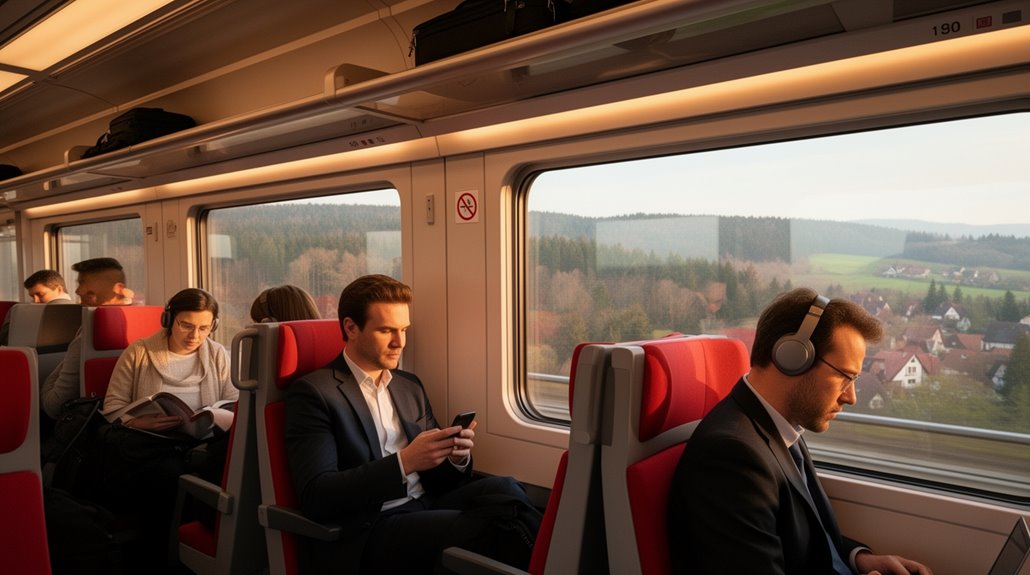
When Deutsche Bahn labels your ticket “Ruhebereich,” they mean it. Phone calls are flat-out banned—no wiggle room there.
Silent mode isn’t a polite request; it’s the expectation. That means no ringtones piercing the quiet, no one-sided conversations drifting across the carriage.
Silent mode isn’t optional—it’s expected. No ringtones, no chatter, no exceptions.
The Handybereich exists specifically for people who need to take calls, so there’s really no excuse. These designated areas feature special signal amplifiers installed to ensure reliable mobile connectivity right at your seat. These mobile zones are typically located near quiet-area doors for convenient access.
Etiquette in these zones is taken pretty seriously. That said, enforcement seems to vary quite a bit depending on who’s conducting.
Some appear to look the other way entirely when someone breaks the rules. Others, though—particularly if fellow passengers lodge complaints—may issue fines reaching up to 40 EUR.
It’s worth noting that silence here isn’t really up for debate. This is especially true on high-speed ICE trains, where business travelers and long-distance passengers rely on quiet carriages to work or rest during their journey.
Rule #2 — Headphone Audio Leakage on Eurostar Quiet Coach Must Produce Zero Audible Sound
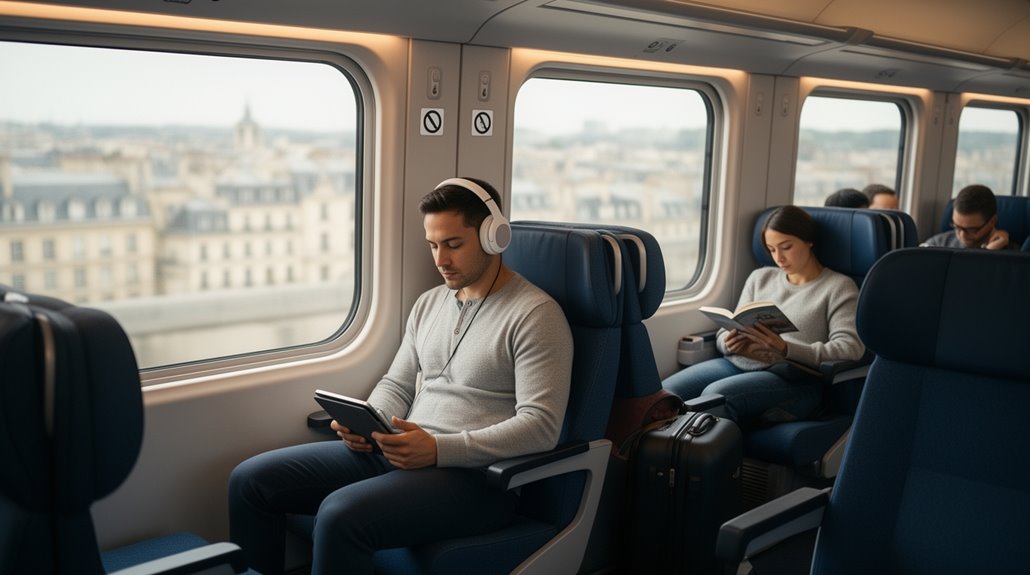
Deutsche Bahn’s phone ban is pretty black and white. Eurostar quiet coach headphone rules? Not so much—and that ambiguity can catch people off guard.
There’s no official decibel limit, which might seem vague at first. The noise restrictions basically boil down to something simpler: if your neighbor hears your music leakage, you’ve failed. Silent mode requirements apply, and conversation limits exist too.
That said, enforcement appears to be largely reactive. Staff typically step in only after complaints roll in, which means you’re essentially relying on fellow passengers to police the vibe. This self-enforcement remains the predominant mechanism for maintaining quiet etiquette across most rail services. If someone continues being disruptive, crew members can be approached to address the situation.
Personal space respect, then, probably means testing your headphones before settling in—pop them off, hold them at arm’s length, and actually listen. Can you hear that podcast bleeding through? Too loud. On Eurostar’s high-speed e320 trains, the quiet coach experience is particularly valued given the roughly two-hour journey time where passengers often work or rest.
It’s not a perfect system, even so, and some travelers may find the self-regulation aspect frustrating. But until Eurostar publishes hard numbers, the “audible at arm’s length” test is likely your safest benchmark.
Rule #3 — Conversation Volume in Swiss Federal Railways Quiet Zones Permits Whispers Only
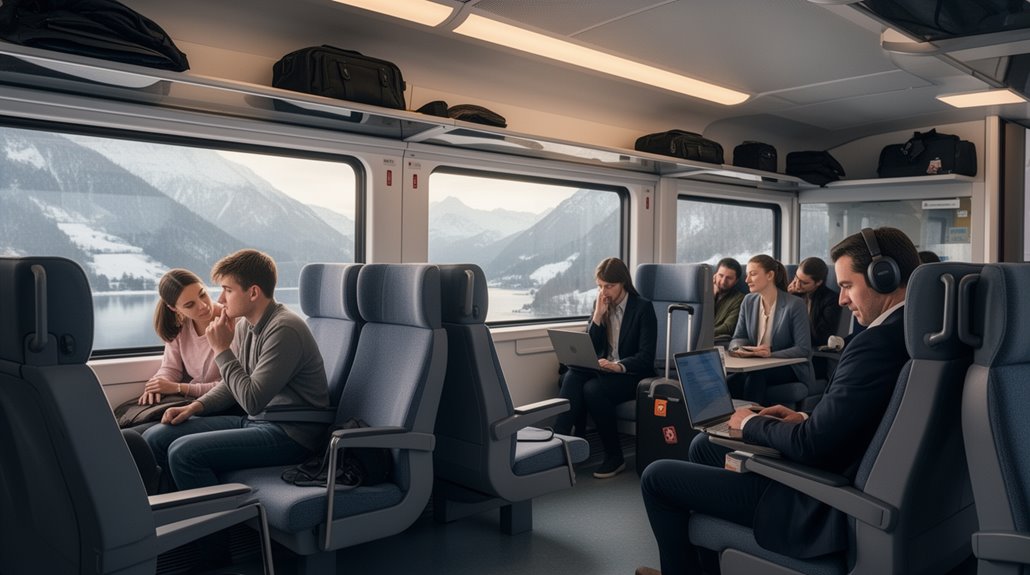
Swiss Federal Railways doesn’t mess around with its quiet zones. SBB quiet zones operate under what appears to be a full conversation prohibition—whispers may technically be pushing the boundaries, though the exact threshold seems open to interpretation.
Mobile phones? Strict ban. Picture library-like etiquette, but rolling through the Alps at 200 km/h. The silent carriage setup aims for genuine silence, not just toned-down chatter or “indoor voices.” Listening to music or radio is banned, even with headphones.
That said, enforcement reality tells a different story. Staff rarely seem to intervene for brief hushed exchanges—a quick word here or there likely flies under the radar. Even so, passenger expectations run high. Fellow travelers in these zones have chosen silence deliberately, and they’ll notice if you haven’t. Keep it zipped. SBB’s broader commitment to noise reduction extends beyond quiet carriages—the railway has installed approximately 400 kilometres of noise barriers across its network to protect residents from train sounds. This attention to passenger comfort reflects why Switzerland’s rail network is considered one of the most efficient and punctual in the world.
Rule #4 — Electronic Device Silence in SNCF Quiet Zones Requires All Notifications Muted
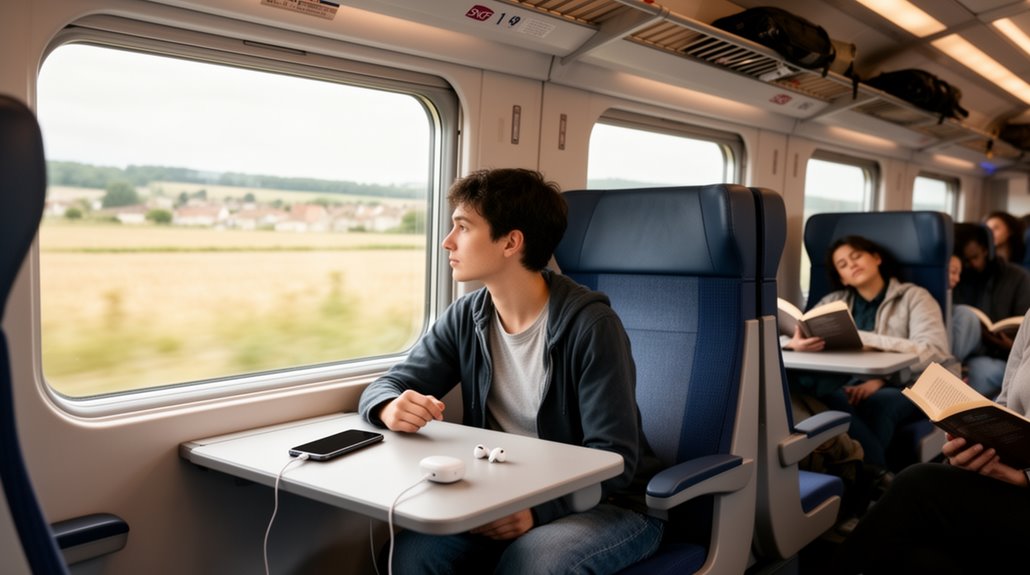
Switzerland’s whisper-only approach sets a high bar, but SNCF appears to take electronic noise just as seriously—if in its own particular way.
In their quiet zones, notification muting isn’t optional. Keyboard clicks, ringtones, that ping when a message lands—all of it has to go silent. Headphones are required to keep audio private, and video streaming falls under the same muting expectations.
Need to take a call? You’re likely being pushed elsewhere, out of the designated zone entirely. These rules seem driven by acoustic comfort standards, and the signage systems make the expectations pretty clear. Even announcements, it seems, don’t get a free pass here. SNCF research has found that specific noise levels directly impair passenger activities like reading and phone conversations, which helps explain why these zones enforce such strict silence. While travelers can find detailed U.S. rail regulations through the eCFR by entering citations or phrases, European operators like SNCF maintain their own distinct quiet carriage standards. Understanding the different types of trains across European networks can help travelers anticipate varying quiet zone policies from one rail system to another.
Rule #5 — Enforcement Awareness at ÖBB Ruhezone Includes Staff-Requested Relocation
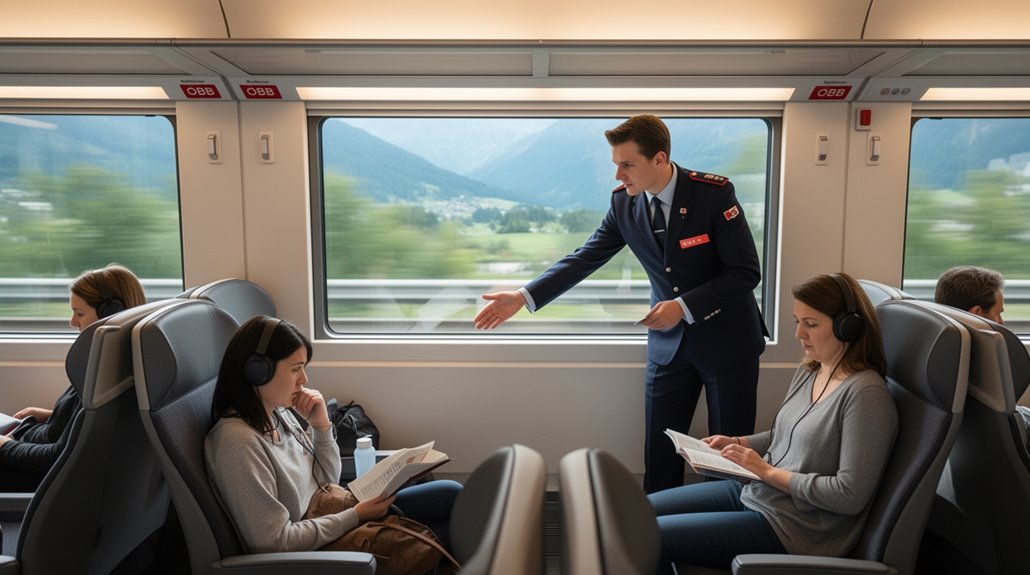
While SNCF focuses on silencing devices, Austria’s ÖBB takes things a step further with what appears to be actual enforcement teeth. Staff authority in the ÖBB Ruhezone isn’t just decorative—ignore quiet zone protocols and you’ll likely face a relocation request. Keep pushing? Fines and penalties enter the chat.
| Violation | Consequence |
|---|---|
| Excessive noise levels | Staff warning, then relocation |
| Ignoring children supervision expectations | Move to Familienzone |
| Repeated non-compliance | Monetary fines, potential exclusion |
That said, the system seems to rely heavily on passenger self-regulation. The official guidelines are clear: keep your voice down, set your mobile to silent, and listen to music with headphones at low volume. If you’re traveling on ÖBB’s modern Railjet trains, you’ll find amenities like free WiFi and restaurant cars, but these conveniences don’t exempt you from quiet zone expectations. And seat reservation enforcement? It’s real—or at least, that’s the expectation. Whether every conductor follows through with the same rigour is another question entirely. Remember that ticket inspections can occur at any time after the journey until leaving platform access, so maintaining proper conduct throughout your travel is advisable.
Frequently Asked Questions
Can I Book a Quiet Carriage Seat in Advance Through Rail Operator Apps?
Yes, quiet carriage seats can often be booked in advance through rail operator apps. Deutsche Bahn, Trenitalia, and others allow quiet-zone selection during booking, though availability depends on the specific train, route, and remaining inventory.
Are Quiet Carriage Rules Enforced Consistently on Cross-Border European Train Journeys?
Quiet carriage rules are not enforced consistently on cross-border European train journeys. Enforcement varies between operators and countries, with staff typically intervening only after complaints rather than actively patrolling designated quiet zones.
What Alternatives Exist for Families Traveling With Young Children on Trains?
Families traveling with young children can use designated family carriages, standard non-quiet carriages, or multi-purpose areas with extra space for strollers. Many operators allow seat selection away from quiet zones during booking.
How Do Quiet Carriage Compliance Rates Compare Across Different European Rail Operators?
Comprehensive compliance data across European rail operators remains unavailable, as most operators do not publish quantitative metrics. Available evidence suggests enforcement varies significantly, with self-regulation predominating and compliance generally decreasing during peak travel periods.
Do First Class Carriages Automatically Have Quiet Zone Expectations Throughout Europe?
First class carriages do not automatically carry quiet zone expectations throughout Europe. Most operators designate specific quiet zones through signage or booking options, regardless of class. Travelers must select marked “Ruhebereich” or “Silent area” seats explicitly.
Parting Shot
Quiet carriages aren’t complicated. Stay silent on calls. Keep headphones leak-free. Whisper if talking is absolutely necessary. Mute everything electronic. And know that staff can—and will—relocate chatty passengers who ignore the rules. That’s it. Five simple guidelines that somehow achieve up to 95% compliance across European rail networks. Not exactly rocket science. Just basic consideration for fellow travelers who actually want some peace and quiet.