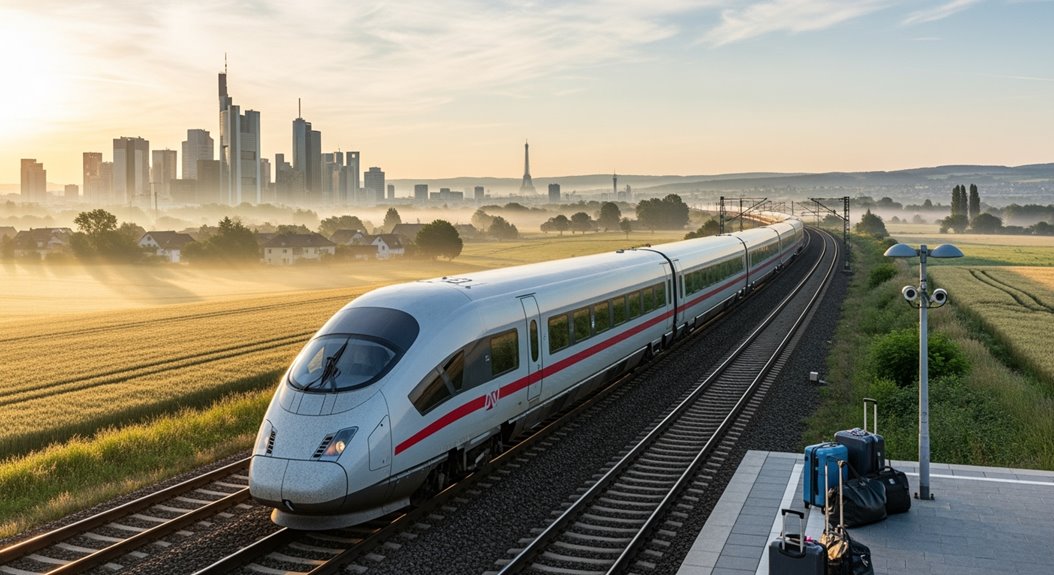

High-speed trains zip between Frankfurt Main Station and Paris Gare de l’Est in just 3 hours 41 minutes. Deutsche Bahn and SNCF operate 17-23 daily departures using sleek ICE and TGV trains. Tickets start at €39.99 for second class when booked early, though premium fares can hit $509.85. Every seat gets WiFi and power outlets, plus generous luggage allowances beat airlines hands down. Book through DB, SNCF, or Trainline up to six months ahead for better deals and smoother journeys.

Why spend half a day wrestling with airport security and cramped airline seats when you could glide from Frankfurt to Paris in under four hours by train? The direct high-speed service between Frankfurt (Main) Hbf and Paris Gare de l’Est appears to deliver passengers center-to-center faster than flying. No joke.
Deutsche Bahn and SNCF jointly operate this route using sleek ICE and TGV trains that hit speeds up to 320 km/h on the TGV-Est line. The fastest direct service takes just 3 hours and 41 minutes—that’s Frankfurt to Paris faster than most people can binge-watch three episodes of their favorite show.
Daily departures range from 17 to 23 trains, starting as early as 5:50 am. The 6:56 am departure is the speed demon, arriving in Paris at 10:38 am. Coffee in Frankfurt, lunch in Paris. Simple as that.
Coffee in Frankfurt, lunch in Paris—the 6:56 am speed demon makes it ridiculously simple.
Ticket prices start at €39.99 for second class with advance booking, though premium fares can reach $509.85 for those who prefer the fancy treatment. Economy seats hover around $57, while regular fares average $283. Book early or pay the price—literally.
The trains themselves aren’t shabby either. ICE3 and TGV Duplex models feature restaurant cars, power sockets at every seat, and free WiFi. First and second class options exist, along with Standard, Plus, and Premier categories. On top of that, generous luggage policies beat airline restrictions hands down. Families traveling with young children will appreciate that children under 5 can ride completely free without requiring their own ticket.
Booking opens six months in advance through platforms like DB, SNCF, Trainline, or Klook. Mobile e-tickets work fine, though some platforms don’t offer seat selection. The “direct services only” filter saves time when searching—trust me on this one.
That said, journey times vary wildly. While the fastest trains clock 3 hours 41 minutes, regular services average 8 hours 27 minutes. Some slower options drag on for 13 hours 12 minutes, which appear to exist for budget travelers who apparently have all day. With 15 daily train schedules available, passengers have plenty of departure times to choose from throughout the day.
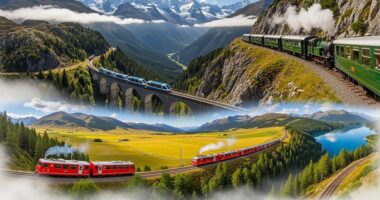
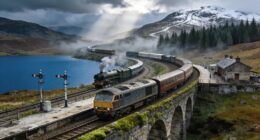
Weekend and holiday demand spikes affect both prices and availability. No overnight sleeper services operate on this route, keeping everything strictly daytime travel. Even so, the scenic countryside between Strasbourg and Paris provides decent entertainment when WiFi fails. For travelers seeking even more spectacular scenic routes, rail journeys through the Swiss Alps or Norway’s Nordic landscapes offer some of the world’s most breathtaking train experiences.
Did You Know
Can I Bring My Bicycle on the Train From Frankfurt to Paris?
Yes, but it’s complicated. Direct high-speed trains require bikes to be semi-dismantled and stuffed into bags under 120x90cm. No assembled bikes allowed, period.
Folding bikes work if bagged properly. Want to keep it assembled? Forget the direct route. Take regional trains through Saarbrücken or Strasbourg instead. It’s slower, requires multiple changes, but bikes ride along intact.
Reservations usually needed.
What Food and Drink Options Are Available Onboard?
The TGV Frankfurt-Paris route has a bar car with sandwiches, snacks, and hot meals.
Standard class passengers buy from the buffet car. Premier classes get fancy at-seat service with chef-designed menus and wine pairings.
Quality’s pretty average though – many travelers grab better food at the station beforehand.
You can bring outside food and drinks onboard, which honestly might be smarter than paying train prices.
Is There Wifi Available During the Journey?
Yes, free wifi is available on both ICE and TGV trains running the Frankfurt-Paris route.
Both first and second class get access, no time limits. The connection uses multiple mobile networks, but don’t expect miracles—speed varies with location and passenger load. Tunnels kill the signal.
Over 1,000 antennae help along French routes. It’s public wifi though, so use VPN for anything sensitive.
How Much Luggage Am I Allowed to Bring?
Passengers get 2 large pieces of luggage plus 1 hand luggage on the Frankfurt-Paris route.
Each big bag can’t exceed 30kg—though enforcement is pretty relaxed unless someone’s dragging a piano onboard. Hand luggage stays small at 40x30x15cm.
Everything needs name labels, because apparently adults need reminders.
No check-in service exists, so passengers haul their own stuff. Storage space is first-come, first-served.
Are There Power Outlets at My Seat for Charging Devices?
Yes, power outlets are available at seats on both TGV Duplex and ICE 3 trains.
First class passengers get individual 230V European sockets. Second class travelers share one outlet per pair of seats.
The outlets work fine for laptops, phones, and tablets. Bring an adapter if devices aren’t EU-compatible.
Smart travelers pack a power bank anyway—peak times mean outlet competition.
Parting Shot
Travelers looking to get from Frankfurt to Paris by train have decent options. The TGV and ICE trains make the journey in about four hours. Not exactly lightning speed, but faster than driving through traffic. Book tickets online or at the station. Prices vary wildly depending on timing. Peak hours cost more, obviously. Direct routes exist, though connections might be cheaper. Pack snacks. Train food is overpriced garbage. The route works, plain and simple.