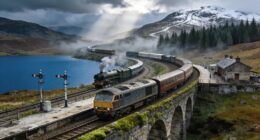
Planning a Rocky Mountain train journey means picking one of three scenic routes between Vancouver and Banff, Lake Louise, or Jasper—but only if you’re traveling between mid-April and mid-October. Choose between the pricey GoldLeaf service with its fancy bi-level glass domes or the more reasonable SilverLeaf option. Book early, especially for summer travel, because everyone else had the same brilliant idea. The journey takes two days with hotel stops included, traveling at a leisurely jogger’s pace through bear country. There’s more to reflect on for the perfect mountain escape.

How does one tackle the Canadian Rockies without breaking a sweat or pitching a tent? The Rocky Mountaineer train service offers three main Canadian routes that turn wilderness exploration into a luxury experience. No camping required.
The First Passage to the West runs from Vancouver to Banff or Lake Louise, following the historic Canadian Pacific Railway. Meanwhile, Journey Through the Clouds heads from Vancouver to Jasper, showcasing Mount Robson, the Rockies’ highest peak. Then there’s the Rainforest to Gold Rush route—this one takes passengers from Vancouver to Jasper via Whistler and Quesnel, highlighting Fraser Canyon and Gold Rush towns.
Three distinct routes showcase Canada’s wilderness: historic railway paths to Banff, cloud-piercing journeys to Jasper, and gold rush heritage through Fraser Canyon.
For those seeking red rocks over snow-capped peaks, there’s also a US route from Denver to Moab.
These aren’t overnight train adventures. All routes run during daylight hours only, which means travelers actually see the scenery they paid for. Novel concept. Trips typically take two to two-and-a-half days with hotel stops included. The train averages 50 kilometers per hour—roughly the speed of a determined jogger—allowing plenty of time to spot wildlife like bald eagles, black bears, and grizzlies.
Passengers choose between two service levels. GoldLeaf features bi-level coaches with glass domes and a downstairs dining area serving gourmet meals. SilverLeaf offers single-level glass-dome cars with meals served at seats. GoldLeaf provides an outdoor viewing platform for fresh mountain air, while SilverLeaf includes outdoor vestibules for refreshing breezes.
Both include fresh regional cuisine, guided commentary, and hosts who provide storytelling and wildlife spotting assistance.
The catch? Routes only operate mid-April to mid-October. Winter travelers need different plans. On top of that, advance booking appears essential, especially during peak season from June through September when everyone apparently discovers trains exist.
Fares reflect the luxury experience, meaning expect premium pricing, particularly for GoldLeaf service. That said, the cost includes meals, beverages, guided commentary, overnight hotels, and luggage transfers. No hidden fees for basic human needs.
Route direction can often be chosen to fit broader itineraries, and scenery quality seems to remain comparable eastbound or westbound. Many combine these journeys with Alaska cruises, city stays, or national park visits. For those seeking a longer cross-country adventure, VIA Rail’s The Canadian offers a 2,762-mile journey from Toronto to Vancouver through forests, prairies, and the Rockies.
Planning guides and customer service help customize itineraries for those who prefer professional assistance over internet research. Since its establishment in 1990, the service has grown from 10,000 guests annually to over 100,000 travelers each season.
Did You Know
What Is the Best Time of Year to Take a Rocky Mountain Train Journey?
The “best” time depends entirely on what travelers want.
Summer offers maximum daylight and warmest weather, but crowds swarm the trains and prices skyrocket.
Spring brings fewer people, lush scenery, and cheaper fares—bears are waking up too.
Fall delivers stunning foliage and crisp visibility, though early snow might appear.
The trains don’t even run November through March, so options are limited anyway.
How Much Does a Typical Rocky Mountain Train Trip Cost per Person?
A typical Rocky Mountaineer trip runs CAD $2,245-$2,894 per person for SilverLeaf service, or CAD $3,065-$3,894 for GoldLeaf.
That’s just the train. Extended packages with hotels and tours? Up to CAD $5,035.
April’s cheapest, September hits peak prices. The company doesn’t do discounts—ever.
Early booking matters since seats sell out fast, especially during summer months.
Can I Bring My Pet on the Rocky Mountain Train?
No pets allowed, period. Only trained service dogs can board, and they travel free.
Emotional support animals? Nope. Therapy pets? Forget it. Regular dogs and cats? Absolutely not.
Service dogs need proper certification, rabies vaccination, and must stay leashed. They get designated space near their handler’s seat.
Long journeys mean 8-12 hours with no relief breaks onboard. Relief areas exist only at stations.
Are Meals Included in Rocky Mountain Train Ticket Prices?
Yes, meals are included in Rocky Mountain train ticket prices for both service levels.
No hidden fees or surprise charges.
Three-course breakfasts and lunches come standard, plus complimentary alcoholic drinks, snacks, and beverages throughout the journey.
GoldLeaf passengers eat in a dedicated dining car with expanded menu options.
SilverLeaf gets meals served at their seats.
Dietary restrictions? Just give advance notice.
What Should I Pack for a Multi-Day Rocky Mountain Train Adventure?
Pack multiple layers because mountain weather changes faster than a teenager’s mood.
Bring comfortable pants for long sitting, flat-soled shoes with grip, and a portable charger since outlets are unreliable.
Don’t forget medications, ID, and a reusable water bottle.
A packable rain jacket beats getting soaked at scenic stops.
Personal snacks help with dietary restrictions.
Parting Shot
Planning a Rocky Mountain train journey isn’t rocket science, but it’s not exactly simple either. Travelers need to book early. Peak season fills up fast. Weather matters more than people think. Winter brings snow delays, summer brings crowds. Routes vary wildly in scenery and comfort levels. Some trains offer luxury, others feel like cattle cars. Research pays off. Check reviews, compare prices, pack layers. The mountains don’t care about anyone’s schedule, so build in flexibility.