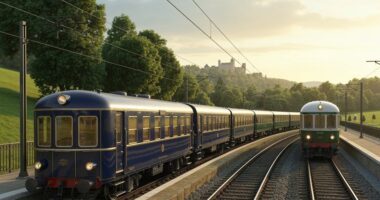
Traveling from Milan to Venice by train is surprisingly simple, with around 50 daily connections available. High-speed Frecciarossa and Italo trains blast through the 244-kilometer journey in just 2 hours and 13 minutes—no transfers required. Tickets start at €14.90 if booked early, though last-minute fares will sting your wallet. Trains depart Milano Centrale from 12:15 am to 11:25 pm, arriving at Venice Santa Lucia station right by the canals. The details matter when planning this trip.

Escaping Milan’s bustling streets for Venice’s romantic canals has never been easier, thanks to Italy’s impressive high-speed rail network. Travelers can choose from around 50 daily trains connecting these iconic cities. Departures run from 12:15 am to 11:25 pm from Milano Centrale station, though who’s really catching that midnight train?
The speed demons of Italian rail—Frecciarossa and Italo trains—blast through the 244-kilometer journey in just 2 hours and 13 minutes. That’s faster than most people spend deciding what to order at dinner, or scrolling through Netflix options. Italo operates seven daily services on this route, while Trenitalia appears to dominate with their sleek Frecciarossa fleet.
Not everyone needs to arrive at lightning speed, though. Standard regional trains also make the trek, averaging around 3 hours and 14 minutes for direct services. Even so, the masochists among travelers can opt for slower connections with transfers, stretching the journey to a mind-numbing 8 hours and 4 minutes. Why anyone would choose this torture remains a mystery—maybe they really love train station coffee?
Money talks, and train tickets whisper sweet deals to early planners. Advance bookings start at €14.90 on Italo and $18.54 on Trenitalia services. Wait until the last minute? Prepare for sticker shock. Peak times and procrastination make ticket prices soar faster than Italian inflation, or at least it feels that way when you’re standing at the ticket counter. For budget-conscious travelers, basic routes start at just US$ 24.19 with reliable operators like Trenitalia.
The journey terminates at Venice Santa Lucia station, conveniently positioned for immediate canal access. High-speed trains offer modern amenities including Wi-Fi, power outlets, and air conditioning—luxuries that may seem basic until you’re stuck on a regional train without them. Luggage space comes standard, because nobody wants to wrestle suitcases in cramped aisles. These trains feature panoramic windows that showcase Italy’s beautiful countryside throughout the journey.
Smart travelers book online through operator websites or third-party platforms. That said, cancellation policies vary wildly between operators and ticket types, so reading fine print prevents nasty surprises later. Most fast trains require zero transfers, making the trip refreshingly straightforward—a blessing in Italy’s sometimes chaotic transport landscape.
Arriving at Milano Centrale twenty minutes before departure prevents last-minute panic sprints through the station. Second-class tickets satisfy most travelers, though first-class options exist for those craving extra comfort or escaping crying babies. Seasonal promotions occasionally appear, offering brief respites from standard pricing. Travelers under 30 can score youth discounts through Trenitalia, making the journey even more budget-friendly for younger adventurers.
The bottom line? Italy’s rail system transforms Milan-to-Venice travel into a swift, civilized experience.
Did You Know
Can I Bring My Luggage on the Train From Milan to Venice?
Yes, passengers can bring luggage on Milan to Venice trains without extra fees.
There’s no strict size or weight limits on most trains, except Italo Smart Class which caps bags at 75 x 53 x 30 cm.
Large suitcases, strollers, and foldable bikes are allowed.
Small bags go overhead, medium ones in racks, bulky items at coach ends.
Passengers handle their own stuff—no porter service onboard.
Do I Need to Reserve Seats in Advance for This Route?
Yes, seat reservations are required for all high-speed trains on the Milan-Venice route.
Frecciarossa, Frecciabianca, and InterCity trains mandate reservations—no exceptions. Boarding without one risks fines up to $65 and potential rail pass confiscation.
Regional trains don’t require reservations, but they’re uncommon for this route anyway.
Book up to four months ahead for better deals, since dynamic pricing means day-of tickets cost significantly more.
Are There Food and Drinks Available on the Train?
Yes, food and drinks are available.
Trenitalia’s high-speed trains have bar cars with sandwiches, snacks, and beverages.
Italo trains? Not so much—just vending machines and limited trolley service. Premium class passengers get complimentary snacks and drinks delivered to their seats.
Prices are higher than station shops, so bringing your own food is totally allowed and pretty common.
What Happens if My Train From Milan to Venice Is Delayed?
Delays of 60-119 minutes get passengers 25% compensation of their ticket price.
Delays over 120 minutes? That’s 50% back.
But there’s a catch—no compensation for delays under 60 minutes or force majeure events like strikes.
Trenitalia makes travelers jump through hoops to claim compensation online or at ticket offices.
Italo’s smarter, automatically crediting accounts within 30 days.
Can I Use My Eurail Pass for This Journey?
Yes, the Eurail Pass works on this route.
But here’s the catch – it only covers Trenitalia trains, not Italo.
High-speed Frecciarossa and Freocciargento require seat reservations that cost €10-15 extra.
Regional trains? No reservations needed, but they’re slower.
The pass covers both Milan Centrale and Venice Santa Lucia stations.
Just don’t expect to waltz onto a high-speed train without booking ahead.
Parting Shot
Traveling from Milan to Venice by train isn’t rocket science. Book tickets online or at the station. High-speed trains take around 2.5 hours, regional ones drag on longer. Prices vary wildly depending on timing and train type. The route cuts straight across northern Italy’s flat landscape. Nothing groundbreaking here. Trains run frequently throughout the day. Pack light, show up early, and don’t expect miracles from Italian rail punctuality. It’s transportation, not a life-changing experience.