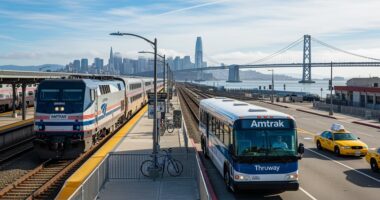
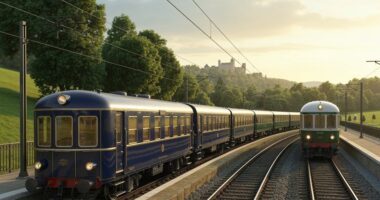
Train travel to Paris beats cramped airplane seats and overpriced airport coffee. Europe’s high-speed rail network connects major cities through six mainline Paris stations. Eurostar whisks travelers from London in just over two hours. Thalys rockets from Brussels in 80 minutes. Germany, Switzerland, and Italy offer regular services. Skip airport security lines and liquid restrictions. Book through SNCF’s website or separate platforms for international routes. Validate tickets in orange machines or face penalties. There’s more to master.
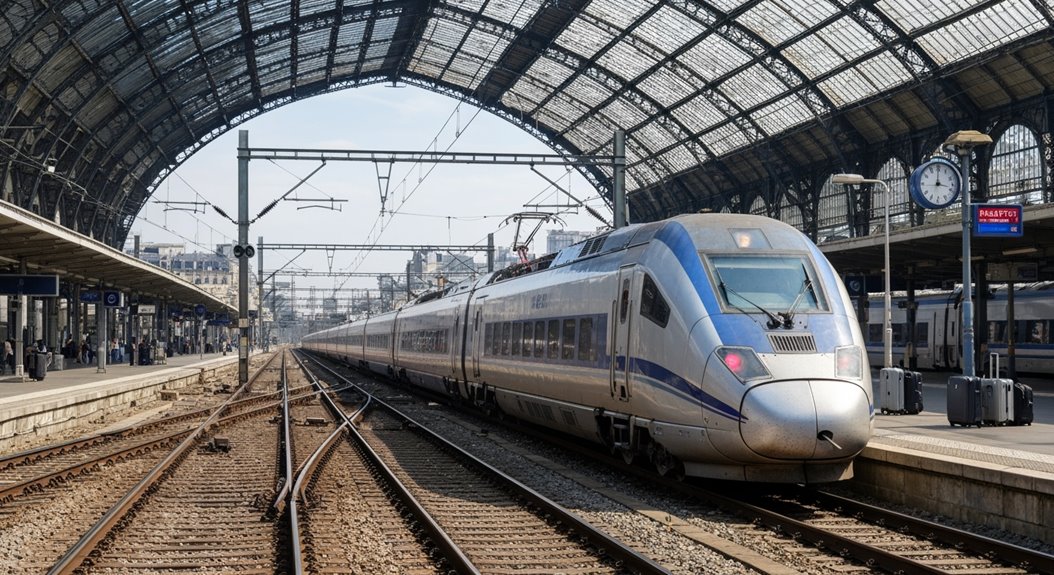
When travelers think about getting to Paris, they usually picture cramped airplane seats and overpriced airport coffee. But here’s the thing: trains offer a surprisingly civilized alternative that most people completely ignore.
Paris sits at the center of Europe’s high-speed rail network like a spider in its web. Eurostar rockets passengers from London’s St Pancras to Gare du Nord in just over two hours—no security theater, no liquid restrictions, no arriving three hours early.
Skip the airport circus and glide into Paris by train—no security lines, no liquid drama, just civilized travel.
That said, Thalys connects Brussels in about 80 minutes, while Amsterdam takes slightly longer. Germany, Switzerland, and Italy all send their sleek trains into Paris stations daily, though schedules can shift with the seasons.
The French capital operates six mainline stations, each serving different directions. Gare du Nord handles northern routes and international arrivals. Gare de l’Est covers eastern destinations. Meanwhile, Gare de Lyon manages southeast France and Italy.
Gare Montparnasse serves the southwest, including Brittany and Normandy. Each station connects seamlessly to Paris’s metro system, which appears to work better than most tourists expect.
Booking requires some planning, though it’s not rocket science. SNCF’s official website handles French trains, while Eurostar and Thalys maintain separate platforms—because why make things simple? Rail passes exist for frequent travelers, though they’re not always the bargain they appear to be.
French stations still require ticket validation in those orange machines before boarding. Miss this step, face the consequences.
Paris stations themselves range from architectural marvels to functional concrete boxes. Most offer left-luggage lockers, though hours vary unpredictably. For travelers seeking luxury train experiences, some services rival the opulent amenities found on famous routes like the Venice Simplon-Orient-Express.
Signage appears in French and English, a small mercy for confused tourists. For Eurostar departures, passengers must complete passport checks by both French authorities and UK Border Force before boarding. On top of that, taxi ranks sit outside every station, along with metro entrances and bus stops.
Charles de Gaulle Airport connects directly to the rail network through two stations. RER B trains reach central Paris in 35 minutes, while the TGV station allows travelers to skip Paris entirely—handy if you’re heading straight to Lyon or Marseille. The TGV station at CDG is positioned between Terminal 2C, 2D, 2E, and 2F for convenient access.
Orly requires a shuttle connection but still beats airport traffic.
Onboard services depend entirely on the train type. Eurostar pampers passengers with generous luggage allowances and bistro cars. Regional trains offer basic seating and little else.
Wi-Fi exists sporadically, power outlets randomly. The experience varies wildly, but it beats airline food every single time.
Did You Know
Can I Bring My Pet on the Train to Paris?
Yes, pets can travel on trains to Paris, but size matters.
Small pets under 6kg ride in carriers for €7. Larger dogs need leashes, muzzles, and proper tickets. Cats, rabbits, hamsters – all good in carriers.
However, certain “dangerous” dog breeds are banned outright. One pet per passenger, period.
Guide dogs get special treatment and travel free. Documentation required.
What Happens if My Train to Paris Is Delayed or Cancelled?
If a train to Paris gets delayed or cancelled, passengers typically qualify for compensation after 30-60 minutes of delay.
They’ll get 25% refund for delays under an hour, 50% for longer disruptions. Claims must be submitted within 60-90 days through online portals.
The operator should offer rerouting or full refunds for cancellations, plus refreshments for extended waits.
Are There Sleeping Cars Available on Trains to Paris?
Traditional sleeping cars with private cabins? Gone from French domestic trains since 2007.
But couchettes are available on night routes like Paris-Nice and Paris-Toulouse. These shared compartments sleep 4-6 people, complete with pillows, sleeping bags, and earplugs.
International trains connecting to Paris still offer proper sleeping cars with private cabins.
All French night trains depart from Gare d’Austerlitz.
Do I Need to Print My Train Ticket or Is Mobile Okay?
Mobile tickets work fine for most French trains in 2025.
SNCF accepts QR codes and barcodes straight from smartphones on TGV, Intercités, and TER routes. No validation needed either. But keep that phone charged – dead battery means no ticket.
Some older regional trains or legacy booking sites might still demand printed copies.
Paris Metro ditched paper tickets anyway, so mobile’s basically the standard now.
Can I Bring My Own Food and Drinks on the Train?
Yes, passengers can bring their own food and non-alcoholic drinks on French trains without restrictions.
Cold food works best—nobody wants to smell someone’s hot, greasy meal. Alcohol is also permitted and commonly consumed.
Most trains have café-bars selling snacks and drinks, but bringing your own saves money. Just avoid messy, pungent items that’ll annoy fellow travelers.
Parting Shot
Paris by train isn’t rocket science. Book tickets early. Check connections. Pack light. Bring snacks because train food costs more than your rent. The Eurostar from London takes three hours. Other European routes vary wildly. Some connections are smooth as butter, others make you question life choices. Train stations can be confusing mazes designed by sadists. But honestly? Trains beat flying. No security theater, decent legroom, and you actually arrive in the city center.