Japan Travel by Navitime takes the crown for conquering Japan’s bewildering train maze. This app delivers comprehensive door-to-door routing that covers everything from bullet trains to ferries, plus real-time delay updates and offline capabilities. Japan Transit Planner by Jorudan runs a close second with superior fare comparisons and rail pass optimization. Both support multiple languages because, frankly, you’ll need all the help you can get traversing this complex system. There’s much more to uncover about these essential travel tools.
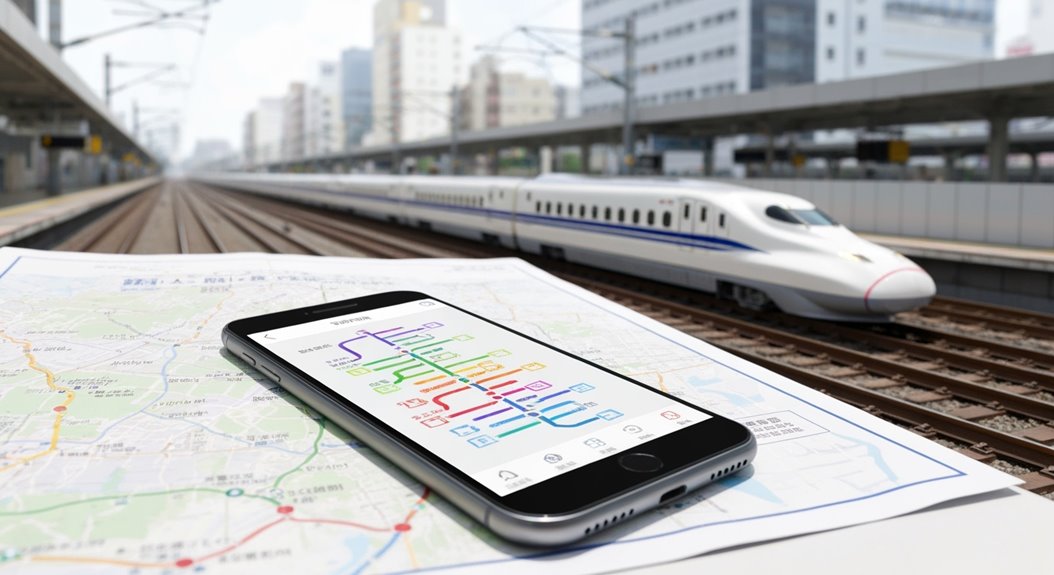
Finding one’s way through Japan’s labyrinthine train system can make even seasoned travelers break out in a cold sweat. The country’s rail network is impressive, sure, but it’s also mind-numbingly complex. Several apps exist to save travelers from wandering aimlessly through Tokyo Station like lost souls, though figuring out which one actually works best takes some digging.
Navitime—specifically Japan Travel by Navitime—appears to be the heavyweight champion. This app doesn’t mess around. It offers comprehensive door-to-door route searches covering everything from shinkansen to ferries. Real-time delay information? Check. Platform numbers? Got it. The app even works offline for saved routes, which is clutch when cellular data decides to abandon you underground.
That said, Japan Transit Planner by Jorudan gives Navitime serious competition. Both apps cater to international visitors with multilingual support, because apparently not everyone speaks fluent Japanese. Shocking.
Where Japan Transit Planner seems to excel is fare comparisons and Japan Rail Pass optimization—perfect for tourists trying to squeeze every yen from their investment.
The features these apps pack are genuinely useful, though some work better than others. Voice navigation prevents missed transfers. Walking speed options accommodate everyone from speed demons to leisurely strollers. Some apps even locate women-only cars and elevators, addressing accessibility concerns that actually matter.
For Tokyo-specific travel, the Tokyo Metro Subway App focuses exclusively on the capital’s subway maze. It’s specialized and effective, plus it works offline. Yahoo Transit covers the entire country but lacks the tourist-friendly polish of the top contenders—which may or may not bother you, depending on your comfort level with basic interfaces.
Premium upgrades exist for those willing to pay for ad-free experiences and improved customization. Japan Transit Planner and Jorudan offer these options, along with additional features like in-app ticket purchases for sightseeing buses. Whether the upgrades are worth it probably depends on how much the ads annoy you.
Language barriers tend to dissolve with these apps. English menus are standard, with Chinese and Korean support on select services. Clear visual mapping helps overcome communication gaps that would otherwise leave travelers stranded—though the quality of translations can vary.
Google Maps serves as adequate backup for supplementary navigation. Even so, it lacks the specialized features of dedicated transit apps. HyperDia provides another comprehensive option with detailed platform numbers and schedules for travelers seeking complete train information. Modern Suica and Pasmo apps eliminate the need for physical cards entirely, offering tap and go convenience that helps streamline the entire transit experience. While Japan’s high-speed rail technology is impressive, neighboring countries like China operate high-speed trains with similar efficiency, reaching speeds up to 350 km/h on major routes. The reality is simple: serious Japan travel likely demands serious navigation tools. These apps deliver exactly that, assuming you pick the right one for your needs.
Did You Know
Do Japan Train Travel Apps Work Offline Without Internet Connection?
Japan train travel apps offer limited offline functionality.
Most provide basic features like static maps and pre-saved routes, but forget dynamic route planning or real-time updates.
Tokyo Subway Navigation works fully offline with static maps.
NAVITIME does spot searches offline but won’t plan routes.
Google Maps downloads maps but needs internet for live transit data.
Pretty bare-bones stuff, honestly.
Are Train Travel Apps Available in English for Foreign Tourists?
Yes, major train travel apps offer full English support for foreign tourists.
Navitime, Japan Transit Planner, Google Maps, Tokyo Metro, and SmartEX all provide English interfaces. They include Romanized station names, clear icons, and English help sections.
Most apps even filter Japan Rail Pass routes and calculate fares. Google Translate supplements these apps by translating Japanese signage in real-time.
Pretty much everything’s covered.
Can I Purchase Train Tickets Directly Through These Mobile Apps?
Yes, several apps let travelers buy tickets directly.
SmartEX handles Shinkansen purchases with major credit cards and Apple Pay.
JR East’s official app sells reserved seat tickets for express trains and bullet trains.
Suica and PASMO apps charge IC cards for regular train fares.
Most route planners like Google Maps? They just show prices, not actual purchasing.
Pretty limited overall.
Do These Apps Show Real-Time Delays and Schedule Changes?
Yes, most do show real-time delays and schedule changes, but quality varies wildly.
Navitime and Japan Travel by Navitime excel at live delay alerts and route alternatives.
Yahoo Transit covers delays but doesn’t emphasize them as much.
Japan Transit Planner’s real-time features are less prominent unless you pay for premium.
Ekispert focuses more on last-train alerts than comprehensive delay reporting.
Are Japan Train Apps Free or Do They Require Payment?
Most Japan train apps are free to download and use for basic functions.
Apps like Japan Transit Planner, Yahoo Transit, and Navitime offer essential route search, maps, and fare calculation without payment.
The catch? Premium features like offline access, transfer alarms, and ad-free browsing cost extra.
For tourists doing simple navigation, free versions work perfectly fine.
Payment’s only needed for fancy bells and whistles.
Parting Shot
Maneuvering Japan’s labyrinthine train system doesn’t have to be torture. Hyperdia remains the gold standard for route planning, though its English interface feels like it’s stuck in 2010. Google Maps works fine for basic trips but chokes on complex transfers. IC card apps handle payments smoothly enough. The real winner? Having multiple apps installed. Because nothing says “prepared traveler” like frantically switching between three different train apps at Shinjuku Station during rush hour.