First Vs Second Class Europe Trains Differences on ICE Seating Layouts
ICE seating layouts: Deutsche Bahn configures first class with 2+1 arrangements while second class uses 2+2 configurations.
First class carriages contain 33% fewer seats per row. This design creates breathing room. Passengers notice the difference immediately.
- Seat pitch: First class measures 92cm between rows. Second class provides 88cm. The extra 4cm matters on Frankfurt to Munich routes.
- Armrests: First class passengers receive individual armrests. Second class travelers share armrests with neighbors. DB Fernverkehr designed this separation intentionally.
- Aisle width: First class corridors span 636mm. Second class narrows to 506mm. The DB Bordrestaurant trolley passes through first class smoothly.
First class tables extend full-width across seats. Second class relies on fold-down trays. Business travelers working on Hamburg to Berlin ICE services appreciate the workspace.
The cumulative effect transforms the journey. Each specification compounds comfort. Deutsche Bahn priced these differences into ticket tiers. Finding the best train deals for Europe travel enhances the overall experience, allowing travelers to allocate their budget towards exploration rather than just transportation. Services like Eurostar and Thalys frequently offer promotions that can significantly cut costs while ensuring a high-quality journey. With various options available, planning and booking ahead can uncover the most affordable and convenient travel itineraries across the continent.
Fun Activity To Try: Book both classes on a short ICE route between Cologne and Düsseldorf. Compare the layouts firsthand. Measure the differences yourself with a tape measure app.
Key Points
- First class uses 2+1 seating (three seats per row), while second class uses 2+2 seating (four seats per row).
- First class offers approximately 33% fewer seats per carriage, resulting in lower density and more personal space.
- First class aisles are about 25% wider (636 mm versus 506 mm), improving passenger movement and trolley service.
- First class provides individual armrests between seats, while second class passengers share a single armrest.
- First class features full-width tables between facing seats, whereas second class has smaller fold-down tables.
Difference #1 — Row Configuration at 2+1 vs 2+2 Creates 33% Fewer Seats in First Class
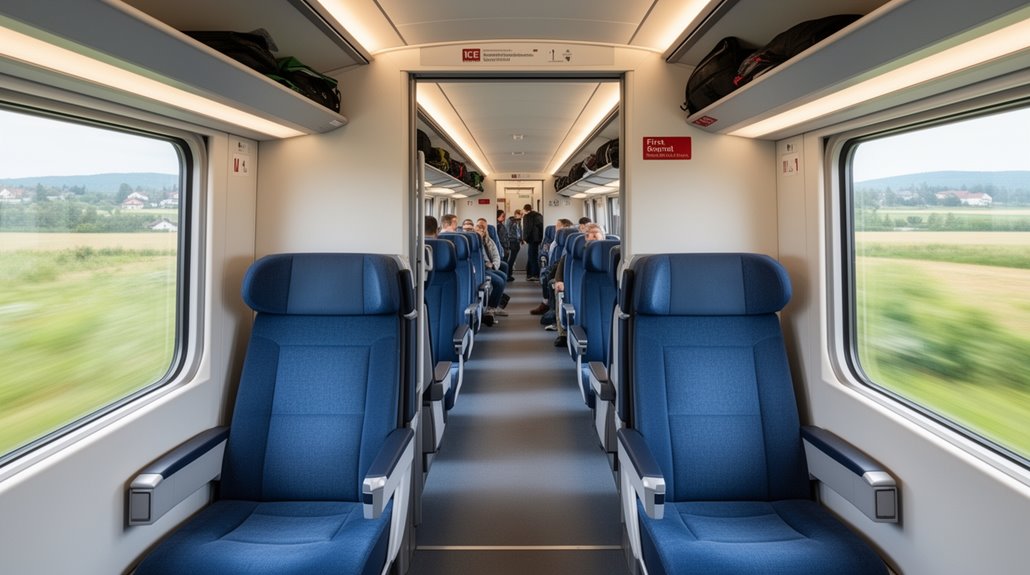
When passengers step into an ICE first class car, they’re greeted by a 2+1 seating layout—three seats per row compared to the 2+2 configuration you’ll find packed into second class.
First class means 2+1 seating—one less person per row makes all the difference.
That works out to roughly 33% fewer seats overall, which is pretty significant.
Seat pitch tells part of the story too. First class offers 92cm while second class sits at 88cm.
Not a huge gap on paper, but you feel it.
And the differences don’t stop there—seat width, aisle space, armrest setups—all of it appears to tilt in first class’s favor. The solo seat on the single-seat side of first class is particularly appealing because it combines aisle and window access, making it the preferred choice for travelers on their own.
Though whether every passenger actually notices these distinctions probably depends on the length of their journey. The high-speed ICE trains connect major cities across Germany, so journeys can vary significantly in duration.
That said, lower seat density clearly means something tangible: less elbow warfare with your neighbor. For some travelers, that alone may justify the premium. Each first class car contains a total of 53 seats, giving you a sense of just how much more breathing room exists compared to the higher-capacity second class carriages.
Difference #2 — Pitch Spacing at 92cm vs 88cm Provides 4cm Extra Legroom in First Class
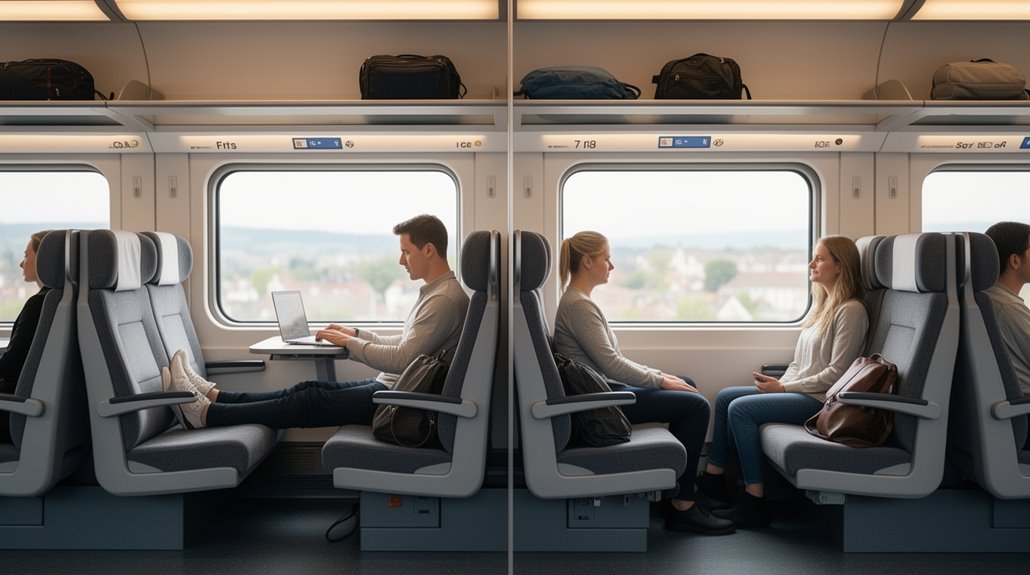
Beyond row configuration, seat pitch tells its own story.
Deutsche Bahn’s ICE trains deliver 92cm pitch in erste klasse versus 88cm in zweite klasse.
Four centimetres extra legroom—doesn’t sound like much, right?
But here’s the thing: for passengers over 185cm, that difference likely means your knees actually clear the seat ahead instead of pressing into it for the entire journey.
The gap between erste klasse’s 2+1 layout and zweite klasse’s 2+2 format appears to matter more than the raw numbers suggest.
Even so, whether 4cm justifies the price premium probably depends on your frame and how long you’re stuck in that seat.
On routes like Frankfurt to Paris, where journeys take approximately 3 to 4 hours, that extra space becomes increasingly valuable.
Comfort features add up, though some travellers may never notice the difference.
First class also includes double armrests and blue-leather seats with attached headrest pillows, adding to the premium feel.
The extra space between seats also means easier luggage access compared to the more crowded second-class carriages.
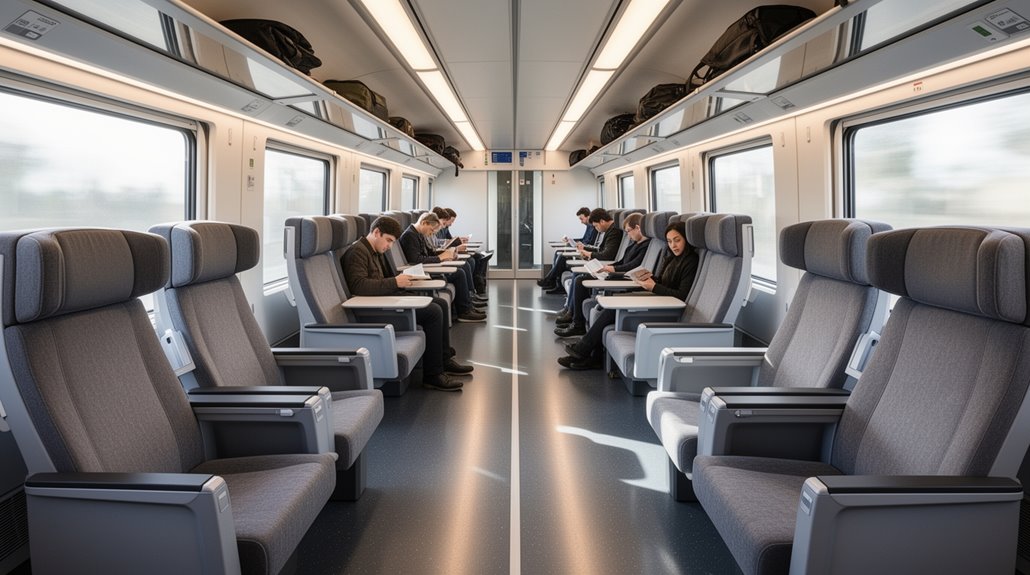
Erste klasse seats on ICE trains come with individual armrests separating each passenger, while zweite klasse passengers share a single armrest surface between them. It’s a small detail that likely makes more difference than you’d expect. With individual armrests, your personal space is clearly defined—no ambiguity about where your territory ends. Shared armrests, on the other hand, can turn into that awkward silent battle over elbow real estate we’ve probably all experienced at some point.
These configurations appear to have a genuine impact on the overall sense of compartment privacy, and possibly even noise perception. When you’re not brushing arms with a stranger, the whole environment tends to feel more contained. That said, it’s worth noting that some travelers don’t mind the proximity and happily coexist on shared surfaces. The less crowded carriage layout in erste klasse further enhances this sense of separation between passengers. Even so, when you factor in the legroom differences between classes, erste klasse does seem to offer a noticeably less cramped experience than zweite klasse—at least for passengers who value having their own clearly marked space. Beyond armrests, erste klasse seats are also about one inch wider than their zweite klasse counterparts, adding to that sense of personal boundary. Understanding these seating layout differences can help you decide whether making seat reservations in advance is worthwhile for your particular comfort preferences.
Difference #4 — Table Allocation at Full-Width vs Half-Width Doubles Available Workspace
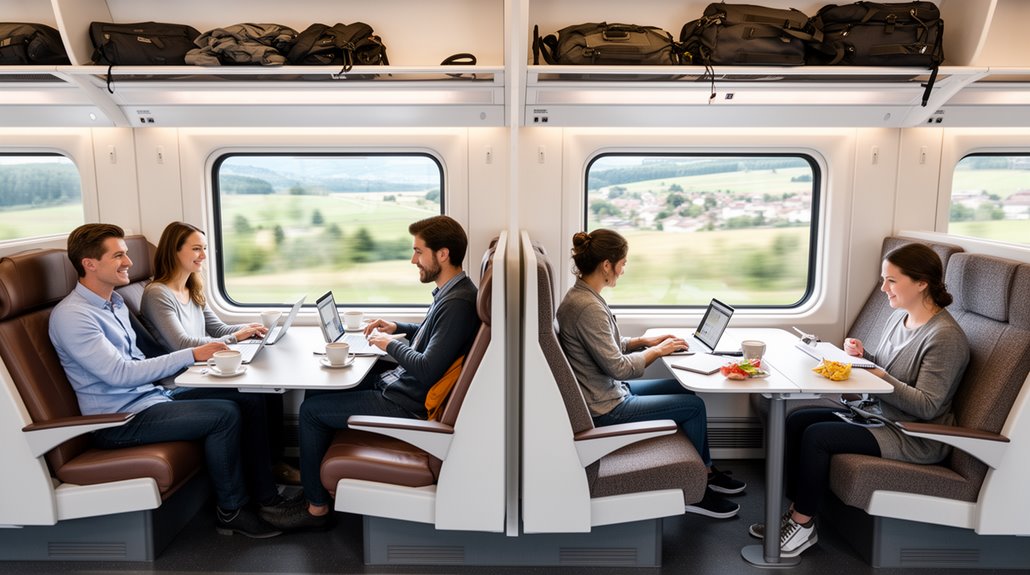
Personal space boundaries matter, sure. But table provisions? That’s where work actually happens.
First class table arrangements appear to feature full-width surfaces spanning facing seats—a setup that likely transforms the space into something resembling an actual mobile office. The 2+1 seating layout typical of first class means each passenger gets a larger share of that table real estate.
Second class tells a different story. Those half-width fold-down tables mean cramped laptop gymnastics, the kind where you’re constantly nudging your coffee aside to make room for a mouse. The seat row configuration plays into this directly: 2+1 versus 2+2 seating isn’t just about elbow room, it fundamentally shapes what’s possible with that table surface.
That said, the fixed compartment tables in first class seem designed with real productivity in mind—enough room to spread out a laptop and still flip through documents without everything sliding into your neighbor’s territory. Deutsche Bahn standards on the ICE 4 do prioritize workspace, at least in premium cabins. At least you won’t need to hunt for an outlet—ICE trains provide power plugs at seats to keep devices charged during the journey.
Second class tables work. Barely. You can type, you can eat, but doing both simultaneously may require a degree of spatial creativity most of us didn’t sign up for. Planning ahead with specialized booking apps can help you snag seats with better table configurations before they’re claimed.
Difference #5 — Aisle Dimensions with Wider Passage Enable Easier Movement and Service
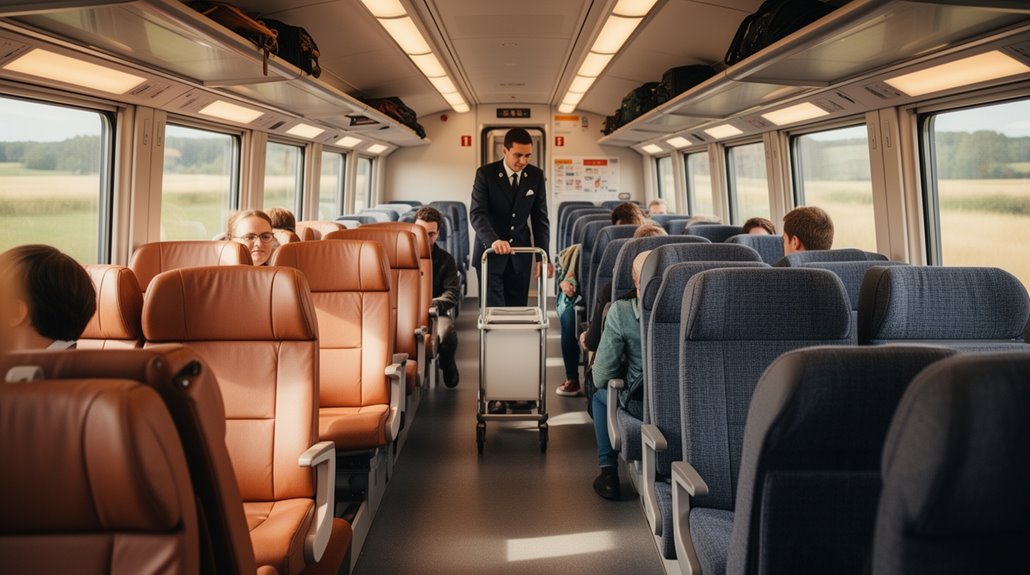
While table space determines whether passengers can actually work, aisle width decides whether they can move at all. ICE first class uses 2+1 seating with wider aisles—roughly 636mm versus 506mm in 2+2 seating second class.
| Feature | First Class | Second Class |
|---|---|---|
| Aisle Width | ~636mm | ~506mm |
| Seat Access | One inner seat | Two inner seats |
| Trolley Manoeuvrability | Smooth passage | Frequent blocks |
That 25% difference isn’t trivial. It appears to affect passenger circulation, boarding and alighting times, and how accessible the carriage feels when you’re trying to squeeze past someone’s oversized roller bag. On top of that, having just one inner seat to climb over rather than two makes a real difference—especially during peak hours when half the carriage seems to need the toilet simultaneously. The wider aisles also improve safety when boarding and disembarking, particularly for passengers managing luggage or traveling with mobility aids.
Trolley service? Actually functional in first class. The catering cart can glide through without that awkward dance where passengers flatten themselves against their seats while the attendant apologises repeatedly. In second class, the narrower passage may contribute to more frequent blocks, though how much this bothers individual passengers likely varies. First class passengers can also have orders taken directly to their seats by onboard attendants, eliminating the need to navigate aisles to the restaurant car entirely. Both classes feature seats with a turning mechanism using a lever, allowing passengers to adjust their orientation—though executing this manoeuvre remains considerably easier when you have more space to work with.
Frequently Asked Questions
Are Quiet Zone Carriages Available in Both First and Second Class ICE Trains?
Quiet zone carriages are available in both first and second class on many ICE services. Deutsche Bahn explicitly markets dedicated quiet zone cars as a first-class benefit, though second-class passengers can also access designated quiet sections.
How Does the Electronic Seat Reservation Display System Work on ICE Trains?
LED displays above each seat show reservation status, updated from Deutsche Bahn’s central database before departure. They indicate specific reserved segments (e.g., “Köln–Frankfurt”), allowing passengers to identify unreserved seats or temporary availability between stations.
What Entertainment Options Does the Bord.Db System Provide for Each Class?
The Bord.DB system provides identical entertainment content across both classes, including streaming films, series, audiobooks, podcasts, and digital newspapers. All passengers access these features free via the ICE Portal regardless of ticket class.
Do ICE Trains Offer Family Compartments and Which Class Includes Them?
ICE trains offer family compartments (Familienbereich) on many long-distance services. These dedicated areas are located in second class, featuring 2+2 seating configurations with facing seats, tables, and proximity to baby-changing facilities and accessible toilets.
What Wheelchair Space Allocations Exist in First Versus Second Class ICE Carriages?
ICE trains allocate dedicated wheelchair spaces exclusively in second class carriages, typically providing two bays per train with adjacent companion seats. First class coaches do not include configured wheelchair bays on most ICE services.
Parting Shot
First class costs more. That’s obvious. But the actual differences—wider seats, extra legroom, personal armrests, bigger tables, roomier aisles—add up to a genuinely different experience. Not groundbreaking. Just noticeably better. Whether that 4cm of legroom and a whole armrest to oneself justifies the price jump? That’s a personal call. The seats won’t change anyone’s life. They might change a long journey, though.