The best train case for travel boils down to two solid choices. Away’s polycarbonate shells deliver serious impact resistance without the luxury price tag. Leatherology’s full grain leather options scream premium but cost more. Both feature water-resistant linings and adjustable dividers that actually work. Small cases measure around 7.5″ x 5″ while larger versions exceed 13 inches. Most comply with airline requirements, because nobody wants to gate-check their entire beauty routine. More details reveal specific features worth considering.
Most travelers obsess over finding the perfect suitcase, then completely forget about their beauty essentials. You know how this ends—frantically digging through luggage at 6 AM, hunting for mascara while foundation leaks all over clean clothes. Smart move.
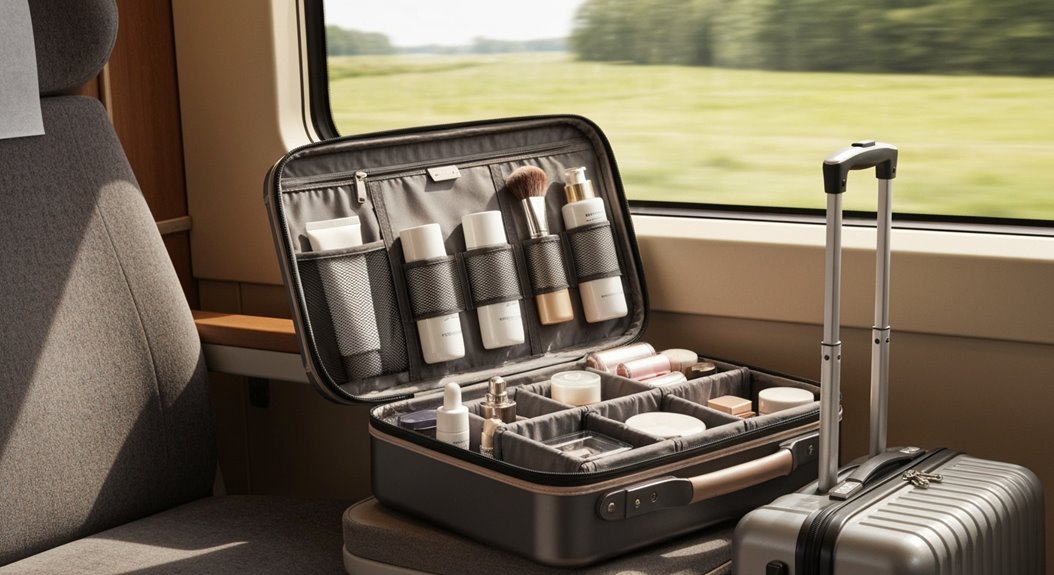
A quality train case can solve this chaos, though the best options vary quite a bit. Polycarbonate shells seem to offer the most protection, actually safeguarding your stuff instead of cracking after one encounter with a rough baggage handler. These lightweight cases appear to provide serious impact resistance and longevity.
A solid train case beats frantically hunting for mascara while foundation destroys your clothes at dawn.
That said, if you’re after luxury vibes, full grain leather delivers that premium look while handling scratches and wear surprisingly well.
Water-resistant linings? Non-negotiable. Spills happen, bottles leak, and your expensive La Mer will inevitably explode at 30,000 feet unless you’re protected. The better cases also tend to maintain their structure under pressure, which may prevent your glass bottles from becoming expensive glitter.
Organization is likely what separates decent cases from game-changers. Adjustable dividers let you customize compartments for different product sizes—your Fenty foundation versus that tiny Glossier Boy Brow tube. Multiple zippered pockets keep makeup separate from skincare. Larger cases often include elastic bands and mesh pockets that actually hold bottles upright instead of letting them roll around like marbles.
Size matters here, obviously. Small cases measure roughly 7.5″ x 5″ x 5.2″. Larger versions stretch over 13″ long with 11+ liter capacities. Most appear to comply with airline personal item requirements, which saves you from gate-checking your entire beauty routine.
Practical features can make or break daily use. Elastic trolley sleeves attach to rolling suitcases for one-handed transport—handy when you’re juggling coffee and boarding passes. Removable shoulder straps provide carrying options. For train travelers specifically, cases should stow easily under seats or in overhead racks where space is typically limited. Free returns for the first 100 days let you test the case at home before committing to travel.
TSA-approved locks on premium models may add security for valuable contents, though honestly, determined thieves probably aren’t after your concealer.
Brand reputation seems to count here. Leatherology and Away appear to lead the pack for durability and thoughtful design. Their cases include dust bags for storage and limited warranties covering defects. Premium options also offer custom monograms for personal touches that make identification easier at security checkpoints. Pricing reflects materials—leather costs more than polycarbonate, obviously.
The bottom line? A proper train case is likely to transform travel beauty routines from nightmare to organized efficiency. No more explosive foundation disasters. No more lost lipstick. Just grab, go, and actually look human when you land.
Did You Know
Can I Bring a Train Case as Carry-On Luggage on Airplanes?
Yes, travelers can bring train cases as carry-on luggage.
Most train cases fit within the standard 22x14x9 inch airline limits. However, they count as a carry-on bag, not a personal item.
Hard-shell cases need careful measurement including handles and wheels.
Contents must follow TSA liquid rules.
Gate-checking might be required on smaller planes with limited overhead space.
How Do I Clean and Maintain My Train Case Properly?
Clean train cases with warm soapy water and soft cloths—nothing fancy.
Skip harsh cleaners unless you enjoy scratched surfaces.
Vacuum the interior, wash removable liners, and tackle stains with upholstery foam.
For stubborn odors, toss in baking soda overnight.
Store in dry areas with silica packets.
Regular maintenance beats emergency scrubbing sessions when your case smells like forgotten gym socks.
What’s the Difference Between a Train Case and a Regular Makeup Bag?
Train cases are basically makeup bags on steroids. They’ve got multiple compartments, adjustable dividers, and hard shells that actually protect stuff.
Regular makeup bags? Single compartment, soft fabric, minimal protection.
Train cases hold entire collections and look professional, but they’re bulky. Makeup bags are compact and lightweight for daily essentials.
Different tools for different needs, really.
Are Train Cases Only for Makeup or Can They Store Other Items?
Train cases aren’t makeup prisoners. They’re basically portable organizers that happen to look pretty.
People stuff them with toiletries, tech accessories, jewelry, medicines, even snacks. The adjustable dividers and multiple compartments work for whatever fits. Airlines don’t care if it’s lipstick or phone chargers inside.
Manufacturers figured this out years ago and started marketing them as general travel organizers. Smart move, honestly.
How Much Should I Expect to Spend on a Quality Train Case?
Quality train cases run $30 to $60.
That’s the sweet spot for decent materials like aluminum or reinforced plastic, plus multiple compartments.
Basic cases start around $15, but they’re pretty flimsy.
Premium options hit $90 to $150+ with leather finishes and fancy hardware.
Sales can slash prices by 20-50% though.
Features like locks or TSA compliance bump up costs regardless of category.
Parting Shot
Choosing the right train case boils down to personal needs and budget. Hard cases offer superior protection but weigh more. Soft cases are lighter, easier to carry. Size matters—too big becomes a hassle, too small leaves essentials behind. Quality brands cost more upfront but last longer. Cheap options break quickly. Most travelers find medium-sized cases with multiple compartments work best. The “perfect” case doesn’t exist. Just pick one that actually fits your stuff.