Train travel around the world requires meticulous planning and the patience of a saint. High-speed trains zip between major cities in hours, while legendary routes like the Trans-Siberian test human endurance across continents. Rail passes like Eurail and Japan Rail Pass simplify booking, though reservations are still mandatory for premium services. Border crossings bring passport checks and customs delays that can derail tight schedules. Understanding these complexities transforms chaotic journeys into manageable adventures.

Forget the romantic notion of hopping on a train and letting the rails take you wherever they may lead. Real train travel around the world requires planning, paperwork, and plenty of patience.
Real train travel demands meticulous planning, endless paperwork, and the patience of a saint—forget those dreamy spontaneous rail adventures.
Global train networks connect over 200 countries, but good luck figuring out visa regulations and customs requirements without doing your homework first.
Major rail passes make things easier, assuming you can navigate the alphabet soup of options. Europe offers Interrail and Eurail passes covering 33-plus countries. Japan has its Rail Pass. America has Amtrak’s version. Then there’s the Trans-Siberian connecting Eurasia, because apparently some people enjoy spending weeks on trains crossing frozen wastelands.
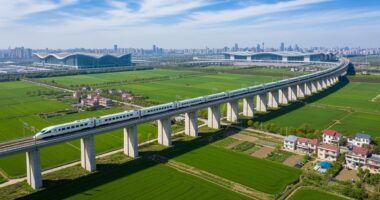
High-speed trains dominate the headlines, zipping between major cities at impressive speeds. Paris to Amsterdam takes 3 hours and 20 minutes. Madrid to Barcelona clocks in at 2 hours and 45 minutes.
That said, regional trains crawl along at their own pace. They stop at every hamlet that ever dreamed of having a railway station.
Night trains provide sleeping compartments for masochists who think sleeping on moving vehicles sounds fun. These overnight journeys remain popular in Europe and Asia, offering everything from basic couchettes to private cabins with actual beds. Interactive night train maps use color coding to help travelers identify the best operator websites for booking these sleeping car routes.
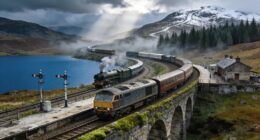
Scenic routes like the Bernina Express may showcase stunning landscapes, while legendary lines like the Trans-Siberian appear to test human endurance limits. Train routes often provide scenic views of beautiful countryside landscapes that can’t be experienced from highways or airports.
Booking requires attention to detail. Most high-speed and night trains demand seat reservations, though regional trains usually don’t. Different booking platforms offer varying options depending on your journey’s starting point and destination across Europe.
Advance booking secures lower fares—apparently procrastination costs money. Digital ticketing increasingly dominates; even so, paper tickets still exist for traditionalists.
Luggage allowances typically include one or two large bags plus a personal item. High-speed trains offer Wi-Fi, power outlets, and food service.
Night trains provide shared lavatories and varying degrees of privacy. Some trains allow bicycles, which likely requires special tickets or reservations.
Border crossings add complexity. Passport checks happen between non-Schengen countries, while customs inspections vary by route. Some trains pause for controls.
Others conduct checks during transit. On top of that, timetables build in extra time for these procedures, because bureaucracy waits for no locomotive.
Did You Know
What Documents Do I Need for International Train Travel?
Travelers need a valid passport for nearly all international rail routes.
EU citizens can use national ID cards within continental Europe, but not for UK entry. Non-EU nationals may require Schengen visas or electronic authorizations like ETAs.
Train operators often demand passport numbers during booking and collect Advance Passenger Information.
Children need their own documents regardless of age. Random spot checks happen frequently, so always carry proper ID.
How Much Does It Cost to Travel Around the World by Train?
Train travel around the world costs a fortune.
Basic multi-continent passes run $2,000-5,000, but that’s just the start. Luxury routes like Trans-Siberian hit $10,000+.
Here’s the kicker: travelers spend 72% more beyond ticket prices on hotels, food, and activities. Visa fees add hundreds more.
Budget $8,000-15,000 minimum for a decent global rail journey.
Flying’s often cheaper, ironically.
Can I Bring Large Luggage on International Trains?
Yes, most international trains allow large luggage, but there are limits.
Typical restrictions hover around 85 x 55 x 35 cm and 23-25 kg per bag. Passengers usually get 2-3 large items plus hand luggage.
Some operators like Trenitalia don’t set hard limits—luggage just needs to fit without blocking aisles.
Break the rules? Expect fees ranging from €10 to €150, depending on the operator’s mood.
Do I Need Travel Insurance for Long-Distance Train Journeys?
Travel insurance isn’t legally required for most long-distance train journeys, but rail operators and travel advisors strongly recommend it.
Here’s why: trains face roughly 25% delay risk, some routes drop to 30% on-time performance, and major delays can stretch 20+ hours.
Non-refundable bookings mean real financial pain without coverage.
Insurance covers trip cancellations, delays, baggage issues, and medical emergencies that rail providers won’t.
What Happens if I Miss a Connecting Train in Another Country?
Missing a connecting train abroad triggers EU passenger rights if travelers hold through-tickets.
The original operator causing delays must provide re-routing, refunds, or later travel at no extra cost. Station staff can help immediately.
Fifteen European rail companies honor the AJC agreement, allowing onward travel on next available trains without additional fees.
Strikes aren’t considered extraordinary circumstances, so compensation rights remain intact.
Parting Shot
Train travel around the world isn’t for everyone. It takes time, patience, and a serious love of sitting. But for those who want to see landscapes roll by at a reasonable pace, it beats flying any day. No security lines. No cramped airplane seats. Just tracks, scenery, and the occasional delay. Sure, it’s slower than jets. But sometimes slow wins the race against sanity.