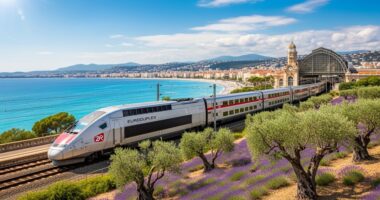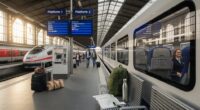
Nearly 30 high-speed trains blast between Rome and Venice daily, with Le Frecce and Italo covering the route in roughly 3 hours. Tickets start around €29.90, though expect to pay about $55 for decent seats. Departures run from 5:55 AM to 7:50 PM, with mandatory reservations required. The journey cuts through stunning Italian countryside, passing Florence and Bologna. Forget driving—cars are banned in Venice anyway. This route transforms a potential travel nightmare into something actually enjoyable, with plenty more details worth exploring.
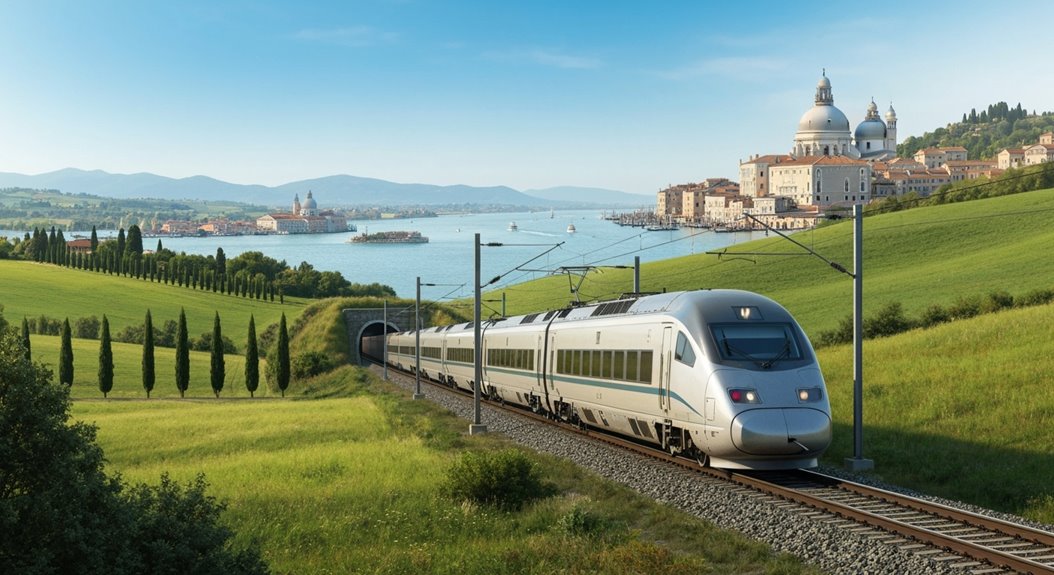
Nearly 30 high-speed trains thunder between Rome and Venice every day, transforming what used to be an exhausting all-day trek into a surprisingly comfortable three-and-a-half-hour ride. Le Frecce and Italo trains rocket across 395 kilometers of Italian countryside at speeds that can hit 190 mph—though you’d hardly notice from your seat.
Both operators run frequent departures from Roma Termini straight to Venezia Santa Lucia, which drops you right in the heart of Venice’s famous canal maze. Journey times range from 3 hours 7 minutes to 3 hours 45 minutes, depending on which train you catch. Le Frecce runs 18 daily trains while Italo offers 11 departures—plenty of options, though morning hours tend to have more frequent service.
Both Le Frecce and Italo operators deliver travelers from Rome’s heart straight into Venice’s canal maze with nearly 30 daily departures.
First trains typically roll out around 5:55 AM, with the last departure usually around 7:50 PM. Departures happen every hour or two, so you’re rarely stuck waiting long. Ticket prices start around €29.90 for Italo’s basic fare, but realistically, expect to pay around $55 USD per person for decent seats. That said, early booking can score you better deals if you plan ahead.
Both operators offer second-class standard seating and first-class premium options. Seat reservations are mandatory, so you can’t just hop aboard last-minute without a ticket. The route cuts through some of Italy’s most diverse landscapes—crossing Lazio, Umbria, and Tuscany before reaching the Venetian lagoon.
Major stops include Florence, Bologna, and Padua, with some trains making additional city stops along the way. The track threads through several tunnels while crossing the Apennines between Florence and Bologna, which can be dramatic if you’re watching out the window.
High-speed trains absolutely crush other transport options. Driving takes 5.5 hours, assuming traffic cooperates—which it may not. Flying might seem faster until you factor in airport transfers and security theater. On top of that, cars are banned in Venice anyway, making driving particularly pointless for this route.
Regional trains do exist for budget travelers willing to endure eight-hour journeys. They cost less but offer reduced comfort and fewer amenities. Even so, seat reservations remain mandatory even on these slower alternatives. Travelers with a Eurail Pass can take advantage of these regional trains without purchasing separate tickets.
Weekend and holiday schedules sometimes shift, so checking timetables ahead of time can prevent unpleasant surprises. For travelers with heavy luggage, consider utilizing the vaporetto service once you arrive in Venice, as these water buses provide convenient transport through the city’s canal system. Train travel proves particularly eco-conscious since Italy’s rail system runs primarily on electric power, making it an environmentally friendly way to explore the country. The high-speed rail connection appears to have transformed Rome-to-Venice travel from an endurance test into a pleasant afternoon ride, delivering passengers from ancient empire to floating republic in what feels like remarkably little time.
Did You Know
Can I Bring Luggage on the Train From Rome to Venice?
Yes, luggage is allowed on all major trains between Rome and Venice.
Trenitalia’s Frecce trains permit two bags free per passenger, while Italo has no official limit. No extra fees required.
Size restrictions vary by class – standard gets 161cm total dimensions, business class gets more room.
Just don’t block aisles or exits, and slap name tags on bags for Frecce trains.
Do I Need to Reserve Seats in Advance for This Route?
Yes, seat reservations are mandatory for all high-speed trains on this route.
Frecciarossa and Frecciargento don’t mess around—no reservation means no boarding, plus potential fines up to $65.
Even rail pass holders must book separate reservations for $14 extra.
Sure, many daily trains run so day-of availability exists, but expect to pay base fare instead of discounted advance prices.
Are There Food and Drinks Available During the Train Journey?
Yes, food and drinks are available. High-speed trains offer bistro cars with Italian meals, sandwiches, and beverages.
Trolley service brings snacks directly to seats. Vending machines stock espresso and soft drinks.
Higher classes get complimentary welcome drinks and snacks. Standard class passengers pay for everything. Prices are inflated compared to station options. Most travelers just grab food before boarding.
What’s the Cheapest Time of Year to Travel by Train?
January and February offer the cheapest train fares between Rome and Venice.
November and early December also see lower prices before Christmas travel chaos hits.
March sometimes brings deals too.
Late autumn generally features off-peak pricing with special offers.
Summer? Forget about it. August fares skyrocket thanks to holiday demand.
Book weeks ahead for rock-bottom prices starting around $25.
Can I Use My Eurail Pass for Rome to Venice Trains?
Yes, Eurail passes work on Rome-Venice trains, but there’s a catch.
They cover Trenitalia’s high-speed Frecciarossa and InterCity services, which is great.
However, seat reservations are mandatory and cost extra fees. The pass won’t work on Italo trains – those sleek private high-speed services that also run this route.
European residents can’t use Eurail passes anyway; they need Interrail instead.
Parting Shot
Taking the train from Rome to Venice is straightforward. Book tickets online or at the station. High-speed trains get you there in under four hours. Regional trains take longer but cost less. Either way, you’ll arrive in one piece. The scenery’s decent if you’re into that sort of thing. Venice’s train station dumps you right into the chaos of the city. No need to stress about connections or complicated routes. It’s basically foolproof transportation.