3 Remarkable Train Journeys on the Hiram Bingham That Showcase Peru’s Heritage
The Belmond Hiram Bingham**: this luxury train connects Poroy Station to Aguas Calientes over 88 kilometers of track. The journey takes three hours. Passengers travel through five centuries of Peruvian heritage**.
Three journeys reveal Peru’s story:
- Machu Picchu Circuit showcases 15th-century Inca engineering at the citadel. Stone temples stand at 2,430 meters elevation. Emperor Pachacuti ordered construction around 1450 AD.
- Sacred Valley Route follows the Urubamba River through terraced landscapes. The train descends 3,500 meters past adobe villages. Quechua farmers use ancient agricultural methods. Towns like Ollantaytambo preserve pre-Columbian irrigation systems.
- Cusco Heritage Tour explores architectural syncretism in Peru’s former Inca capital. Spanish colonizers built Cusco Cathedral on Viracocha’s palace foundations. The Church of Santo Domingo sits atop Qorikancha temple walls.
PeruRail operates the Belmond Hiram Bingham service daily. The train features Pullman-style dining cars. Bar Car Nº 333 serves pisco sours. Observation deck windows offer Andes mountain views.
Local guides from Inkaterra Association board at Aguas Calientes Station. They explain Inca stonework techniques. Tourists visit the Manuel Chávez Ballón Site Museum before ascending to Machu Picchu.
The train returns passengers to Poroy by evening. Cusco’s Plaza de Armas lies 20 minutes away.
Fun Activity To Try: Book a guided tour at Museo Machu Picchu Casa Concha in Cusco to examine artifacts excavated by Hiram Bingham’s 1911-1915 Yale University expeditions before boarding the train.
Journey #1 — Historic Machu Picchu Route Reveals 15th-Century Inca Engineering Marvels
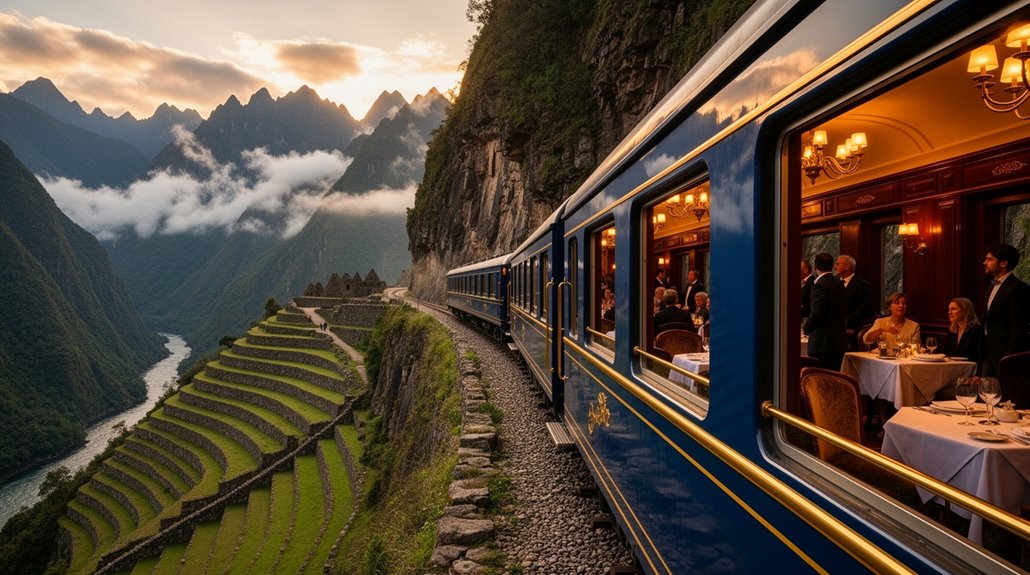
The Belmond Hiram Bingham doesn’t hold back when it comes to theatrical flair.
This historic Machu Picchu route drops 88 km from dizzying Andean heights alongside the Urubamba River, and along the way it seems to reveal one Inca engineering marvel after another—structures that speak to a 15th-century civilization’s technical brilliance. Travelers can experience unforgettable journeys on Machu Picchu train, which allows them to soak in breathtaking vistas at every turn. As the train winds through verdant valleys and rocky cliffs, passengers are treated to glimpses of ancient ruins nestled in the landscape. This scenic adventure sets the perfect tone for exploring the wonders that await at the historic citadel.
You’re looking at three hours of cultural immersion wrapped in polished wood and brass, where gourmet dining meets jaw-dropping mountain panoramas.
The train departs from Poroy station, located just outside Cusco, before beginning its descent through the Sacred Valley.
The interiors themselves feature gleaming wood panels and brass finishes, designed to evoke the elegance of 1920s parlour cars. Like other luxury trains around the world, the experience emphasizes opulent comfort and vintage-style sophistication throughout the journey.
That said, it’s pure Belmond through and through: impeccable service, yes, but also the kind of polished experience that may feel a touch rehearsed to travelers seeking something rougher around the edges.
Journey #2 — Sacred Valley Train Route Through Living Andean Villages and Terraces
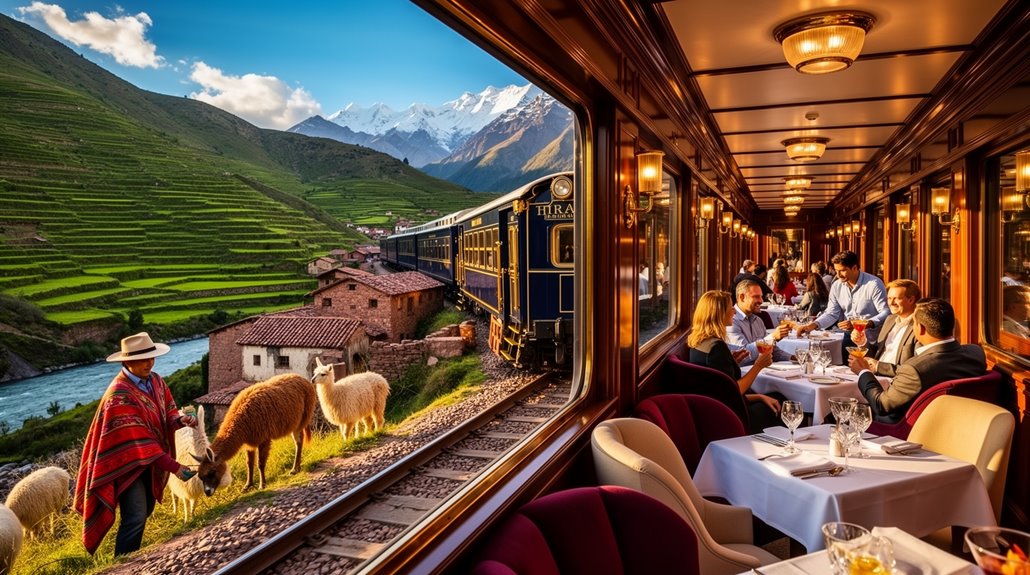
Between Poroy and Aguas Calientes, the rail corridor shadows the Urubamba River through what appears to be 3,500 meters of vertical drop.
Beyond the polished windows, a living catalog of Andean agrarian life unfolds—terraced fields carved into impossible slopes, adobe villages clinging to ridge lines, oxen plowing rows of quinoa the way their ancestors likely did five centuries back.
Through scratched glass, centuries-old farming methods persist on vertical slopes where Quechua families cultivate terraces their ancestors engineered before Spanish conquest.
This luxury Peruvian rail experience along the sacred valley train route delivers something closer to a cultural excursion through living Andean villages where Quechua families still farm without machines.
The observation car frames Andean peaks and colonial architecture—decent photo opportunities on the Inca citadel access route.
Meanwhile, the gourmet dining car journey glides past what feels like unbroken tradition, even if modernity has inevitably crept in at the edges.
That said, the window-framed scenes carry an undeniable authenticity.
Stone terraces still hold crops. Smoke still rises from clay chimneys in settlements that predate the rail line by generations.
On top of that, the route itself traces pathways the Inca engineered long before steel rails replaced footpaths. The Hiram Bingham provides personalized service throughout the journey, ensuring passengers can fully appreciate the cultural significance of each vista.
The journey spans approximately 3.5 hours from departure to arrival, enough time to watch the landscape shift from highland plateaus to cloud forest transitions.
Passengers receive gourmet lunch crafted with fresh Peruvian ingredients as the train cuts through the valley’s agricultural heartland.
Journey #3 — Cusco Colonial Heritage Shows Spanish Churches on Inca Foundations
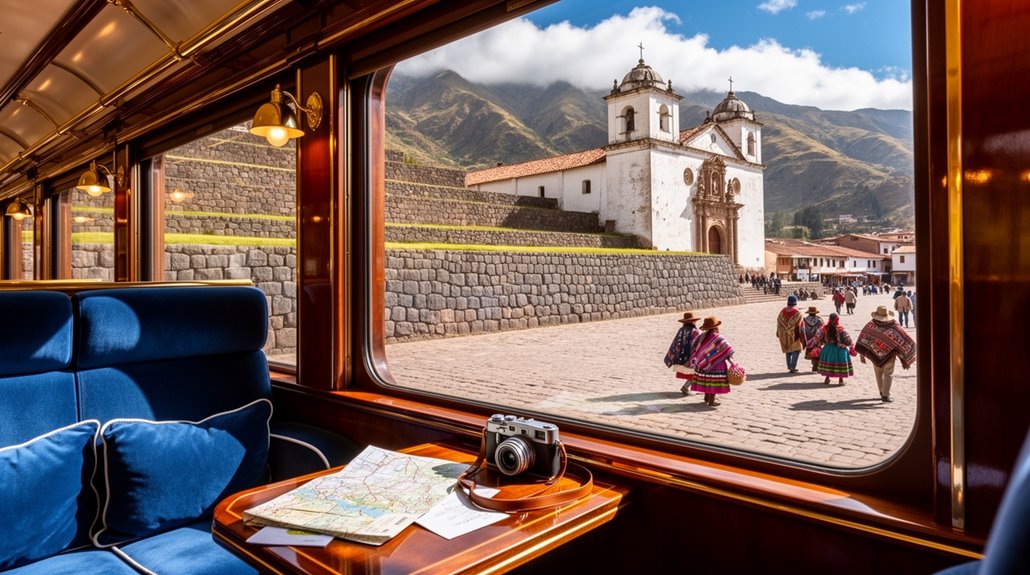
Stepping off the train at Wanchaq or Poroy, passengers find themselves in a city that seems to have refused—or maybe just forgotten—to commit to any one architectural moment.
The highland crossing deposits travelers into a landscape where Spanish colonial buildings sit, quite literally, on top of Inca stonework. There’s the Cathedral. Qorikancha. Churches assembled from the rubble of dismantled temples.
That first-class observation car journey ends at what may be Peru’s most visible example of syncretism, a place where cultural layers collide and coexist in stone.
The effect is jarring at first.
Then again, it’s also strangely honest—Cusco wears its complicated history on the surface, refusing to smooth over the ruptures. You can run your hand along walls where Spanish mortar meets Inca masonry so precise it needs no mortar at all.
Some see it as architectural triumph. Others, a permanent record of conquest. Likely it’s both.
Guided tours include transportation and insights from local experts who decode the visible tension between foundation and façade. The Santo Domingo Convent stands among the most striking examples, where colonial construction rises directly from Qorikancha’s original Inca temple walls. Visitors should plan for potential train delays when scheduling their exploration time, as the railway shares tracks with freight services throughout the highland route.
Frequently Asked Questions
What Is the Ticket Price for the Hiram Bingham Luxury Train?
Hiram Bingham luxury train tickets range from approximately $400 USD one-way to $950 USD round-trip for train-only service. Complete tour packages including Machu Picchu entrance, guided tours, and transfers cost between $1,200-$1,550 USD per person.
How Many Passengers Can Travel on Each Daily Departure?
Each daily departure accommodates a maximum of 84 passengers in standard operation. The train features two dining cars with 42 seats each, ensuring all guests enjoy seated gourmet meals while traveling through Peru’s Sacred Valley to Machu Picchu.
What Dining Options Are Included During the Journey?
The Hiram Bingham includes a four-course gourmet lunch on the outbound journey and a four-course dinner returning, both featuring Peruvian cuisine by chef Jorge Muñoz, plus afternoon tea at Sanctuary Lodge and open bar service.
Does the Train Operate Year-Round or Only During Certain Seasons?
The Hiram Bingham operates seasonally from May through December, suspending luxury service during Peru’s rainy season (January–April). Travelers should verify specific operating days—typically Tuesday, Wednesday, Thursday, Saturday, and Sunday—as schedules vary annually.
Are Hotel Transfers Included in the Hiram Bingham Ticket Cost?
Yes, hotel transfers are typically included. Standard Hiram Bingham tickets generally cover private coach transfers between central Cusco hotels and the departure station, plus bus transfers between Aguas Calientes station and Machu Picchu citadel.
Parting Shot
The Hiram Bingham doesn’t just move people from Point A to Point B. It’s basically a rolling museum that happens to serve incredible food. Three and a half hours through centuries of history—Inca ruins, Spanish colonial architecture, living Andean culture—all from a 1920s-style train car. Sure, it’s expensive. But squeezing Peru’s entire heritage into one train ride? That’s the whole point. Some journeys actually earn their price tag.