The Swiss Travel Pass runs CHF 244 for three days and covers most scenic routes like the Glacier Express—which costs CHF 159 alone without a pass. Individual tickets hit CHF 50-150 per journey, so the pass breaks even after two or three expensive rides. The Half-Fare Card at CHF 120 cuts every ticket in half but requires more math. Basically, three consecutive travel days make the pass cheaper than buying separate tickets. The real calculation depends on specific routes and how many days someone’s actually riding trains.
Swiss Travel Pass Costs CHF 232-384 for 3, 4, 8, or 15 Consecutive Days

The Swiss Travel Pass starts at CHF 244 for three consecutive days in second class—though that’s just the entry point.
Longer durations appear to offer better value: four days runs CHF 295, eight days CHF 419, and fifteen days CHF 459. When you compare these multi-day passes against buying individual tickets for multiple journeys, the savings can be substantial, especially if you’re planning scenic routes.
The per-day rate drops noticeably as you extend your trip, from CHF 81 down to CHF 30. On top of that, unlimited travel benefits cover regional trains, buses, boats, and even some mountain excursions without extra fees.
The daily cost falls dramatically with longer passes while maintaining full access to trains, buses, boats, and select mountain routes.
That said, first class jumps significantly—CHF 389 to 723, depending on duration. Youth travelers under 25 do score lower rates, which helps.
The regional pass seems to favor people who move around frequently. If you’re planning just one or two trips, a single ticket might make more sense from a pure cost standpoint. Consider that dynamic pricing can affect individual ticket costs depending on demand and timing across different European countries. For 2025, travelers can take advantage of bonus day offers like 4+1 and 8+2, which extend coverage without increasing the base price. The pass is stored as a PDF on smartphones and uses a QR code scanned by train staff, eliminating the need for e-wallets.
Even so, the convenience factor may tip the scales for many travelers.
Half-Fare Card at CHF 120 Annual Fee: 50% Off Every Scenic Train Journey

Flexibility matters when you’re trying to save on Swiss trains—though there’s a catch if you’re just visiting. The annual Half-Fare Card runs CHF 120, but that pricing is reserved for Swiss and Liechtenstein residents only. Tourists get stuck with a one-month version at the same price, which feels like a bit of a raw deal.
Either way, the card slashes every point-to-point ticket and daily purchase by exactly 50% across scenic routes, mountain railways, and regular trains.
The fare savings can pile up surprisingly fast. Two Glacier Express rides or one Jungfraujoch trip and you’ve likely paid for the card already.
On top of that, there are no blackout dates and no limit on journeys. The discount applies to both 1st and 2nd class tickets, giving you flexibility on comfort level without losing the 50% savings. You’ll need to purchase accompanying tickets on public transport separately, as the Half-Fare Card itself doesn’t grant entry—just the discount. Since Switzerland’s rail network operates with frequent service across both scenic and regular routes, you can maximize the card’s value with spontaneous travel decisions. If you’re planning to ride those expensive mountain railways more than once or twice, this appears to be the best discount option on the table—assuming you can access the annual version in the first place.
How Much Do Point-to-Point Tickets Cost? Expect CHF 50-150 Per Journey

When you’re looking at scenic train tickets in Switzerland, you’re probably going to spend somewhere between CHF 50 and CHF 150 per journey—and that’s just the ticket itself, before those mandatory seat reservations come into play.
What you actually pay depends on how long you’re traveling and which route you pick. The GoldenPass Express runs CHF 56 in second class. The Glacier Express? That’ll set you back CHF 159.
Individual tickets do give you some flexibility, at least—you can hop off for stops as long as you keep heading in the same direction.
Here’s where it gets expensive, though: those reservation fees pile right on top of the base fare. We’re talking another CHF 20 to CHF 54 per person.
On top of that, buying the tickets is pretty straightforward. Grab them same-day at the station or book online ahead of time. Either way works. For the Glacier Express, it’s smart to book at least 93 days before your travel date. For the GoldenPass Express specifically, you can book seat reservations up to 2 months in advance through their website.
If you have a rail pass that covers other European routes, keep in mind that many passes only cover the base fare and you’ll still need to pay those reservation fees separately for premium scenic trains. when considering eurail pass pricing for youth travelers, it’s important to compare various options to find the most cost-effective choice. Many youth discounts can make travel significantly cheaper, especially if you plan to visit multiple countries. Always check the details of each pass to ensure you are maximizing your savings while enjoying your trip. european rail pass options explained offer a variety of benefits that can enhance your travel experience. From unlimited travel within certain timeframes to discounts on specific routes, understanding these options is crucial for planning your journey. Be sure to evaluate each pass thoroughly, as some may provide added perks like free or discounted entrance to popular attractions across Europe.
But no matter how you slice it, scenic train ticket pricing in Switzerland adds up fast.
Unlimited Travel Pass Benefits: 90+ Scenic Routes Plus Free Urban Transport Included

Coverage is really what sets the Swiss Travel Pass apart—and it’s tough to find anything quite like it.
You’re looking at over 90 scenic routes wrapped into one package, plus unlimited urban transport once you hit the major cities. That booking headache of calculating consecutive day passes versus individual tickets? Pretty much solved.
The pass covers trains, boats, buses—even throws in 50% discounts on some mountain railways.
Now, does the flexible pass always win on value? It appears to crush point-to-point pricing when you’re bouncing between the Glacier Express, Bernina Express, and various city centers. Unlike busy routes that offer frequent departures every few minutes, scenic Alpine trains typically run on more limited schedules, making advance planning crucial.
Transfers become seamless across the board. No standing in queues, no wrestling with language barriers at every ticket window. You just go.
That said, it’s worth running your own numbers if you’re planning a slower pace or sticking to just one region—sometimes individual tickets may edge ahead.
Even so, for most multi-destination itineraries, the convenience alone is likely to tip the scales. The Grand Train Tour of Switzerland effectively links all these scenic routes together, letting you experience major premium trains in a single self-guided journey.
The pass also grants free admission to over 500 museums throughout the country, including major cultural sites like the Olympic Museum and Chateau de Chillon.
Glacier Express Costs CHF 152 Second Class Without Pass vs Free with Pass
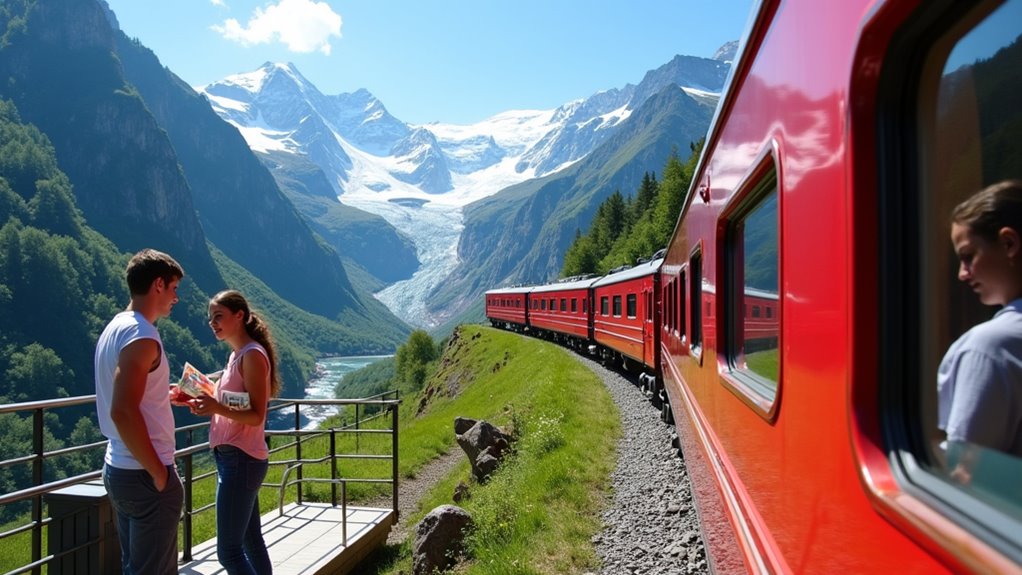
The Glacier Express ticket runs about CHF 152 in second class for the full route—and that’s before you even think about the mandatory seat reservation.
Swiss Travel Pass holders skip that fare entirely, though the reservation fee still applies no matter what.
That’s where things get interesting with panoramic train fares. Half-Fare Card users get a 50% discount on the ticket, which is something, but they’re still paying out of pocket.
Booking early matters, especially during peak validity periods when demand spikes. Seat reservations open 93 days before your travel date, so plan accordingly.
The pass basically turns what would be a pricey journey into a reservation-only expense. Recent price increases have pushed reservation fees from $39 to $49, adding to the total cost calculation.
The Glacier Express also connects with other scenic routes like the Bernina Express, creating opportunities for multi-day Alpine adventures.
Big difference.
Calculate Break-Even: Pass Pays for Itself After 2-3 Expensive Scenic Journeys

The math here isn’t complicated, though it does require sitting down with a calculator for ten minutes. Start with the pass itself—let’s say 389 CHF for eight days—then stack it up against what you’d pay for individual mountain railway tickets.
If you grab a half-fare card at 120 CHF instead, those scenic rides drop by 50%. So when does the pass actually pay for itself? Generally after two, maybe three of the pricey routes—think Glacier Express or Jungfraujoch. Beyond that, you’re saving money.
If you’re traveling with kids or young adults, youth discounts may tilt the equation further. The SBB price calculator is your friend here; plug in your actual routes instead of guessing. Keep in mind the Travel Pass covers premium scenic trains, though seat reservations cost extra.
One thing worth checking before you commit: the cancellation policy. Plans change, and you don’t want to eat the full cost if something comes up. GetYourGuide allows free cancellation up to 24 hours before travel, which gives you flexibility if your itinerary shifts.
Both the Glacier Express and Bernina Express offer UNESCO World Heritage status along with their panoramic alpine views, making them popular choices for travelers weighing pass value.
It’s honestly just addition. Not rocket science, but not something you should eyeball either.
3-Day Threshold: When Consecutive Travel Days Make Pass Cheaper Than Tickets

When you’re weighing whether a Swiss Travel Pass is worth it, the real deciding factor appears to be how many consecutive days you’ll actually spend on trains—not just the total length of your trip. Additionally, it’s important to conduct a swiss travel pass value comparison to see how it stacks up against individual ticket prices for your intended routes. Often, travelers find that the pass offers significant savings, especially for those planning extensive train journeys. Make sure to consider factors like included discounts on mountain excursions and local transport as part of your overall evaluation.
Pass comparison data suggests the break-even point typically lands somewhere around three to four active travel days, especially if you’re riding scenic routes.
That said, the validity period can trip you up. Buy a 3-day pass but only ride trains for two of those days? You’re essentially burning money.
Unused pass days equal wasted money—make sure your actual travel schedule matches the validity period you’re paying for.
On top of that, cost comparison tools reveal something important: multi-day pass value really jumps when you’re stacking expensive routes back-to-back, not spreading them out.
The activation method is straightforward enough—your first ride starts the clock.
Family discounts may sweeten the deal if you’re traveling as a group and hitting that 3+ day threshold. The free Swiss Family Card allows kids under 16 to travel at no cost when accompanying a parent with a valid pass.
The pass also covers various types of transport including trains, buses, and gondolas across the core Swiss travel network. Consider different booking platforms depending on where you’re purchasing from, as availability and pricing can vary by region. Even so, if you’re only planning two days of actual train travel, just buy individual tickets instead.
Frequently Asked Questions
Can I Combine Half-Fare Card With Swiss Travel Pass for Discounts?
No, the Swiss Half-Fare Card and Swiss Travel Pass cannot be combined for additional discounts. Only one pass is valid per journey. Travelers must choose which option better suits their itinerary, as stacking discounts is not permitted.
Do Children Travel Free With Swiss Travel Pass or Need Tickets?
Children aged 6 to under 16 travel free with a parent holding a Swiss Travel Pass when accompanied by a Swiss Family Card, issued free upon request. Children under 6 travel free without requiring any card.
Are Seat Reservations Included Free With Swiss Travel Pass Scenic Routes?
Seat reservations are not included free with Swiss Travel Pass for scenic routes. Mandatory reservations for panoramic trains like Glacier Express and Bernina Express require separate paid fees beyond the pass coverage, typically bookable three months in advance.
Can Tourists Buy Half-Fare Card or Only Swiss Residents Qualify?
Tourists can purchase the Swiss Half Fare Card, which is specifically designed for non-residents. Swiss residents are ineligible for the tourist version but may buy a separate one-year Half-Fare Travelcard instead.
Does Swiss Travel Pass Cover First Class Scenic Train Upgrades?
A 2nd class Swiss Travel Pass does not automatically cover 1st class travel. Holders must pay the fare difference to upgrade plus separate mandatory seat reservation fees on premium scenic trains like Glacier Express.
Parting Shot
The math isn’t complicated. Three days of scenic trains? The pass wins. One or two journeys? Buy tickets or grab the Half-Fare Card. The Glacier Express alone costs CHF 152—that’s already two-thirds of a 3-day pass. Break-even happens fast on these expensive alpine routes. No magical secret here, just basic arithmetic. Count your travel days, add up ticket prices, compare the numbers. Done.