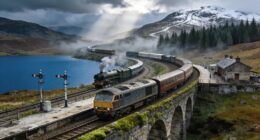
Train travel faces significant hurdles that make it less appealing than other transportation options. Journey times are painfully long—a 19-hour train ride versus a 2-hour flight speaks volumes. Route coverage remains spotty, especially in rural areas, while reliability issues plague the system with frequent delays and cancellations. Many stations sit inconveniently far from city centers, requiring additional transportation. Onboard amenities often disappoint, with outdated facilities and inconsistent comfort levels affecting the overall experience for travelers seeking alternatives.

Despite all the romantic notions about scenic rail journeys and eco-friendly travel, trains come with some serious drawbacks that can turn a dreamy trip into a logistical nightmare.
The biggest slap in the face? Time. A train from New York to Chicago crawls along for 19 grueling hours while a flight zips there in two. That’s not travel—that’s endurance testing. On top of that, multiple stops drag out journeys even longer. Unless travelers happen to be in Europe or Japan with their fancy high-speed rails, most trains simply can’t compete with flight times.
A 19-hour train crawl versus a two-hour flight isn’t travel—it’s endurance testing that makes planes look like magic.
Route availability appears to be another mess. Outside of a few well-connected regions, train networks look like Swiss cheese—full of holes. Amtrak covers major cities but leaves rural areas hanging. Want to catch a late-night train? Good luck. Many routes operate on skeletal schedules that make last-minute travel plans nearly impossible.
Then there’s what seems like a constant reliability issue. Delays pop up due to weather, mechanical breakdowns, or track maintenance. In the United States, passenger trains share tracks with freight trains, creating a scheduling disaster where cargo often takes priority. Cancellations happen with little warning, leaving passengers stranded.
Station locations add insult to injury. Many stations sit far from city centers or popular destinations, requiring additional transportation that eats up time and money. Rural stations often feel like they’re in the middle of nowhere. This forces travelers to figure out complicated connections just to reach their final stop. Even in Great Britain’s well-developed system with multiple train operators, coordinating between different companies can create confusion for travelers trying to navigate seamless journeys.
Onboard amenities range from decent to absolutely dismal. Regional and older trains skimp on basics like Wi-Fi, power outlets, and decent food. Budget routes offer uncomfortable seating that makes long journeys feel like punishment, though to be fair, cleanliness standards vary wildly between operators. While sleeper cars can provide better comfort on overnight routes, these premium options significantly increase costs.
Perhaps most frustrating is arriving without personal transportation. No car means relying on rentals, public transit, or ride-sharing services—all adding cost and complexity. Exploring beyond the immediate station area becomes a logistical puzzle.
Even so, while major accidents remain rare, media coverage of train incidents doesn’t help public perception. Statistical data shows that car occupants face 17 times greater fatality risk compared to mainline train passengers, yet public perception often doesn’t reflect this safety advantage. These safety concerns, whether justified or not, may influence travel decisions and contribute to train travel’s mixed reputation.
Did You Know
How Do Train Ticket Prices Compare to Airline Prices for Long-Distance Travel?
Train tickets cost 2.5 times more than flights on average across Europe’s long-distance routes.
Some routes hit brutal extremes—like Barcelona to London where trains cost 26 times more than planes. Nearly 60% of major European routes are cheaper by air.
Low-cost airlines regularly offer sub-€20 fares while comparable train journeys exceed €100.
Airlines dodge taxes that trains can’t escape.
Can I Bring My Bicycle or Large Luggage on Trains Without Restrictions?
No, bringing bikes and large luggage on trains comes with plenty of restrictions.
Most operators require advance reservations for bicycles, charge extra fees, and limit spaces. Some trains only accept folding bikes or ban them during peak hours.
Large luggage faces size and weight limits with additional charges. Policies vary wildly between companies and regions, making spontaneous travel with bulky items nearly impossible.
Are Trains Safe During Bad Weather Conditions Like Storms or Heavy Snow?
Trains face real safety challenges during bad weather, but they’re generally safer than cars. Implementing effective safety measures for European trains can greatly enhance passenger security and comfort during inclement weather. These measures often include advanced tracking systems, real-time updates for travelers, and reinforced infrastructure to withstand harsh conditions. As technology continues to improve, we can expect even greater innovations to ensure the safety of train travel across the continent.
Snow and ice cause mechanical failures, malfunctioning switches, and signal problems. Heavy rain creates flooding and track washouts.
Winter months see the highest accident rates, peaking December through March. Modern warning systems help, but weather-related incidents still cause derailments and significant delays.
Geography matters too—mountainous areas get hit harder.
Do Trains Have Reliable Wifi and Electrical Outlets for Charging Devices?
Train Wi-Fi is pretty hit-or-miss. Speeds often crawl at 50 kbps per passenger during busy times, making streaming a joke.
Dead spots kill connections regularly. Electrical outlets are better on newer trains—most seats get power now.
Older trains? Good luck finding one outside first class. The rail industry thinks 72% satisfaction is great, but passengers clearly disagree when their phones die mid-journey.
What Happens if My Train Is Cancelled or Significantly Delayed?
Passengers get refunds, re-routing options, or alternative transport when trains are cancelled or delayed.
Delays over an hour trigger compensation – 25% for 1-2 hours, 50% for delays exceeding two hours.
The railway must provide meals, accommodation if needed, and cover reasonable alternative transport costs.
Claims require documentation and have deadlines.
Staff strikes don’t excuse compensation, but “extraordinary circumstances” like extreme weather do.
Parting Shot
Train travel isn’t going anywhere—literally and figuratively. Sure, it’s got charm. But the delays, limited routes, and glacial speeds make flying look like a miracle. Then there’s the cost factor. Sometimes trains cost more than planes. Go figure. For short trips, trains work fine. Long hauls? You’ll arrive wondering why you didn’t just drive. Rail travel remains stuck in the past while everyone else moved on.