Traveling from Vienna to Venice by train is surprisingly straightforward. Two direct trains depart daily at 6:25 AM and 12:25 PM, covering 434 kilometers in about 7 hours and 40 minutes. The Railjet and EuroCity services offer modern amenities like WiFi and dining cars. Tickets start at €28.30, but reservations are mandatory. The route winds through the stunning Eastern Alps, making it one of Europe’s most scenic journeys. There’s more to take into account for this Alpine adventure.

When most travelers think about getting from Vienna to Venice, they picture cramped budget flights or endless highway drives. But here’s the thing—there’s a direct train route that makes this journey ridiculously simple. No plane changes, no rental car headaches. Just one train covering 434 kilometers.
The ride takes about 7 hours and 40 minutes on daytime Railjet or EuroCity trains, which is honestly faster than most people expect. There’s also a Nightjet sleeper service that stretches the journey to roughly 10 hours and 35 minutes, though you get to sleep through most of it.
The 7-hour 40-minute daytime journey beats most expectations, while the 10-hour sleeper lets you snooze through the Alps.
Two direct departures leave daily—the earliest around 6:25 AM, the latest near 12:25 PM.
Trains depart from Wien Hauptbahnhof or Wien Meidling and roll straight into Venezia Santa Lucia station. That’s right on the Grand Canal, which beats landing at some distant airport and figuring out transportation into the city.
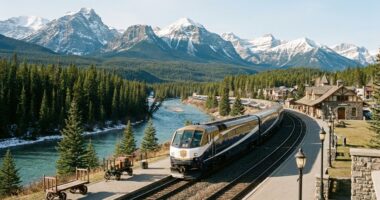
The route cuts through the Eastern Alps, past Klagenfurt, Villach, and those postcard-perfect Worthersee lake resorts. It appears to be one of Europe’s most scenic train rides, at least judging by the constant parade of people crowding the windows with cameras.
Seat reservations are mandatory—no showing up and hoping for the best. One-way tickets start at €28.30 for daytime travel, though night train options cost more. Advance booking gets better fares and guarantees availability. That said, Eurail passholders can use these trains but still need to pay reservation fees.
The trains come loaded with modern amenities. Railjet and EuroCity services offer comfortable seating, air conditioning, free WiFi, power outlets, and restaurant cars. All classes include facilities for special needs passengers, ensuring everyone can travel comfortably.
Nightjet sleeper trains provide everything from basic couchettes to private sleeping compartments with beds. Some even have shower facilities, which is likely more luxury than most budget hotels offer.
The journey’s highlight hits between Bruck an der Mur and Udine, where Alpine scenery dominates the windows. Then comes the famous causeway crossing into Venice’s lagoon—a dramatic entrance that beats any airport arrival.
Even so, once at Santa Lucia station, you’re not quite done traveling. Vaporetto water buses wait right outside, ready to ferry passengers deeper into Venice’s canal network. Once in Italy, consider using high-speed trains like the Frecciarossa and Frecciargento to explore other destinations throughout the country. Regional trains also operate on this route, offering passengers the flexibility to stop at charming destinations like Klagenfurt, Villach, and Udine along the way.
Did You Know
What Documents Do I Need for Train Travel From Austria to Italy?
Travelers need a valid passport or national ID card for train travel between Austria and Italy.
Both countries are in the Schengen zone, so border checks are minimal. However, conductors will demand to see ID during ticket inspections.
Minors need their own documents—no piggybacking on parent’s passports. Keep documents handy throughout the journey.
Police can randomly check IDs at stations, and lacking proper documentation means fines or getting booted off.
Can I Bring My Pet on the Vienna to Venice Train Route?
Yes, pets can travel on Vienna to Venice trains, but it’s not exactly a free-for-all.
Small pets in carriers (70x30x50 cm max) travel free as hand luggage.
Larger dogs need tickets at 50% second-class fare, plus mandatory leash and muzzle.
All pets require valid passports and health documents—no exceptions.
Guide dogs get the VIP treatment: free travel everywhere.
Are There Dining Cars or Food Services Available on This Train Journey?
Yes, food services are definitely available, but it depends which train you pick.
The luxury Venice Simplon-Orient-Express offers three fancy restaurant cars with four-course dinners and cocktail lounges – basically floating fine dining.
Regular trains like Italo and ÖBB Nightjet have more basic options: vending machines, snack carts, and seat service for premium classes.
Quality varies wildly by operator.
What’s the Baggage Allowance for Trains Traveling From Vienna to Venice?
Most trains from Vienna to Venice don’t enforce strict luggage limits, but passengers handle their own bags.
Frecce trains allow two pieces per person with specific size restrictions—161cm total dimensions for second class, 183cm for first class.
Don’t block aisles or you’ll face penalties up to €150.
Special luggage areas exist on select trains.
Bottom line: pack smart and label everything.
Do I Need to Make Seat Reservations or Can I Buy Tickets Onboard?
EuroCity and Night trains require seat reservations and don’t allow onboard ticket purchases—period.
Regional trains are more forgiving, letting passengers buy tickets at stations without reservations.
But here’s the kicker: onboard purchases usually cost more when they’re even allowed. Rail pass holders still need to pay reservation fees for reserved trains.
Smart travelers book online up to three hours before departure.
Parting Shot
The Vienna to Venice train route offers travelers a straightforward connection through Austria and Italy. Multiple daily departures make scheduling flexible. The journey takes roughly 11-14 hours depending on connections, with most routes requiring at least one transfer in cities like Villach or Udine. Overnight options exist for those wanting to sleep through the Alps. Book tickets in advance for better prices. It’s slower than flying but infinitely more scenic. The mountains alone make it worthwhile.