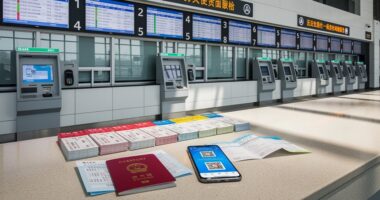
First Europe Train Trip: How to Plan Your Complete Beginner Rail Adventure
European rail travel: a system requiring advance preparation, reservation knowledge, and station navigation skills. The continent’s train network connects major cities through efficient routes. Beginners face common pitfalls that seasoned travelers avoid through simple planning steps.
- Seat reservations: mandatory on high-speed routes, required for specific train categories, essential for guaranteed seating
- Rail passes: valid across multiple countries, cost-effective for extended journeys, requiring activation before first use
- Station layouts: featuring multiple platforms, containing departure boards in local languages, demanding early arrival times
Train stations across the continent serve as transportation hubs and architectural landmarks. Munich Central Station processes thousands of passengers daily. Paris Gare du Nord connects travelers to destinations across Western Europe. Frankfurt Main Station functions as a critical junction point for international routes.
Preparation transforms a stressful journey into a seamless experience. Travelers who research connection times avoid missed trains. Those who download offline maps navigate unfamiliar stations with confidence. Smart planners arrive at platforms with time to spare.
The ticketing process varies by country and rail operator. Some routes require booking weeks ahead. Others allow same-day purchases at station kiosks. Understanding these differences prevents costly mistakes and platform panic.
Interesting Fact: Switzerland’s rail network maintains a 92% punctuality rate, making it one of the most reliable train systems in the world and an ideal starting point for first-time European rail travelers.
First Europe Train Trip: Your Complete Beginner’s Checklist

Your first European train adventure looms ahead. Nervous? You shouldn’t be.
Beginner European train travel isn’t rocket science; it’s simpler than you think, more intuitive than you fear, and far less complicated than that IKEA furniture you assembled last month.
The secret lives in preparation—a solid checklist that transforms anxiety into anticipation.
Preparation is the antidote to travel anxiety—transform nervous energy into excitement with one solid checklist.
Arrive early. Arrive forty minutes early, to be exact.
Study station maps before you ever set foot on foreign pavement, memorizing the layout so your legs know where to carry you when your brain goes blank from jet lag.
Cross-reference those flickering departure boards with your ticket, because platforms change, times shift, and assumptions betray even seasoned travelers.
Then validate your physical tickets at those yellow machines tucked near the platforms.
Miss this step? Your ticket becomes expensive paper.
Here’s what train station veterans understand: preparation beats panic every single time.
They’ve learned the hard way.
They’ve sprinted through terminals, wrestled with foreign ticket kiosks, watched trains pull away without them.
Now they prepare—they prepare meticulously, they prepare obsessively, they prepare like their vacation depends on it.
Because it does.
Packing demands restraint.
Go minimal.
Your back will thank you when you’re hoisting luggage onto overhead racks in a swaying carriage; your sanity will thank you when navigating narrow corridors packed with other travelers.
Heavy bags transform adventure into ordeal. Most European trains have no specific luggage restrictions, but your own carrying capacity becomes the true limit.
No elaborate eurail pass beginner guide required here.
What you need instead: common sense, a willingness to observe, and trust in your own competence.
European rail systems have carried millions of first-timers before you—through alpine tunnels, along Mediterranean coasts, across borders that once seemed impossibly foreign.
The trains will run. European trains run on schedule over 90% of the time, making them remarkably dependable compared to flights.
The stations will make sense.
And you? You’ll wonder why you ever stressed at all.
Download specialized apps like Omio before departure to access real-time train information and booking options right from your phone.
Navigate European Train Stations Without the Stress

How exactly does someone find the right train in a station they’ve never seen, in a country where they don’t speak the language?
Terrifying.
That’s what European train station wayfinding sounds like—a maze of foreign signs, rushing crowds, and announcements you can’t understand.
But here’s the truth: it’s not terrifying at all.
Start with your ticket.
Look at your ticket.
Really look at your ticket.
That small printed number? It’s your anchor.
Departure boards hang overhead in every European station, glowing with train numbers, destinations, platform assignments, and times; these boards speak a universal language that transcends whatever tongue you don’t.
Match your number to the board.
Done.
What seems overwhelming at first becomes routine faster than you’d expect, because European rail stations follow predictable patterns that reward even minimal attention.
The main departure board serves as your compass, directing you toward platforms that are clearly numbered and logically arranged.
Car numbers printed on your ticket tell you exactly where to stand on the platform—not at the front, not at the back, but precisely where your carriage will stop.
Platform diagrams often show exactly where each car will stop, so look for these posted guides to wait near the correct car.
Your survival kit for navigating these stations requires no special equipment: no apps, no phrase books, no expensive guides.
Just awareness.
Find the board.
Locate your platform.
Check your car number.
Board with confidence.
You might arrive feeling like a lost tourist, clutching your bags and scanning desperately for someone who speaks English.
Within minutes, though, the system reveals itself.
Symbols guide you.
Numbers orient you.
Logic prevails.
This is beginner station survival stripped to its essence—paying attention to what’s already there, trusting a system designed for millions of travelers who speak dozens of languages.
The complexity melts away once you understand: every station wants you to find your train.
When in doubt, station employees at customer service desks can read your ticket and confirm your platform, even if you don’t share a common language.
Before you board, also confirm whether your ticket requires a seat reservation or allows open seating.
So breathe.
Watch.
Follow the numbers.
Easy.
Why Booking the Wrong Pass Costs First-Timers Hundreds

The allure of unlimited train travel sells itself. Hop on, hop off, see all of Europe with one magic pass—the promise glitters like city lights from a speeding window. But here’s the reality check you need: that 5-day Eurail Global Pass breaks down to €64 per travel day, and suddenly the math doesn’t sparkle quite so bright.
Consider what €64 buys. Consider what alternatives exist. Consider what first-timers never think to research. A Berlin-Prague ticket, booked ahead, costs €18.99. Not €64. Not even close. That four-hour-and-fifteen-minute journey runs six to eight times daily on comfortable EuroCity trains with onboard dining, making it one of the best-value routes in Central Europe.
Look at the numbers; they tell a story you can’t ignore:
| Route | Advance Ticket | Pass Day Cost |
|---|---|---|
| Prague-Berlin | €18.99 | €64 |
| Vienna-Bratislava | €12 | €64 |
| Florence-Pisa | €9 | €64 |
Nine euros from Florence to Pisa—a journey of Renaissance towers and Tuscan hills—versus sixty-four for that same stretch on your pass. Why would anyone choose the expensive option? Because marketing is seductive, because “unlimited” sounds like freedom, because nobody warned them to do the arithmetic before clicking purchase.
Short hops bleed you dry. The pass demands its daily fee whether you’re crossing three countries or riding thirty minutes to the next town; it doesn’t care about your itinerary, only about your wallet. Meanwhile, Germany’s Deutschland-Ticket offers unlimited regional travel for just €58 per month, making short trips far more economical than any multi-country pass. Remember too that reservation fees still apply even if you’re traveling with children under 12 for free, adding hidden costs that chip away at your supposed savings.
So before you buy, calculate. Add up your actual routes. Compare advance fares against that fixed daily rate. You might discover the magic pass costs hundreds more than simply booking tickets as you go.
Ouch.
10 Mistakes First-Time European Train Travelers Make

You save fifty euros on a ticket. You board the train feeling clever. You settle into your seat with a satisfied smile. Then the conductor appears, and that yellow validation machine you walked past—the one that looked purely decorative—becomes the most expensive oversight of your trip. Two hundred euros. Gone.
Italy demands validation; those boxy yellow stamps exist for a reason, and ignoring them invites disaster.
But validation isn’t the only trap waiting for first-timers. Have you ever watched a departure board in Rome or Paris? Names flash, platforms shuffle, and trains slip away while you’re still searching for your gate. Boarding the wrong train entirely—this happens more than anyone admits. A quick word with a crew member before stepping aboard can save you from this fate, since crew knowledge reveals every stop on the route. The stress mounts quickly; your pulse races as announcements blur into foreign syllables. Wrong platform. Wrong car. Wrong destination. Learning to read station departure boards before your trip removes much of this confusion and keeps you moving in the right direction.
Now consider the TGV, France’s lightning-fast pride, where seats without reservations mean nothing at all. Skip the booking, and you’ll stand in the corridor watching countryside blur past—or worse, get removed at the next stop. Cross-border routes carry their own demands: the right station matters, the right car number matters, a validated ticket matters most of all. Keep your passport handy alongside your ticket, since border checks require identification and fumbling through bags only adds to the chaos.
Simple requirements, really. Check your station name twice. Confirm your car assignment. Stamp that ticket before you ever step aboard. Three basics that seem obvious until the moment they’re forgotten.
Why do so many travelers stumble over such straightforward steps? Perhaps excitement clouds judgment. Perhaps unfamiliar systems breed overconfidence. The rhythm of European rail travel rewards preparation—methodical, patient, thorough preparation—and punishes haste without mercy.
The Moment Europe Unfolds Outside Your Train Window

The platform chaos fades. The validation drama becomes a distant memory. And then something remarkable happens.
You feel it before you see it—that first scenic rail experience hits different when the wheels find their rhythm beneath you.
Through the window, Europe unfolds like a secret it’s been keeping just for this moment.
The Glacier Express doesn’t rush; it crawls through the Rhine Gorge with deliberate grace, letting every cliff face and rushing river burn itself into your memory. Often called the slowest express train in the world, it connects Zermatt and St. Moritz while crossing nearly 300 bridges along the way.
The Bernina Express climbs higher, ascending to 2253 meters while turquoise lakes stretch below like scattered jewels, and the thin alpine air seems to sharpen every color, every shadow, every impossible view. The route earns its legendary status through 55 tunnels and 196 bridges that thread through UNESCO-listed terrain.
These are journeys that transform the skeptical into believers, the hurried into the unhurried, the distracted into the devoted.
Real.
Not postcards. Not filtered photographs. Not somebody else’s story.
What happens when a train window becomes a frame for mountains, for gorges, for lakes that shouldn’t exist in such impossible blues?
You stop scrolling.
You stop planning the next thing.
You simply watch.
Europe’s scenic railways offer something that planes cannot: time to absorb, space to breathe, permission to be fully present. The Grand Train Tour of Switzerland combines panoramic trains, buses, and boats to showcase the country’s most spectacular landscapes and cultural treasures.
The views through that glass—Rhine Gorge dropping away beneath you; alpine meadows racing past; ancient villages perched on slopes—these images stick.
They lodge themselves in the corners of your mind where inspiration lives.
First-timers become converts on these rails.
Skeptics arrive; believers depart.
The transformation is quiet but absolute, measured in kilometers and switchbacks and the slow accumulation of wonder.
This is travel that moves at the speed of memory.
This is Europe by rail.
And once you’ve watched it unfold outside your window, you’ll understand why some journeys change everything.
Reading a European Train Ticket: Visual Decoder
Reading a European Train Ticket: Visual Decoder
You stare at the ticket. Strange abbreviations crowd the paper. Numbers cluster without explanation. How hard can reading a train ticket actually be?
Pretty confusing, it turns out.
Across platforms in Paris, Munich, and Rome, travelers squint at these slips of paper—searching for meaning in the jumble of codes and timestamps. This European rail ticket decoder exists for one purpose: to break down what matters. Every element tells a story; every marking serves a function. Understanding train tickets in Europe becomes simple once you know where to look.
| Element | What It Says | Example |
|---|---|---|
| Train Number | Unique service ID | TGV 6789 |
| Voiture/Wagen | Carriage number | Car 12 |
| Date/Time | 24-hour format | 14:30, DD/MM/YYYY |
Consider the train number first. TGV 6789—that’s your unique service ID, the fingerprint of your journey. Next comes the carriage: Voiture in France, Wagen in Germany, but always the same concept guiding you to your coach. And the timestamp? Europeans favor the 24-hour format, clean and unambiguous, with dates reading DD/MM/YYYY rather than the American reverse. In Paris, your ticket will also indicate which of the six major train stations serves as your departure point, since each handles different regional and international routes.
Your SNCF ticket explained simply: train number, seat, carriage. Your France train ticket guide distilled to essentials. Your path forward—clear at last.
Three elements. That’s all.
Every train ticket explained follows this pattern, whether printed in Barcelona or stamped in Brussels. The language shifts; the structure holds. Before you stands a system built on logic, waiting only for you to decode it. Look for seat type indicators like F for window or C for aisle, codes that reveal your exact position within the carriage.
Grab your ticket now. Find the train number in the corner, locate your voiture, check that 24-hour departure time. Platform confusion dissolves when the code makes sense—and suddenly, boarding becomes the easy part. Before stepping aboard, verify your carriage number against the display on the carriage door to ensure you’re entering the correct coach.
Trainline vs Omio vs Rail Planner: Booking App Guide
Decoding that ticket matters little if the wrong app booked the wrong train.
It matters little if you’re stranded in Stuttgart.
It matters little if your connection vanished into digital mist.
But choose wisely, and everything changes.
The right booking app transforms chaos into seamless travel—choose poorly and watch your itinerary unravel.
The trainline vs omio comparison reveals something surprising—base prices are identical.
Why?
Because operators set them, not the apps.
Both platforms rank among the best european rail booking platforms, pulling from the same fare pools, the same schedules, the same fundamental data.
Yet train booking apps europe handle complexity in remarkably different ways, and those differences will shape your journey more than you might expect.
Consider what each brings to the table: Trainline’s routing engine crushes multi-leg journeys, weaving together connections that lesser apps simply miss;
Omio casts a wider net, covering buses, flights, and ferries alongside rail;
the rail planner app offers offline timetables for cross-border rail preparation tips when WiFi fails you.
Three tools.
Three philosophies.
One destination.
So which deserves space on your phone?
That depends on how you travel.
Are you threading through four countries in a single day?
Trainline excels here—its algorithm hunts down transfers with surgical precision.
Trainline also includes budget operators like Ouigo, FlixTrain, and Italo that competitors partially or don’t cover, enabling savings of 50% or more on some routes.
Its best price guarantee and digital ticket storage make it particularly reliable for complex international bookings.
Perhaps you want flexibility, the freedom to pivot from train to bus when delays strike.
Omio handles that pivot gracefully, partnering with over 1000 transport providers across 37 countries to give you options when plans fall apart.
For pure planning, for studying routes before committing a single euro, the rail planner app delivers comprehensive schedules without booking pressure.
Here’s what matters most: know your journey’s demands before opening any app.
A simple point-to-point trip needs no sophisticated routing.
A complex itinerary demands it.
The wrong choice wastes time, money, sometimes both.
Download all three.
Test them against your actual route.
Compare results.
Then book with confidence.
Pack This Station Survival Checklist for Your First Trip
European rail travel seduces you with promises. Scenic vistas unfurling past your window. Effortless border crossings. Sophisticated continental vibes that make you feel like a character in a film. But here’s the brutal truth—and it stings.
Seasoned veterans watch it happen constantly: unprepared travelers boarding trains with nothing but optimism and a ticket. They’ve seen the panic at midnight when a phone dies. They’ve witnessed the desperate scramble through bags for something, anything, to sanitize hands after touching that communal door handle. They’ve observed the neck-cramp shuffle of someone eight hours into a journey with no pillow. Painful.
What do these rookies forget? A neck pillow for that grueling eight-hour haul; a padlock to secure luggage compartments while they sleep; a battery bank when their phone gasps its last breath somewhere between Vienna and Prague. They forget hand sanitizer. They forget document copies. They forget, they forget, they forget—until forgetting costs them.
Consider the essentials: power backup, security measures, hygiene basics, comfort items, emergency paperwork. Five categories. Five chances to fail or succeed.
Your first international train trip deserves preparation. It deserves respect. Why stumble through common beginner errors when experienced riders have already mapped every pitfall? Don’t forget a reusable water bottle and a pair of headphones to make those long hours more bearable. Bring a packet of tissues too, since not every train bathroom will be stocked with toilet paper.
The scenic route loses its magic when you’re stressed, uncomfortable, and watching your dead phone like it might resurrect itself through sheer willpower. Keep your medications, valuables, and toiletries in a small accessible bag rather than buried in your main luggage.
Pack the neck pillow. Bring the padlock. Charge the battery bank and pack it where you can reach it—not buried beneath three layers of clothes in your checked bag. Carry hand sanitizer; trains are shared spaces with shared germs. Leave document copies with someone at home, and keep digital backups accessible offline.
European train travel mistakes plague rookies every single day. Don’t join their ranks. The romance of rail travel rewards those who prepare for it.
Frequently Asked Questions
Can I Bring My Bicycle on European Trains?
Can I Bring My Bicycle on European Trains?
Yes, many European trains allow bicycles. Rules vary by country and train type. Some high-speed trains prohibit non-folding bikes. Reservations and fees may be required.
Are European Trains Accessible for Passengers Using Wheelchairs?
Are European Trains Accessible for Passengers Using Wheelchairs?
Sweden and Norway have 99% barrier-free stations. Ireland has 40% accessible stations. Pre-notification is often required for wheelchair assistance.
Do European Trains Have Wifi and Power Outlets Available?
Do European Trains Have Wifi and Power Outlets Available?
Yes, most European trains offer WiFi and power outlets, though availability varies by country and operator. Sweden has the fastest train WiFi at 64.58 Mbps. Check with your specific rail operator to confirm power outlet availability.
Can I Travel With My Pet on European Trains?
Can I Travel With My Pet on European Trains?
Yes, most European rail networks allow pets. Small animals require carriers, while larger dogs need leashes and muzzles. Proper documentation is required.
What Happens if I Miss My Scheduled Train Connection?
If you miss your train connection due to delays, contact station staff immediately. Under EU regulations, railways must provide free replacement travel. Obtain a Delay/Cancellation Confirmation for compensation claims.
Parting Shot
European trains aren’t rocket science. They just feel that way the first time. Some travelers insist spontaneity beats planning, but showing up clueless at Milano Centrale during rush hour? That’s not charming. That’s chaos. The prep work matters. Study the tickets. Download the apps. Arrive early. Then, somewhere between boarding and the first mountain view, the stress fades. The window becomes a screen. Europe scrolls past.