Catching a high-speed train from Madrid’s Puerta de Atocha station to Barcelona Sants takes 2.5 hours at 350 km/h—no transfers needed. Renfe, Ouigo, and Avlo operate 10-13 daily departures from 6:08 AM to 9:25 PM, with fares ranging $34-$192. The journey offers Wi-Fi, power outlets, food service, and decent luggage allowances. Arrive early for baggage checks because, apparently, that’s necessary now. Book ahead for better prices and seat selection—there’s more to master here.

The high-speed train from Madrid to Barcelona isn’t just fast—it’s stupidly fast. We’re talking 350 kilometers per hour, which translates to 217 mph for anyone still stuck in the imperial system. The AVE bullet trains cover this route in as little as 2 hours and 30 minutes. That’s faster than most people can decide what to watch on Netflix.
Renfe operates the main service, though they’ve got competition from Ouigo and Avlo now. Competition is good—it keeps prices from getting completely ridiculous, though “reasonable” is relative when you’re looking at fares ranging from $33.80 to nearly $192. The average sits around $112. Not exactly pocket change, but it won’t require mortgaging your house either.
Trains depart from Madrid’s Puerta de Atocha station starting around 6:08 AM. The last one leaves around 9:25 PM, so no, there’s no overnight service. Why would you want to sleep through one of Europe’s best high-speed rail experiences anyway? It’s worth arriving early at the station since baggage checks are required for high-speed services.
There are 10 to 13 high-speed departures daily, with up to 34 total trains depending on the schedule. With 47 trains operating daily across all service types, you’ll have plenty of options for departure times.
The journey appears to be refreshingly straightforward. Zero transfers. None of that connecting-flight nonsense that makes air travel a special kind of torture. You board in Madrid, arrive at Barcelona Sants station a few hours later. Simple.
Zero transfers, zero headaches—just board in Madrid and step off in Barcelona a few hours later.
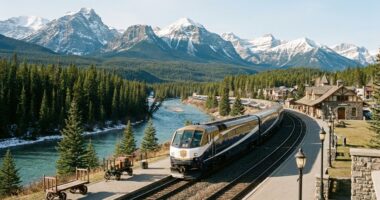
The scenery isn’t going to change your life, but it’s pleasant enough. Spanish countryside, small towns, bits of Zaragoza if you’re paying attention. Large windows mean photographers can snap away at rural landscapes and regional geography without much hassle.
Onboard amenities include Wi-Fi, power outlets, and food service. Seats range from standard to first class, depending on how much legroom your budget can handle. For those wanting premium comfort, Preferente First Class offers superior amenities compared to the standard Turista options. Luggage allowances are generous, though each operator has their own rules because why make anything completely straightforward?
Booking happens online through official websites or third-party platforms. E-tickets work fine. Some fares are flexible and refundable, others aren’t—read the fine print or suffer the consequences later. Early booking typically means better prices and seat selection, which shouldn’t surprise anyone who’s ever bought anything, anywhere.
Did You Know
Can I Bring My Pet on the Train From Madrid to Barcelona?
Yes, pets can travel on Madrid-Barcelona trains, but it’s not exactly a free-for-all.
Small pets under 10kg ride in carriers for €10 with standard tickets.
Large dogs weighing 10-40kg get their own seat on select AVE trains for €35-40, but they need advance reservations and paperwork.
Guide dogs travel free, naturally.
One pet per passenger, period.
Are There Power Outlets Available for Charging Devices During the Journey?
Yes, every high-speed train operator offers power outlets at all seats.
AVE, Ouigo, and Iryo all provide individual charging points. Standard European outlets work with most devices—smartphones, laptops, tablets.
Located between seats or in armrests. Both economy and premium classes get the same power access.
Non-European travelers need plug adapters. If an outlet’s busted, tell the staff.
What Is the Luggage Weight Limit for Train Travel Between These Cities?
Luggage weight limits depend on which train someone picks.
Standard high-speed trains allow up to 25 kg total per passenger across all bags. Pretty generous, honestly.
But here’s the kicker – low-cost operators like Avlo and OUIGO don’t set weight limits for their included luggage allowances.
They focus on size restrictions instead.
The catch? Their size limits are much stricter than regular trains.
Do I Need to Make Reservations in Advance or Buy Tickets?
Yes, AVE high-speed trains require mandatory seat reservations – no reservation, no entry. Period.
Regional trains don’t need reservations but take nine grueling hours. AVE reservation fees run €10-€23.50 depending on class.
Passholders face extra headaches since online booking often doesn’t work for them. Peak travel days? Good luck finding seats without advance booking. Trains sell out, especially during summer and weekends.
Are There Food and Beverage Services Available on Board the Train?
Yes, food and beverage services are available on all AVE and most long-distance trains.
Premium classes get fancy meals from Michelin-starred chef menus. First class receives included meal service.
Standard class? You’re buying snacks from a trolley.
Special dietary needs can be accommodated if ordered 24 hours ahead.
Service quality varies dramatically by ticket class and operator.
Parting Shot
Taking the train from Madrid to Barcelona isn’t rocket science. Book tickets online or at the station. Show up early. Sit down. Wait three hours. Done. The high-speed rail network actually works in Spain, unlike some places. Trains run frequently throughout the day. No security theater like airports. No weather delays. Just efficient transportation between two major cities. Sometimes the simplest option is the best option. Who knew?