
7 Europe Air Travel Vs Train Factors for the Madrid to Seville Route
Seven key factors determine your best Madrid-Seville transport choice: speed, location, security, environment, price, comfort, and reliability.
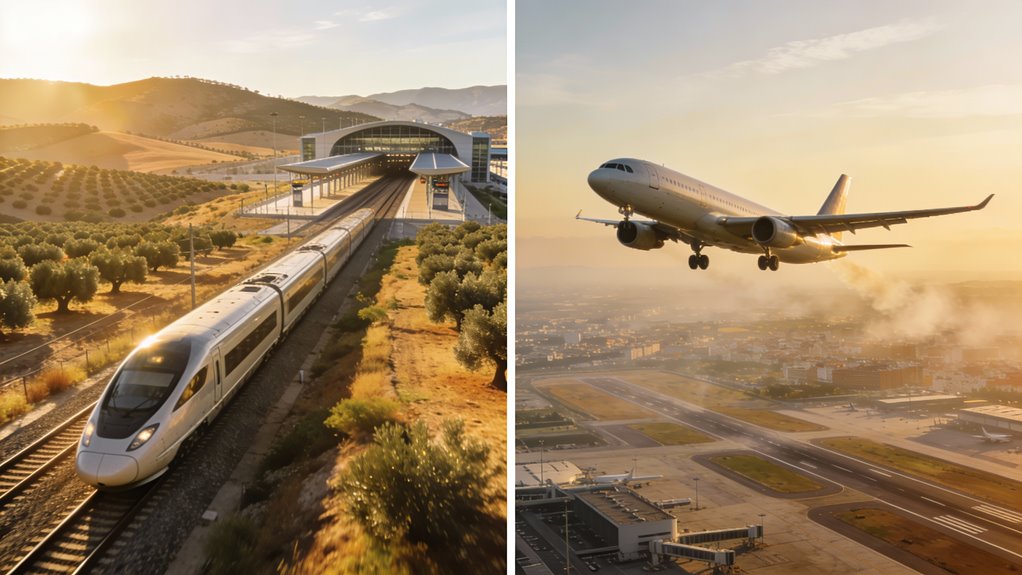
Renfe AVE high-speed trains cover the 471-kilometer distance in 2.5 hours. Iberia and Vueling flights require 4+ hours when you count airport procedures.
- Atocha Station sits 10 minutes from Puerta del Sol. Adolfo Suárez Madrid-Barajas Airport lies 25 kilometers outside the city center.
- Carbon emissions favor rail travel. Spanish high-speed trains run 90% cleaner than aircraft on this route.
- Seat pitch reaches 83 centimeters on AVE coaches. Economy class on most European carriers offers less legroom.
Renfe tickets cost €30-80. This matches Vueling and Ryanair base fares before luggage fees.
Security screening at Barajas demands 90+ minutes during peak hours. Atocha passengers board 15 minutes before departure.
AVE trains maintain 95%+ punctuality rates. Flight delays from weather and air traffic control affect Seville-bound aircraft regularly.
Santa Justa Station in Seville connects directly to the historic center. Seville Airport requires a €25 taxi ride to reach the Guadalquivir riverfront.
Local transport company ALSA offers connecting buses from both terminals. However, train arrivals place travelers closer to Alcázar and the Cathedral immediately.
Fun Activity To Try: Book a window seat on the AVE and photograph the olive groves of Jaén province as you speed through Andalucía at 300 kilometers per hour.
Key Points
- Door-to-door travel time favors the AVE train when accounting for airport transfers, check-in, and security procedures.
- AVE trains maintain over 95% on-time performance with refunds for delays exceeding 15 minutes, offering superior reliability.
- High-speed trains emit approximately 5–6 times less CO2 per passenger than short-haul flights on comparable routes.
- AVE fares (€30–80) include luggage, while budget airlines typically charge extra fees for checked and carry-on bags.
- Train seating offers 83 cm pitch versus 76 cm on planes, plus 2+2 configurations eliminating middle seat assignments.
Factor #1 — Journey Time Shows AVE Completes Madrid-Seville in 2.5 Hours vs 4+ Flying
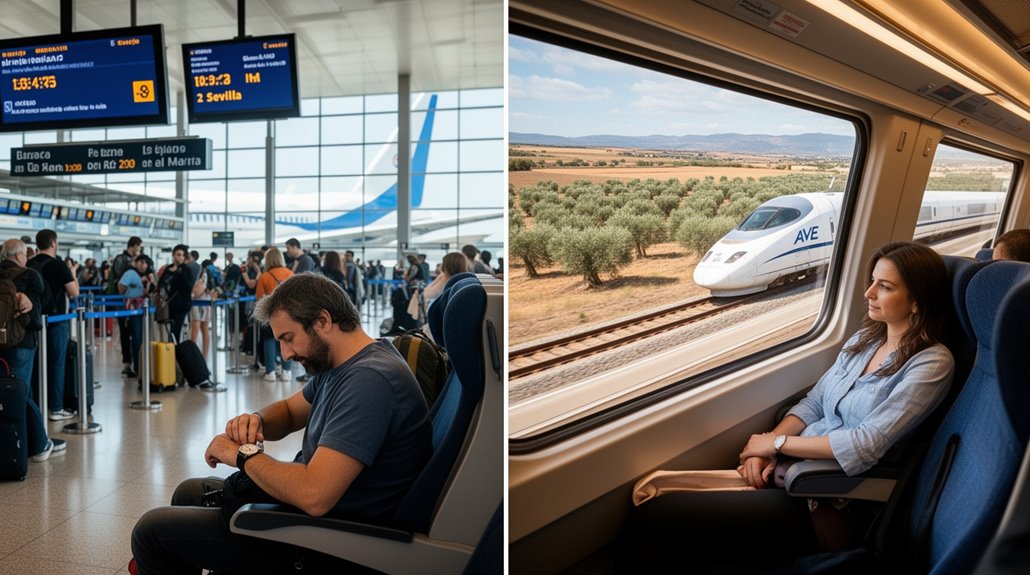
When travelers compare the raw flight time of just over an hour to the AVE’s 2.5-hour ride, the train looks like the obvious loser.
But here’s the thing — that 1 hour flight time is something of a fantasy. You’ve got airport security to clear. Check-in eats up more time. And then there’s the trek out to Madrid Barajas Airport, which sits well outside the city center, versus simply walking into Madrid Atocha Station right in the heart of things. Keep in mind that high-speed services require arriving early for baggage checks, though this still adds far less time than airport procedures.
That 1-hour flight? Pure fiction once you add security lines, check-in queues, and the airport commute.
Stack all of that up, and the total journey time comparison appears to flip entirely. The train likely comes out ahead once you factor in the full door-to-door experience. City center access matters more than most people realize. Atocha station sits about a mile from central hotels, making it easy to reach on foot from most downtown accommodations. Once you arrive in Seville, the time savings become even more valuable when you consider that a typical tapas meal costs €20–25 per person with drinks, giving you more hours to explore the local food scene.
That said, individual circumstances vary — someone living near the airport might see things differently. Even so, for the typical traveler starting downtown, AVE high speed wins.
Factor #2 — City Center Access Places Madrid Atocha Just 10 Minutes from Puerta del Sol
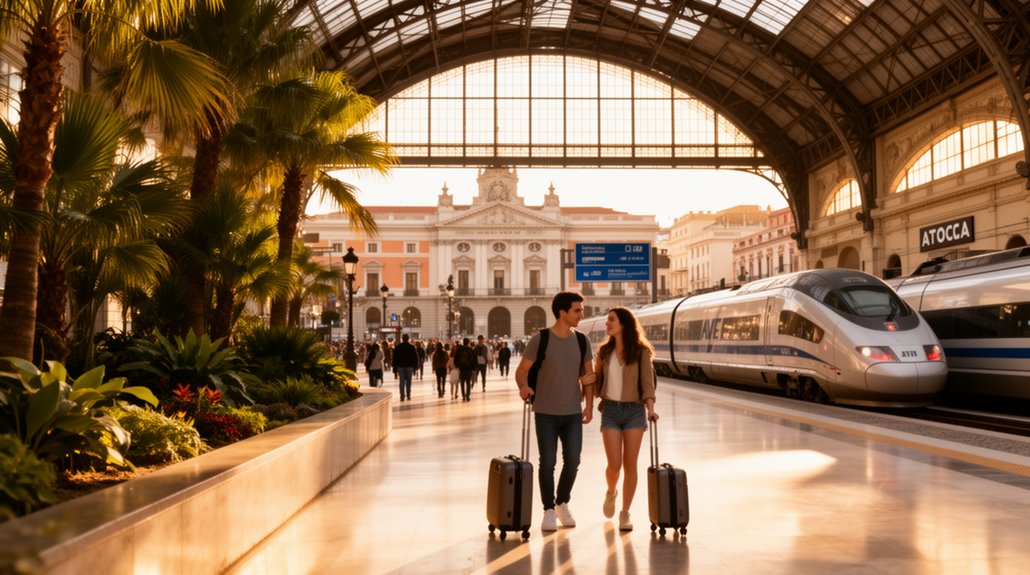
Madrid Atocha station sits roughly 2 kilometers from Puerta del Sol — that’s it. Hop on the Cercanías commuter train or Metro Line 1, and you’re looking at about 10 minutes to reach Sol.
Both options run every 10 minutes or so, which means you’re unlikely to find yourself stranded on the platform for long. The Metro Line M-1 fare costs just €1.50 for the quick trip between Estación Del Arte and Sol. Now compare that to the slog from Barajas airport. If you’d rather walk, the journey from Atocha to Puerta del Sol takes approximately 26 minutes.
The advantage of departing from the city center becomes pretty obvious pretty fast. Platform to plaza? The whole thing takes almost comically little time. This same station, officially called Madrid Puerta de Atocha, also serves as the departure point for high-speed AVE trains to Barcelona and other Spanish cities.
Factor #3 — Security Time Elimination Saves 60-90 Minutes by Skipping Barajas Queues
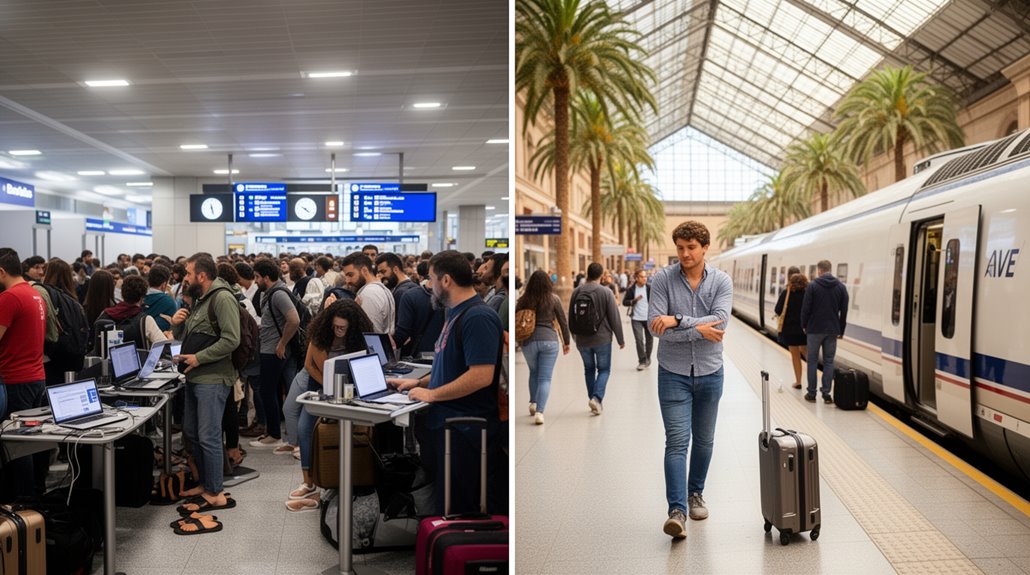
Somewhere between 60 and 90 minutes of your life gets swallowed up before a Madrid–Seville flight even leaves the ground. Security waits at Barajas swing wildly—one morning you’re through in fifteen minutes, the next you’re shuffling past the same duty-free shop for the third time.
The recommended arrival window sits at 90–120 minutes for domestic flights, which tells you something about how unpredictable the whole thing can be. And it gets worse.
Disruption events have left hundreds of passengers missing flights entirely after hour-long security crawls. A recent work-to-rule action by 21 security staff at Terminal 4 caused queues stretching up to 50 minutes before operations normalized by midday. That said, even on a calm day, the structural time cost appears baked into the airport experience. A Fast Track pass is available online to shorten waits, but it only operates during limited hours and still requires planning ahead.
On the train? Gone. No checkpoint, no liquids in a plastic bag, no removing your belt while a toddler screams behind you. Just predictability. Experienced rail travelers recommend arriving early at the station, but that buffer is measured in minutes rather than hours.
Factor #4 — Carbon Emissions Make AVE Train Travel 90% Cleaner Per Passenger Than Flights
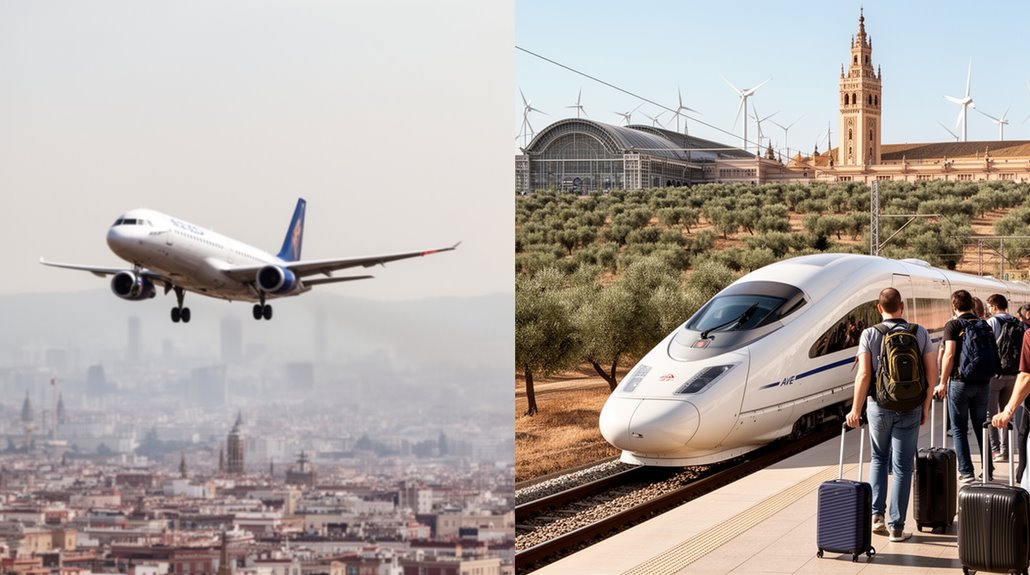
Even if the security lines and airport hassle weren’t enough to sway someone, the carbon math probably should be.
The emission differences here are stark—almost jarring, really. On the Madrid–Seville route, the AVE runs on electrified rail powered by what appears to be roughly 80% renewable energy. That’s significant. This aligns with why high-speed trains across Europe have become the preferred sustainable alternative for routes under 700 kilometers. When planning your journey, it’s essential to keep in mind budget travel tips for Europe to ensure you make the most of your experience without overspending. By utilizing local transportation options and seeking out free attractions, travelers can explore the rich culture and history of the continent while staying within their financial means. Additionally, booking accommodations in advance often leads to significant savings, especially in popular cities during peak seasons.
CO2 emissions per passenger? Trains seem to emit about 5-6 times less than short-haul flights, though the exact figure likely shifts depending on load factors and how you’re counting. Looking at the broader picture, short flights account for roughly 25% of EU aviation emissions, making routes like this prime candidates for rail alternatives.
Life-cycle assessments tend to back this up. Some might argue that aviation technology is improving, and that’s fair. Even so, the gap remains considerable. This sustainability advantage is resonating with travelers, as more than two in three are now likely to fly less due to environmental concerns.
Modal shift, in other words, actually matters here.
Factor #5 — Ticket Costs Show €30-80 AVE Fares Matching Budget Airline Price Points
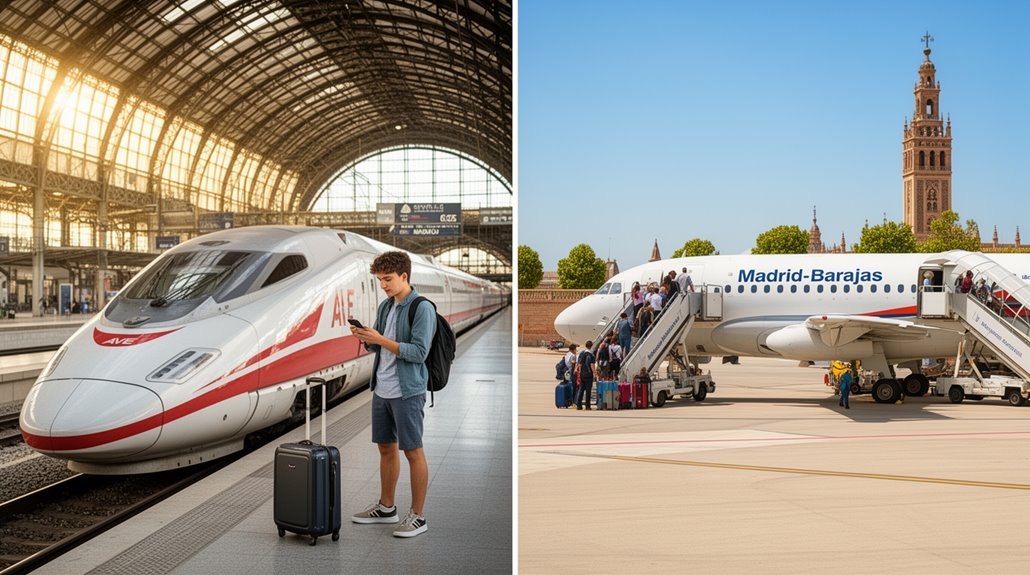
When you actually sit down and compare ticket prices, the gap between trains and planes turns out to be narrower than most travelers assume. That €30-80 AVE fare range? It lands right in Vueling territory.
But here’s where things get interesting—Renfe throws in your luggage. Vueling, not so much. Those baggage fees have a way of creeping up on you.
And sure, budget airlines love advertising those €15 fares. Tempting, right?
That price tag likely won’t survive first contact with reality once you start adding extras. Last-minute bookings don’t really favor either option, to be fair. Prices seem to spike across the board when you’re scrambling to travel. Smart travelers know you can book AVE tickets up to one year in advance to lock in the best rates. For the absolute lowest fares, the sweet spot is actually 91 days before departure. Even high-speed routes require advance reservations since seat allocation can be limited, making early planning essential for both price and availability. The whole “cheap flight” pitch starts looking a bit less convincing once you factor everything in.
Factor #6 — Seat Comfort Favors AVE Turista’s 83cm Pitch Over Economy Air’s 76cm
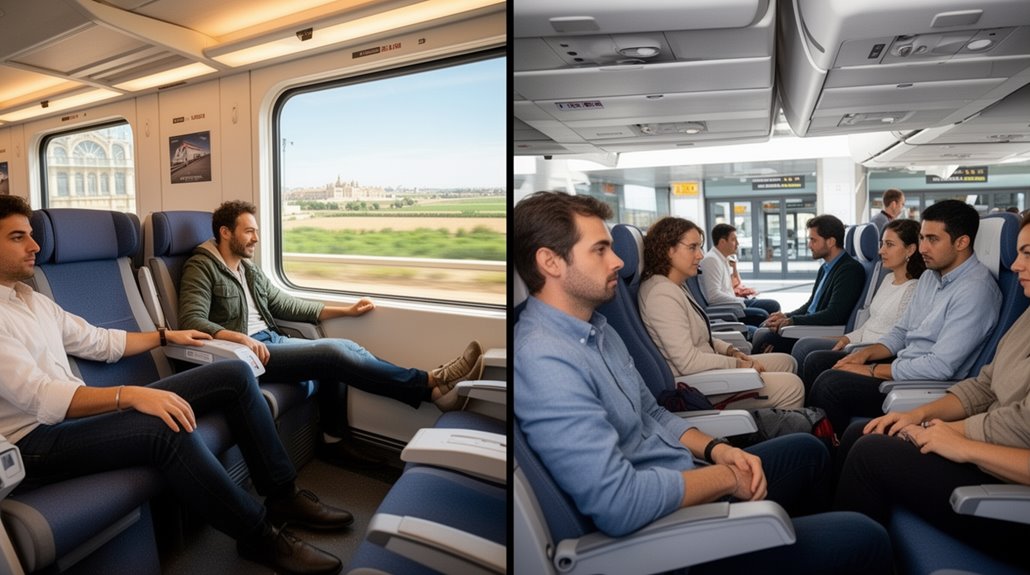
Seven centimeters doesn’t look like much when you’re staring at a spec sheet.
But fold yourself into an economy airline seat for any length of time, and your knees will likely have opinions. AVE Turista’s 83cm pitch versus economy air’s 76cm—that gap appears to matter more than the numbers suggest.
Then there’s the seating layout to consider.
RENFE runs 2+2 configurations on the Madrid to Seville route, which means no middle seat lottery. Nobody wedged between two strangers, no awkward elbow negotiations. Each seat comes equipped with reclining capability adjustable to travel direction, along with a footrest, personal table, and individual reading light. Free WiFi on the PlayRenfe network lets you stay connected throughout the journey without hunting for hotspots or burning through mobile data. You can use the train time productively—catching up on work, reading, or simply relaxing—while enjoying quiet car etiquette that keeps the environment peaceful.
On top of that, after you’ve logged 4+ hours of total air travel time—security, boarding, the flight itself, deplaning—rolling straight into a city center station just hits differently.
Factor #7 — Punctuality Confirms AVE Maintains 95%+ On-Time Arrivals on This Route
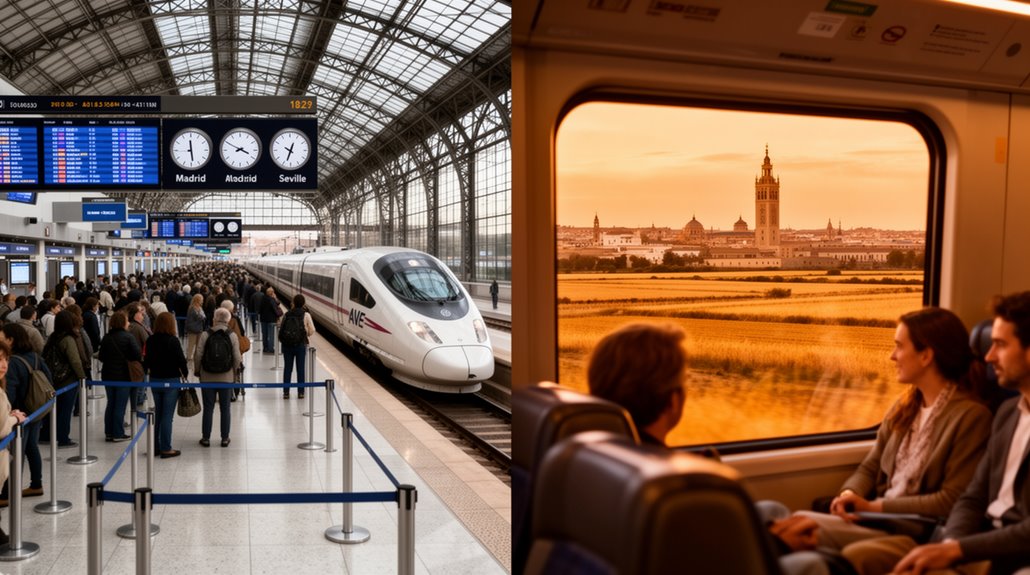
Punctuality might sound like a boring metric—until a missed connection leaves you stranded at an airport with nothing but a vending machine and regret for company.
AVE maintains 95%+ punctuality rates on this route, and that’s not just marketing fluff.
Renfe actually backs it with refunds for delays over 15 minutes, which suggests they’re pretty confident in those numbers.
Meanwhile, Seville San Pablo Airport appears more vulnerable to the kind of weather delays that trains simply dodge.
There’s something to be said for that.
Even so, it’s worth noting that air travel has its own redundancies built in. Budget-conscious travelers can also choose Avlo, Renfe’s low-cost service with fares starting from €7, while still benefiting from high-speed rail’s punctuality advantage. Understanding how dynamic pricing works across Spanish rail services can help you lock in the best fares while still enjoying reliable arrival times.
That said, the combination of Seville Santa Justa’s city access and a consistently predictable journey time? Reliability likely wins out for most travelers weighing their options. With up to 10 departures per day, you also have plenty of flexibility if your schedule shifts unexpectedly.
Frequently Asked Questions
Can I Stop in Córdoba Midway and Continue to Seville on the Same Ticket?
Standard Madrid-Seville AVE tickets do not permit breaking the journey at Córdoba and reboarding a later train. Travelers planning a Córdoba stopover should purchase two separate tickets: Madrid-Córdoba and Córdoba-Seville.
How Many Daily AVE Departures Run Between Madrid and Seville?
Approximately 12–15 direct AVE high-speed trains operate daily between Madrid Atocha and Seville Santa Justa. Departures are spaced roughly every 30–60 minutes during peak hours, offering travelers considerable scheduling flexibility throughout the day.
Is Wifi Available Onboard the Madrid to Seville AVE Trains?
WiFi is available onboard Madrid to Seville AVE trains through the PlayRenfe service. Both Standard and Comfort class passengers can access the network, which provides internet connectivity and onboard entertainment throughout the 2.5-hour journey.
What Luggage Allowance Is Permitted on AVE Trains to Seville?
Passengers on AVE trains to Seville may carry up to three items of hand luggage with a combined weight limit of 25 kg. Each item must not exceed 85 × 55 × 35 cm in dimensions.
Are Mobile Tickets Accepted for Boarding AVE Trains at Madrid Atocha?
Mobile tickets are accepted for boarding AVE trains at Madrid Atocha. Passengers present their PDF or app ticket with a visible barcode/QR code at access gates or to staff for scanning during the boarding process.
Parting Shot
The AVE basically demolished air travel on this route. Faster door-to-door times, cheaper fares, way less hassle, and passengers don’t have to pretend airport security is fun. The train wins on comfort, punctuality, and environmental impact too. Seven factors examined. Seven points to rail. Flying Madrid to Seville still exists, sure. But the numbers tell a pretty one-sided story here.