How Budget Train Travel Europe Tips Maximize Regional Train Savings
Budget train travel Europe tips: regional trains eliminate reservation fees that high-speed services charge.
Deutsche Bahn regional services, Trenitalia Regionale, and SNCF TER networks skip the €5-15 booking surcharges. Walk-up tickets work perfectly. Most regional routes require no advance reservations.
- Day passes: Regional day tickets like the Bayern-Ticket in Germany or Lombardia day pass in Italy pay off after three journeys
- Off-peak pricing: Midday departures on routes like the Rhône-Alpes TER save 10-30% compared to rush hour fares
- Second class seating: Short journeys on carriers like ÖBB Regional or Swiss SBB Regio need no upgrade
Local ticket counters at stations like Roma Termini or München Hauptbahnhof sell combination passes. The Interrail Pass covers unlimited regional travel across 33 countries. Trainline app compares prices across carriers instantly.
Small-town routes connect through regional hubs. The Cinque Terre line in Italy uses Trenitalia Regionale exclusively. Austrian lake towns depend on ÖBB regional connections from Salzburg.
Station bakeries like Ditsch in German stations sell cheap meals. Pack water. Bring snacks from local Carrefour or Lidl shops near stations.
Fun Activity To Try: Ride the scenic Bernina Express regional route section between Tirano and Poschiavo—same views as the tourist train, fraction of the price.
Key Points
- Regional trains typically require no reservations, eliminating €5–15 fees per journey that quickly add up for families.
- Day passes offer unlimited regional travel and provide best value when clustering three or more stops together.
- Travel midday between 09:00–16:00 for off-peak discounts of 10–30% on regional services across Germany, Austria, and France.
- Second class is adequate for most travelers since many regional trains lack first class and amenities are similar.
- Use split-ticketing tools to chain cheaper domestic fares on cross-border routes, potentially saving up to 40%.
No-Seat-Fee Regional Services Eliminate €5-15 Reservation Surcharges Per Journey

While high-speed trains zip across Europe with sleek interiors and promises of Wi-Fi, they come with a catch that tends to sting the wallet.
Reservation fees typically run €5-15 per journey—and on premium routes, you might be looking at €30 or more. Eurostar routes between London, Paris, and Brussels charge €22-€43 depending on class, making these among the priciest mandatory reservations in Europe.
Regional trains, on the other hand? No reservation requirement whatsoever. You just hop on with a validated pass and find a seat. Austrian routes like Salzburg to Munich on regional services don’t even offer reservation options, making the process completely fee-free.
Second class offers adequate comfort for most travelers, though admittedly the experience lacks a certain glamour. For those planning multiple journeys, rail passes like Eurail can provide additional value when combined with reservation-free regional routes.
That said, pass versus ticket comparison guides consistently appear to show that stopping service lower fares beat the fancy alternatives.
Even so, there’s something to be said for weighing what you actually value in a journey—speed and polish, or keeping those euros in your pocket.
How Walk-Up Fare Availability Enables Spontaneous Same-Day Budget Travel

Regional trains across Europe almost always let you buy tickets the same day you want to travel. That’s reservation-free riding at its finest, really.
Regional trains keep it simple—just show up, grab a ticket, and go wherever the day takes you.
No advance booking drama to worry about—same-day purchase flexibility means your spontaneous decisions likely won’t cost you extra. Most local connections appear to run on no-reservation routes, which keeps things refreshingly simple.
Point-to-point tickets? They give you options. Day passes sweeten the deal even more, especially if you’re hopping between a few towns. This contrasts sharply with international high-speed services like Eurostar, where tolls and station fees contribute to fares roughly €0.17 per passenger-kilometer. These premium services like the London to Paris route require booking well in advance for the best prices.
That said, regional trains just seem to work for last-minute plans in a way that longer-haul services often don’t. For example, walk-up off-peak fares on routes like Rome–Florence remain at around €43 one-way, making same-day travel surprisingly affordable compared to premium high-speed alternatives. train travel advantages in Europe extend beyond just affordability. The convenience of hopping on a train allows travelers to spontaneously explore charming towns and picturesque landscapes that might otherwise be overlooked. Moreover, with efficient connections and minimal delays, the overall experience can be far less stressful than navigating through airports. Some of the best train journeys in Europe, such as the scenic ride from Lisbon to Porto or the breathtaking views along the Glacier Express, offer stunning vistas that make the trip an unforgettable part of your travel experience. Each journey is not just about reaching a destination but also about enjoying the rolling hills, vibrant countryside, and historic towns that pass by your window. With such an array of beautiful routes to choose from, train travel becomes a compelling way to immerse yourself in the culture and landscapes of Europe.
24-Hour Regional Day Passes Maximize Cost Efficiency Across Multi-Stop Journeys

Most hour-based regional passes kick off their countdown at first validation, not at midnight—and that’s a pretty big deal.
Day passes that unlock unlimited travel across regional routes basically let you cram multiple stops into a single purchase, which can work out beautifully if you plan it right.
Connection planning matters more than you’d think here.
Front-loading your longer segments tends to make sense, and clustering towns that sit along the same local network coverage helps stretch your value further.
Off-peak timing? Worth exploiting when you can.
That said, your mileage may vary depending on the specific region.
The math on pass comparison versus split ticketing usually seems to favor day passes once you’re hitting three or more hops—though there could be edge cases where that doesn’t hold.
Still, for most travelers hopping between, say, a main city and a couple of surrounding villages in Bavaria or the Swiss rail network, the day pass approach appears to come out ahead. The Swiss pass stands out because it covers much more than just trains, offering unique bonuses that add extra value beyond typical rail passes. When considering rules for train travel in Europe, it’s essential to familiarize yourself with regional regulations and available discounts. Each country may have its own unique offerings, so researching options can greatly enhance your travel experience. For instance, many destinations offer special passes that provide unlimited travel over specific periods, adding convenience for those looking to explore multiple cities.
In countries like Germany, Austria, and Switzerland, regular daytime trains usually require no reservations, which makes spontaneous multi-stop itineraries even more practical with day passes. Switzerland’s clear station signage and frequent service make navigating between platforms and connections remarkably stress-free for budget travelers.
Pretty straightforward calculation, honestly, even if the route planning takes a bit of thought upfront.
Why Continuation Services Unlock Split-Ticket Savings on Cross-Border Routes

Cross-border train fares rarely follow logical math—that’s just the reality. But savvy travelers have caught on: splitting tickets at strategic points can slash costs dramatically. The trick appears to work because different countries price their segments separately, and chaining those domestic fares together often beats the through-ticket price. Regionalzug services and stopping trains? They tend to dodge international supplements entirely, which is where the real savings seem to hide.
| Strategy | Benefit |
|---|---|
| Cross-border continuation options | Chain cheaper domestic fares |
| Reservation avoidance | Skip €5-15 fees |
| Off-peak services | Lower base pricing |
| Advance fares | Operator-specific promos |
That said, it’s worth noting this approach isn’t foolproof. You’re juggling more tickets, tighter connections, and the occasional platform sprint. Understanding how dynamic pricing works across different European rail operators can help you time your bookings for maximum savings. Even so, for routes like Munich to Salzburg or Lille to Brussels, the math is likely to work in your favor. On top of that, skipping those €5-15 reservation fees adds up faster than you’d expect—especially if you’re traveling with family or making multiple trips. Cross-border savings compound quickly when you know where to split. Platforms like Trainline and Splitticketing can automate these calculations, with some claiming up to 40% savings on rail travel. Navan has also entered this space, partnering with Trainline Partner Solutions to offer split-ticketing that saves travelers an average £13 per UK return trip.
Midday Regional Services Access Lower-Demand Discounted Off-Peak Fares

Travelers who time their journeys right often stumble onto a quiet little secret: midday trains are cheaper. Off-peak discounts on services like Regionalzug, Regionalbahn, and TER France appear to shave 10–30% off second class fares outside rush hours. Around the continent, quiet train travel in Europe offers more than just savings; it provides a serene way to experience stunning landscapes without the hustle and bustle of peak hours. Travelers can savor the peaceful atmosphere as they glide through charming towns and picturesque countryside. This leisurely pace enhances the overall journey, allowing for moments of relaxation and reflection that are often missed when traveling during busier times.
Why does this work? Well, business crowds tend to vanish between 09:00 and 16:00, which likely explains the slower service savings approach. Germany takes this even further with the Deutschlandticket, offering €58 per calendar month for national travel and local public transport. This pass covers everything from S-Bahn and Regional Express trains to local buses and trams across the country.
Advance booking can help stretch your budget further. That said, pass alternatives and walk-up off-peak tickets may compete just fine—sometimes even better, depending on your route.
Standard Second Class Seating Delivers Comparable Comfort on Shorter Journeys

For trips under two or three hours, shelling out for first class starts to feel a bit pointless, honestly.
The difference in seat pitch is likely marginal at best, and most modern regional trains appear to offer Wi-Fi and power outlets in both classes anyway.
So why bother?
That said, second class works particularly well when you pair it with a few smart moves—booking advance point-to-point tickets, say, or opting for slower trains that wind through more scenic budget routes. This approach makes even more sense given that some regional trains lack first class entirely, so you wouldn’t have the upgrade option anyway.
On top of that, you’re typically looking at no extra fees for luggage, decent options for connecting to local services, and often the ability to bring a bicycle along. You can also take advantage of unique train features like quiet cars when you need to work or rest during your journey. Additionally, for those embarking on solo train travel tips for women, it’s essential to research your route and understand the safety protocols of each station. Many trains provide amenities specifically designed for female travelers, such as women-only cars or designated waiting areas. Connecting with fellow passengers can also enhance your experience, allowing you to share travel insights and local recommendations.
These perks may not seem flashy, but they add up quickly when you’re watching your spending. Plus, you’ll find yourself in good company since the majority of European travelers opt for second class themselves.
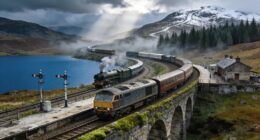
Slower Regional Journeys Provide Panoramic Scenic Views Without Premium Pricing

Beyond the wallet-friendly basics, regional trains pull off something you might not expect—they basically function as rolling observation decks.
The Rhine Valley’s castle parade, Cinque Terre’s cliffside drama, Scotland’s West Highland moorlands.
These all run as standard services, which seems almost too good to be true.
No premium panoramic surcharges tacked on.
Just regular tickets.
And here’s the thing: those youth discount strategies and senior fare access tips you’ve picked up? They work here too.
The scenic route bonus appears to offer genuine value, though your mileage may vary depending on weather and timing.
Slower speeds mean you’re actually watching the landscape unfold rather than tunneling through mountains at breakneck pace.
The West Highland Line journey from Glasgow to Mallaig even crosses the famous Glenfinnan Viaduct, adding cinematic drama to an already stunning route. ScotRail operates this iconic service as part of their regular network, making it accessible without special bookings or premium fares.
The Cinque Terre route connects all five coastal villages with journeys often lasting just five minutes per segment, making it easy to hop between towns without any premium ticket requirements.
Whether that trade-off appeals to you is personal, but for many travelers, the extra time is part of the point.
Frequently Asked Questions
Can I Bring My Bicycle on Regional Trains Without Paying Extra Fees?
Travelers can bring bicycles free on regional trains in France, Spain, and some German states. Most other countries charge small fees between €1.50–€6.50. Folding bicycles in bags typically travel free throughout Europe.
Are Regional Trains Wheelchair Accessible Across All European Countries?
Regional train wheelchair accessibility varies significantly across Europe. Sweden, Norway, and the Netherlands offer near-complete access, while Belgium, Denmark, Czechia, and Italy have substantial gaps, with only major stations providing reliable wheelchair facilities.
How Far in Advance Can I Purchase Regional Train Tickets Online?
Regional train tickets typically become available online 1–3 months before departure in Western Europe, while Central and Eastern European countries often offer shorter windows of 30–60 days. Checking national rail websites confirms exact opening dates. Arriving at train stations in Paris can be a delightful experience, offering a gateway to the city’s rich culture and history. Familiarize yourself with the layout of major terminals like Gare de Lyon and Gare Saint-Lazare to ensure a smooth journey. Additionally, consider booking your tickets in advance to secure the best options and avoid last-minute stress.
Do Regional Trains Offer Free Luggage Storage for Large Suitcases?
Regional trains typically allow large suitcases free of charge. Passengers store them in end-of-carriage racks or designated luggage areas. No reservation is required for storage space, though availability operates on a first-come, first-served basis.
Which European Countries Have the Most Extensive Regional Train Networks?
Germany operates Europe’s most extensive regional rail network at 38,691 km, followed by France with 27,812 km and Poland with 19,355 km. These countries offer budget travelers comprehensive coverage for spontaneous, reservation-free journeys across diverse regions. For those looking to explore Italy, train travel tips for Italy can enhance the experience significantly. With its scenic routes and efficient service, Italy’s rail system allows travelers to effortlessly visit iconic cities like Rome, Florence, and Venice. Understanding ticketing options and schedules can make your journey more enjoyable while providing maximum flexibility.
Parting Shot
Regional trains won’t win any speed contests. That’s kind of the point. These slower services trade velocity for value—no reservation fees, walk-up flexibility, and fares that don’t require a second mortgage. The scenic routes are a bonus, not a consolation prize. For travelers watching their euros, regional rail networks across Europe deliver genuine savings without the premium price theater.