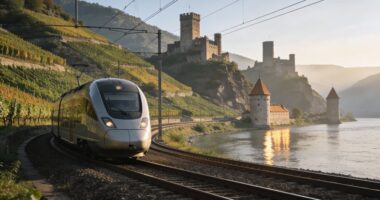
Brussels-Midi station: the gateway Eurostar recommends for newcomers to European rail travel.
The journey takes two hours from London St Pancras International. The route delivers passengers to Belgium’s primary high-speed hub. Border control occurs at departure. Arrival means freedom to explore.
- Eurostar operates ten daily services on this corridor. The train reaches speeds of 300 km/h through the Channel Tunnel and French countryside.
- Brussels-Midi connects travelers to Thalys services toward Amsterdam, ICE trains to Frankfurt, and TGV routes into France. Six countries sit within reach from one platform.
- SNCB Belgian Railways manages the station’s local connections. Grand Place stands fifteen minutes away by metro. The Manneken Pis district welcomes visitors within walking distance.
The station functions as Europe’s rail junction. Connections run to Bruges, Ghent, and Antwerp. Deutsche Bahn and SNCF services depart hourly. The architecture guides travelers through clear signage. No terminal transfers. No baggage carousels. Walk off the train. Walk into Brussels. Seasonal train routes across Europe make it easy to explore picturesque cities and enjoy vibrant festivals. Travelers can hop on a train to admire the scenic countryside or visit multiple countries in just a few days. With such convenient connections, impromptu adventures become a delightful possibility.
Fun Activity To Try: Book a same-day round trip to Bruges via SNCB—the medieval city sits just one hour from Brussels-Midi, making it the perfect first European rail adventure.
Key Points
- The two-hour journey from St Pancras to Brussels-Midi is short enough to minimize travel fatigue and passport-control anxiety.
- Border procedures are completed before departure, eliminating stressful arrival queues and allowing passengers to relax onboard.
- Brussels-Midi station features clear multilingual signage, helpful staff, and straightforward navigation ideal for inexperienced rail travelers.
- The station serves as a major European hub with connections to six countries, making onward travel simple and flexible.
- Ten daily departures and generous luggage allowances provide scheduling flexibility and reduced stress for first-time international train travelers.
The Two-Hour Direct Journey Makes Brussels Ideal for First Channel Tunnel Crossings

For travelers who’ve never zipped beneath the English Channel, the Brussels route offers something pretty hard to beat. Two hours from St Pancras International to Brussels-Midi station—short, sweet, done.
That brevity appears to be exactly why channel tunnel crossing guides keep flagging this as ideal for first-timers. And honestly? The border crossing and passport control side of things feels less intimidating when you’re not sitting there for what seems like forever. Since the first Eurostar trains departed in 1994, the London to Brussels connection has become one of the most established routes in the network. The border control procedures take place before departure, so once you’re on board, you can simply relax and enjoy the journey.
Even so, your mileage may vary depending on the day and how busy things get. Brussels-Midi itself is described as a modern station that’s easy to navigate, with clear signage that helps travelers find their way to the Eurostar Channel Terminal. Simple as that, though.
Brussels-Midi Serves as Immediate Gateway to Thalys ICE and Pan-European Networks

Brussels-Midi functions as something of a sprawling junction box for Europe’s high-speed rail network. The station concentrates Eurostar, Thalys connections, and ICE services on platforms 3–6—making it a genuine EU rail hub.
Brussels-Midi isn’t just a station—it’s where Europe’s high-speed lines converge, a genuine crossroads for continental rail travel.
Getting around? Pretty straightforward, though that doesn’t mean you should wing it entirely. The main passageway, known as the Couloir Principal / Hoofdgang, runs under the railway tracks and provides access to all departing trains.
Connection timing appears to matter quite a bit here. Many transfers clock in around 20 minutes, which seems tight but is likely manageable if you know where you’re headed. The official guidance suggests allowing at least one hour for connections to account for finding your platform and passing through any additional security checks. Travelers should also carry valid ID since random customs checks may occur even on these cross-border routes.
That said, rushing through an unfamiliar station never feels great. The Belgian rail network fans out from this spot, so you’re well-positioned for onward travel.
On the platform logistics front: arrivals and departures often happen on adjacent platforms. Walk across. Done.
Even so, it’s worth double-checking the departure boards—schedules can shift, and assumptions have a way of biting you.
How City Center Arrival Eliminates Complex Airport-Style Terminal Transfers

Beyond the platform logistics, though, there’s a bigger picture worth noticing.
Brussels-Midi drops you straight into actual city streets—no shuttle buses, no 20-kilometer airport crawl that eats into your afternoon.
That’s the thing about city center arrival.
Border crossing happens before you leave, while you’re still alert, not after landing when exhaustion has properly set in.
And the station itself?
It connects directly to local public transport.
Metro, trams, all of it right there.
This likely makes a bigger difference than most travelers initially expect.
Luggage handling becomes almost comically simple—grab your bag, walk out, done.
No carousels spinning for twenty minutes while you wonder if your suitcase made the same journey you did.
There’s no stressing about liquid restrictions either, since Eurostar allows you to bring unlimited liquids through security.
The generous luggage allowances add to this convenience, letting you pack freely without worrying about strict weight limits or extra fees.
Even so, the real efficiency might be what’s absent.
Those station navigation guides nobody seems to need?
That’s because the layout is, well, that straightforward.
The main passage even provides access to staffed info booths, waiting areas, and food and drink options for anyone who does need to pause.
Whether this holds true during peak holiday chaos is another question, but under normal circumstances the whole process appears designed for people who actually want to get somewhere rather than wander through terminals.
Eurostar Terminal Border Procedures Complete UK-EU Clearance Before You Board

Most international journeys save the passport drama for arrival—those bleary-eyed queues, jet lag creeping in, that particular fluorescent-lit purgatory we’ve all endured. Eurostar, though, flips the whole thing around.
Border procedures happen *before* boarding at St Pancras. Passport control, security screening, UK exit, Schengen entry—all done in one flow, or at least that’s how it tends to work on a good day.
| Step | What Happens |
|---|---|
| Ticket Gates | Automated scan |
| Security | Bags + body scanner |
| UK Exit | Border Force check |
| EU Entry | Schengen clearance |
| Departure | Board freely |
The upshot? You arrive at Brussels-Midi feeling more like a domestic passenger than someone who just crossed an international border. No queues to speak of. That said, this does mean building in extra time at St Pancras—miss the window and you’re watching your train leave without you. From 12 October 2025, British passport holders will also need to complete EES registration on their first visit, which involves a passport scan, fingerprints and photograph. Once registered, your digital EES record remains valid for 3 years, with subsequent entries requiring only a fingerprint or photo.
For those planning a London departure: the frequent direct service appears to make EU rail hub access genuinely straightforward, without the chaos you’d typically expect on arrival. From Brussels, onward connections to destinations like Paris take roughly 3 hours and 20 minutes on the high-speed Eurostar service, making the Belgian capital a practical gateway to the continent.
Why the Belgian Rail Hub Enables Same-Day Connections to Six Countries

Belgium sits smack in the middle of Western Europe’s busiest transport corridors, which means arriving at Brussels-South puts you within easy reach of France, Germany, the Netherlands, Luxembourg, the UK, and beyond—all before dinner, if you time it right.
There’s a reason continental connection guides keep pointing to Brussels as a multi-country gateway.
Departures run frequently enough that you may not even need a detailed onward journey plan. The high-speed link to Paris via HSL 1 slashes travel time to just 1 hour 22 minutes, making France an easy same-day destination.
That said, connection windows can be tight. First-time travelers should consider a Eurail pass to simplify bookings across multiple countries without purchasing separate tickets for each leg.
Belgian rail networks feed directly into high-speed lines, so the onward routing possibilities are, frankly, a bit ridiculous. Starting in September 2026, DB ICE trains will add direct Antwerp-to-Cologne services with stops at Brussels Airport-Zaventem, further expanding cross-border options.
Even so, it’s worth noting that tight connections cut both ways—miss one train and your evening plans might shift.
Still, for sheer accessibility to six countries in a single day, few hubs appear to match what Brussels offers.
Ten Daily Departures Provide Flexible Scheduling Options for First-Time Travelers

Ten direct trains a day might sound like overkill—until you’re actually sitting there trying to piece together your first international rail trip. Then, suddenly, that frequency starts to matter quite a bit.
The journey clocks in at around two hours, which is manageable. And here’s the thing: when you’re not locked into a single departure window, your connection options appear to multiply in ways that genuinely reduce stress.
Most ticket booking advice seems to overlook this, but strategies tend to work better when you’ve got some wiggle room built in. Miss one train? There’s likely another in an hour or so.
On top of that, English-speaking assistance is available—helpful for first-timers navigating unfamiliar systems. Ticket pricing does vary depending on when you travel, so an early morning departure may cost differently than a midday option. Worth checking before you commit. Tools like the Eurail Planner and apps such as Omio can help you compare departure times and fares to find the best option for your schedule.
English-Speaking Brussels Creates a Stress-Free Continental Rail Introduction

Scheduling flexibility helps, sure.
But here’s the thing about first-time continental rail—language anxiety tends to kill the vibe faster than anything else.
Brussels appears to solve that problem pretty quickly. Nearly half the city speaks English, which makes a real difference when you’re jet-lagged and trying to figure out platform numbers. That 47% English proficiency has climbed steadily from just 33% in 2000, reflecting the city’s increasingly international character.
The Eurostar Brussels route drops you at Brussels-South station, and this is where it gets easier: multilingual signage everywhere, customer service staff who actually understand what you’re asking.
Brussels-South station actually works the way you hope a major transit hub would—clear signs, staff who get it.
That said, “stress-free travel” can sound like marketing speak. In this case though, it’s closer to just… a regular Tuesday.
Signs make sense. People respond in your language. You’re not miming your way through a ticket change.
Even so, it’s worth noting that “nearly half” still means roughly half the population doesn’t default to English—so patience remains useful. But compared to diving straight into a city where you’d be completely adrift linguistically? Brussels offers what seems like a genuinely soft landing. The city’s linguistic diversity runs deep, with the Language Barometer recording 104 different languages spoken across the region this year. Once you’ve built confidence here, tackling a city like Paris with its six major train stations serving different regions becomes far less intimidating.
Frequently Asked Questions
What Is the Maximum Luggage Allowance Permitted on the Brussels Eurostar Route?
Passengers on the Brussels Eurostar route receive two main luggage items plus one hand luggage piece in Standard class, or three main items plus one hand luggage in Premier class, with no weight limit but individual items capped at 30kg.
Can I Upgrade to Business Premier Lounge Access After Booking Standard Class?
Standard class ticket holders cannot directly upgrade to Business Premier lounge access. Eurostar policy prohibits upgrades from Standard or Standard Premier to Business Premier through normal exchange channels. Only auction-style bidding may occasionally provide this upgrade opportunity.
How Does Eurostar Pricing Compare Between British Pounds and Euros Payment Options?
Eurostar’s internal currency conversion often includes markups exceeding 10% compared to market rates. Travelers typically find savings by selecting GBP or EUR pricing and using a no-foreign-transaction-fee card rather than accepting USD conversion.
Is Wifi Connectivity Reliable Throughout the 50KM Channel Tunnel Segment?
Wi-Fi connectivity in the Channel Tunnel segment remains relatively consistent, supported by dedicated 4G infrastructure installed since 2014. Passengers can expect basic functions like email and messaging to work, though bandwidth limitations restrict streaming services.
Are Quiet Coach Reservations Available for Passengers Wanting a Peaceful Journey?
Dedicated quiet coaches are not currently available on Eurostar services. A trial ended without permanent implementation. Passengers seeking peaceful journeys may select seats away from the bar car or book higher classes for generally calmer environments.
Parting Shot
Brussels just makes sense for a first Eurostar trip. Two hours, direct service, and you’re standing in the middle of Europe’s rail network. No airport chaos. No confusing transfers. Border stuff? Done before boarding. The city speaks English, which removes that particular anxiety. Six countries accessible in a single day from one station. It’s not complicated. That’s kind of the whole point.