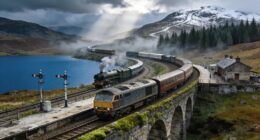
Hidden Railways of Europe: How to Discover Secret Rail Routes Off the Tourist Trail
Hidden railways of Europe: these forgotten routes exist across the continent, threading through misty valleys and crossing century-old viaducts. Regional train networks operate single-carriage services. Mainstream booking platforms ignore them. The routes remain practically empty while high-speed lines overflow with crowds.
- Regional timetables: Local operators publish schedules that international apps never index
- Rail forums: Enthusiast communities share route information that guidebooks omit
- Narrow-gauge lines: Historic railways connect remote villages through mountain passes
Discovery requires specific knowledge. The Swiss Rhaetian Railway crosses alpine terrain. The Semmering Railway in Austria winds through UNESCO-protected landscapes. Portugal’s Douro Line follows river gorges past terraced vineyards. These services don’t advertise to international travelers. They serve local communities. They preserve railway heritage.
European rail networks contain thousands of branch lines. Station masters know departure times by heart. Conductors recognize regular passengers by name. The experience differs entirely from crowded intercity services. Travelers find authenticity here. They find solitude. They find routes unchanged for generations.
Local tourism offices hold printed timetables. Station kiosks sell regional passes. Small operators maintain websites in native languages only. The Harzer Schmalspurbahn in Germany still runs steam locomotives. The Inlandsbanan in Sweden traverses wilderness for 1,300 kilometers.
Interesting Fact: The Bernina Express route between Switzerland and Italy reaches 2,253 meters elevation without using rack-and-pinion technology, making it the highest railway crossing in the Alps achieved through adhesion alone.
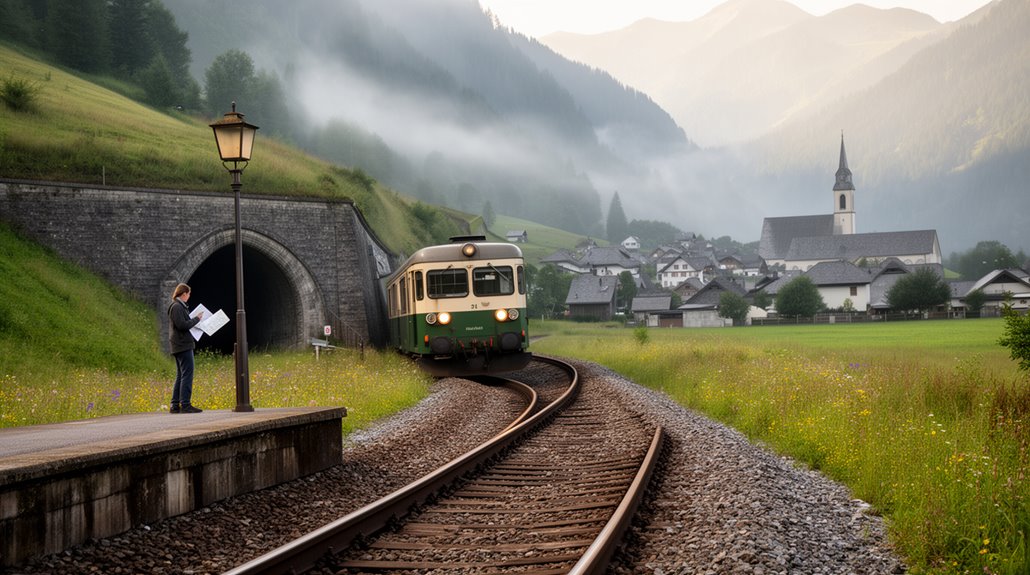
Where exactly does one find Europe’s best-kept railway secrets? Not on Instagram. Not in guidebooks. Not anywhere the crowds have already discovered.
Hidden European railways snake through landscapes most travelers never see—through the misty valleys of northern Bohemia, across the rugged spine of Wales, deep into the limestone shadows of the Dinaric Alps.
These routes carry no tour buses, attract no selfie sticks, demand nothing but your presence and patience.
While millions pack onto the same celebrated lines, fighting for window seats and elbow room, these forgotten tracks unspool through villages where conductors still know passengers by name; through tunnels carved a century ago by hands long turned to dust; through scenery so quietly magnificent it feels almost private.
This is rail travel as it once was.
Undiscovered. Unhurried. Yours.
Consider the Heart of Wales Line, threading through countryside that time politely declined to modernize. The single-carriage train crawls for four hours between Swansea and Shrewsbury, passing the iconic Sugar Loaf knoll where travelers can disembark for walking or picnicking before catching the next service. Great Britain’s well-connected rail network with over 2,500 stations makes discovering such hidden gems surprisingly accessible once you know where to look.
Or imagine yourself aboard a local train in regions Europe itself seems to have forgotten—a semicircular route through mountain passes, a coastal stretch where the sea crashes close enough to taste.
You can find these journeys.
They exist, waiting in timetables nobody bothers to check, running on schedules built for locals rather than tourists.
The secret demands one thing: you have to look harder.
Crowd-free European rail routes don’t advertise themselves with glossy campaigns or influencer partnerships.
They simply run—day after day, year after year—carrying farmers and students and the occasional curious wanderer who stumbled upon something remarkable.
Fifteen such lines hide across this continent, each one a quiet rebellion against overtourism. In Slovakia, trains climb to Banská Štiavnica, a hilltop town where turquoise mining lakes now serve as summer swimming spots amid pastel houses and centuries of history.
So pack light. Study the map’s margins. Board the train that nobody recommended.
The best railway secrets reveal themselves only to those willing to leave the obvious behind.
Skip the Crowds on Europe’s Secret Rail Lines

Most travelers obsessively refresh booking pages.
They chase the same overrun routes, fight the same crowds, scroll past the same sold-out departures.
But here’s the secret: a handful of genuinely uncrowded alternatives have quietly emerged across Europe—and nobody’s talking about them.
Consider the Villach to Lienz line in Austria.
This route follows the Drau River through valleys so pristine they feel invented, hugging mountainsides where the water runs clear and the platforms sit empty; it’s the kind of journey that makes you forget trains were ever crowded at all.
While everyone else battles the nightmare Brenner corridor, shoulder to shoulder, stress mounting with every delay, you could be gliding through Austrian wilderness with a window seat to yourself.
The scenery unfolds like a private showing: peaks, gorges, villages tucked into hillsides, silence.
Why fight for what everyone else wants?
Secret. That word gets overused.
Overused in travel guides, overused in clickbait headlines, overused until it means nothing.
But these routes? These actually deliver.
Off-beaten-path rail travel transforms more than your itinerary.
It transforms your mood, your pace, the way you remember a country.
Short hops through forgotten corridors.
Long stretches where reflection comes easy and the rhythm of wheels on track lulls you into something like peace.
You’ve seen the chaos of peak-season platforms—the crowds pressing forward, the anxiety of finding any seat at all.
Now picture the opposite: a carriage half-empty, light streaming through clean glass, no one elbowing past with oversized luggage.
These secret European train journeys aren’t mythical.
They aren’t reserved for locals or rail obsessives with insider connections.
They exist right now, bookable, waiting.
The Drau River route proves it.
Some discoveries hide in plain sight.
This is one of them.
Or venture further east, where trains between Vilnius and Riga began running last December, making summer the ideal time to combine Baltic capitals.
For those craving overnight adventure, the new Basel to Malmö EuroNight sleeper lets you fall asleep in Central Europe and wake up in Scandinavia.
Meanwhile, the Vienna to Venice corridor offers its own magic—not secret, but often overlooked for its Semmering Railway views that UNESCO deemed worthy of World Heritage status.
Why Most Travelers Never Find These Rail Routes

Algorithms decide. They always decide. And because they decide, you never see what lies beyond the obvious.
Think about how booking apps work: they default to famous routes, the celebrated journeys, the postcard-perfect lines everyone already knows.
Lesser-known scenic railways? Buried. Pushed down beneath page after page of TGV results, scrolled past before you even realize they exist.
The hidden rail routes of Europe—those quiet threads stitching together villages and valleys—vanish into digital obscurity, sacrificed to the hunger of mainstream marketing.
Try searching for secret European train routes sometime. Go ahead; see what happens.
The algorithms will serve you Bernina Express content, again and again, while parallel rural options sit ignored in some forgotten database corner.
Every Europe train route planner funnels travelers toward the same crowded hubs: Paris, Zurich, Milan. The stations where tourists cluster. The platforms where selfie sticks bloom like weeds.
How could you possibly find hidden trains when the system itself works against discovery?
Marketing saturates every search. It floods the results.
It drowns the alternatives—those slow, winding journeys through landscapes unmarked by influencer hashtags. You type your query with genuine curiosity; the internet answers with sponsored listings, affiliate links, and the same ten routes recycled endlessly. Meanwhile, a journey tracing the Orient Express route through France, Switzerland, and Hungary toward Romania’s star-shaped fortress never appears in your results. The regional trains connecting small towns across the continent rarely surface in search results, despite offering authentic experiences far from overcrowded tourist platforms.
Here is the quiet tragedy of modern travel planning: choice becomes illusion.
The options presented feel abundant, yet they loop back to identical destinations. Rural railways connecting ancient hill towns, coastal routes hugging forgotten shorelines, mountain passes crossed by rattling local trains—all of it exists. Waiting. But the path to finding them grows narrower each year, choked by content optimized for clicks rather than wonder. A train guard in the Danube valley once dismissed the entire subject of rail privatisation as “incredibly boring,” yet that very indifference allows quiet regional lines to persist unchanged, invisible to the algorithm’s gaze.
Most travelers never stumble onto these lines.
Not because the routes disappeared. Not because the trains stopped running.
Simply because no algorithm thought to show them.
5 Heritage Railways Still Running Across Europe
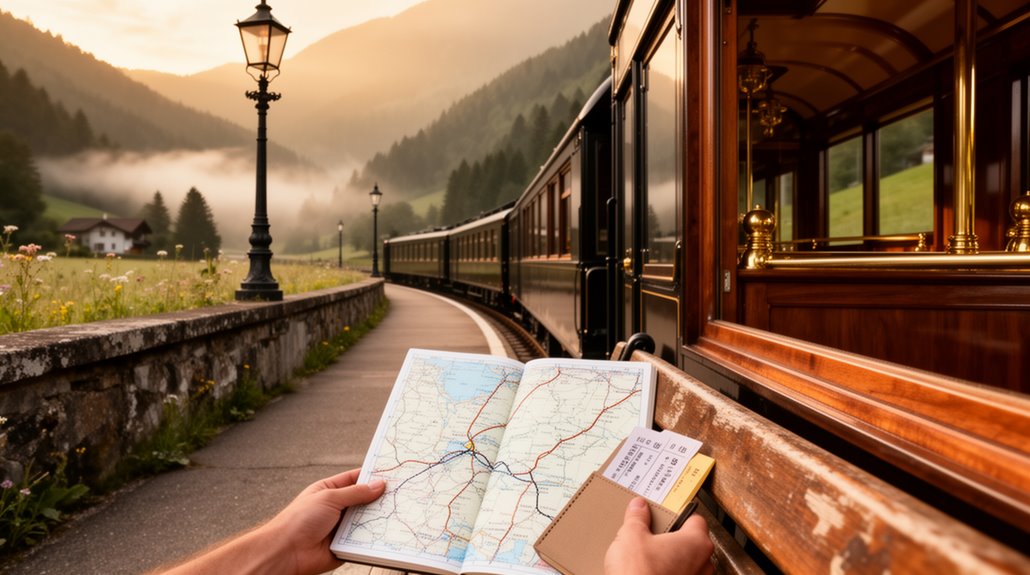
Against all algorithmic odds, heritage railways keep chugging along across Europe. They persist. They endure. They thrive.
Consider the Harz Mountains in Germany, where hidden scenic rail lines wind through forests that have watched trains pass for over a century. Steam rises. Whistles echo through valleys.
The tracks curve around ancient peaks, carrying passengers who chose slowness over speed, romance over efficiency—and somewhere in that deliberate choice lies a kind of rebellion against everything modern travel has become.
Choosing the slow train is a small rebellion—a refusal to let speed steal the journey from the destination.
But have you ever wondered what most tourists completely miss?
The Czech Republic offers vintage railway journeys that slip beneath the radar of guidebooks and travel influencers; these routes remain gloriously undiscovered. Historic train connections link Dresden festivals to Austrian heritage lines, threading culture to culture like iron stitches across a continental quilt. Meanwhile, modern rail is expanding too, with a new direct daytime connection launching from Prague to Copenhagen in May 2026, proving that European rail networks continue to grow alongside their heritage counterparts.
In the Netherlands, Dutch steam operations keep the old ways alive: the hiss of pressure valves, the clank of coupling rods, the sweet coal-smoke smell that clings to your coat long after you’ve stepped onto the platform.
France has its own treasure. The Baie de Somme railway curves along the coast, a living postcard.
You might think these relics would have vanished by now—replaced by high-speed alternatives, forgotten by generations raised on instant everything. Yet here they are, defiant and beautiful.
Undiscovered mountain trains wind through passes that GPS cannot fully map. Hidden routes wait in valleys you’ve never heard of. Heritage railways across Europe number in the dozens, each one a small act of preservation against forgetting.
Short journeys. Long memories.
These aren’t museums on wheels; they’re working pieces of history that still punch tickets, still blow whistles at crossings, still offer something no algorithm can replicate. In Poland, the Wolsztyn depot remains unique in Europe as the only place still supplying standard-gauge steam locomotives for regular timetabled national services. Poland’s organized rail network also makes it easy to combine heritage excursions with efficient travel between major cities and smaller destinations. The tracks remain. The engines run.
And somewhere right now, a conductor is calling “all aboard” in a language you might not speak—but you’d understand perfectly.
The Secret Train Lines That Changed How I Travel

When you finally abandon the well-worn routes—those paths guidebooks have beaten to death—something shifts.
Everything shifts.
The landscape shifts.
Your entire sense of time shifts.
These hidden railways force a different pace; they demand that you stop measuring travel in destinations reached and start measuring it in moments collected.
Efficiency has no place here.
Only the window matters.
Only the changing light.
Only the slow transformation of terrain as valleys give way to mountains, as farmland dissolves into mist.
Consider what awaits: the Heart of Wales Line carries you four hours through surreal rural passages where sheep outnumber humans.
From desolate glens to the Atlantic coast, the Kyle of Lochalsh route strips away every expectation you brought with you.
Le Petit Train Jaune crosses canyons in open-air carriages, wind in your face, France sprawling beneath.
Between Switzerland and Italy, the Centovalli Express works its border magic through chestnut forests and stone villages.
And the Brenner Railway? It drops you from snow line to vineyards in a single afternoon.
No fancy itinerary required.
No planning obsession necessary.
Just pick one.
Have you ever watched a landscape tell its own story, kilometer by kilometer, without narration or agenda?
That’s what these routes offer.
The rhythm slows when reflection matters—when morning fog lifts from a Scottish loch, when afternoon sun catches a French gorge—and quickens through tunnels that swallow the train whole before spitting it back into brilliance.
Life-changing travel happens when you stop rushing.
It happens when you choose the forgotten line, the unmarked platform, the departure that nobody recommends because nobody knows.
You board.
You sit.
You watch.
Then you understand why some journeys refuse to end even after you’ve stepped off the train.
Take the three-hour Golden Pass route to Lauterbrunnen, where panoramic views unfold through the windows as you descend into the valley of 77 waterfalls.
These secret routes let you avoid Europe’s hotspots during summer when high-demand trains between major cities overflow with reservation requests.
For those wanting to connect multiple scenic experiences, the Grand Train Tour of Switzerland weaves together panoramic trains, boats, and buses to showcase lakes, cultural sites, and UNESCO World Heritage locations.
Photo Spots Along Europe’s Hidden Southern Rails
A camera becomes something different on these forgotten southern routes. It transforms. It shifts. It stops being a device and starts becoming a way of seeing—a lens into what most travelers miss entirely.
Why do we rush past the quiet corners of Europe?
These hidden railways of southern Europe wind through landscapes that guidebooks have somehow overlooked; they offer scenic Italian train views that will make you grip the window frame and forget to breathe. Consider what awaits along tracks where few tourists venture: mountain passes carved by ancient glaciers, medieval towns frozen in amber light, waterfalls cascading down cliffsides so numerous you lose count somewhere after fifty. The Cinque Terre Express hugs the Ligurian coastline, connecting five UNESCO-listed villages that seem to tumble directly into the sea.
The top secret rail photo locations deserve your attention.
Val Gardena’s Dolomite panoramas stretch before your lens in layers of impossible blue and stone-white peaks—Italy train photography spots simply don’t get better than this. Český Krumlov frames itself through your viewfinder like a medieval painting, all red rooftops and winding river bends. And then comes Lauterbrunnen, where 77 waterfalls plunge from sheer valley walls into mist and legend below.
Seventy-seven.
You could spend a lifetime chasing postcard-perfect shots in crowded destinations, fighting for space at overrun viewpoints, settling for images identical to a thousand others. Or you could board a train heading south, camera ready, and discover what the hidden mountain railways reveal. These routes don’t appear on most itineraries; they don’t trend on social media feeds; they don’t promise convenience or speed. What they promise is this: scenes that belong to you alone, light that falls on valleys untouched by tourist buses, compositions that no algorithm has optimized. If you time your journey right, you might even capture a rough-legged buzzard hovering against the winter sky as it migrates southward through the mountain passes. For those seeking the ultimate in contrasts, the Bernina Express delivers snow-clad peaks transitioning to Mediterranean palms within a single four-hour journey.
The forgotten tracks are waiting. Your camera will thank you for the journey.
Since 1883, the Orient Express has shuttled passengers between Paris and Istanbul.
Everyone knows this.
Everyone talks about this.
Everyone acts like they’ve discovered something remarkable—yet the secret has been out for over a century.
Meanwhile, across the alpine valleys and through forgotten mountain passes, genuine treasures wait in silence.
The Semmering Railway winds through Austrian peaks with barely a soul aboard; its engineering marvels, recognized by UNESCO, deserve audiences that never arrive.
Why do we crowd onto famous routes when alternatives offer richer rewards?
Consider the numbers.
Famous lines carry over 500 million passengers yearly, prioritizing speed, commanding premium prices that strain travel budgets.
Under 10,000 travelers experience them annually.
These local lines focus on scenery rather than schedules, offering basic service at honest fares.
The contrast couldn’t be sharper.
You’ve heard of Switzerland’s celebrated railways—the Glacier Express, the Bernina.
But have you wandered onto the lesser routes, the ones threading through villages where conductors still know passengers by name; the ones pausing at stations that feel suspended in time; the ones revealing vistas no postcard has captured?
Pure discovery.
Austria holds similar secrets.
The Mariazellbahn climbs from St. Pölten into the pilgrimage town of Mariazell, passing forests, crossing viaducts, delivering you into landscapes untouched by tourist hordes.
No reservation systems.
No crowds.
No pretense.
Here lies the truth about European rail travel: the famous routes earned their fame, but fame breeds predictability. When considering travel options from Copenhagen to Stockholm, travelers often overlook the scenic ferry rides that offer breathtaking views of the archipelago. Alternatively, high-speed trains provide a swift and comfortable connection between these two vibrant cities. Each choice presents a unique experience, reflecting the charm of Scandinavian travel.
Scenic alternatives exist—Swiss hidden lines, Austrian mountain railways, Italian branch routes snaking along coastal cliffs—and they ask only that you seek them out.
European railways developed with established markets already in place, unlike their North American counterparts that had to create towns along their routes.
So skip the Orient Express mystique for once.
Board something quieter.
Let the rhythm of wheels on lesser-known tracks carry you somewhere unexpected, somewhere the journey itself becomes the destination.
The hidden gems are waiting.
Tools like the Eurail Planner app can help you uncover these overlooked regional routes that mainstream booking sites often ignore.
How to Find Secret Railways Before They Go Viral
Where exactly do railway obsessives uncover these routes before Instagram ruins them?
The hunt begins. It begins in unglamorous places. It begins where most travelers never think to look—buried in dense operator timetables, hidden within forum threads, waiting for someone patient enough to dig.
Picture the dedicated few: they gather in railway forums and online communities, dissecting national schedules like detectives poring over cold case files. Every obscure departure time becomes a clue; every single-car service running twice daily whispers of something worth chasing. These are not casual browsers. These are seekers.
Social media scouting offers another path, one requiring speed and instinct. You must catch those early #SlowTravel posts before the algorithm amplifies them, before the crowds descend, before the magic dissolves into selfie sticks and queues. Timing matters. Vigilance matters more.
Now, three reliable tactics for finding hidden railways across Europe—proven methods that separate the discoverers from the followers:
First, scan seasonal timetables for routes offering only one or two daily trains. Scarcity signals authenticity. Second, follow rail vloggers who preview emerging Balkan lines, those content creators exploring tracks that mainstream travel media hasn’t yet noticed. Third, check enthusiast threads on Reddit’s r/trains, where passionate communities trade intelligence freely and obsessively.
Each tactic demands patience; each rewards persistence. The forums run deep, the timetables grow thick, and the vloggers multiply—but somewhere in that noise hides your next unforgettable journey. Can you hear it calling?
You already possess what the hunt requires: curiosity, a screen, and the willingness to scroll past the obvious. The secret railways exist. They rumble through mountain passes and coastal curves, serving locals who never considered their commute remarkable. Consider the Wien to Ljubljana route, which uniquely combines both the Semmering Railway and the River Sava gorge into one spectacular journey. Even well-traveled corridors like Vienna to Salzburg offer scenic views along the Eastern Alps that most passengers overlook while glued to their devices. Once you’ve discovered your hidden route, you can explore hidden gems in the north or south of Europe to plan stops along the way.
Find them before the world does.
Frequently Asked Questions
Do Hidden European Railways Accept International Rail Passes Like Eurail or Interrail?
Yes, many hidden European railways accept Eurail or Interrail passes, including the Semmering Railway, Centovalli Railway, and Douro Line. Some routes like Romania’s Mocănița steam train require separate tickets.
Are These Secret Rail Routes Accessible for Travelers With Mobility Disabilities?
Are These Secret Rail Routes Accessible for Travelers With Mobility Disabilities?
Accessibility varies by location. Major city stations typically have ramps, lifts, and assistance services. Rural and suburban stations often lack full accessibility features and staffing.
What Languages Are Spoken by Staff on Lesser-Known European Train Lines?
What Languages Are Spoken by Staff on Lesser-Known European Train Lines?
Staff primarily speak local national languages. English is commonly used for basic transactions. Cross-border routes typically have multilingual crews. Domestic services usually operate only in the national language.
Can I Bring Bicycles or Large Luggage on Hidden Heritage Railways?
Heritage railways are exempt from EU bicycle carriage mandates. Policies vary by operator. Space limitations and reservations often apply, especially during peak periods. Check individual railway websites for specific conditions.
Do Secret Rail Routes Operate Year-Round or Only During Specific Seasons?
Most secret rail routes operate year-round with seasonal schedule variations. The Bernina Express and Centovalli trains run continuously. The Belgrade-Bar Tara daytime service runs summer only. Winter brings reduced frequencies on many lines.
Parting Shot
These hidden railways aren’t just transportation. They’re time machines rusting quietly in the fog.
The empty platform becomes a symbol. Of patience. Of discovery. Of everything mass tourism forgot to value.
Most travelers will never find these routes. That’s kind of the point. The creaking carriages and hand-punched tickets represent something rare now—journeys without algorithms, without influencers, without rush.
Sometimes the forgotten path leads somewhere better.