Why Iconic Train Routes in Popular Culture Feature the Hogwarts Express So Prominently
The Hogwarts Express: dominates train imagery in popular culture because Warner Bros. created instant visual recognition with one scarlet steam locomotive. Platform 9¾ at King’s Cross Station delivers emotional weight through parent-child separation scenes. The Scottish Highlands provide dramatic backdrop shots.
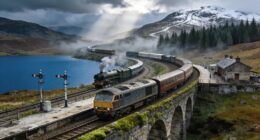
The Jacobite steam train operates the actual route. West Coast Railways runs this service between Fort William and Mallaig. The Glenfinnan Viaduct features 21 concrete arches spanning 1,000 feet. Scottish Highlands tourism boards report visitor increases after each Harry Potter film release.
- The Jacobite Steam Train: carries passengers across the real filming location daily from April through October
- Glenfinnan Viaduct: stands as Scotland’s most photographed railway structure since the Chamber of Secrets premiered in 2002
- King’s Cross Station: installed a permanent Platform 9¾ photo attraction that draws 2 million annual visitors
J.K. Rowling chose steam locomotion deliberately. The GWR Hall Class 5972 Olton Hall became the physical Hogwarts Express. The National Railway Museum preserves British rail heritage that inspired the fictional journey. Twenty-five years of Universal Studios theme park experiences strengthened generational memory bonds. Children who watched Daniel Radcliffe board that train now bring their own children to the Wizarding World of Harry Potter.
The train means childhood wonder. It means September 1st departures. It means magic waits at the destination.
Fun Activity To Try: Book passage on The Jacobite steam train from Fort William and photograph your own Glenfinnan Viaduct crossing while wearing your Hogwarts house scarf.
Key Points
- The scarlet steam engine’s distinctive silhouette achieves near-instant recognition across billions of viewers, functioning as visual shorthand for magical journeys.
- Platform 9¾ operates as a powerful coming-of-age symbol, representing the threshold between childhood dependency and independence.
- The Glenfinnan Viaduct’s 21-arch structure provides cinematic Highland framing that elevates the train journey into iconic visual storytelling.
- Steam locomotive heritage aesthetics merge nostalgic rail atmosphere with transformation narratives, connecting fantasy to real-world travel rituals.
- Multi-generational franchise reach spanning 25 years creates enduring parent-child memory bonds that reinforce the train’s cultural prominence.
The Scarlet Steam Engine Achieves Instant Recognition Among Billions of Global Franchise Viewers

A flash of scarlet metal against grey British skies.
That’s really all it takes. The Hogwarts Express, with its distinctive steam engine appearance, seems to have achieved something close to instant recognition across billions of viewers through the Harry Potter franchise.
A single scarlet silhouette—and billions instantly know the destination is magic itself.
From those King’s Cross Station departures to the famous Glenfinnan Viaduct crossing—you know the one—the image just sticks. The viaduct itself sits along Scotland’s scenic rail routes, drawing visitors who want to witness the real-world location that brought the magical journey to life.
Eight films will do that, I suppose. And the reach feels genuinely multi-generational at this point. The original Harry Potter films grossed over $7.7 billion at the box office during their theatrical run, cementing the train’s image in popular culture. Universal’s physical recreation of the train at their Orlando parks drew one million riders within a month of opening, suggesting the locomotive’s cultural imprint extends well beyond passive viewership.
Those kids who grew up watching? Many of them are likely showing their own children now. Whether that kind of visual shorthand translates to actual emotional resonance or just surface-level familiarity is probably worth questioning.
Even so, there’s something to the staying power of a single colour burned into collective memory.
How Platform 9¾ Captures the Universal Poignancy of Parent-Child Separation Moments

When millions of readers first encountered Platform 9¾, they probably didn’t realize they were staring at a thesis on growing up.
The symbolism hits hard—maybe harder than Rowling even intended. Kids run at a brick wall, which likely functions as a kind of magical threshold, a line between childhood dependency and something else entirely.
And then there’s the platform itself: parents crying, last-minute fussing over jumpers and sandwiches, children disappearing into billowing steam. It appears to tap into something universal about departure rituals, the way we perform separation even when it breaks us a little. The platform only comes alive six days every school year, making each farewell feel concentrated and ceremonial rather than routine. This emotional weight mirrors why iconic train journeys around the world continue to captivate travelers—there’s something about boarding a train that transforms ordinary transit into meaningful passage.
On top of that, there’s this collision happening between generational memory and childhood imagination.
Parents standing on the platform may be reliving their own first departures, their own brick walls. Kids, meanwhile, are hurtling toward independence without looking back. Harry himself spent nine years and nine months under the Dursleys’ roof before finally passing through that barrier—a period of waiting that some fans believe the platform’s fractional number quietly memorializes.
That tension—between holding on and letting go—seems to be what gives the scene its weight. Pretty brutal, honestly.
Glenfinnan Viaduct Delivers Cinematic Highland Majesty Through Its Iconic 21-Arch Crossing

If Platform 9¾ represents the emotional gut-punch of leaving home, Glenfinnan Viaduct is what comes after—the actual journey into something bigger.
This 21-arch concrete beast curves through the Scottish Highlands in a way that seems almost deliberately built for cinematic framing. Built by Scottish businessman Robert McAlpine in the 1890s, it stands as Scotland’s longest concrete railway bridge. The viaduct’s cinematic appeal extends beyond Hogwarts, appearing in everything from the 1948 historical drama Bonnie Prince Charlie to Charlotte Gray in 2001, where an opening aerial shot showcases the train crossing with expansive landscape in full force.
The Jacobite Steam Train still crosses it daily, which likely explains why filming location tourism exploded the way it did. For travelers seeking similar vintage-style rail experiences through dramatic scenery, the Belmond Royal Scotsman offers luxury journeys through these same Scottish Highlands. Those viaduct crossing moments in the Hogwarts Express scenes? They appear to capture something essential about Highland majesty—though whether that’s the landscape itself or just very clever camera work, well, that’s probably up for debate.
The September 1st Journey Represents Annual Childhood-to-Magic Transformation Rituals

Every September 1st at exactly 11:00 a.m., the wizarding world essentially hits its collective reset button. There’s something almost ritualistic about the Platform 9¾ departure—kids literally running through a brick barrier, crossing from the mundane into the magical. It’s a threshold moment that never quite loses its punch.
What’s fascinating is how quickly compartment friendships seem to form. Ron offers Harry a seat, shares some Chocolate Frogs, and suddenly we’re watching the foundation of a seven-year bond. The coming-of-age symbolism? It hits hard, though one could argue it romanticizes leaving home in ways that might not resonate with everyone. The author herself has compared Back to Hogwarts Day to New Year celebrations, emphasizing its significance as a moment for fresh starts and new beginnings.
| Element | Function | Impact |
|---|---|---|
| Fixed departure | Annual ritual | Emotional resonance |
| Barrier crossing | Threshold moment | Nostalgia appeal |
| Train compartments | Social bonding | Identity formation |
That said, the fixed timing appears to serve a deeper purpose than mere scheduling. September 1st marks the academic year’s beginning across Britain, grounding this magical tradition in something instantly recognizable. Even so, one wonders whether the rigid 11:00 departure time is meant to heighten anticipation or simply reflects old railway conventions that Rowling borrowed for authenticity. At King’s Cross Station, the actual announcements reference themed details like trunks, owls, and toads, adding theatrical authenticity to the real-world celebration. The station itself is one of over 2,500 stations in Great Britain’s extensive rail network, making it a fitting real-world anchor for this beloved fictional journey.
What the Muggle-to-Wizarding Passage Reveals About World-Crossing Threshold Mythology

Countless fantasy worlds rely on magical doorways and hidden passages, but Platform Nine and Three-Quarters pulls off something weirdly specific.
The departure scenes embed threshold symbolism directly into a London train station—an ordinary, bustling commuter space most readers can picture without effort. The real-world ambiguity of the platform’s location adds another layer, since there’s actually no barrier between the real platforms 9 and 10, with the presumed inspiration being the arched brick wall between platforms 4 and 5.
A magical threshold hiding in plain sight—where the mundane commute becomes the gateway to wonder.
Running headlong at a brick wall? That appears to be a coming-of-age journey wrapped in a leap of faith, though some might argue it’s equally about trust in an unfamiliar world. This very platform served as the site where Harry Potter first met Ron Weasley, establishing foundational friendships that would define their magical journey.
The steam locomotive imagery and heritage aesthetic seem to merge naturally with transformation narrative devices. This nostalgic rail atmosphere echoes real-world journeys like the Venice Simplon-Orient-Express, which similarly trades on historic luxury and romantic mystique to transport passengers between worlds.
On top of that, even the Glenfinnan Viaduct filming location likely reinforces this world-crossing mythology, anchoring fantasy firmly in recognizable Scottish landscape.
The Multi-Decade Franchise Creates 25-Year Parent-Child Generational Memory Bonds

Over the past twenty-five years, something quietly remarkable seems to have unfolded. The kids who once stayed up past bedtime with flashlights and dog-eared pages? They’re now parents. And they’re handing those same stories down to their own children, crossing that magical threshold together. That’s franchise recognition power at work—though perhaps “power” undersells the emotional weight of it.
| Generation | Experience |
|---|---|
| Parents | Original readers, aged 30-45 |
| Children | Second-generation fans |
| Bonding | Co-viewing rituals |
| Heritage aesthetics | Fictional railway nostalgia appeal |
| Adventure departure ritual significance | Imagination connection |
There’s the parent who read the series in middle school, now somewhere between thirty and forty-five, settling onto the couch for a movie marathon with their kid. The child becomes a second-generation fan almost by inheritance. Co-viewing rituals emerge—Sunday afternoon rewatches, maybe, or annual trips back to the films around the holidays. That fictional railway platform carries its own nostalgic pull, a kind of heritage aesthetic that likely resonates across age groups. Even the simple act of departure, stepping into adventure, appears to forge an imaginative connection that transcends the generational gap. This emotional pull mirrors how scenic rail journeys worldwide continue to captivate travelers seeking immersive experiences through breathtaking landscapes and cultural discovery.
Shared nostalgia just hits different. It may not be magic in the literal sense, but it comes close. The franchise provided a supportive narrative during a time of sustained fear and uncertainty, which helps explain why it continues to feel like a home worth returning to across generations. With roughly 450 million copies sold, the series became the best-selling book series in history, ensuring that nearly every family has had some touchpoint with this world.
The Jacobite Steam Train Enables Real-World Access to Fictional Scottish Highland Scenery

The Jacobite Steam Train doesn’t just look like the Hogwarts Express—it actually *is* the filming train. The Fort William–Mallaig route delivers what appears to be the definitive Scottish Highlands experience from those movies: moorlands, lochs, mountains stretching out in every direction.
And yes, you cross the Glenfinnan Viaduct. All 21 arches of it. You’ll also pass Loch Eilt, which served as Dumbledore’s resting place in the films.
Now, whether this heritage steam journey single-handedly invented film location tourism for a generation might be a stretch—though it’s likely come closer than most. That said, the crowds suggest something caught on. Book early if you’re serious about going. It sells out, and probably faster than you’d expect. The train only operates from early April to late October, so your window is limited. For those traveling from London, consider combining this Scottish adventure with other UK train journeys to destinations like Bath or the Cornish coast to make the most of your rail escape.
Frequently Asked Questions
What Specific GWR Hall Class Locomotive Served as the Basis for Hogwarts Express?
GWR 4900 Hall Class locomotive No. 5972 *Olton Hall* served as the basis for the Hogwarts Express. Built at Swindon Works in 1937, this 4-6-0 mixed-traffic steam engine was selected for the film series in 2001.
How Does the Trolley Witch Confectionery Service Work During the Fictional Journey?
The Trolley Witch pushes the Honeydukes Express through carriages, stopping at compartments with “Anything off the trolley, dears?” Students purchase Chocolate Frogs, Bertie Bott’s Every Flavour Beans, and Pumpkin Pasties using wizarding currency.
Why Do Romance Languages Assign Feminine Gender to the Hogwarts Express Locomotive?
Romance languages assign feminine gender to the Hogwarts Express locomotive because the noun “locomotive” (*locomotora*, *locomotiva*, *locomotive*) belongs to the feminine grammatical class inherited from Latin, not from any inherent characteristic of the train itself.
What Merchandise Licensing Requirements Govern Official Hogwarts Express Collectibles and Products?
Warner Bros. Consumer Products controls official Hogwarts Express merchandise through written licensing agreements requiring multilayer approval processes, strict brand guideline compliance, quality control submissions, territory restrictions, and royalty payments from authorized manufacturers.
How Many Compartments Does the Authentic Hogwarts Express Carriage Configuration Include?
The authentic Hogwarts Express carriage configuration includes eight enclosed passenger compartments per coach. This layout, based on vintage British Railways Mk1 corridor carriages, aligns with canon-consistent fan calculations and standard UK railway design practices.
Parting Shot
The Hogwarts Express works because it’s simple. A red train. A hidden platform. Kids waving goodbye to parents. That’s it. No complicated mythology required. The Glenfinnan Viaduct gave it visual proof, and now tourists chase steam across Scottish highlands for Instagram moments. Twenty-five years later, parents share this with their own children. A fictional train became generational glue. Pretty remarkable for something that doesn’t technically exist.