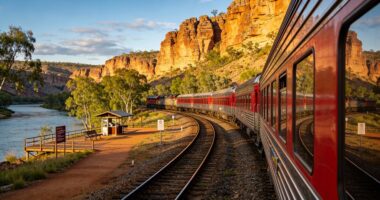
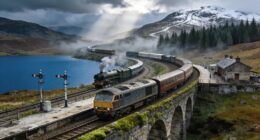
What Makes World’s Most Renowned Trains Like the Rovos Rail Stand Above the Rest
Rovos Rail: this South African legend rejects speed as its defining principle. The Pride of Africa crawls at 60 km/h through savanna landscapes. Butlers serve passengers in restored Edwardian carriages. The journey becomes the destination itself.
These luxury rail experiences share common traits:
- Rovos Rail operates from Capital Park Station in Pretoria. Each suite features Victorian fixtures and private bathrooms. The train crosses routes from Cape Town to Dar es Salaam.
- Rocky Mountaineer runs glass-dome coaches through British Columbia. Passengers witness 180-degree views of the Canadian Rockies. The GoldLeaf Service provides bi-level seating with outdoor viewing platforms.
- Venice Simplon-Orient-Express carries original 1920s Art Deco carriages. Lalique crystal panels line the Côte d’Azur dining car. Belmond operates this iconic route between London and Venice.
Speed serves modern travelers poorly here. These trains understand something different. Time stretches across landscapes. Meals last hours. Conversations deepen. The tracks carry passengers backward into elegance.
Each operator maintains strict heritage standards. Rovos Rail’s Rohan Vos personally restores vintage coaches. Rocky Mountaineer employs local Indigenous guides for cultural interpretation. The Orient Express preserves original marquetry from French craftsmen.
The world rushes past windows at 300 km/h on bullet trains. These legendary services refuse that pace. They offer something speed cannot purchase.
Fun Activity To Try: Book the Rovos Rail journey from Pretoria to Victoria Falls and request the Royal Suite for a 72-hour immersion in slow luxury travel.
Key Points
- Handcrafted vintage interiors featuring Victorian wood panelling, Art Deco details, and heritage materials create an authentic historical atmosphere.
- Meticulous restoration of classic locomotives and carriages preserves railway heritage while incorporating modern comforts like en-suite bathrooms.
- Slow operating speeds around 50-60 km/h allow passengers to fully absorb spectacular scenery through panoramic windows and observation cars.
- Intimate capacity with dedicated butler service delivers personalized, five-star hospitality throughout the journey.
- Unique experiential offerings like safari-style wildlife viewing and regionally-inspired gourmet cuisine connect passengers to local cultures.
Rovos Rail Elevates the Luxury Sleeper Experience Through Handcrafted Victorian Suites
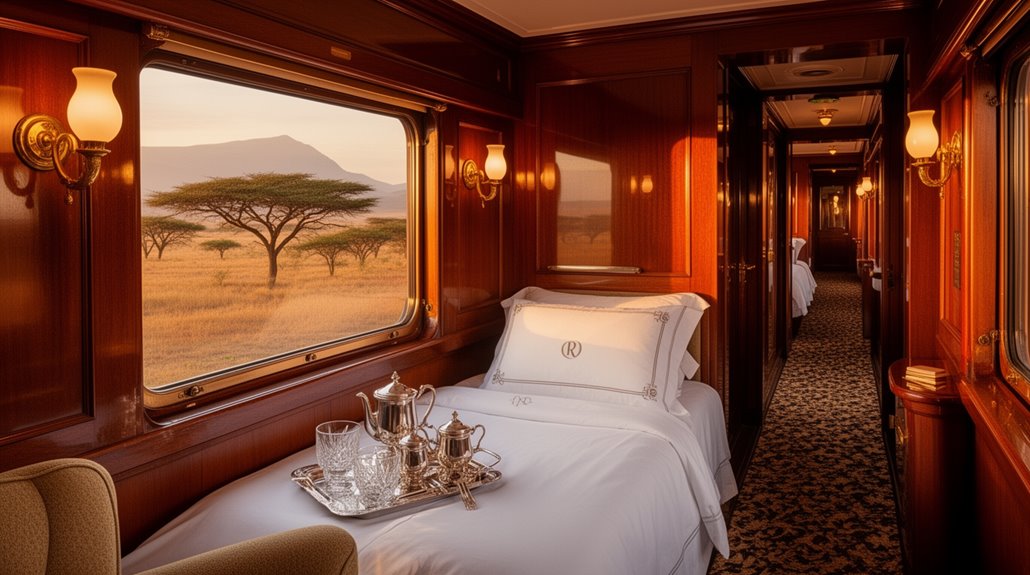
Rovos Rail doesn’t simply restore old train carriages—it rebuilds them to mint condition, filling interiors with handcrafted wood panelling and what appears to be genuine Victorian elegance.
The aesthetic draws heavily from Edwardian-era inspiration, though somehow manages to deliver actual comfort alongside all that period charm.
Private suite accommodations vary considerably. You might book a compact Pullman cabin, or spring for a Royal suite that takes up half a carriage. The Royal suites are named after Victorian-era South African figures such as Cecil John Rhodes and Barney Barnato. Every suite comes equipped with en-suite bathrooms featuring hot showers and heated towel rails, along with modern conveniences like air-conditioning and a personal safe.
Butler service runs around the clock, which sounds indulgent—and likely is. These opulent passenger cabins seem designed to evoke something close to a royal carriage experience on rails. The train’s leisurely pace of around 60 km/h allows passengers to properly absorb the wildlife and landscapes passing outside their windows. That said, whether the reality fully matches the promise probably depends on your expectations. Sleeper services done right, basically.
How Rocky Mountaineer Delivers Panoramic Excellence Through Bi-Level Glass Dome Cars

Some travelers couldn’t care less about restored Victorian elegance. They just want the mountains, pure and simple.
Rocky Mountaineer seems to understand this instinct. Their bi-level GoldLeaf coaches position you beneath a glass dome with 180-degree views—no pillars, no obstructions getting in the way. The train crawls along at 50 km/h, which they call “picture-perfect speed.” Whether that pace feels meditative or maddening likely depends on your temperament.
| Feature | Specification |
|---|---|
| Observation cars | Full-length dome windows |
| Scenic route traversal | Daylight-only operation |
| Gourmet dining car journey | Lower-deck 36-seat restaurant |
The route threads through canyon alignments, and the luxury train service appears designed around that panoramic observation experience. On top of that, the daylight-only operation means you won’t miss the scenery to darkness. That said, running exclusively during daytime hours also means overnight stops—something worth factoring into your itinerary if you’re weighing options. The lower deck houses a 36-seat restaurant, so the gourmet dining happens just below all that glass and mountain drama. The upper deck features 72 electrically adjustable seats that rotate to face the direction of travel, ensuring every passenger has an optimal vantage point for the passing scenery. If you prefer fresh air with your views, there’s an outdoor viewing platform available, though it runs cooler than the temperature-controlled carriages inside. The service operates mid-April to mid-October, connecting British Columbia and Alberta through routes that showcase turquoise lakes, rainforests, and wildlife along the way.
Heritage Steam Locomotives: Rovos Rail Preserves Century-Old Restored Engines

While most luxury train operators source their locomotives from established dealers, Rohan Vos was apparently scouring scrap metal yards.
His heritage steam locomotive tour fleet now includes five restored vintage engines.
No. 2702 Bianca, it turns out, was pulled from Loewenthal’s Scrap Metal back in 1986—a fate that seems almost unthinkable given what she’s become. This first engine was built by Borsig in 1938, making her a true survivor of pre-war German engineering.
The antique locomotive restoration work happens on-site at Rovos Rail’s Pretoria facility, which may explain how they’ve managed to maintain such exacting standards. The company’s commitment to preservation extends beyond locomotives, as they purchased 38 redundant carriages from railways in 1994 to expand their rolling stock.
Similar dedication to preservation can be seen in North America, where operators like the Royal Canadian Pacific showcase meticulously restored vintage cars from rail’s golden age.
South African rail heritage, saved from what were, quite literally, junk piles. Not bad at all.
That said, one has to wonder how many other gems remain buried in similar yards, waiting for someone stubborn enough to dig them out.
The Orient Express Defined Vintage Elegance with Original 1920s Art Deco Design

The Orient Express didn’t just ride the Art Deco wave—it practically became the poster child for it. That’s no exaggeration, really. This luxury sleeper train experience featured vintage rolling stock from the 1920s and 1930s, and stepping inside likely felt like entering a museum that moved.
Lalique glass panels caught the light. Intricate marquetry lined the walls. The dining carriages? They offered fine dining surrounded by velvet, marble, and dark woods—though one could argue all that opulence might have felt overwhelming to some travelers. The wood panelling throughout the carriages is between 50 and 90 years old, with historic timber carefully sourced for any restoration work.
Even so, the details are what made it remarkable. Premium cabin accommodations included heritage preservation touches like pocket-watch hooks, the kind of small, deliberate choice that appears to have been made for travelers who appreciated a certain era’s rhythms. For those seeking similarly opulent, vintage-style experiences today, other luxury trains like the Maharajas’ Express in India carry on this tradition of refined rail travel.
Not everyone needs a pocket-watch hook anymore, obviously. But that’s sort of the point. The legendary train is now being revived, with 17 original 1920s carriages currently being restored in France for a planned 2027 return to the tracks.
Legendary rail journeys, indeed.
Five Star Regional Cuisine Showcases Palace on Wheels Gourmet Dining Mastery
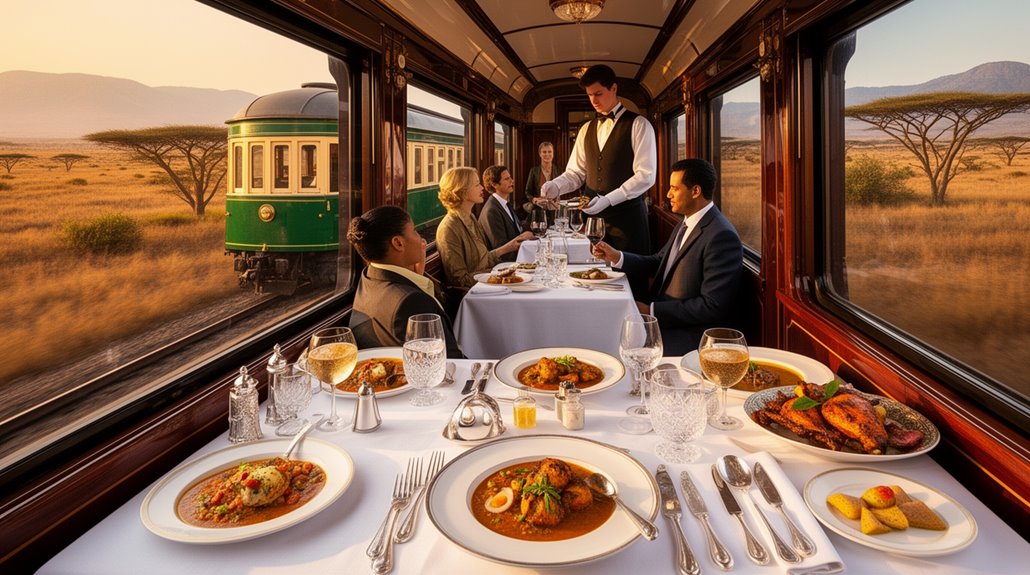
One cuisine was never going to be enough for the Palace on Wheels—so passengers find themselves navigating menus that span Rajasthani, Indian, Continental, Chinese, Marwari, and Mughalia styles, all aboard a single train. It’s ambitious, maybe even excessive, though that appears to be precisely the point.
The Maharajah and Maharani restaurants deliver gourmet fine-dining with butler-attended service, which likely elevates the experience beyond typical rail travel.
| Feature | Details |
|---|---|
| Signature dishes | Dal Baati Churma, Laal Maas |
| Menu variety | Seven-day menu rotation |
| Service style | Bespoke culinary itineraries |
That said, guest ratings seem to tell their own story. Rajasthani cuisine dominates—and the numbers aren’t exactly subtle about it. Whether this reflects genuine regional superiority or simply the novelty factor for international travellers is harder to say. The cuisine’s enduring appeal may stem from its practical origins, with dishes adapted for arid climate conditions that allow them to be stored and enjoyed for days without reheating.
The menu thoughtfully follows the journey itself, with regional specials served at respective stops—Mughal dishes appearing in Agra, Mewari cuisine emerging in Mewar—creating a culinary narrative that mirrors the train’s itinerary. While the Palace on Wheels focuses on luxury dining experiences, India’s extensive railway network also features remarkable long-distance journeys like the Vivek Express, which spans approximately 4,200 kilometers across eight states.
Why Rovos Rail Private Charters Remain the Ultimate African Safari Experience

Since 1989, Rovos Rail has been quietly perfecting something most safari operators never even attempt—turning a train into a mobile game lodge.
It’s an ambitious idea, and one that appears to work remarkably well. Their private charters let you craft a bespoke itinerary across the African landscape, with the whole train essentially becoming your own. Each train carries just 72 passengers, ensuring an intimate experience that larger operations simply cannot match.
You’ll spot game from a vintage observation car—think polished wood, oversized windows, and a drink in hand—while butlers handle the details you’d rather not think about. The observation car sits at the rear of the train, complete with open-air balconies that let you watch elephants and lions pass by with nothing between you and the savanna.
Departures happen from the Pretoria terminus, which itself feels like stepping back a few decades. This approach mirrors how other luxury train tours worldwide combine cultural immersion with exceptional comfort, though few can match the wildlife viewing possibilities of the African routes. Now, some purists might argue you lose something by not bouncing along dirt roads in an open Land Rover. Fair point. But for travelers who want the wildlife without the dust and the jarring potholes? This is likely as good as it gets.
Seven Time Zones, Three Continents: The Trans Siberian Railway’s Legendary Scope

How does a railway line manage to stretch across nearly 9,300 kilometers of some of the most unforgiving terrain on Earth? The Trans Siberian Railway does exactly that—though calling it merely a “railway” feels like underselling the achievement. This cross continental rail adventure spans seven time zones and connects Europe to Asia across three countries.
| Feature | Measurement | Context |
|---|---|---|
| Total Distance | 9,288 km | World’s longest |
| Time Zones | 7-8 | Extreme reach |
| Journey Duration | 6-7 days | Non-stop |
| Rivers Crossed | 16 major | Engineering feat |
| Cities Served | 87 | Backbone corridor |
Building this thing took over 25 years. And honestly, that timeline seems almost optimistic when you consider what workers were up against: permafrost that could swallow equipment, mountain ranges that didn’t care about human ambitions, and Siberian winters that appear to have been designed specifically to break people’s spirits. Not exactly a weekend project, to put it mildly. Construction began in 1891 and wasn’t completed until 1916.
Even so, the numbers alone may not capture the full scope here. Eighty-seven cities strung together like beads on a thread. Sixteen major rivers crossed—each one likely presenting its own engineering nightmare. Some historians suggest the completed line represents one of the most ambitious infrastructure projects humanity has ever attempted, though others might argue the human cost deserves more scrutiny than it typically receives. The journey begins at Yaroslavsky Railway Station in Moscow and terminates at Vladivostok Railway Station on Russia’s Pacific coast. While the Trans Siberian showcases raw engineering ambition, other legendary routes like Norway’s Bergensbanen offer their own compelling Nordic landscapes that draw travelers seeking spectacular natural views.
Frequently Asked Questions
How Much Does a Typical Luxury Train Journey Cost per Person?
A typical luxury train journey costs between US$1,000 and US$3,000 per person per night, with complete multi-day itineraries ranging from US$3,000 to over US$10,000 depending on cabin class and route exclusivity.
What Is the Maximum Passenger Capacity on World-Renowned Luxury Trains?
Luxury train capacities vary significantly, from Japan’s intimate 30-guest Shiki-shima to the Venice Simplon-Orient-Express accommodating 188 passengers. Rovos Rail maintains exclusivity with a 72-guest maximum, while Maharajas’ Express carries 84 guests across 14 carriages.
Are Luxury Train Journeys Suitable for Travelers With Mobility Challenges?
Luxury train journeys present varying accessibility levels for travelers with mobility challenges. While some operators offer wheelchair spaces, accessible suites, and onboard lifts, vintage heritage trains like Rovos Rail may have structural limitations requiring advance verification.
What Dress Code Requirements Exist for Dining on Luxury Trains?
Luxury trains like Rovos Rail typically require formal or semi-formal evening attire for dinner service, including elegant suits and cocktail dresses. Jeans, shorts, T-shirts, and sneakers are generally prohibited in dining cars to maintain refined ambiance.
Do Luxury Trains Offer Wifi Connectivity and Modern Communication Amenities?
Most luxury trains offer Wi-Fi connectivity and modern communication amenities, though coverage varies by route and operator. Rovos Rail particularly maintains a no television or radio policy, emphasizing authentic vintage travel experiences over digital connectivity.
Parting Shot
These trains aren’t just transportation. They’re time machines with better food.
From Rovos Rail’s restored Victorian suites to the Orient Express’s Art Deco glamour, luxury rail travel refuses to die. And honestly? Good. Sometimes slower is better. The world’s finest trains prove that getting somewhere matters less than how you get there. Seven time zones on the Trans-Siberian or 6,000 kilometers across Africa—that’s not commuting. That’s living.