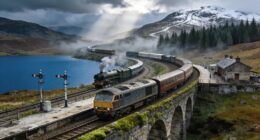
What Makes Most Luxurious Trains in Europe Like the Transcantábrico Gran Lujo Unforgettable
Transcantábrico Gran Lujo: Spain’s premier luxury rail journey transforms century-old Pullman carriages into mobile five-star hotels. RENFE operates this eight-day voyage along the Cantabrian coast. Each restored carriage contains 12-square-meter suites. These suites feature hydromassage showers. They include private steam saunas. In addition to its exquisite amenities, the journey highlights the stunning landscapes of Spain, offering breathtaking views of vineyards and mountains. Passengers are treated to gourmet meals prepared by renowned chefs, enhancing the overall experience of luxurious train journeys across Europe. This unique adventure is perfect for those seeking both relaxation and exploration in a lavish setting.
The train employs dedicated butlers. Butlers provide around-the-clock service. Chefs prepare five-course meals. Meals showcase Basque and Asturian cuisine.
- Bilbao Guggenheim Museum: Frank Gehry’s titanium masterpiece anchors the cultural excursion program
- Altamira Cave replicas: UNESCO World Heritage prehistoric art comes alive through guided expert tours
- Covadonga Sanctuary: This Asturian pilgrimage site offers mountain lake views and historic significance
The railway parks at quiet sidings each night. Passengers sleep without motion disturbance. Morning brings fresh coastal panoramas. The Picos de Europa mountains frame distant horizons.
Paradores de Turismo partners with the journey. Their historic properties host select overnight stays. Local sidrerías pour traditional cider. Pintxos bars in San Sebastián deliver authentic flavors.
The carriages date to the 1920s. Spanish craftsmen restored each wooden panel. Brass fixtures gleam under soft lighting. Velvet upholstery recalls golden-age travel.
Fun Activity To Try: Book the Transcantábrico’s optional Rioja wine excursion to visit Marqués de Riscal’s Frank Gehry-designed bodega for private cellar tastings.
Key Points
- Gran Clase Suites offer private en-suite bathrooms with hydromassage showers, steam saunas, and multimedia computers with free internet access.
- Five-course regional meals featuring Asturian fabada, Galician seafood, and Basque pintxos paired with local wines create unforgettable culinary experiences.
- Century-old 1923 Pullman carriages restored with belle époque aesthetics seamlessly blend heritage charm with modern luxury amenities.
- Eight-day itineraries include exclusive excursions to the Guggenheim Bilbao, UNESCO World Heritage sites, and dramatic Cantabrian Coast landscapes.
- Around-the-clock butler service with a five-to-twenty-four staff-to-guest ratio ensures personalized attention throughout the entire journey.
Gran Clase Suite Accommodations Feature Private En-Suite Living Spaces with Period Furnishings

The Transcantábrico Gran Lujo doesn’t mess around with cramped quarters.
Each gran clase suite category spans roughly 12 square meters—though that figure likely varies a bit depending on the specific carriage—spread across heritage carriages featuring belle époque restoration.
Wood-paneled walls catch your eye first.
Then there’s the large windows.
And really, what sets these apart is how the space breaks into three distinct zones, which seems almost impossible for a train compartment.
On top of that, the private en-suite bathrooms come equipped with hydromassage showers and steam saunas.
A sauna on a train, mind you.
Fourteen suites total across the consist.
Twenty-eight guests max.
That kind of ratio appears deliberately designed to maintain exclusivity—and honestly, it shows.
Similar attention to intimate guest counts can be found on North America’s Royal Canadian Pacific, which offers exclusive charter experiences with comparable dedication to personalized service.
During the day, the bed converts into a sofa, transforming your sleeping quarters into a private lounge for watching the landscapes roll by.
Each suite also includes a multimedia computer with free Internet connection, letting you stay connected while traveling through Spain’s northern coast.
How the Pullman Dining Car Creates Five-Course Belle Époque Culinary Theatre Nightly

Stepping into the 1923 Pullman saloon cars each evening feels like something more than just showing up for dinner. These belle époque restored carriages have been transformed—quite deliberately, it seems—into a kind of culinary theatre. The pullman-style dining appears to draw heavily from northern Spain’s finest regional traditions, offering what many would consider genuine gourmet dining.
| Element | Feature | Experience |
|---|---|---|
| Setting | Painted panels, dedicated bar | Onboard lounges atmosphere |
| Service | Uniformed waitstaff, branded tableware | Dining excellence standards |
| Cuisine | Five courses, local ingredients | Service standards met nightly |
That said, the experience likely varies from one evening to the next. The painted panels and dedicated bar create an atmosphere that evokes those classic onboard lounges, though whether it fully captures the original era is hard to say with certainty. Uniformed waitstaff move through the carriages with branded tableware in hand, suggesting a commitment to dining excellence—or at least, a careful attention to presentation. On top of that, the five-course meals built around local ingredients appear designed to meet rigorous service standards nightly. The menus feature representative dishes such as Asturian fabada, baked fish, and Galician seafood, all paired with fine regional wines. Beyond the main dining car, guests can retreat to the Entertainment Saloon, which functions as a small nightclub with nightly entertainment to continue the evening’s festivities. This emphasis on the journey itself rather than mere transportation mirrors the philosophy of iconic trains like Rovos Rail, which travels at a leisurely pace so guests can admire stunning landscapes along the way. Still, one might wonder how consistently any train kitchen can deliver on such ambitious promises.
1920s Belle Époque Heritage Restoration Brings Authentic Golden Age Atmosphere to Life

Restoring century-old train cars isn’t exactly a weekend DIY project—though that probably goes without saying.
The Transcantábrico’s vintage carriages show their restoration quality in every detail, with original 1923 Pullman lounge cars that appear to have been preserved as fully functioning social spaces. Heritage meets modern reality here, and honestly, it works better than you might expect: hydromassage showers and Wi-Fi tucked discreetly behind wood paneling. This approach mirrors how the Venice Simplon-Orient-Express maintains its authentic 1920s Art Deco interiors while accommodating contemporary travelers.
The Pullman dining car elegance? Still intact. Sleeper cabin comfort, on the other hand, got what seems like a serious upgrade back in 2011. Slow travel luxury with actual history attached—not just the aesthetic of it. The suites feature panoramic windows alongside king-sized beds and private bathrooms, letting passengers watch the dramatic northern Spanish coastline drift by from the comfort of their accommodations. Attentive staff provide warm hospitality throughout the journey, ensuring every need is met with genuine care.
Why the Cantabrian Coast Route Reveals Eight Days of Dramatic Green Spain Panoramas

Eight days of green—that’s what the Cantabrian coast hands you, and it largely delivers on the promise.
Eight days, endless green, and a coastline that mostly lives up to the hype—not bad for northern Spain.
Dramatic cliffs plunge toward the Bay of Biscay.
Fjord-like estuaries carve into the landscape.
Mountains appear to crash right into the sea, though whether that’s geology or just excellent sightlines probably depends on where you’re standing.
This northern Spain coastal route packs serious itinerary depth, maybe more than most travelers expect.
Daily off-train excursions hit spots like Picos de Europa and Playa de Las Catedrales—the kind of places that actually justify pulling out your phone camera.
And here’s what matters: the eight-day journey duration means cultural excursions get room to breathe.
You’re not sprinting through some medieval village to catch the next departure.
Scenic coastlines? They’re everywhere along this stretch.
That said, “everywhere” might be the point—or the problem, depending on how you handle repetition.
Even so, no rushing here.
The pace seems designed for people who want to look, not just check boxes.
The single-packing format means your luggage stays put in your Grand Luxury suite while you explore each destination unburdened.
The train itself doesn’t run at night on the main line—instead it settles into sidings, letting passengers actually sleep without the constant rumble of motion.
This journey operates on regional rail lines like FEVE, which specializes in Spain’s narrow-gauge northern routes rather than the high-speed AVE network.
Bilbao Guggenheim Excursions Deliver Daily UNESCO Heritage and Art Museum Immersion

Titanium panels—33,000 of them—catch the light along Bilbao’s Nervión riverfront. That shimmer is usually the first thing Transcantábrico guests notice when their private coach pulls up to the Guggenheim, though some might argue the building’s impossible curves grab attention even before the metal does.
This off-train excursion anchors the northern Spain route, and it’s easy to see why. Inside, Richard Serra’s massive steel installation dominates the space in a way that can feel almost confrontational. The work stretches across the 130-meter Arcelor Gallery, giving visitors a sense of scale that photographs simply cannot capture.
Even so, it’s the kind of confrontation most visitors seem to welcome. Step back outside and the Casco Viejo awaits—pintxos bars, narrow streets, the whole basque gastronomy experience that appears to convert even skeptical eaters. The museum opens Tuesday through Sunday, making it accessible on nearly any itinerary stop.
On top of that, the scenic routes weave UNESCO world heritage visits throughout the journey, while private facilities keep logistics seamless in the background. This emphasis on heritage sites mirrors other celebrated European rail experiences, such as the Bernina Express that carries UNESCO World Heritage status for its remarkable alpine crossing. Not bad for a train stop.
Dedicated Staff Service Ensures Journey-Long Personalized Attention for Every Guest

Art and architecture can only carry a journey so far before someone needs to actually, you know, help. The Transcantábrico Gran Lujo seems to understand this instinctively. Butler service here operates around the clock, with crew members attending to suites and the champagne bar lounge at all hours.
They’ll unpack your bags. They’ll maintain your private bathroom to exacting standards. They’ll arrange gourmet meals delivered directly to your suite if you’d rather not venture out.
That said, some travelers might find this level of attention almost excessive—though most appear to welcome it. With cultural immersion woven into the itinerary and exclusive access to sites along the route, guests are, for the most part, free to do nothing but enjoy the experience. The intimate staffing ratio helps explain this attentiveness, with just five serving staff dedicated to approximately two dozen passengers. A dedicated Trip Supervisor coordinates with crew members who remain available around the clock to address any passenger needs. This personalized approach mirrors the attentive service found on luxury California rail journeys like the Napa Valley Wine Train and Coast Starlight.
Whether that’s liberating or slightly unsettling probably depends on your comfort with being thoroughly looked after.
Basque Cuisine Immersion Showcases Michelin-Quality Pintxos and Regional Txakoli Wines

Sampling pintxos along the northern Spanish coast isn’t exactly roughing it—though that’s probably an understatement.
The regional gastronomy here just hits different.
San Sebastián’s Michelin-starred chefs have, over time, turned bite-sized snacks into something that arguably qualifies as art.
In San Sebastián, pintxos aren’t just bar snacks—they’re edible masterpieces crafted by world-class chefs.
Gilda skewers.
Idiazabal cheese.
Txakoli wine that cuts through rich flavors like nobody’s business.
That said, the presentation quality of the regional cuisine may actually rival what you’d find at UNESCO heritage sites—at least in terms of sheer impressiveness.
Some might argue it’s style over substance, but the craftsmanship on display suggests otherwise.
On top of that, all-inclusive luxury pricing covers these culinary experiences alongside stops in the Rioja wine region, which feels like a reasonable trade-off for what you’re getting. The pintxo tradition has been embedded in Basque social culture for nearly 100 years, with many top tabernas still family-run across multiple generations. This immersive approach to regional cuisine mirrors the philosophy behind vintage-style luxury train experiences found throughout Europe, where opulent settings enhance cultural discovery.
The Basque approach emphasizes letting natural flavors shine through high-quality ingredients and simple cooking techniques rather than overcomplicating dishes.
Frequently Asked Questions
What Is the Maximum Guest Capacity on the Transcantábrico Gran Lujo Journey?
The Transcantábrico Gran Lujo accommodates a maximum of 28 passengers under standard occupancy across its 14 Grand Luxury Suites. Triple occupancy configurations can increase capacity to approximately 30-42 guests depending on booking arrangements.
How Much Does the Eight-Day Transcantábrico Gran Lujo Experience Typically Cost?
The eight-day Transcantábrico Gran Lujo experience typically costs between €9,250 and €9,900 per person for the Grand Luxury Suite, with single supplements adding approximately €6,750 to €7,200 for solo travelers.
Does the Transcantábrico Gran Lujo Accommodate Solo Travelers or Families With Children?
The Transcantábrico Gran Lujo accommodates both solo travelers and families with children. Solo guests may book single-room options or pay supplements, while families can add extra beds for children under 14 in spacious suites.
What Safety and Environmental Certifications Does the Transcantábrico Gran Lujo Maintain?
The Transcantábrico Gran Lujo operates under Spanish national railway safety regulations and compulsory travel insurance requirements. While maintaining strict JourneySafe hygiene protocols, specific environmental certifications like ISO 14001 are not publicly documented in available sources.
Can Guests Opt Out of Daily Excursions and Remain Onboard the Train?
Guests may opt out of daily excursions and remain onboard the Transcantábrico Gran Lujo. The train stays parked overnight at stations, allowing passengers to enjoy lounge cars, bars, entertainment, or relax in their suites.
Parting Shot
The Transcantábrico Gran Lujo isn’t just a train. It’s basically a rolling five-star hotel with better views. Eight days, 28 guests, and enough Basque cuisine to make any foodie weep. Sure, it costs a small fortune. But for travelers who’ve done everything else? This slow crawl through Green Spain delivers something planes and cars simply cannot. Sometimes the longest route is the point.