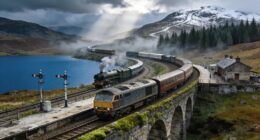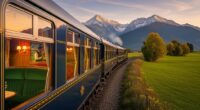
Europe’s winter train discounts hit hardest from New Year through mid-February, with scenic routes like the Glacier Express and Bernina Express slashing prices 50-85% during off-peak season. Swiss Travel Pass holders score the deepest cuts—Glacier Express reservations drop to CHF 49 while Bernina Express seat fees fall from CHF 36 to CHF 32. European Sleeper night trains offer steepest discounts on midweek departures, and booking six months ahead locks in maximum savings. The specifics of timing and route selection determine whether travelers actually capitalize on these price drops.
Why Glacier Express Scenic Routes Deliver Europe’s Best Winter Off-Peak Discounts
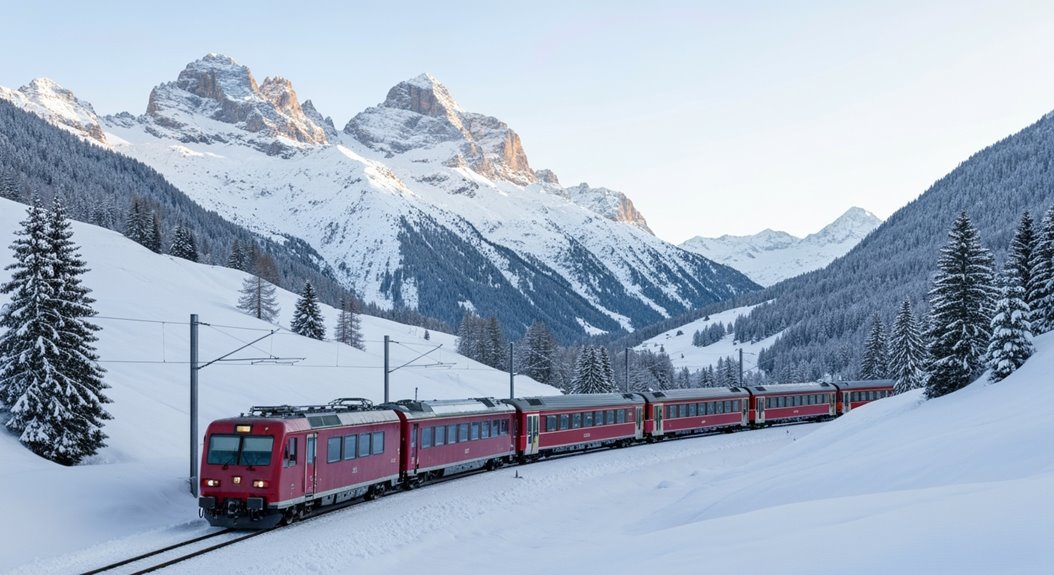
When you actually sit down and crunch the numbers on Switzerland’s famous Glacier Express, the winter discount math starts to look pretty compelling. The Swiss Travel Pass slashes CHF 159-272 off base fares—leaving you with just CHF 49 for reservations.
That’s remarkable value for premium service on scenic routes carving through alpine terrain.
Sure, we’re not talking sleeper services here. But panoramic windows paired with gourmet meals? That combination alone appears to justify the cost for most travelers.
The train blasts through mountain passes you’d struggle to access any other way, and doing it in winter when crowds thin out makes the experience even better. The 8-hour journey covers 300 km between Zermatt and St. Moritz, giving you plenty of time to soak in the scenery without feeling rushed. Known as the slowest express train in the world, it prioritizes experience over speed.
On top of that, the discount structure seems designed specifically to reward off-peak visitors—you get the same iconic route, same views, but at a fraction of what summer passengers pay. While Europe offers these winter savings, Canada’s Rocky Mountaineer provides a similar philosophy of prioritizing scenic experience with multiple routes showcasing spectacular mountain landscapes from Vancouver to destinations like Jasper and Banff.
That said, it’s worth noting the CHF 49 reservation fee is mandatory, so factor that into your budget regardless of which pass you’re carrying.
Even so, the total outlay remains well below what you’d face during high season.
How to Maximize Bernina Express Alpine Train Discounts During European Winter Off-Peak Season
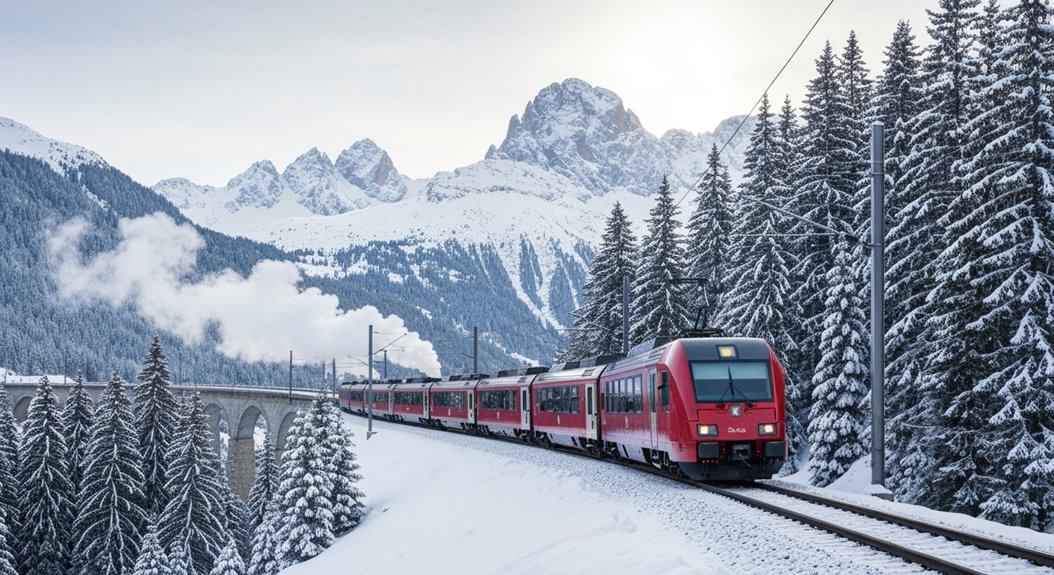
The Bernina Express pricing works differently than the Glacier Express—something worth understanding if you want to stretch your budget.
Swiss Travel Pass holders actually ride free; you’re only paying for seat reservations. Winter travel drops those reservation fees to CHF 32, down from the CHF 36 you’d pay in summer. The St. Moritz-Tirano route? That one appears to stay at CHF 28 year-round.
With a Swiss Travel Pass, your only cost is the seat reservation—CHF 32 in winter, CHF 36 in summer.
Here’s where it gets interesting: pass holders can save somewhere between 50-85% during off-peak periods, though the exact percentage likely depends on when you book and which route you choose.
That said, the reservation system rewards travelers who dig into the details rather than just showing up. The journey spans 122 km, featuring 55 tunnels and 196 bridges along the way. The route reaches an elevation of 2,253 meters at Ospizio Bernina, making it one of the highest railway crossings in Europe. Like other European train routes, passengers should arrive about 20 minutes before departure to ensure a smooth boarding process. Even so, it’s not an overly complicated setup—just different enough from the Glacier Express that you’ll want to check the specific rules before assuming they work the same way.
When European Sleeper Night Trains Offer the Deepest Winter Off-Peak Travel Discounts
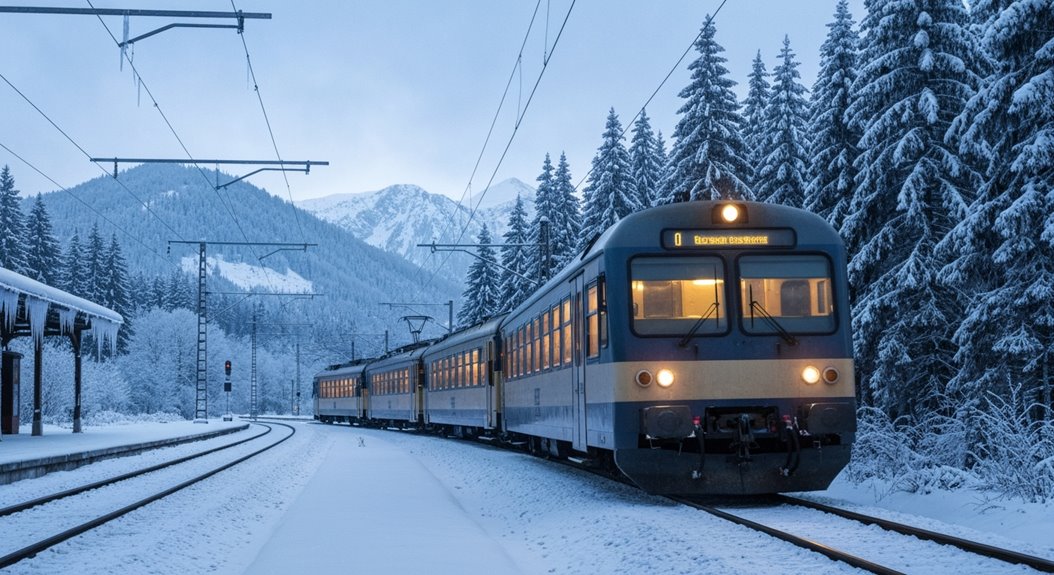
Discount hunting on European Sleeper night trains follows a predictable rhythm, and understanding that rhythm can mean the difference between paying full fare and snagging a seat for half price.
The deepest winter discounts typically hit after New Year through mid-February—though exact timing may shift depending on the route. Return tickets and midweek departures tend to slash prices hardest.
That said, sleeper compartments often see last-minute fire sales when January bookings lag, especially on less popular corridors. Off-peak windows between holidays deliver the real savings.
European Sleeper connects Brussels to Berlin and is included in Eurail Pass, though you’ll still need to pay the reservation fee separately. Booking platforms vary depending on your journey’s starting point, so check multiple options for the best winter deals.
It’s not some mystery; it’s just timing. Saturday to Saturday arrangements maximize your skiing time when booking winter train travel to the Alps.
Eurostar Winter Off-Peak Sleeper Services: Unlocking Cross-Channel European Travel Discounts
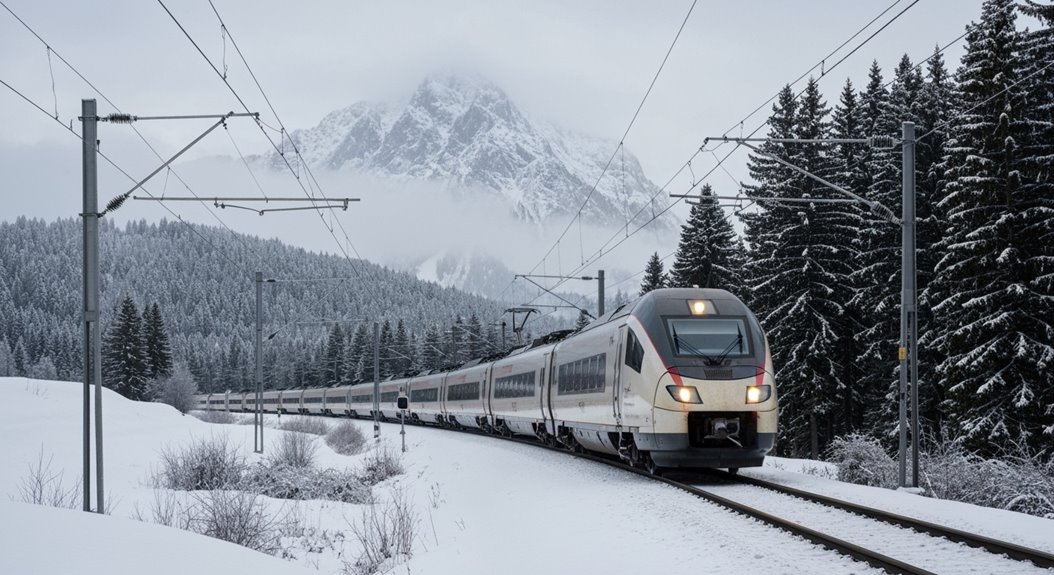
Anyone typing “Eurostar sleeper services” into a search bar is going to hit a wall pretty quickly. Eurostar simply doesn’t run overnight trains—never has.
That said, the instinct to hunt for cross-channel winter discounts isn’t misguided, just misdirected.
Here’s what actually works: Eurostar does offer off-peak fares, typically from mid-January through mid-March. Book those early—they go fast.
Once you’re in Brussels, that’s where things get interesting. European Sleeper and NightJet both operate from there, and *that’s* where you’ll find the genuine sleeper options and, quite possibly, better overall savings on longer European routes. European Sleeper’s service to Venice departs Brussels at 5 PM, arriving the next afternoon—perfectly timed to catch the tail end of carnival season if you’re traveling in late February or early March. The company already runs overnight trains to Berlin, a route it launched in May 2023 and later extended to Dresden and Prague.
The discount isn’t where you thought it was, but it exists if you’re willing to connect. Many travelers find that booking through major rail hubs like Union Station in Los Angeles offers similar comprehensive connections for domestic journeys.
Best Winter Off-Peak Ski Train Discounts Connecting European Ski Resorts
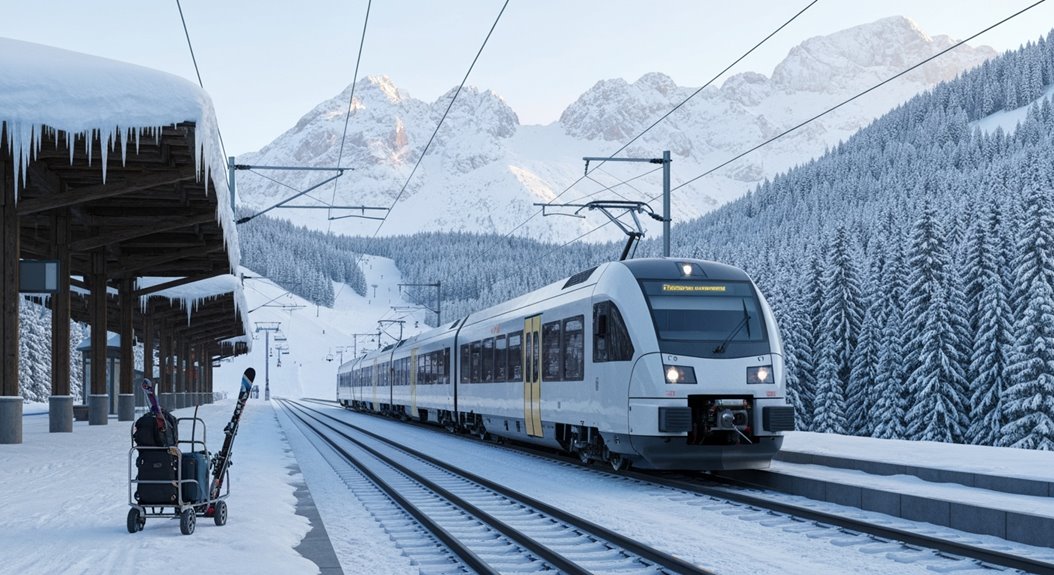
When Eurostar announced £99 fares to the Alps for 2025/26, ski travelers who’d been shelling out double that amount probably felt a mix of relief and mild irritation.
That’s a sharp discount. Rail Europe and Trenitalia jumped in too, bundling tickets with lodging and lift passes—package deals that may make the math easier for some. When considering the best time to purchase eurail pass options, travelers should look for special promotions or seasonal offers that can enhance their journey. Timing your purchase strategically can lead to significant savings, making it more affordable to explore multiple destinations across Europe. Additionally, planning ahead often yields better availability and choice in routes and accommodations. One way to optimize travel expenses is by taking advantage of super offpeak train fares in Europe, which can significantly reduce costs during less busy times. By traveling during these off-peak periods, you can enjoy a more relaxed journey without the crowds typically found during peak travel seasons. This approach not only saves money but also allows for a more enjoyable exploration of Europe’s stunning landscapes and vibrant cities.
Booking strategies matter here. Reserve in July if you can. Travel midweek. Skip the Christmas chaos entirely.
Sustainability sells, apparently, though whether that’s driving bookings or just good marketing is harder to say. The train service operates every Saturday throughout winter, linking London St Pancras with major Alpine stations like Moûtiers, Aime-la-Plagne, and Bourg-Saint-Maurice.
Even so, six Alpine stations are now accessible without the guilt—or at least with less of it.
On top of that, you’re avoiding the rental-car hassle and airport queues, which for many travelers might be reason enough. The same Eurostar routes that connect London to Paris and Amsterdam provide the foundation for these Alpine connections, making weekend ski trips surprisingly accessible. The service includes space for two suitcases plus hand luggage and your skis or snowboard at no extra cost, eliminating the usual baggage fee headaches.
What Winter Sleeper Compartment Upgrades Cost on European Mountain Railways During Off-Peak Season

If you’re eyeing a winter sleeper compartment on an Alpine route and wondering what the upgrade will actually cost, the short answer is anywhere from €40 to €250 per person—though that range depends heavily on how much privacy and comfort you’re willing to pay for.
ÖBB Nightjet mini cabins start around €100, which honestly isn’t bad for a solo traveler who wants a door that locks. Standard two-berth sleeper compartments tend to run €110–€180 during off-peak pricing. Deluxe sleeper options with private bathrooms, on the other hand, hit €180–€250, so you’re paying a premium for that en-suite convenience.
That said, railway companies appear to offer the steepest discounts midweek, which makes sense if you can swing a Tuesday or Wednesday departure. For cross-border journeys, consider routes like Paris to Milan via the French Riviera, where Thello night trains offer special discount pricing during winter months.
Even so, you’ll want to compare specific routes—some mountain lines may price more aggressively than others depending on demand and seasonal quirks. The Semmering Bond railway, completed in 1854 as Europe’s first mountain railway, remains one of the most scenic Alpine crossings with its 41-kilometer route climbing 460 meters through the Eastern Alps. For maximum savings, consider booking up to six months in advance, as the cheapest fares tend to disappear quickly once early-bird windows close.
Top 5 European Alpine Routes with Bernina Express Winter Off-Peak Pass Discounts

Number 1 – The Bernina Express runs year-round from Chur to Tirano with off-peak discounts when most Alpine passes are buried in snow—that’s the standout rail option.
Numbers 2 and 3, Grossglockner High Alpine Road and Stelvio Pass hit impressive heights but close for winter months.
Numbers 4 and 5, Nockalm Road and Reschenpass offer scenic connections between countries, though they’re seasonal too.
Rail beats road for winter access, plain and simple. Those looking beyond these five routes will find over 220 major passes and thousands of kilometers of Trans-European trails waiting.
The Alps don’t mess around. Over 220 major mountain passes snake through France, Italy, Switzerland, Austria, Slovenia, and Germany, some reaching heights up to 2,758 meters. That’s Stelvio Pass territory, where Giro d’Italia cyclists suffer beautifully and winter closures slam the door on drivers for months at a time.
Over 220 major Alpine passes reach heights up to 2,758 meters, where winter closures lock out drivers for months.
Then there’s the Grossglockner High Alpine Road. Scenic? Absolutely. Free? Not a chance. Tolls apply, though the panoramic views seem to justify the expense for most visitors. Nockalm Road offers gentler curves through Austria, while Reschenpass at 1,504 meters connects north to south, famously marked by that submerged village clock tower in Graun.
Come winter, these roads transform into impassable frozen corridors.
Trains don’t care about snow, though. The Bernina Express runs year-round from Chur, Switzerland to Tirano, Italy, earning UNESCO World Heritage status for its engineering and landscapes. It crosses high-altitude passes including Ospizio Bernina when road routes sit buried under ice.
Winter off-peak passes offer discounted fares, making the quieter months more affordable. Smart move for budget-conscious travelers who don’t mind fewer crowds.
Seasonal variation dictates everything. High-altitude roads close in winter, visitor numbers plummet, and rates drop where access remains. Summer and early autumn bring peak traffic and premium prices. For those attempting long-distance routes on foot, hiking season typically runs from late April through early November depending on conditions.
The Alps sprawl across 200,000 square kilometers from the French Mediterranean to the Pannonian Plain. Contour lines at 250-metre intervals on detailed topographic maps help travelers understand the extreme elevation changes across this terrain. Beautiful, brutal, and completely indifferent to human convenience.
Did You Know?
Can I Bring Ski Equipment on European Trains During Winter Off-Peak Season?
Yes, most European trains welcome ski equipment during winter.
Eurostar’s dedicated snow trains to Bourg-St-Maurice and French Alps destinations let passengers bring skis and snowboards as *additional* luggage beyond the standard allowance—pretty sweet deal.
Standard Eurostar services count ski gear as one of two permitted bags, though. Equipment needs protective cases with straps for safety. Items over 85cm on regular trains require registered baggage service at £30.
Regional trains across Europe typically accommodate winter sports gear without fuss.
Do European Rail Passes Include Christmas Market Special Train Routes?
Rail passes cover regular scheduled trains between Christmas market cities—Vienna to Prague, Cologne to Frankfurt, Strasbourg to Basel.
No special holiday routes exist. European operators don’t run exclusive Christmas market trains, despite what travel blogs might suggest.
Pass holders use the same regional and intercity services locals take year-round. High-speed trains need reservations (€4-40 extra), but regional connections between markets typically don’t.
It’s standard infrastructure, just crowded with tourists.
What Temperature Standards Do Overnight Sleeper Trains Maintain During Winter?
European overnight sleeper trains aim for a minimum 20°C compartment temperature during winter operations.
Reality? It’s not that simple. Effectiveness varies wildly based on train age and maintenance quality.
First-class sleepers maintain more consistent warmth than second-class. Upper berths run hotter than lower ones—basic physics.
Temperature fluctuates throughout journeys, especially during border stops when doors keep opening. Modern trains keep windows sealed for climate control efficiency.
Are There Family Compartments Available on Winter Off-Peak European Trains?
Yes, family compartments are available on winter off-peak European trains.
Private compartments accommodate up to five people on services like European Sleeper, while sleeping cars offer one-to-three-person spaces with showers and toilets.
Shared classic compartments work well for families during quieter periods.
Kids aged 4-11 travel for around €10 on certain night trains.
Book early though—family-friendly accommodations disappear fast, even during off-peak season.
How Much Luggage Can I Bring on European Winter Trains?
Most European trains let passengers bring two large bags plus hand luggage—no weight police like airlines.
France’s TGV caps bags at 70 x 90 x 50 cm. Spain’s Renfe allows 85 x 55 x 35 cm pieces totaling 25 kg.
Budget services like Ouigo? They’re stingy: one carry-on max, extra bags cost €6 each. Ski gear usually gets a pass.
No security scanners for luggage either, just overhead racks and common sense.
Parting Shot
Winter train travel across Europe isn’t rocket science. Book early, travel between November and March, skip the holidays. The discounts exist because fewer people want to freeze their butts off on scenic routes. Rail passes work across borders. Sleeper trains cost more but save a hotel night. The infrastructure handles the cold fine—heated switches, de-iced power lines, the whole deal. Load factors drop, prices follow. Simple economics at 200 kilometers per hour.