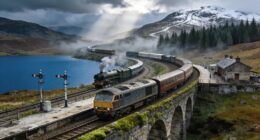
The Venice Simplon-Orient-Express runs actual 1920s and 1930s carriages that survived two world wars and decades of neglect. Belmond Limited operates this legendary train, featuring 35 meticulously restored period cars with original marquetry and brass fittings. Routes connect Paris to Venice, tracing paths once traveled by royalty. The British Pullman offers luxury day excursions from London Victoria with eleven vintage carriages showcasing intricate Art Deco detailing. LVMH acquired Belmond’s portfolio for $2.6 billion in 2018. The journey ahead reveals what separates authentic Belle Époque glamour from ordinary rail travel.
The Venice Simplon-Orient-Express Showcases Authentic Orient Express Heritage Through Legendary European Routes

The Venice Simplon-Orient-Express’s authenticity isn’t just marketing talk—it’s built from actual 1920s and 1930s carriages that somehow survived two world wars and decades of neglect.
These aren’t replicas—they’re genuine 1920s-1930s carriages that survived wars and abandonment before meticulous restoration.
James Sherwood spent $16 million hunting down and restoring 35 period cars, complete with original marquetry and brass fittings that craftsmen painstakingly brought back to life.
These legendary European routes still trace paths once traveled by royalty, connecting Paris to Venice through the historic Simplon Tunnel. Italy’s Alpine infrastructure developments have played a crucial role in enhancing accessibility and bolstering tourism in the region. Improved roads and railways now allow visitors to experience the stunning vistas and quaint villages nestled among the mountains. As a result, travelers can easily navigate from bustling cities to serene alpine escapes, enjoying the best of both worlds.
The Simplon Tunnel’s completion in 1906 drastically reduced travel time between Paris and Venice, making it the longest tunnel in the world at that time.
The 1930s marked the acquisition of the Orient Express’s reputation for unparalleled comfort, with its sleeping and restaurant cars setting new standards for luxury rail travel.
The train’s Art Deco elegance creates an authentic atmosphere that transports passengers back to the golden age of luxury travel.
That said, one could argue this level of preservation comes with a hefty price tag that puts it out of reach for most travelers.
Even so, for those who can afford it, the experience appears to deliver on its promise of stepping back into a gilded age of rail travel.
The British Pullman Features Meticulously Restored Art Deco Carriages For Unforgettable Luxury Day Excursions

The British Pullman runs eleven vintage carriages, and every single one has its own name and backstory.
The Art Deco detailing is intricate enough to send design enthusiasts into raptures—think marquetry panels, mosaic floors, and restored brass fittings that gleam like they did decades ago.
These carriages pull out of London Victoria for luxury day trips that typically include gourmet meals.
Some excursions lean into the theatrical side of things with murder mystery lunches, which may not be everyone’s cup of tea but certainly add drama to the journey. Destinations range from Country Gardens to historic estates like Highclere Castle.
Like the renowned luxury trains of South Africa, the British Pullman emphasizes period décor and attentive service to create an indulgent travel experience.
On top of that, Wes Anderson redesigned one of the carriages—because of course he did. Cygnus features pastel pink ceilings and emerald green upholstery that blend classic Pullman elegance with modern design touches.
Belmond Limited Operates The Venice Simplon-Orient-Express As Europe’s Premier Luxury Train Experience

Behind all that Art Deco glamour and those gleaming brass fittings sits Belmond Limited—the company that actually owns and runs the Venice Simplon-Orient-Express.
LVMH scooped up Belmond in 2018 for $2.6 billion, folding this luxury train experience into a portfolio that spans 32 hotels and five train services worldwide.
What sets them apart? They’re the only ones allowed to use the full Venice Simplon-Orient-Express name, and they do it with the original 1920s carriages.
That exclusivity matters, even if the nostalgia comes at a premium.
Beyond the luxury experience, choosing this iconic train journey significantly reduces your carbon footprint compared to flying or driving between European destinations. One of the most enchanting options is the romantic train journeys through Rhine Valley, where stunning landscapes unfold before your eyes. As you glide along the river, you’re treated to picturesque views of vineyards and charming villages that dot the landscape. This immersive experience not only captivates your senses but also allows you to savor the rich culture and history that define the region. As you venture further into your journey, the romantic train journeys through Europe open up opportunities to explore various culinary delights unique to each region. Each stop along the way invites you to indulge in local delicacies, from freshly baked pastries to robust regional wines. The rhythmic clatter of the train on the tracks enhances the ambiance, making every moment a cherished memory as you traverse through breathtaking scenery.
Before Belmond took the reins, the company operated under the Orient-Express Hotels name until 2014.
Accor acquired a 50% stake in “Orient Express” rights in 2017, planning new train service and hotels.
The Royal Scotsman Journey Inspires British Pullman Passengers To Explore Venice Simplon-Orient-Express European Adventures

Stepping onto the Royal Scotsman doesn’t just sell passengers a trip through the Scottish Highlands—it plants an idea.
That idea? More luxury rail.
Belmond seems to know this well. The mahogany-lined carriages, the whisky observation car, the intimacy of just 40 passengers—it all works like a gateway.
The mahogany, the whisky, the mere 40 guests—it’s all calibrated to make you crave the next journey.
British Pullman awaits next. Then comes the Venice Simplon Orient Express winding across Europe. One train leads to another, and the transition feels almost seamless.
That said, you could argue it’s intentional. The experience is designed to create appetite, to make you wonder what else is out there on the rails.
Even so, for passengers who’ve caught the bug, the progression makes sense. Why stop at Scotland when continental Europe is calling?
The Venice Simplon-Orient Express extends that journey through cities like Paris, Vienna, Prague, and Budapest, all while featuring authentic sleeper cars from the 1920s and 1930s. Beyond Europe, travelers can discover the Eastern & Oriental Express traversing the landscapes of Southeast Asia. The exquisite dining experience onboard combines modern culinary excellence with vintage elegance.
The Golden Eagle Danube Express Eastern European Routes Highlight Belmond Limited’s Venice Simplon-Orient-Express Western European Distinction

Geography pretty much tells the story before a single ticket gets sold. The Golden Eagle Danube Express owns Eastern Europe—Budapest to Warsaw, Krakow’s gothic streets, the haunting reality of Auschwitz.
Meanwhile, the Venice Simplon-Orient-Express commands Western routes with what you might call Art Deco swagger.
Different worlds, different luxury train experiences. One investigates post-imperial grit. The other? It celebrates Belle Époque glamour through and through.
That said, the distinction runs deeper than just route maps. The Eastern European journey appears to lean into historical weight and cultural complexity, while the Western offering tends to polish everything until it gleams. Guests begin with an arrival in Budapest, transferring to the Four Seasons Hotel Gresham Palace. The Golden Eagle experience includes complimentary draft beer in the Bar Car for all passengers alongside wine or local beer with meals.
Regardless of which route you choose, smart packing with essential medications and toiletries ensures maximum comfort throughout your luxury rail journey.
Even so, both deliver luxury—just from opposite ends of the continent’s experience. Simple as that.
Did You Know
What Is the Dress Code for Evening Meals on Board?
Evening meals require formal attire—period.
Men show up in suits and ties, many going full black-tie with dinner jackets. Women wear elegant gowns or cocktail dresses.
The train’s philosophy? You can’t be overdressed.
Jeans, shorts, T-shirts, and sneakers are strictly banned after dark. No athletic wear. No casual anything.
Staff enforce these rules harder at dinner than breakfast.
Most guests accept it, packing multiple formal outfits and treating the dress code like part of the 1920s nostalgia trip.
How Many Staff Members Serve Passengers During Each Journey?
Around 42 staff members work each journey, serving up to 182 passengers. That’s roughly a 1:4.3 staff-to-passenger ratio—pretty impressive for attentive service.
The crew includes cabin stewards, executive chefs, dining car waiters, bartenders, and train managers. Everyone’s trained in luxury hospitality protocols and multilingual communication.
It’s 24-hour concierge-level attention, from turn-down service to gourmet meal preparation. Basically, there’s always someone available to handle whatever passengers need.
Can Solo Travelers Book Individual Cabins on the Train?
No dedicated single cabins exist anymore—they were discontinued after recent upgrades.
Solo travelers must book a twin cabin for sole use, paying the full double occupancy rate. Translation: you’re paying for two people.
The baseline Historic Twin cabin costs roughly £3,800 per person double occupancy; the same price applies solo.
Occasionally—very occasionally—specific departures waive the single supplement, but availability is rare.
Contact booking directly to check.
What Is Included in the Baseline Fare Price?
The baseline fare covers the sleeper journey, all meals—breakfast, lunch, multi-course gourmet dinners—plus afternoon tea.
Cabin accommodation with 24-hour steward service, bedding, luxury toiletries, and luggage handling are included.
Access to the bar car, lounge areas, and most non-premium drinks come standard.
Transfers for initiation and disembarkation are handled.
Basically, everything except premium alcohol and boutique purchases.
Fares run £3,800–£4,000 per person for a one-night, one-way trip.
How Far in Advance Should Passengers Book Their Journey?
Passengers should book at least 12 months ahead—seriously.
Peak routes like Paris–Istanbul sell out fast, sometimes over a year in advance. Grand Suites? Gone even quicker.
The train only runs mid-March through December, so summer and autumn departures disappear first. A 50% deposit locks it in, with final payment due 180 days before departure.
Wait too long and it’s just waitlists and disappointment. Early birds get the best cabins.
Parting Shot
The Venice Simplon-Orient-Express isn’t trying to be a luxury train. It *is* one. Period. With 98% occupancy and £11 million in restorations, Belmond created something actually worth the hype—seventeen restored carriages, authentic 1920s interiors, Lalique glass panels. The whole thing. It’s not just transportation between Paris and Venice. It’s a 31-hour experience with black-tie dinners and white-glove service that somehow balances UNESCO heritage standards with modern safety regulations. Fancy, functional, fully booked. Luxury train journeys through Europe offer an unparalleled way to explore the continent’s stunning landscapes and rich history. Each voyage provides a unique blend of opulence and adventure, allowing passengers to indulge in gourmet cuisine and breathtaking views from the comfort of elegantly appointed carriages. With routes that traverse iconic cities and hidden gems, these journeys elevate travel into an art form.luxury train experiences.0s and 1930s carriages that survived two world wars and decades of neglect. Belmond Limited operates this legendary train, featuring 35 meticulously restored period cars with original marquetry and brass fittings. Routes connect Paris to Venice, tracing paths once traveled by royalty. The British Pullman offers luxury day excursions from London Victoria with eleven vintage carriages showcasing intricate Art Deco detailing. LVMH acquired Belmond’s portfolio for $2.6 billion in 2018. The journey ahead reveals what separates authentic Belle Époque glamour from ordinary rail travel.
The Venice Simplon-Orient-Express Showcases Authentic Orient Express Heritage Through Legendary European Routes
The Venice Simplon-Orient-Express’s authenticity isn’t just marketing talk—it’s built from actual 1920s and 1930s carriages that somehow survived two world wars and decades of neglect.
These aren’t replicas—they’re genuine 1920s-1930s carriages that survived wars and abandonment before meticulous restoration.
James Sherwood spent $16 million hunting down and restoring 35 period cars, complete with original marquetry and brass fittings that craftsmen painstakingly brought back to life.
These legendary European routes still trace paths once traveled by royalty, connecting Paris to Venice through the historic Simplon Tunnel. Italy’s Alpine infrastructure developments have played a crucial role in enhancing accessibility and bolstering tourism in the region. Improved roads and railways now allow visitors to experience the stunning vistas and quaint villages nestled among the mountains. As a result, travelers can easily navigate from bustling cities to serene alpine escapes, enjoying the best of both worlds.
The Simplon Tunnel’s completion in 1906 drastically reduced travel time between Paris and Venice, making it the longest tunnel in the world at that time.
The 1930s marked the acquisition of the Orient Express’s reputation for unparalleled comfort, with its sleeping and restaurant cars setting new standards for luxury rail travel.
The train’s Art Deco elegance creates an authentic atmosphere that transports passengers back to the golden age of luxury travel.
That said, one could argue this level of preservation comes with a hefty price tag that puts it out of reach for most travelers.
Even so, for those who can afford it, the experience appears to deliver on its promise of stepping back into a gilded age of rail travel.
The British Pullman Features Meticulously Restored Art Deco Carriages For Unforgettable Luxury Day Excursions
The British Pullman runs eleven vintage carriages, and every single one has its own name and backstory.
The Art Deco detailing is intricate enough to send design enthusiasts into raptures—think marquetry panels, mosaic floors, and restored brass fittings that gleam like they did decades ago.
These carriages pull out of London Victoria for luxury day trips that typically include gourmet meals.
Some excursions lean into the theatrical side of things with murder mystery lunches, which may not be everyone’s cup of tea but certainly add drama to the journey. Destinations range from Country Gardens to historic estates like Highclere Castle.
Like the renowned luxury trains of South Africa, the British Pullman emphasizes period décor and attentive service to create an indulgent travel experience.
On top of that, Wes Anderson redesigned one of the carriages—because of course he did. Cygnus features pastel pink ceilings and emerald green upholstery that blend classic Pullman elegance with modern design touches.
Belmond Limited Operates The Venice Simplon-Orient-Express As Europe’s Premier Luxury Train Experience
Behind all that Art Deco glamour and those gleaming brass fittings sits Belmond Limited—the company that actually owns and runs the Venice Simplon-Orient-Express.
LVMH scooped up Belmond in 2018 for $2.6 billion, folding this luxury train experience into a portfolio that spans 32 hotels and five train services worldwide.
What sets them apart? They’re the only ones allowed to use the full Venice Simplon-Orient-Express name, and they do it with the original 1920s carriages.
That exclusivity matters, even if the nostalgia comes at a premium.
Beyond the luxury experience, choosing this iconic train journey significantly reduces your carbon footprint compared to flying or driving between European destinations. One of the most enchanting options is the romantic train journeys through Rhine Valley, where stunning landscapes unfold before your eyes. As you glide along the river, you’re treated to picturesque views of vineyards and charming villages that dot the landscape. This immersive experience not only captivates your senses but also allows you to savor the rich culture and history that define the region. As you venture further into your journey, the romantic train journeys through Europe open up opportunities to explore various culinary delights unique to each region. Each stop along the way invites you to indulge in local delicacies, from freshly baked pastries to robust regional wines. The rhythmic clatter of the train on the tracks enhances the ambiance, making every moment a cherished memory as you traverse through breathtaking scenery.
Before Belmond took the reins, the company operated under the Orient-Express Hotels name until 2014.
Accor acquired a 50% stake in “Orient Express” rights in 2017, planning new train service and hotels.
The Royal Scotsman Journey Inspires British Pullman Passengers To Explore Venice Simplon-Orient-Express European Adventures
Stepping onto the Royal Scotsman doesn’t just sell passengers a trip through the Scottish Highlands—it plants an idea.
That idea? More luxury rail.
Belmond seems to know this well. The mahogany-lined carriages, the whisky observation car, the intimacy of just 40 passengers—it all works like a gateway.
The mahogany, the whisky, the mere 40 guests—it’s all calibrated to make you crave the next journey.
British Pullman awaits next. Then comes the Venice Simplon Orient Express winding across Europe. One train leads to another, and the transition feels almost seamless.
That said, you could argue it’s intentional. The experience is designed to create appetite, to make you wonder what else is out there on the rails.
Even so, for passengers who’ve caught the bug, the progression makes sense. Why stop at Scotland when continental Europe is calling?
The Venice Simplon-Orient Express extends that journey through cities like Paris, Vienna, Prague, and Budapest, all while featuring authentic sleeper cars from the 1920s and 1930s. Beyond Europe, travelers can discover the Eastern & Oriental Express traversing the landscapes of Southeast Asia. The exquisite dining experience onboard combines modern culinary excellence with vintage elegance.
The Golden Eagle Danube Express Eastern European Routes Highlight Belmond Limited’s Venice Simplon-Orient-Express Western European Distinction
Geography pretty much tells the story before a single ticket gets sold. The Golden Eagle Danube Express owns Eastern Europe—Budapest to Warsaw, Krakow’s gothic streets, the haunting reality of Auschwitz.
Meanwhile, the Venice Simplon-Orient-Express commands Western routes with what you might call Art Deco swagger.
Different worlds, different luxury train experiences. One investigates post-imperial grit. The other? It celebrates Belle Époque glamour through and through.
That said, the distinction runs deeper than just route maps. The Eastern European journey appears to lean into historical weight and cultural complexity, while the Western offering tends to polish everything until it gleams. Guests begin with an arrival in Budapest, transferring to the Four Seasons Hotel Gresham Palace. The Golden Eagle experience includes complimentary draft beer in the Bar Car for all passengers alongside wine or local beer with meals.
Regardless of which route you choose, smart packing with essential medications and toiletries ensures maximum comfort throughout your luxury rail journey.
Even so, both deliver luxury—just from opposite ends of the continent’s experience. Simple as that.
Did You Know
What Is the Dress Code for Evening Meals on Board?
Evening meals require formal attire—period.
Men show up in suits and ties, many going full black-tie with dinner jackets. Women wear elegant gowns or cocktail dresses.
The train’s philosophy? You can’t be overdressed.
Jeans, shorts, T-shirts, and sneakers are strictly banned after dark. No athletic wear. No casual anything.
Staff enforce these rules harder at dinner than breakfast.
Most guests accept it, packing multiple formal outfits and treating the dress code like part of the 1920s nostalgia trip.
How Many Staff Members Serve Passengers During Each Journey?
Around 42 staff members work each journey, serving up to 182 passengers. That’s roughly a 1:4.3 staff-to-passenger ratio—pretty impressive for attentive service.
The crew includes cabin stewards, executive chefs, dining car waiters, bartenders, and train managers. Everyone’s trained in luxury hospitality protocols and multilingual communication.
It’s 24-hour concierge-level attention, from turn-down service to gourmet meal preparation. Basically, there’s always someone available to handle whatever passengers need.
Can Solo Travelers Book Individual Cabins on the Train?
No dedicated single cabins exist anymore—they were discontinued after recent upgrades.
Solo travelers must book a twin cabin for sole use, paying the full double occupancy rate. Translation: you’re paying for two people.
The baseline Historic Twin cabin costs roughly £3,800 per person double occupancy; the same price applies solo.
Occasionally—very occasionally—specific departures waive the single supplement, but availability is rare.
Contact booking directly to check.
What Is Included in the Baseline Fare Price?
The baseline fare covers the sleeper journey, all meals—breakfast, lunch, multi-course gourmet dinners—plus afternoon tea.
Cabin accommodation with 24-hour steward service, bedding, luxury toiletries, and luggage handling are included.
Access to the bar car, lounge areas, and most non-premium drinks come standard.
Transfers for initiation and disembarkation are handled.
Basically, everything except premium alcohol and boutique purchases.
Fares run £3,800–£4,000 per person for a one-night, one-way trip.
How Far in Advance Should Passengers Book Their Journey?
Passengers should book at least 12 months ahead—seriously.
Peak routes like Paris–Istanbul sell out fast, sometimes over a year in advance. Grand Suites? Gone even quicker.
The train only runs mid-March through December, so summer and autumn departures disappear first. A 50% deposit locks it in, with final payment due 180 days before departure.
Wait too long and it’s just waitlists and disappointment. Early birds get the best cabins.
Parting Shot
The Venice Simplon-Orient-Express isn’t trying to be a luxury train. It *is* one. Period. With 98% occupancy and £11 million in restorations, Belmond created something actually worth the hype—seventeen restored carriages, authentic 1920s interiors, Lalique glass panels. The whole thing. It’s not just transportation between Paris and Venice. It’s a 31-hour experience with black-tie dinners and white-glove service that somehow balances UNESCO heritage standards with modern safety regulations. Fancy, functional, fully booked. Luxury train journeys through Europe offer an unparalleled way to explore the continent’s stunning landscapes and rich history. Each voyage provides a unique blend of opulence and adventure, allowing passengers to indulge in gourmet cuisine and breathtaking views from the comfort of elegantly appointed carriages. With routes that traverse iconic cities and hidden gems, these journeys elevate travel into an art form.