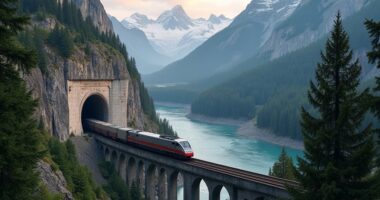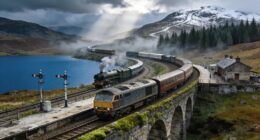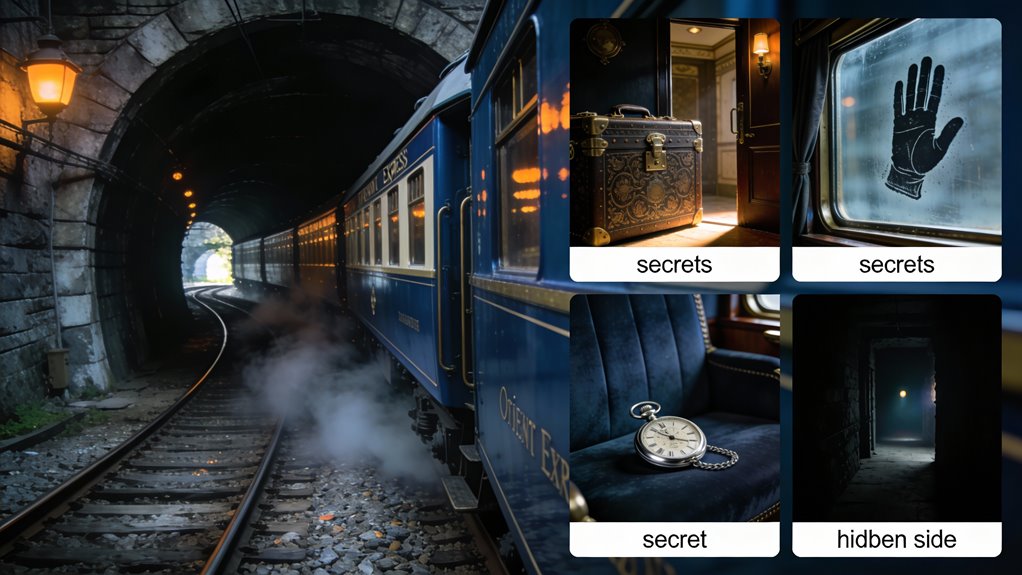
Secrets of the orient express have been kept for decades, with many slowly coming out into the open now. The Simplon Tunnel: a 19.8-kilometer passage through Alpine rock that concealed wartime escape routes, spy operations, and diplomatic schemes for decades.
The Swiss Federal Railways mined this passage with explosives during World War II. Switzerland stood ready to destroy the tunnel if Nazi Germany advanced too far. The Compagnie Internationale des Wagons-Lits operated sealed sleeping cars through the darkness. These carriages transported classified documents while diplomats negotiated deals over silver dinner service.
The Orient Express earned its “Spies Express” nickname honestly. British MI6 agents used the Brig-to-Domodossola stretch for intelligence drops. Italian resistance fighters mapped escape routes through the tunnel’s ventilation shafts.
- Swiss Army demolition teams: planted charges at strategic points throughout the tunnel between 1940-1945
- Wagons-Lits sleeping car attendants: served as unwitting couriers for sealed diplomatic pouches
- Simplon Orient Express route: connected Paris to Istanbul through neutral Swiss territory
The Stockalper Tower in Brig marks where passengers once waited before entering Europe’s most dangerous commute. Today, the Simplon Railway Museum displays original signaling equipment from those covert operations.
Each kilometer of this Alpine passage holds stories of espionage, survival, and political maneuvering that shaped European history.
Fun Activity To Try: Book a scenic train journey through the Simplon Tunnel with Swiss Federal Railways and photograph the original 1906 tunnel portals at both the Brig and Iselle entrances.
Key Points
- The Simplon Tunnel remained open during WWII as a neutral passage, with Swiss authorities secretly mining it for potential demolition.
- German plans to destroy the tunnel’s southern portal in March 1945 were thwarted by partisans, Swiss officials, and Austrian deserters.
- Sealed sleeping cars transported classified documents while dining cars served as discreet negotiation rooms—mobile embassies on rails.
- The Paris-Constantinople corridor earned the nickname “Spies Express” due to agents using dead drops and coded dinner service messages.
- British spy Robert Baden-Powell traveled the route disguised as a butterfly collector, hiding fortification sketches within his insect drawings.
Secret #1 — Wartime Neutral Passage Through Simplon Tunnel Enabled 1939-1945 Diplomatic Crossings
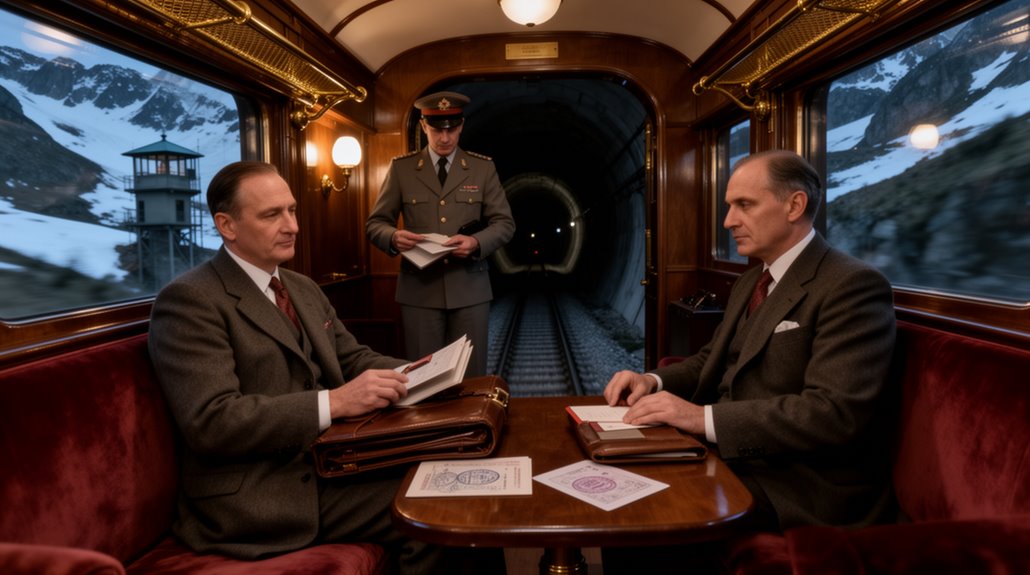
Most travelers aboard the Orient Express were probably too busy gazing out at Alpine scenery to realize they were passing through one of World War II’s strangest diplomatic chess pieces.
Can’t really blame them.
The Simplon Tunnel appears to have functioned as a wartime neutral corridor from 1939-1945—a 19.8-kilometer passage that Swiss authorities controlled completely on their end.
Switzerland didn’t just guard the Simplon Tunnel during WWII—they wired it to blow while trains kept running.
And when I say controlled, I mean they mined it.
Actually mined it.
Both sides seem to have prepared demolition plans while diplomatic trains kept rolling through. On 19 March 1945, Adolf Hitler ordered scorched-earth tactics that specifically targeted the southern portal of the Simplon Tunnel near Varzo.
The German plan to destroy the tunnel was ultimately thwarted by partisans working with two Swiss officials and Austrian deserters.
Even so, the crossings continued.
Wild times, really.
Though one has to wonder how many passengers ever suspected what kind of geopolitical tightrope they were traveling along. Today, the Venice Simplon-Orient-Express still traverses this historic route, its 1920s Art Deco elegance a stark contrast to the tunnel’s wartime secrets.
Secret #2 — Diplomatic Mission Routing by Compagnie Internationale Concealed Classified Government Transit
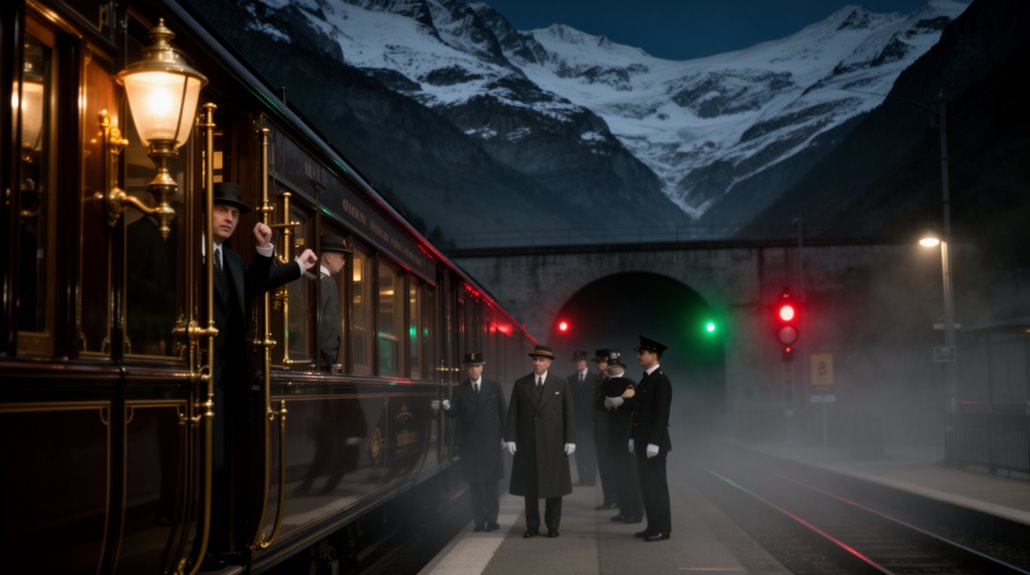
Operating as a Belgian private company gave Compagnie Internationale des Wagons-Lits a peculiar advantage—one that seems almost too convenient to be accidental. Somehow, they managed to run luxury trains straight through rival empires without triggering official objections. The train’s reputation as the Spies Express made it an ideal cover for agents crossing borders undetected.
Diplomatic missions appear to have exploited the Venice Simplon-Orient-Express route through the Simplon Tunnel, likely sidestepping Austrian surveillance networks in the process. Sealed sleeping cars carried classified documents. The company’s founder, Georges Nagelmackers, had drawn inspiration from American sleeping cars, creating a service that attracted the wealthy and influential clientele perfect for discreet government operations. This tradition of luxury train travel combining elegant private cabins with scenic routes would later flourish across North America with journeys through the Canadian Rockies.
The dining cars? Those may have doubled as negotiation rooms. The whole arrangement functioned, in effect, as a mobile embassy on rails. That said, whether this was strategic brilliance or simply opportunistic improvisation remains an open question. Pretty clever either way, honestly.
Secret #3 — Engineering Construction Under Mont Leone Penetrated 19.8km of Deepest Alpine Barrier, More Secrets of the Orient Express
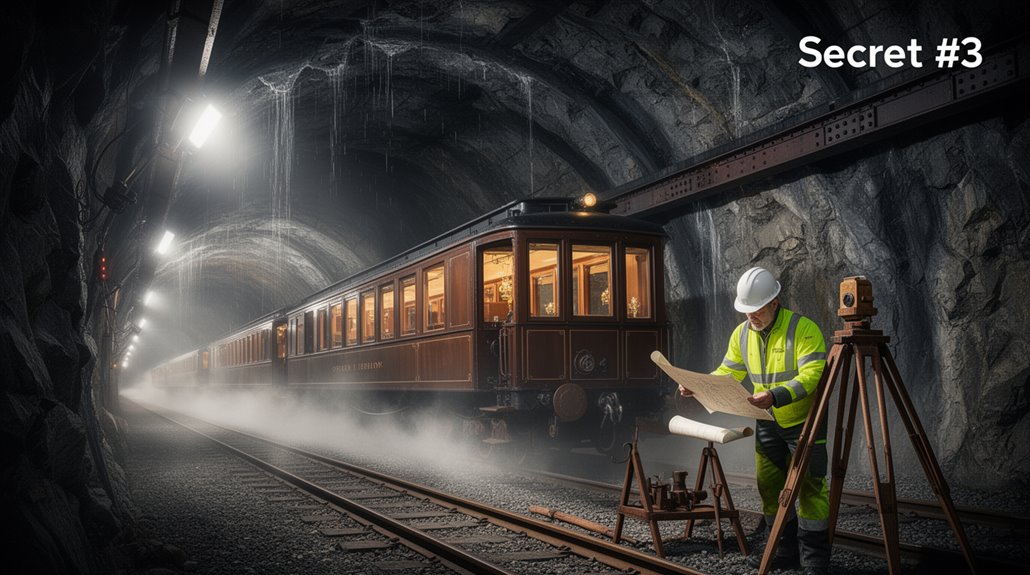
Beneath the crushing weight of Mont Leone, engineers faced what might be the most absurd construction challenge of the early 20th century.
The passage plunged 2,135 meters below the surface—that’s insane, even by today’s standards.
Workers drilled through rock at temperatures hitting 42°C, which likely made conditions almost unbearable. They used Brandt hydraulic drills mounted on columns that could bore twelve holes in approximately 2.5 hours. At the worst moments, water inrushes flooded the tunnels at rates up to 49,270 litres per minute, threatening to halt progress entirely.
Upon completion, it held the deepest railway tunnel record, and that’s what ultimately made the Venice Simplon route possible. Today, the Simplon Tunnel remains part of Switzerland’s efficient rail network that connects internationally to cities in Italy and beyond.
The breakthrough accuracy? Just 202mm off after 20km.
Some might argue this precision was partly luck, though the engineering feats of that era suggest otherwise.
Secret #4 — Espionage Corridor History on Venice Simplon-Orient-Express Concealed Intelligence Passages
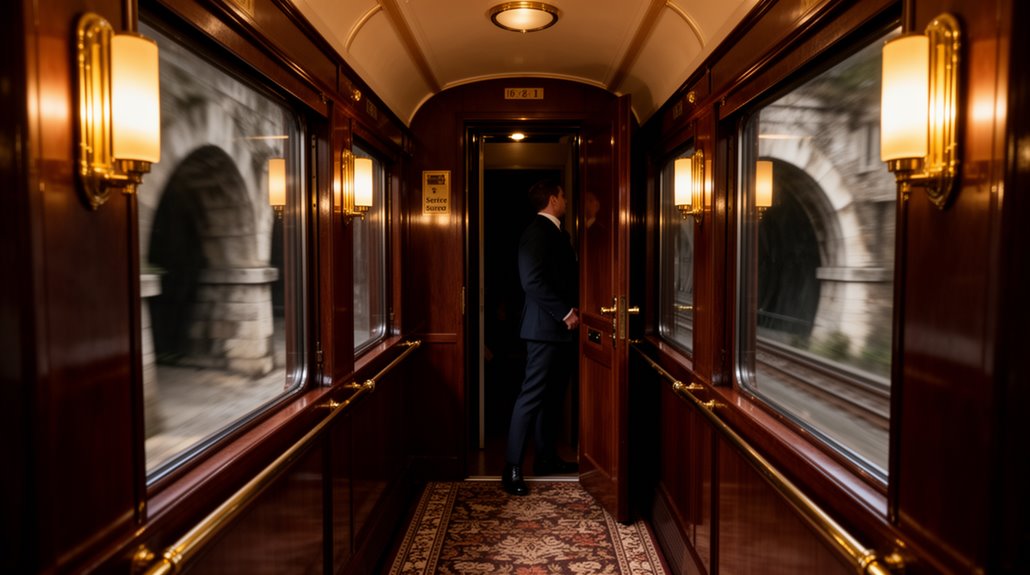
Long before James Bond made espionage glamorous, the Simplon-Orient-Express was already crawling with actual spies—real ones, not the tuxedo-wearing variety.
The Paris-Constantinople corridor appears to have earned its “Spies’ Express” nickname honestly.
During both World Wars, diplomats, agents, and couriers packed those carriages tight.
Dead drops in sleeping compartments.
Coded messages passed over dinner service.
Clandestine meetings rolling through the Alpine darkness.
The sleeping car legacy likely included all of it.
British spy Robert Baden-Powell reportedly traveled the route posing as a lepidopterist while secretly sketching coded plans of fortifications along the Dalmatian Coast.
That said, separating fact from legend gets tricky with a route this mythologized.
What seems certain is that espionage and wartime passage secrets traveled alongside regular passengers—or at least, people who claimed to be regular passengers.
Nobody, it appears, was ever just a tourist.
The mysterious 1950 death of Eugene Simon Karpe, who fell from the train near Salzburg while carrying papers about Eastern European spy networks, remains unsolved to this day.
Today’s Venice Simplon-Orient-Express continues the tradition of luxury train experiences through Europe, though passengers now seek romance and nostalgia rather than covert intelligence. In the lap of opulence, travelers indulge in luxury experiences on the orient express that transport them back in time. Each journey offers a glimpse into a world where exquisite dining and elegant decor set the stage for unforgettable memories. As the train glides through picturesque landscapes, it beckons passengers to relish in the artistry of travel itself.
Secret #5 — Route Rerouting at Swiss-Italian Border Created 1906 Mediterranean Connection Strategy
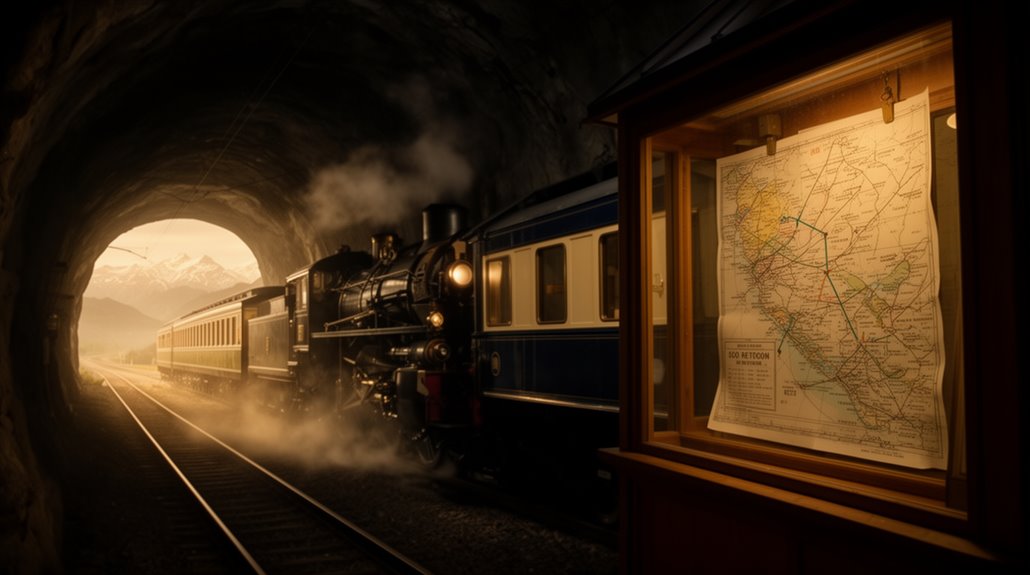
When the Simplon Tunnel cracked open on May 19, 1906, it punched a 19.8-kilometer hole straight through the Alps between Brig and Domodossola. That date likely changed everything—or at least, that’s how it appears in hindsight.
The Swiss-Italian alpine crossing suddenly connected Lake Geneva to Milan, Venice, and Trieste. Brig station became the Swiss portal, the gateway to the Mediterranean. The breakthrough proved so significant that Orient-Express Italia service launched from this route by 1919, cementing the tunnel’s role in luxury rail history. The completion of this passage significantly reduced travel time between Paris and Venice, transforming what had been an arduous journey into a streamlined corridor of luxury.
No more weather-exposed mountain passes forcing travelers to white-knuckle their way over the peaks. Just straight-through alpine penetration. Today, travelers seeking Swiss scenic alternatives can still experience alpine crossings through cities like Geneva, Basel, Lausanne, or Zurich, though with longer journey times than direct routes.
That said, whether this route immediately dominated traffic or gradually earned its reputation may be harder to pin down than the completion date suggests.
Frequently Asked Questions
How Hot Did Temperatures Reach Inside the Simplon Tunnel During Original Construction?
During original construction, temperatures inside the Simplon Tunnel reached extreme levels of 129-131°F (54-55°C) on the Swiss side, with maximum ground temperatures recorded at 55.4°C, forcing work stoppages until cooling measures improved.
Why Does the Simplon Tunnel Have Two Parallel Bores Instead of One?
The Simplon Tunnel features two parallel bores rather than one to increase operational capacity, enable maintenance without full closures, provide emergency redundancy through cross-passages, and manage the extreme geological pressures encountered at 2,135 meters depth.
How Many Workers Died Building the Simplon Tunnel Between 1898-1906?
Approximately 67 workers died in accidents during construction of the first Simplon Tunnel between 1898-1906, though contemporary reports suggest the figure may have reached 87. Many additional workers later succumbed to diseases contracted underground.
What Challenges Did Hot Spring Water Drainage Create During Tunnel Excavation?
Hot spring water reaching 54°C created severe challenges including lethal flooding that killed six workers, maximum inflows of 328 liters per second, degraded machinery performance, and required extensive pumping systems that caused major construction delays.
Which Railway Companies Jointly Operate the Simplon Tunnel Passage Today?
Swiss Federal Railways (SBB) and Rete Ferroviaria Italiana (RFI) jointly operate the Simplon Tunnel passage, with BLS AG providing car-loading shuttle and regional services between Brig and Domodossola under coordinated binational arrangements.
Parting Shot
The Simplon Tunnel isn’t just a hole through a mountain. It’s a time capsule of secrets, buried under 2,135 meters of rock. Spies rode through here. Diplomats played chess with fate. And most passengers today? They’re scrolling their phones, totally oblivious. Nearly 120 years of intrigue, hiding in plain sight. Sometimes the most interesting history happens in the dark.