Europe Train Trip Planning Guide
ICE seating layouts: Deutsche Bahn separates classes through five distinct design choices.
German ICE first class features a 2+1 seating configuration. Second class uses a 2+2 arrangement across identical carriage width. This difference creates 33% fewer passengers per car in first class.
- Seat pitch: First class offers 92cm legroom. Second class provides 88cm. The gap measures just 4cm between classes.
- Armrest design: First class passengers receive individual armrests. Second class travelers share armrests with neighboring seats. Personal space increases significantly in premium cabins.
- Table configuration: First class includes full-width fold-down tables. Second class equips half-tables only. Business travelers prefer first class for laptop work between Frankfurt Hauptbahnhof and Berlin Hauptbahnhof.
The center aisle runs wider in first class carriages. DB Lounge access at major stations like München Hauptbahnhof adds value. Quiet zones exist in both classes on ICE 4 trains.
Siemens Velaro trains and Bombardier coaches maintain these standards across the Deutsche Bahn network. The Sparpreis ticket system offers first class upgrades at reduced rates when booked early through the DB Navigator app.
Fun Activity To Try: Board an ICE train at Köln Hauptbahnhof and walk through both classes to compare the seating layouts firsthand before your next booking decision. When planning your journey, consider the copenhagen to stockholm train benefits, such as scenic views of the countryside and the comfort of onboard amenities. Many travelers appreciate the ease of travel that allows them to relax without the hassle of airport security. Moreover, these trains often provide efficient routes that can save you time compared to flying.
Key Points
- First class uses a 2+1 seating layout across the aisle, while second class uses a denser 2+2 configuration.
- First class offers 92 cm seat pitch compared to 88 cm in second class, providing 4 cm additional legroom.
- First class passengers receive individual armrests, whereas second class requires sharing armrests between adjacent seats.
- First class provides full-width tables for workspace, while second class has half-width tables that create crowding.
- The 2+1 arrangement creates wider aisles in first class, enabling easier movement and reducing passenger jostling.
Difference #1 — The 2+1 vs 2+2 Row Configuration Creates 33% Fewer First Class Seats
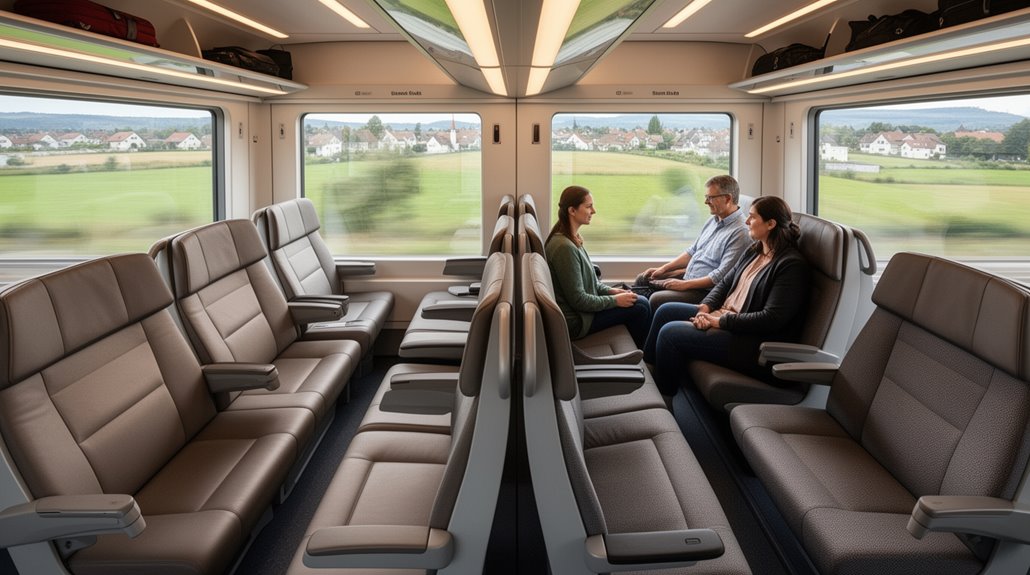
Count the seats across the aisle—that’s the quickest way to tell first class from second on an ICE train.
First class runs a 2+1 layout: two seats on one side, a single seat on the other. Second class squeezes in a 2+2 configuration, four seats spanning the same width. Most second class seating is arranged in open-plan saloons rather than compartments. A typical first class car holds 53 seats total, giving you a sense of just how much space gets allocated per passenger.
The impact on capacity seems straightforward enough. With roughly 33% fewer seats packed into first class carriages, you’re looking at noticeably more breathing room. The high-speed ICE trains represent Germany’s premier rail service, making this seating distinction particularly relevant for longer journeys. That said, whether the extra space justifies the price bump probably depends on how much you value elbow room during a three-hour haul to Munich. For those considering alternatives, there are fantastic train travel deals across Europe that can enhance your journey without breaking the bank. Budget-friendly options like regional trains and passes can offer a comfortable experience while allowing you to explore more destinations. Whether you’re hopping between cities or embarking on a scenic route, these deals make rail travel an appealing choice for any traveler.
Difference #2 — The 92cm vs 88cm Pitch Provides 4cm Additional First Class Legroom
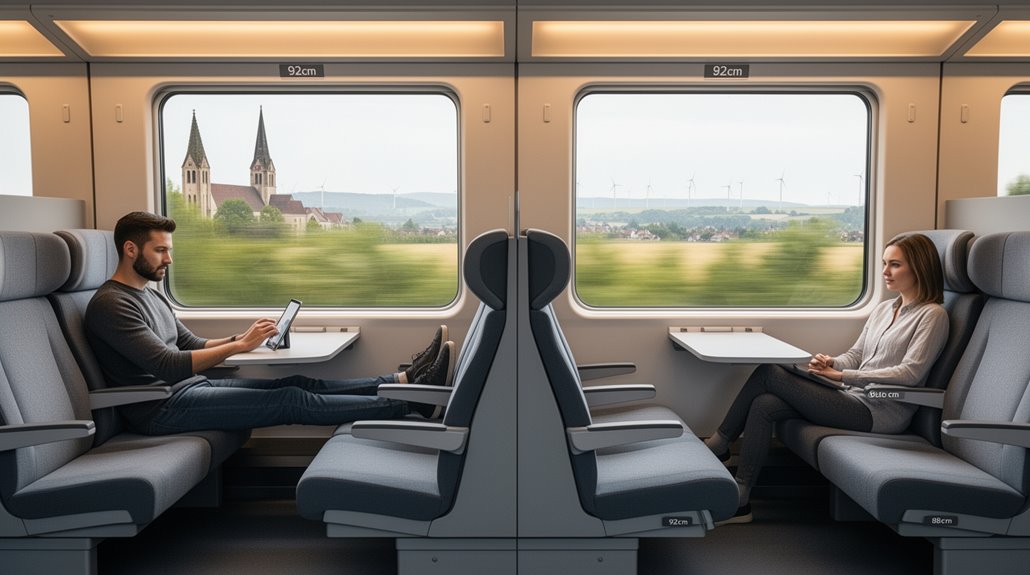
Four centimeters. That’s the gap we’re talking about here.
The 92cm pitch in first class versus 88cm in second gives your knees a bit more breathing room—though whether that qualifies as a game-changer is debatable.
Still, legroom tends to matter more than you’d think on longer journeys. That modest buffer likely keeps your shins from pressing up against the seat ahead, which anyone who’s done a four-hour stretch in a cramped carriage will appreciate. The 2-1 seating configuration in first class means you’re not just getting more legroom but also wider seats with double armrests to spread out. First class also tends to be generally quieter, though second class does offer designated quiet carriages for those who prefer a calmer ride.
Four extra centimeters won’t change your life—but your knees might disagree after hour three.
For taller passengers—say, anyone north of 185cm—it may well be the difference between arriving relaxed and quietly counting down the minutes until you can finally stand up. If you’re considering night train routes for even longer distances, that extra legroom becomes even more valuable when you’re spending extended hours in your seat.

How much does an armrest really matter? Probably more than you’d expect.
In ICE seating layouts, first class gives every passenger their own individual armrest — no sharing, no awkward elbow negotiations with the stranger next to you.
Second class works differently, and this is where things get a bit frustrating. That shared armrest setup means middle seats don’t actually have anything dedicated. You’re left with one armrest squeezed between two people who’ve never met. It’s not ideal, though some passengers seem to manage fine by establishing silent truces early in the journey. The higher passenger density in second class carriages only amplifies this armrest competition.
First class armrests tend to be wider and better padded, and perhaps more importantly, they’re actually *yours*. Personal boundary control appears to be solved — or at least, as solved as it’s likely to get on a train. Beyond the armrest advantage, first class seats are also about one inch wider than their second class counterparts, giving you that extra bit of breathing room. Understanding these comfort differences becomes especially important when planning longer rail itineraries across multiple countries.
Difference #4 — Full-Width vs Half-Width Tables Double the Available Workspace Area
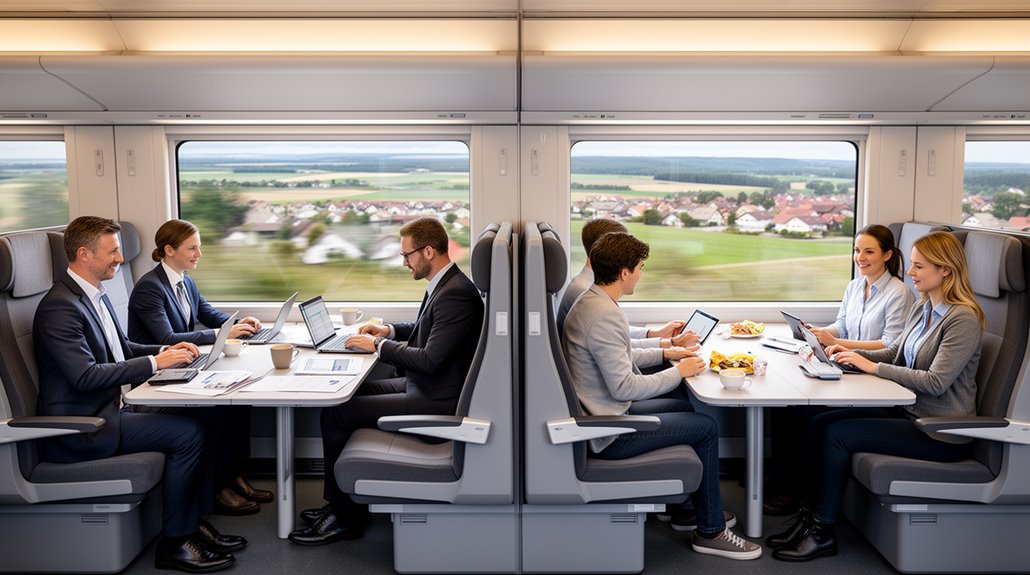
When passengers actually need to get work done on a moving train, table size stops being a minor detail and becomes the whole point.
That full-width table allocation in first class? It means your laptop, a stack of documents, and your coffee can all coexist peacefully without territorial disputes. The yellow roof-line stripe makes these premium carriages easy to spot from a distance when you’re positioning yourself on the platform. First class offers fewer seats and more room, which explains why those generous table dimensions are even possible in the first place.
Second class tells a different story. Those half-width tables crammed into a 2+2 seat configuration appear to make fitting four people’s stuff a genuine challenge—elbows will likely collide, and someone’s notebook is probably ending up on their lap. The math here is brutal, but it’s honest. Even so, plenty of commuters seem willing to make it work when the ticket price difference is steep enough. For business travelers planning longer routes like the Paris to Berlin daytime train, the workspace advantage of first class becomes even more valuable when you’re trying to stay productive across multiple hours.
Difference #5 — Wider Aisle Passage Enables Easier Movement and At-Seat Service

Tables matter, sure. But the wider aisle? That’s where first class benefits actually start to feel tangible. The 2+1 layout opens up real breathing room, so you’re not contorting yourself around strangers during boarding like some kind of awkward human Tetris.
The wider aisle is where first class stops being a label and starts becoming an actual experience.
And luggage management—it may not sound glamorous, but your carry-on strategies actually work here. You can roll a suitcase down the aisle without clipping someone’s elbow or muttering apologies the whole way. This generous clearance means packing smartly with essentials in a smaller bag becomes less critical since you can actually access your larger luggage without disturbing fellow passengers.
Even so, the real payoff might be how catering staff can move through delivering meals at-seat without that painful shuffle-and-wait routine. In first class, attendants pass through taking orders for seat delivery, charging items directly to passengers who’d rather not trek to the bar counter. Two-way traffic just… flows. Nobody gets wedged between armrests.
On top of that, passengers coming back from the lavatory aren’t stuck behind a beverage cart for five minutes. This extra space also makes first class more conducive to napping, since you’re less likely to be jostled by passersby brushing against your seat.
It’s simple geometry, honestly. Though I’d argue it’s the kind of detail most people don’t consciously notice until they’re back in a tighter cabin, suddenly remembering what cramped actually feels like.
Frequently Asked Questions
Are Quiet Zone Carriages Available in Both First and Second Class ICE Trains?
Quiet zone carriages are available in both first and second class on many ICE trains. Deutsche Bahn’s reservation system typically allows passengers to select seats within designated quiet zones when booking either class.
How Does the Electronic Seat Reservation Display System Work on ICE Trains?
Small LED displays above each ICE seat receive real-time data from Deutsche Bahn’s reservation database via the onboard computer. They show reservation segments, “Frei” for available seats, or status messages when synchronisation is incomplete.
Can Passengers Access Bord.Db Entertainment in Both ICE Travel Classes?
The available research materials do not contain specific information regarding Bord.DB entertainment access across ICE travel classes. Passengers seeking clarification on entertainment system availability should consult Deutsche Bahn’s official resources directly for accurate details.
What Wheelchair Space Provisions Exist in First Versus Second Class ICE Carriages?
Dedicated wheelchair spaces are located exclusively in second-class ICE carriages, not first-class saloons. Standard ICE trains provide two wheelchair positions with companion seats, while newer ICE L sets offer three spaces with height-adjustable tables.
Do Family Compartments Offer Different Configurations Than Standard ICE Seating Layouts?
Family compartments offer distinct configurations from standard ICE seating layouts, featuring enclosed spaces with table seating arrangements, additional floor space for children’s movement, stroller storage areas, and baby-changing facilities unavailable in regular open-plan carriages.
Parting Shot
The numbers don’t lie. First class delivers 33% fewer seatmates, 4cm extra legroom, and actual personal armrests. Second class crams passengers into tighter quarters with shared everything. That’s just how it works. Whether the premium price justifies wider aisles and bigger tables depends entirely on the traveller’s budget and tolerance for elbow contact with strangers. Simple math, really.