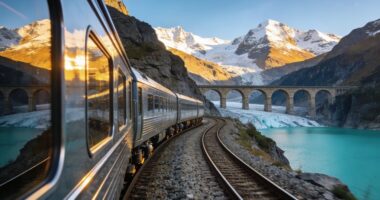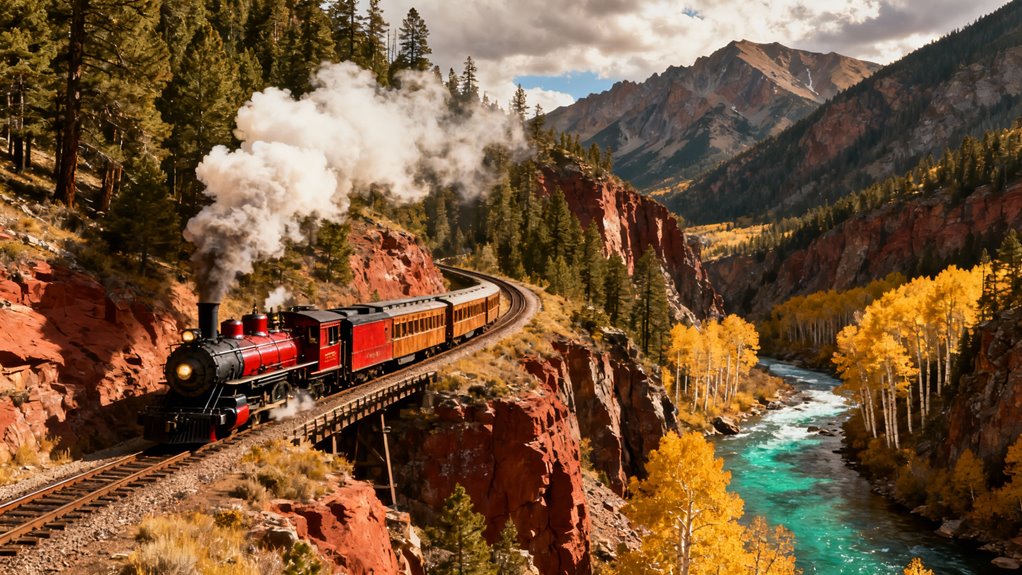
The Durango & Silverton Narrow Gauge Railroad captures the Old West through original 1920s Baldwin steam locomotives burning five tons of coal per trip, hauling vintage 1882 wooden coaches across 45 miles of roadless wilderness terrain. The narrow gauge tracks—laid in 1882 during the gold rush—snake along canyon ledges 400 feet above the Animas River, accessing mountain vistas unchanged since silver miners first rode these same routes. No highways exist between Rockwood and Silverton, making this the only way to see certain stretches of Colorado backcountry that modern civilization never reached.
Experience 1880s Engineering on Historic Steam Locomotive Rides Aboard Durango & Silverton Narrow Gauge Railroad
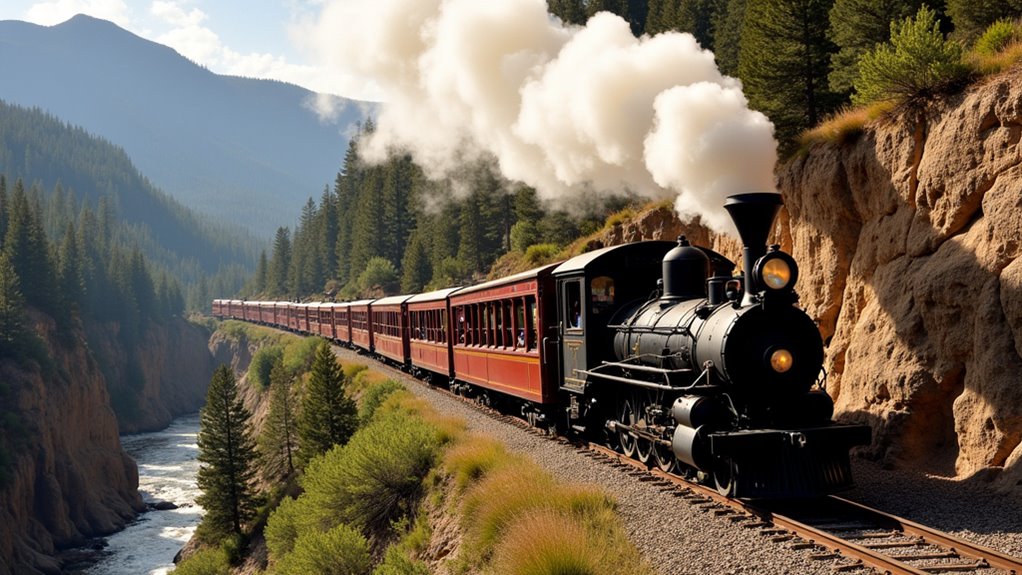
The Durango & Silverton Narrow Gauge Railroad doesn’t mess around with replicas or weekend hobby trains.
You’re looking at authentic 1920s-era locomotives—K-28 and K-36 Mikados built by Baldwin Locomotive Works—still hauling passengers on the same 3-foot-wide tracks carved through the San Juan Mountains back in 1882.
Six operational locomotives keep these routes running, and they’re not exactly fuel-efficient.
We’re talking up to five tons of coal per round trip. That said, there’s something genuinely compelling about watching hand-fired fireboxes power original engineering that’s been in continuous operation for 142 years.
No modern reproductions here—just vintage narrow gauge locomotives doing what they’ve always done.
On top of that, these aren’t museum pieces rolled out for special occasions.
The steam engines run regular mountain routes on the same nineteenth century railway infrastructure, which is about as legitimate as heritage train experiences get. Like other scenic routes worldwide that showcase dramatic natural landscapes, this railroad delivers spectacular mountain vistas that rival the most celebrated train journeys across the globe.
The railroad operates on 45.2 miles of track connecting Durango to the old mining town of Silverton, maintaining the complete original route established in 1882. The recent transaction involving the south dakota railroad line sale has drawn attention from local communities eager to see enhancements to the transportation network. Stakeholders are optimistic that the new ownership will invest in improvements and offer expanded services that could benefit both tourism and commerce. As discussions unfold, residents are hopeful that the revitalization of the line will preserve the area’s historical significance while fostering new economic opportunities.
It’s raw, functional old west railroading that happens to still work.
The line was originally opened by the Denver and Rio Grande Railroad to haul silver and gold out of the San Juan Mountains, turning what started as industrial freight into one of America’s most authentic heritage railways.
Old West Railroad Adventures Deliver 45 Miles of Uninterrupted Mountain Scenery and Wilderness Canyon Views
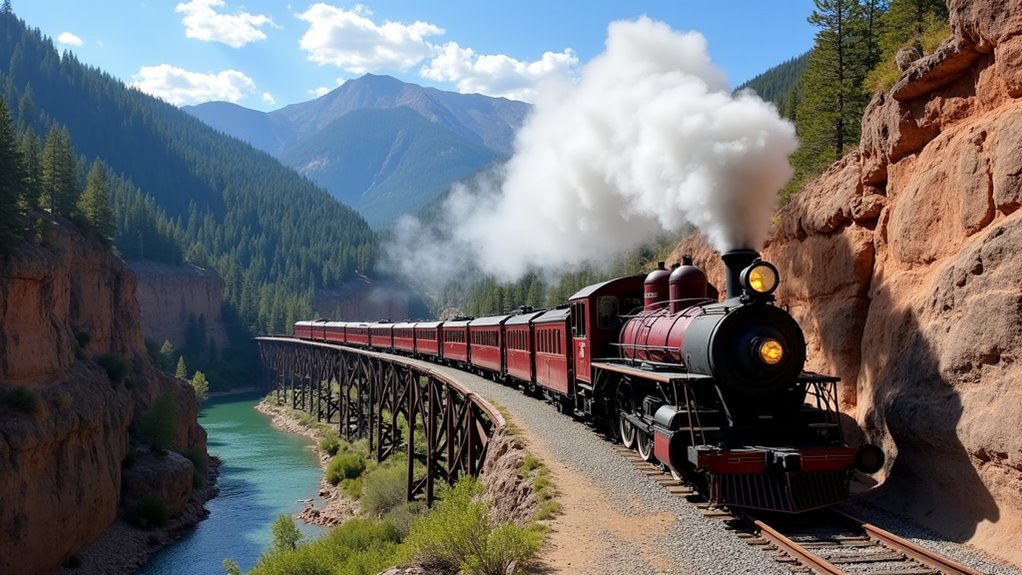
Beyond the mechanical marvels pulling these trains lies what actually makes the trip worth three and a half hours of your time: 45 miles of mountain scenery that hasn’t changed much since 1882.
The wilderness canyon train rides climb sheer rock ledges barely wide enough for passage. You’ll cross the Animas River five times while ascending to 9,300 feet—no small feat when you consider the terrain.
The train hugs impossible cliffsides while climbing nearly 2,000 feet through terrain that defies easy passage.
Here’s the thing: no highways exist between Rockwood and Silverton. Just designated wilderness, which means the views you’re getting are pretty much exclusive to this route.
Back during the gold rush, these railroad expeditions transported what appears to be around $300 million in precious metals through this corridor. That said, the real value now may be something different entirely.
Railway preservation efforts maintain access to canyon routes and mountain scenery only steam locomotives can reach—places that would otherwise remain completely inaccessible to most visitors. Like other scenic train journeys across North America, these routes offer passengers comfortable access to panoramic views of diverse natural environments that would be difficult to experience by other means of transportation. The entire route maintains a maximum grade of 2.5 percent, a remarkable achievement given the rugged San Juan Mountain terrain it traverses. The railway has earned recognition as both a National Historic Landmark and Civil Engineering Landmark, honors bestowed in the late 1960s for its engineering significance and historical importance.
What Makes Coal-Fired Steam Locomotives the Heart of Scenic Mountain Railroad Trips?
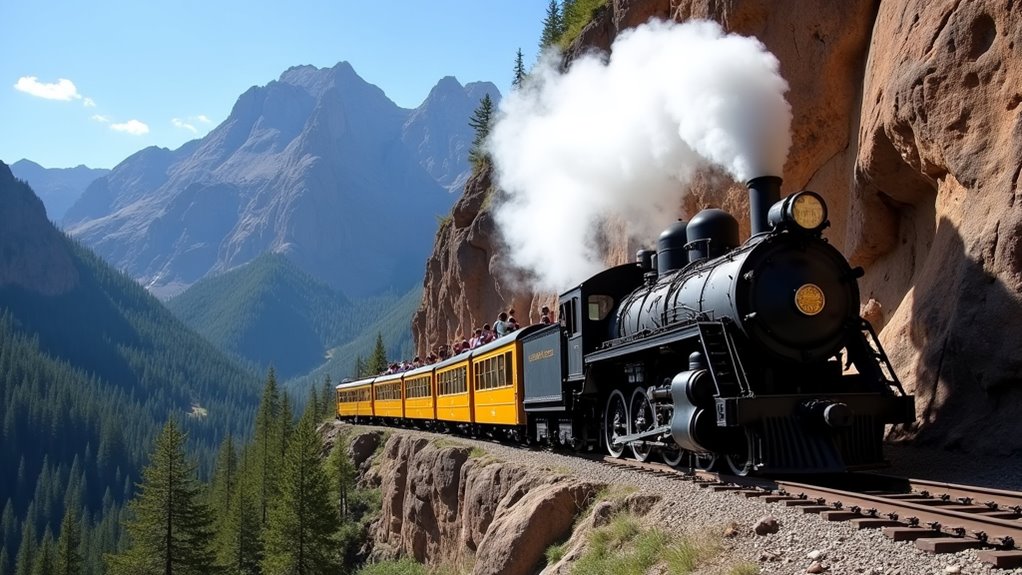
When you’re dealing with locomotives that date back to the 1920s—K-28, K-36, and K-37 class machines, all 2-8-2 “Mikado” types—you’re looking at equipment that was never meant to be quaint.
These were workhorses. The coal fired engine excursions running today use engines originally built for freight service on the Denver and Rio Grande Western Railroad, hauling cargo through mountain passes, not tourists with cameras.
Heritage preservation, it turns out, means hand-firing 3–5 tons of coal per trip. That’s backbreaking work that keeps historic timetables running and vintage locomotive experiences authentic.
Railway maintenance still follows original methods—no shortcuts, no modern workarounds that would compromise what these machines actually are. The route spans 45.2 miles of track connecting Durango and Silverton through Colorado’s mountain terrain. Locomotive 473 was built by American Locomotive Works in 1923 as one of ten K-28 locomotives designed for the narrow gauge network. This narrow gauge experience represents one of many scenic rail journeys that offer travelers unique perspectives on natural landscapes and history.
Sure, the billowing smoke against mountain wilderness creates the kind of scenic trains people travel hundreds of miles to see, and yes, these preserved railroad historical tours wind through some spectacular wilderness landscapes.
But that’s almost beside the point.
That’s not nostalgia—it’s engineering that refuses to quit.
Capture 400-Foot Animas River Gorge Vantage Points Through Heritage Railway Photography on Canyon Routes
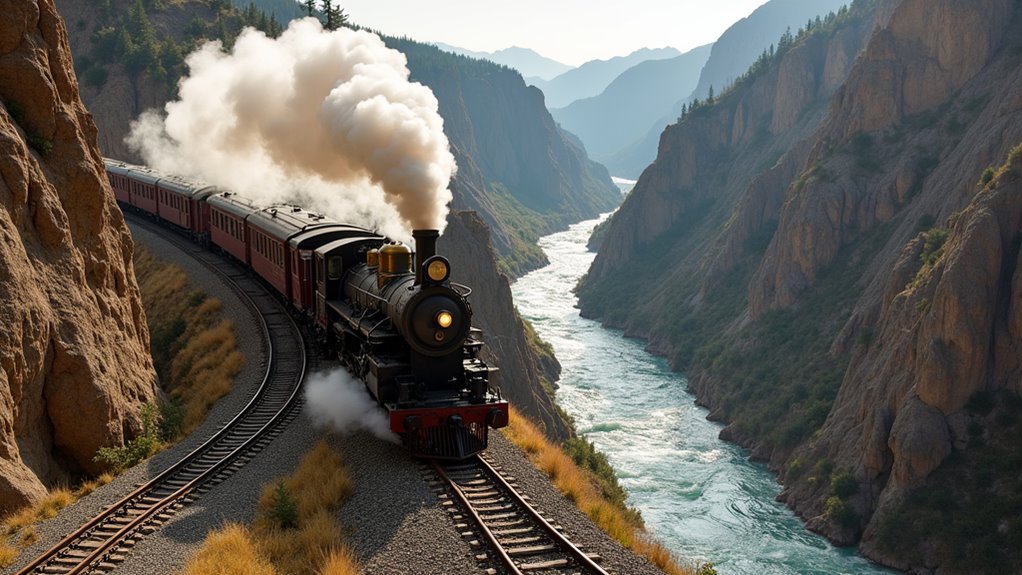
Photographers either get serious about canyon vantage points or they settle for mediocre snapshots—and the High Line section doesn’t seem to care which category anyone falls into.
Heritage railway photography tours position vintage passenger cars suspended 400 feet above the Animas River, where turbulent water meets San Juan National Forest backdrops. Railroad engineers carved these rocky ledges directly into mountainside walls back in 1882.
The 20-minute traverse provides extended shooting windows for photographic subjects that include steam locomotives against canyon walls—though the exact quality of your shots will likely depend on weather, timing, and how steady you can keep your camera while moving. Two steam engines generate the distinctive chugging sound that defines the authentic railway experience.
Scenic railway journeys deliver what historical reenactments can’t replicate—authentic wilderness access. The 45.2-mile route covers the full distance between Durango and Silverton through these mountain corridors. While Amtrak’s network spans 46 states with over 500 destinations, this narrow gauge experience offers something entirely different from the national rail system.
That said, it’s worth noting that “authentic” here means you’re still on a commercial tourist train, not bushwhacking through untouched backcountry. Even so, canyon railway trips maintain these identical vista locations continuously since the gold rush era, which means you’re at least photographing from the same angles that captivated travelers more than a century ago.
Authentic Period Train Journeys: Original 19th Century Design Elements in Vintage Passenger Cars
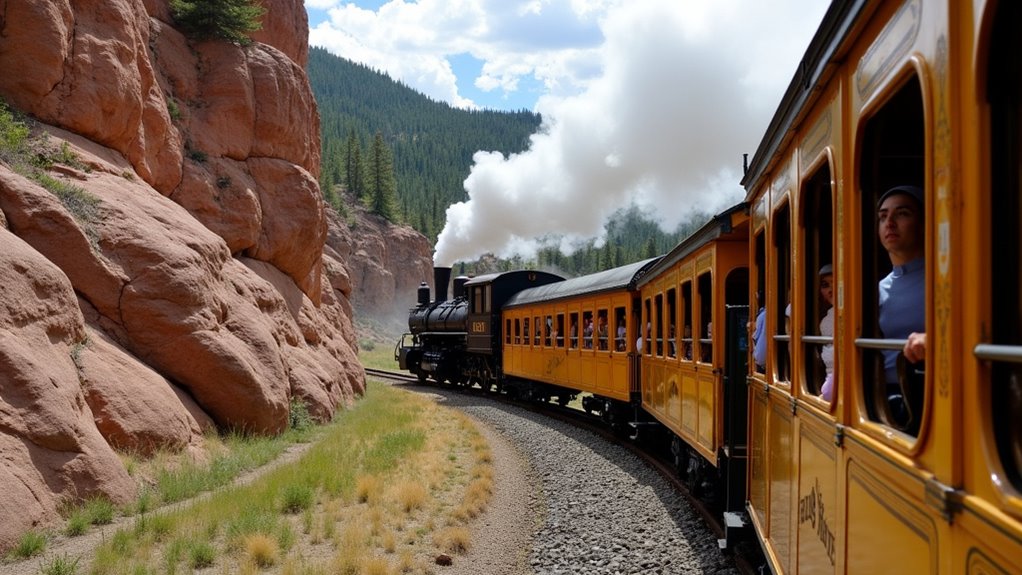
Since 1882, passengers have been climbing aboard wooden coaches that actually remember the gold rush—or at least their structural bones seem to. Many of these passenger cars trace their lineage back to the 1880s Denver & Rio Grande Railway.
The authentic restorations preserve bullnose ends, clerestory roofs, and original furnishings like those Heywood-Wakefield reclining seats.
The hardwood interiors? Period architecture details? Vintage mechanical systems like coal stoves and early brake assemblies? They aren’t replicas. They’re the real deal.
Preservation funding keeps those Tuscan red paint schemes and historic vestibules intact, though it’s fair to say railroad museums would probably kill for access to this rolling stock. These cars have survived train wrecks and fires, enduring extensive rebuildings and renumberings throughout their long service lives. While modern high-speed trains can reach 350 km/h with panoramic windows and contemporary amenities, these vintage coaches offer something entirely different—a window into America’s railroad heritage. Stock photo collections now document these authentic railway treasures for historical archives and creative projects.
On top of that, period costumes on conductors complete what might otherwise feel like an illusion—except it’s not. It’s history you can actually sit on, even if the experience is likely to feel surreal given how few places can make that claim.
Navigate Inaccessible Mountain Terrain Safely on Wilderness Canyon Train Rides via Narrow Gauge Tracks
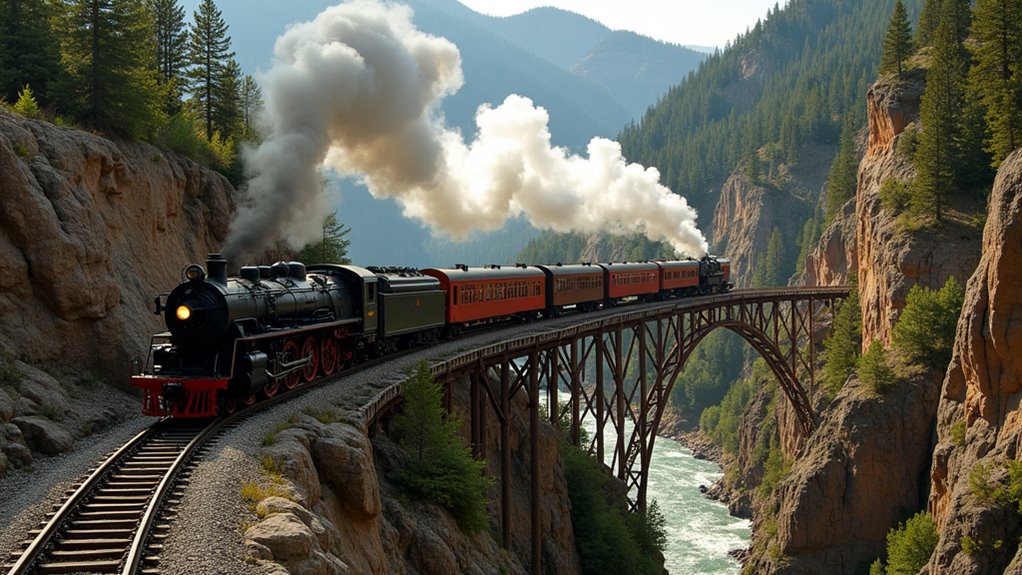
Those vintage passenger cars might transport you back to 1882, but here’s the thing—they’re also carrying you into terrain that would otherwise remain completely out of reach.
Once you roll beyond Rockwood Station, you’re entering designated wilderness. No roads. No vehicles. Just narrow gauge tracks hugging the Animas River as it cuts through San Juan National Forest.
Beyond Rockwood Station lies true wilderness—no roads, no vehicles, only tracks carved along the Animas River through untouched forest.
The railway’s path follows canyon walls through what they call the “Highline” section, crossing the river five times along the way. What used to be Victorian era passenger service now serves a different purpose—providing wilderness access to scenic overlooks and remote train depot stations like Needleton and Elk Park. This rugged mountain experience stands out among North America’s most celebrated scenic rail journeys.
That said, operations shift with the seasons. Summer brings the full 45-mile run, while winter scales back to the Cascade Canyon Express. The railroad has maintained year-round operations for visitors wanting to witness the dramatic seasonal changes across southwest Colorado’s alpine landscape. The 5.25-hour Cascade excursion departs Durango at 9:45am and returns by 3:00pm, offering a midday wilderness experience without the full journey to Silverton.
Railroad memorabilia in a museum display can’t really capture this: the mountains pressing in, the river churning below, the sheer isolation of it all.
Explore Preserved 1880s Mining Town Architecture at Gold Rush Railroad Expedition Depot Stations
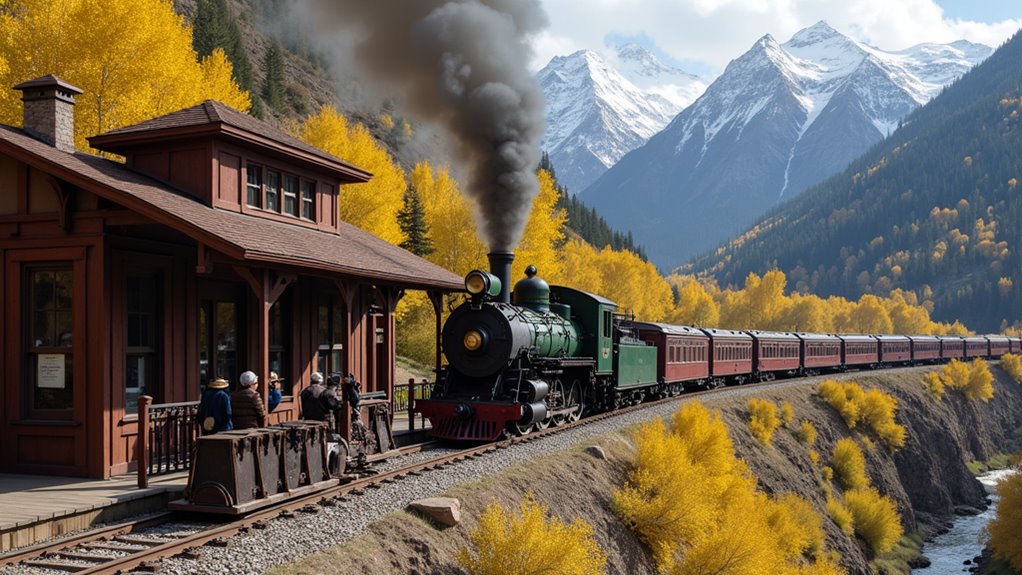
The train pulls into Silverton, and suddenly you’re standing in front of a depot that hasn’t changed much since 1882. You’ve got Victorian-era brickwork, timber construction—the whole deal. The Durango & Silverton Narrow Gauge Railroad connects these depot stations like time capsules, stringing together pieces of history that feel remarkably intact.
Durango’s roundhouse was rebuilt after a 1989 fire, and they used salvaged bricks from 1881, which gives it this authentic weight you can’t fake. Locomotive museums sit trackside next to restored coaches. Historic hotels line the streets nearby.
What really dominates, though, is the mining town architecture—cast-iron storefronts, wooden balconies jutting out over the sidewalks, ore loading platforms that look ready for business. The town’s reputation for astorite, a pinkish stone, adds another layer to its mining heritage, commemorating the area’s geological significance alongside its architectural treasures. Like Austria’s Semmering Line, this railway represents remarkable engineering achievements that have become part of the cultural landscape.
Architectural restoration keeps it real here. That said, there’s always this tension between preservation and accessibility, but it leans toward living heritage rather than theme park fakery. Your passenger tickets grant access to something that appears genuinely preserved, not just dressed up for tourists. The region once saw railroad magnate Otto Mears issue elaborate annual passes on buckskin and stamped silver, turning transportation credentials into collector’s items.
Frequently Asked Questions
What Ticket Prices and Booking Options Are Available for Railroad Journeys?
Standard coach tickets cost $105 adult and $69 child, with gondola upgrades available. Multiple classes range from $89 to $279. Booking occurs online or by phone, with season passes at $320.76 adult offering unlimited rides plus preservation fees.
Are There Seasonal Schedule Changes Affecting Departure Times and Frequency?
Yes, seasonal schedule changes significantly affect operations. Summer (May-November) offers multiple daily Silverton departures with varying times (8:15 AM-9:45 AM). Winter limits service to Cascade Canyon excursions only, with reduced frequency and single morning departures around 9:15 AM.
What Dining or Meal Options Exist During the Three-Hour Train Ride?
The railroad offers onboard concession service selling snacks, beverages, and limited hot items like hot dogs. Passengers may pre-order boxed lunches or dine at restaurants in Durango and Silverton before, after, or during layovers.
Can Passengers Bring Pets or Service Animals Aboard Vintage Passenger Cars?
Passengers may not bring pets aboard vintage passenger cars, but properly trained service animals assisting individuals with disabilities are permitted with advance reservation. Emotional support animals are specifically excluded. Durango offers numerous pet boarding options for travelers.
What Weather Conditions or Safety Factors Might Cause Trip Cancellations?
Heavy rainfall causing flooding, track damage, or rising river levels frequently prompts cancellations. Debris accumulation, washouts, and unsafe roadbed conditions also halt operations. The railroad prioritizes passenger safety, suspending service until inspections confirm tracks are secure and weather risks subside.
Parting Shot
The Durango & Silverton nails what most heritage railways miss—it’s the real deal, not some sanitized theme park version. You get coal smoke in your face, the original tracks laid more than a century ago, authentic Victorian cars that creak and sway. No shortcuts here. This railroad’s been hauling passengers through that canyon since 1882, same route, same narrow gauge. Modern tourists have replaced gold miners, sure. But the experience? It still feels legitimate, or at least pretty close to it.
Three and a half hours of wilderness that hasn’t changed much—inaccessible terrain you can’t reach any other way, working steam locomotives doing essentially what they’ve always done. Even so, it’s worth remembering these engines are maintained with modern tools and safety standards the original miners never had. That said, the history here actually moves. You’re not looking at a museum piece behind velvet ropes. You’re riding it.