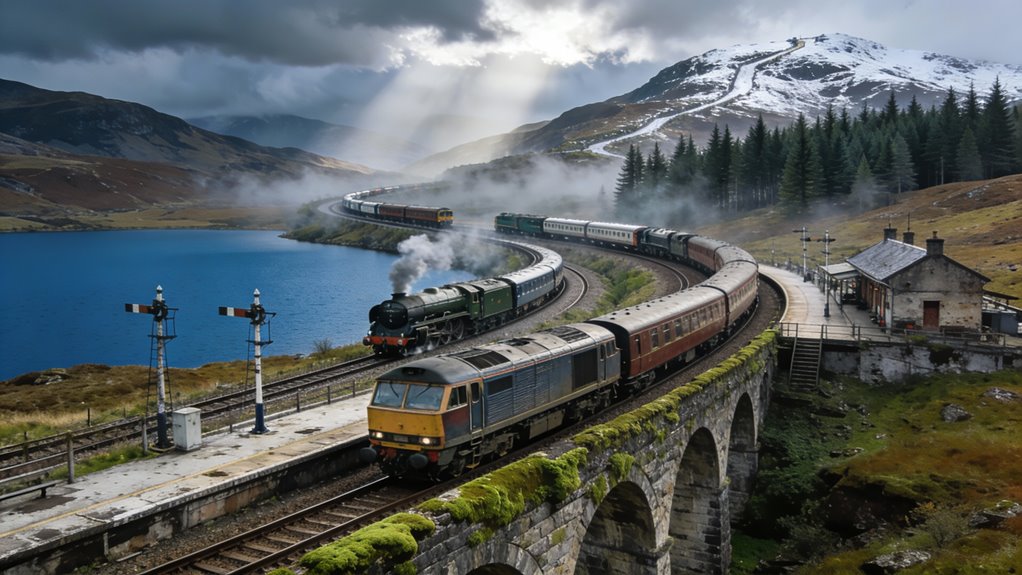
5 Historic Railway Escapades Along the West Highland Line That Redefine Adventure
The West Highland Line: This 164-mile Scottish railway route connects Fort William to Mallaig through Highland wilderness.
Victorian engineers constructed this railway between 1889 and 1901. The track floats across Rannoch Moor’s peat bog using foundations of tree roots, ash, and brushwood. Engineers designed this “floating railway” because traditional foundations sink into the bog.
The route showcases these landmark features:
- Glenfinnan Viaduct: This 21-arch concrete structure spans 416 yards and reaches 100 feet high, appearing in Warner Bros’ Harry Potter films since 2001.
- Ben Nevis: Britain’s highest mountain stands at 1,345 meters, dominating views from the Fort William station operated by ScotRail.
- The Jacobite Steam Train: West Coast Railways operates this steam service from May through October, departing Fort William at 10:15 AM daily.
The line terminates at Mallaig Harbour. This fishing village serves as the gateway to the Isle of Skye via CalMac Ferries. Local businesses include The Steam Inn, Jaffy’s Fish & Chip Shop, and The Tea Garden.
ScotRail operates year-round diesel services between Glasgow Queen Street and Mallaig. The journey takes 5 hours and 23 minutes. Passengers cross the Glenfinnan Viaduct, traverse Rannoch Moor’s 20-mile wilderness section, and pass Loch Shiel.
The railway replaced horse-drawn transport for Highland fishing communities in 1901. Mallaig’s herring industry demanded direct rail access to Glasgow markets.
Fun Activity To Try: Book The Jacobite steam train‘s first-class observation car through West Coast Railways for unobstructed photography of Glenfinnan Viaduct from aboard the crossing train.
Escapade #1 — Remote Wilderness Adventure Crossing Rannoch Moor’s 20 Miles of Trackless Peat Bog
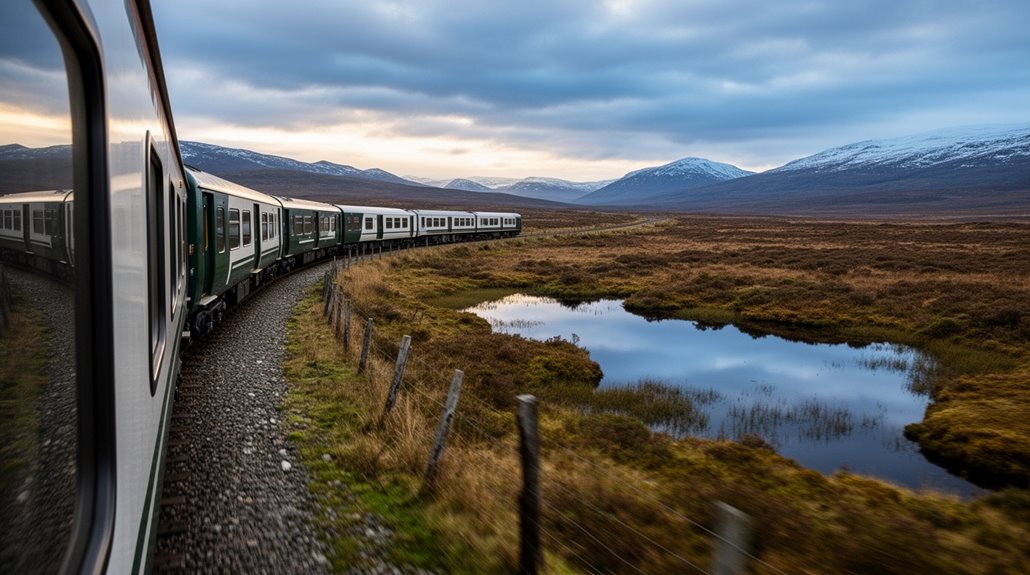
When Victorian railway engineers surveyed the 20-mile stretch across Rannoch Moor in the late 1880s, they faced what would likely make modern contractors wince: building a railway across a landscape that was essentially one giant waterlogged sponge.
Their solution? Float it. They literally floated a railway on tree roots, brushwood, and thousands of tons of ash across deep peat bog—a technique that seems almost implausible until you see it for yourself.
This remote wilderness railway adventure through the Scottish Highlands remains one of the world’s most scenic railways today. The line passes Rannoch station and dramatic viaduct passages, carving through terrain that still feels fundamentally untamed. Rannoch station opened on 7 August 1894, welcoming passengers to one of Britain’s most isolated platforms. The route continues north to the iconic Glenfinnan viaduct, immortalized as the Hogwarts Express bridge in the Harry Potter films.
Today, this engineering marvel operates as part of the ScotRail network, connecting travelers from Glasgow to the dramatic landscapes of Fort William and beyond.
That said, “floating” a railway is probably not quite how a Victorian engineer would have described it. Even so, the principle holds: rather than dig down to solid ground (which may not even exist in places), they created a kind of raft foundation that could sit atop the shifting peat without sinking into oblivion.
Escapade #2 — Scenic Highland Crossing Framing Ben Nevis Summit at 1345 Meters
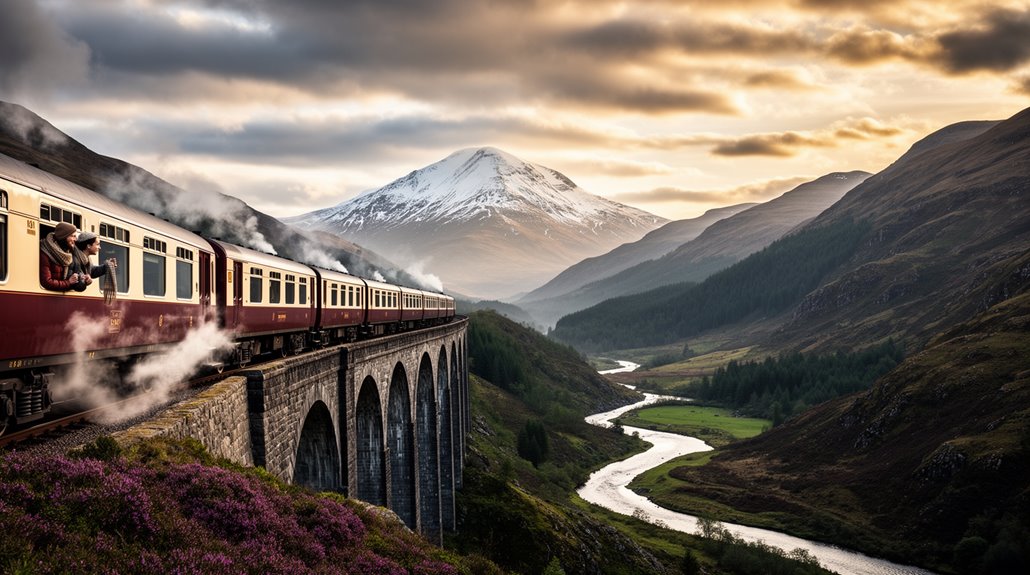
Ben Nevis stands at 1,345 meters—Britain’s highest mountain—and the West Highland Line frames it like a natural trophy case. As heritage steam locomotives roll into Fort William, passengers get what might be the best view of the summit, perfectly positioned through the carriage windows.
The route carves through glen passages where red deer appear along the skylines, dotting the highland landscape in ways that feel almost staged.
That said, it’s not just about the mountain itself. The crossing delivers wildlife encounters and scenic photography opportunities that arguably justify the trip on their own. Like North America’s renowned Coast Starlight route, this railway journey combines natural beauty with memorable travel experiences through diverse landscapes. Fort William serves as the largest town on the line, making it a natural hub for exploring the surrounding highlands. From here, express bus or train connections provide convenient return journeys to Glasgow and beyond.
Even so, lighting and weather can be fickle this far north, so that “perfect” summit shot isn’t guaranteed. On top of that, the red deer sightings tend to be more reliable at dawn and dusk, which doesn’t always align with the train schedule.
Escapade #3 — Dramatic Viaduct Passage Curving Glenfinnan’s 21 Arches Above Loch Shiel
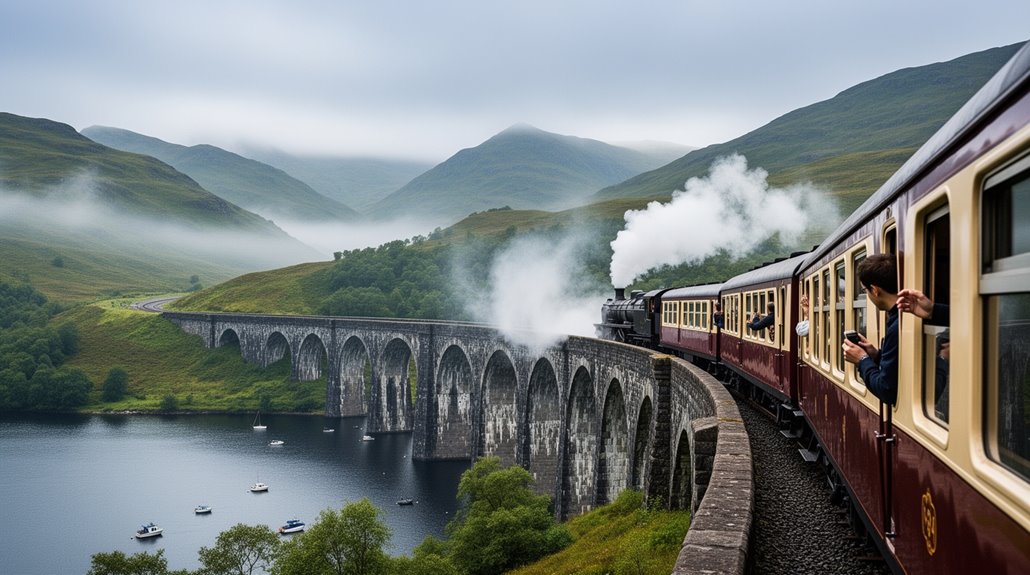
The Glenfinnan Viaduct‘s 21 arches sweep across the valley in a graceful curve that’s pure Victorian engineering bravado—416 yards of unreinforced concrete suspended 30 meters above marshland and loch.
Sure, this dramatic passage became a filmed location after *Harry Potter*, but the real magic here likely lies in the raw engineering itself.
The viaduct’s true enchantment predates Hollywood—it’s found in Victorian ambition made manifest through concrete and calculation.
When the Jacobite steam train traces that highland curve, Loch Shiel’s reflection unfolds below—a meeting point of wilderness adventure and heritage that no amount of cinema can quite capture.
Built by Robert McAlpine & Sons in 1901, the structure pioneered mass concrete construction techniques that would influence railway engineering across Britain.
Beyond the viaduct itself, the Mallaig route continues through stunning coastal landscapes, passing serene Lochs Eilt, Ailort, and Nan Uamh before reaching Morar’s sandy shores.
Train travel offers a panoramic way to experience Scotland’s diverse highland environments, allowing passengers to witness the dramatic transition from ancient engineering marvels to untouched wilderness.
Even so, it’s worth noting that the viaduct’s fame has transformed what was once a remote engineering marvel into something of a pilgrimage site, which changes the experience depending on when you visit.
Escapade #4 — Heritage Steam Journey Aboard the Jacobite Train Operating Since 1984
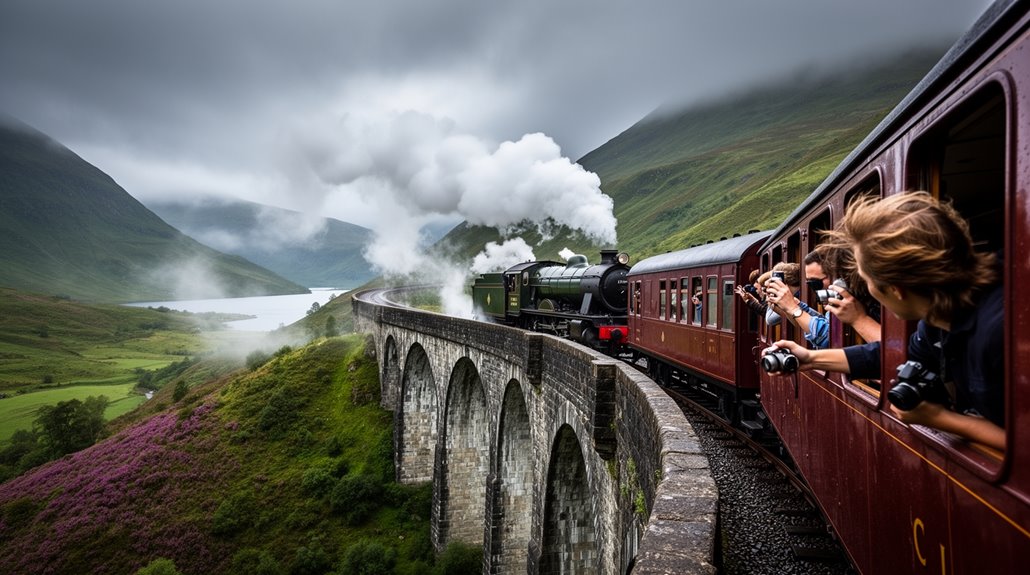
Since 1984, steam locomotives have been thundering back along the Fort William–Mallaig stretch of the West Highland Line, hauling tourists through 42 miles of highland drama that regular diesel services just can’t match for sheer theatrical value.
The Jacobite steam excursion pulls out of Fort William terminus at 10:15, crossing the Glenfinnan viaduct—yes, *that* one—while the route delivers coastal loch shorelines, dramatic cliff edges, scenic loch reflections, and the chance to spot highland wildlife along this historic Victorian railway line. The carriages are mostly British Railways Mark 1 coaches, painted in an approximation of British Rail Maroon livery.
You get the full heritage station platform experience, though demand is brutal, so booking ahead is essential. Like other spectacular natural views featured on iconic train journeys worldwide, the West Highland Line offers passengers unforgettable vistas of Scotland’s rugged beauty. While specific engines aren’t guaranteed, the 2025 season may feature Black 5 locomotives or the K1 Lord Of The Isles.
Escapade #5 — Coastal Terminus Arrival at Mallaig Fishing Port After 164 Highland Miles
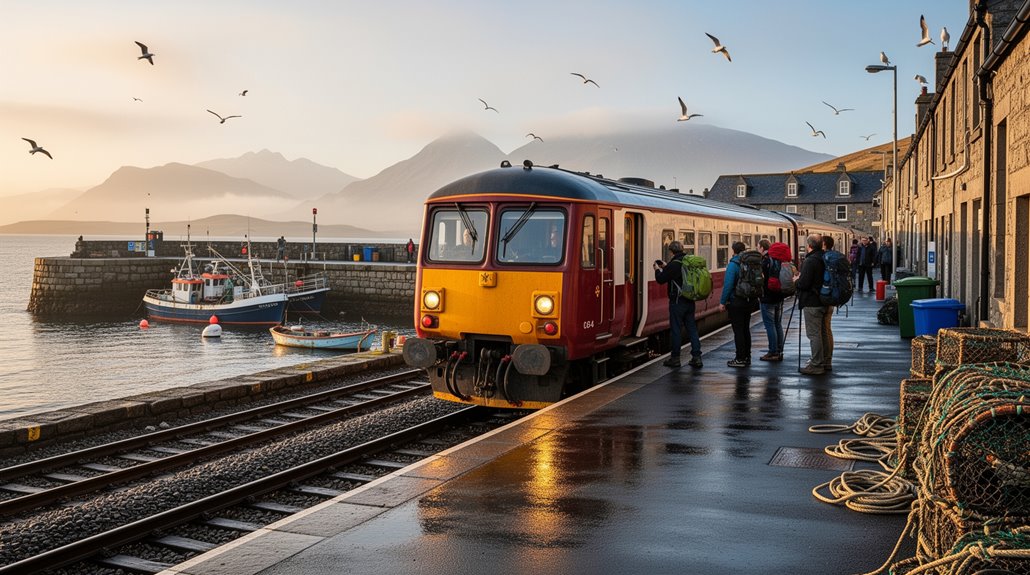
After 164 miles of highland wilderness, loch shorelines, and Victorian engineering marvels, the West Highland Line dumps passengers onto the platform at Mallaig—a working fishing port that smells like salt spray and diesel fumes, not some manicured tourist trap.
That said, the 164 mile route is more than just one long scenic chug through the Highlands. It transforms from Loch Lomond shoreline section through rugged mountain pass crossing to coastal traverse, ending where fishing boats actually matter more than Harry Potter filming locations. Four diesel electric trains make the daily run between Mallaig and Fort William, with connections onward to Glasgow.
The extension reached Mallaig in 1901, originally intended to terminate further south at Roshven before fishing industry demands redirected the endpoint. Like Portland’s seamless connections to its MAX Light Rail system, Mallaig serves as a crucial transportation hub linking rail travelers to ferry services bound for the Inner Hebrides.
Sure, the viaduct engineering gets all the acclaim, but Mallaig itself rarely does—which may be exactly why it feels authentic.
Frequently Asked Questions
What Are the Daily Departure Times for Scotrail Services From Glasgow?
ScotRail operates regular West Highland Line services from Glasgow Queen Street, with typical daytime departures at 08:22 and 12:22 towards Fort William and Mallaig. Exact daily times vary seasonally and should be verified via ScotRail’s journey planner.
Can Passengers Bring Bicycles Aboard West Highland Line Trains Year-Round?
Yes, passengers may bring bicycles aboard West Highland Line trains throughout the year at no charge. However, compulsory advance reservations are required for all non-folding bicycles, with refusal possible if spaces are fully booked.
Are Observation Cars Available on Regular Scotrail Services or Steam Trains Only?
Observation cars are not available on regular ScotRail services, which use standard Highland Adventure units with large side windows. Dedicated observation saloons appear only on heritage steam specials and occasional private charters over the West Highland Line.
What Accessibility Features Exist at Britain’s Most Remote Station at Corrour?
Corrour offers step-free platform access via portable ramps, shelter seating, electronic displays, help-point telephones, and platform lighting. However, no road access exists, barrow crossing poses challenges, and onward tracks remain unsuitable for most mobility aids.
How Do Ferry Connections From Mallaig Integrate With Train Arrival Schedules?
Train arrivals at Mallaig are coordinated with ferry departures, allowing 2–3 hour layovers for Skye crossings. Up to eight peak-season sailings daily enable same-day rail-ferry combinations, though separate booking is required.
Parting Shot
The West Highland Line doesn’t mess around. It’s 164 miles of raw Scotland—bogs, mountains, viaducts, and ocean—all from a train seat. Victorian engineers built something that still works, still impresses, and still gets people to places cars can’t reach. The Jacobite adds nostalgia. Corrour adds isolation. Glenfinnan adds drama. It’s not just scenic. It’s legitimately wild, genuinely historic, and completely unpretentious about both.


