The Jacobite steam train between Fort William and Mallaig delivers five unforgettable experiences: crossing the iconic Glenfinnan Viaduct twice daily for jaw-dropping photo ops that Harry Potter made famous, operating as a working Victorian railway museum with period uniforms and restored carriages, showcasing Scotland’s wildest Highland scenery including Ben Nevis and Loch Morar, running authentic 1930s-1950s steam locomotives that actually burn coal, and connecting remote fishing villages like Mallaig while tourists snap pictures. These overlapping elements transform a regular train route into something historians and Instagram addicts both obsess over.
Way #1 Jacobite Steam Locomotive Journey Across Glenfinnan Viaduct Creates World-Famous Railway Photography

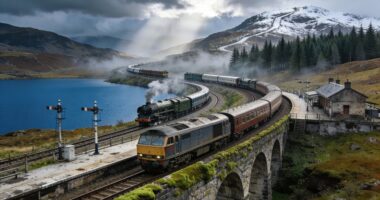
Twice a day between mid-April and late October—at 10:45 am and 3:00 pm—the Jacobite steam locomotive rumbles across the Glenfinnan Viaduct, and photographers flood the Scottish Highlands like pilgrims chasing something rare and beautiful.
It’s heritage mountain railway photography at its finest, really.
Twenty-one stone arches, white plumes trailing behind, Loch Shiel glittering in the background—this nostalgic steam engine experience seems tailor-made for Getty Images and Instagram feeds.
The scenic journey‘s Harry Potter connection certainly helped, transforming what was already a remarkable heritage railway into a global photography obsession.
That said, even without the cinematic fame, steam preservation on this scale would likely draw crowds.
There’s something almost hypnotic about watching that mechanical giant cross the viaduct, especially when the light hits just right. Like other spectacular natural views found on the world’s most celebrated train journeys, this Highland crossing creates an unforgettable visual experience.
The train actually crosses four times daily—twice heading west toward Mallaig and twice returning—giving photographers multiple opportunities to capture the perfect shot.
Serious photographers typically arrive 30 minutes in advance to secure optimal positioning before the locomotive approaches the iconic bridge.
Way #2 Victorian Era Railway Excursion Preserves Railway Heritage Through Authentic Period Travel Traditions

The Jacobite isn’t just about grabbing the perfect Instagram shot—it’s more like a working museum piece that brings Victorian railway culture back to life, complete with the social rituals and class divisions that defined 19th-century travel.
This preserved historic train service runs authentic period locomotive operation using steam engines that demand traditional railway craftsmanship and constant restoration work.
The vintage carriages mirror the original class system—first-class luxury versus standard seating—though whether that’s something to celebrate is another question entirely.
Railway preservation groups maintain these heritage operations with obsessive detail, and it shows. These excursions follow patterns established by the first railway excursions on the Liverpool and Manchester Railway in 1831, which defined the template for leisure travel by rail with significantly discounted fares for group outings.
The Victorian era between 1837 and 1901 saw railways transform holidays from elite privilege to common pastime, fundamentally reshaping how ordinary people experienced leisure travel.
On top of that, these nostalgic journeys aren’t theme park rides trying to simulate the past. They’re functional historic train trips using actual Victorian-era railway excursion infrastructure that’s somehow still operational, which appears to be as much a feat of engineering as it is dedication. The journey connects with ScotRail services that continue to operate throughout Scotland’s extensive rail network, linking heritage experiences with modern transportation.
Way #3 Heritage Mountain Railway Route Showcases Highland Landscapes Across Scotland’s Most Dramatic Scenery

Riding this steam train feels less like ordinary sightseeing and more like watching Scotland’s greatest hits reel out the window for two solid hours. The heritage mountain railway route blasts through Highland landscapes that make postcards jealous—Ben Nevis, Rannoch Moor, Loch Morar.
Scotland’s greatest hits roll past your window for two straight hours—Highland landscapes that put postcards to shame.
The scenic crossing showcases Victorian engineering that somehow convinced tracks to float across peat bogs, though you have to wonder what those engineers were thinking attempting it in the first place.
The Jacobite Steam Train’s historic rolling stock and passenger carriages preserve railway history while the steam locomotive hauls tourists through what’s genuinely one of Earth’s most dramatic train rides. Rail & Hike experiences pair these scenic journeys with hiking opportunities throughout the Highlands and Isle of Skye.
That said, “dramatic” here isn’t marketing fluff—we’re talking mountains that loom, moorlands that stretch endlessly, and coastal views that appear out of nowhere to ambush your camera roll. While Scotland delivers Highland spectacle, Canada’s VIA Rail operates The Canadian across 2,762 miles of equally stunning terrain from Toronto to Vancouver.
The 84-mile journey from Fort William to Mallaig takes approximately two hours each way, covering terrain that shifts from dramatic mountains to white sandy beaches along the West Highland Line.
Scottish Highland railway adventure, delivered. All included, no asterisks.
Way #4 Nostalgic Steam Engine Experience Allows Vintage Locomotives to Transport Modern Passengers Back in Time

Nostalgia hits differently when it arrives wrapped in coal smoke and mechanical thunder. The Jacobite deploys vintage locomotives—LNER K1s and LMS Black 5s from the 1930s–1950s—for what appears to be one of the most authentic steam operations heritage tourism can offer.
These restored heritage rolling stock pieces recreate the golden age passenger rail experience, including British Rail Mark I carriages that happened to find fame in the Harry Potter films.
Railway preservation societies maintain mechanical authenticity down to the details: coal firing, steam propulsion, brass fixtures. Staff wear period uniforms.
The nostalgic steam engine experience delivers that rhythmic chuffing, whistles echoing off scenic viaducts, and period railway architecture at rural stations that make the past feel tangible. It’s historical railway routes as living theater—though purists might debate how much compromise modern safety regulations demand.
Even so, the effect is striking.
That said, authenticity lives as much in the small moments as in the grand machinery: the hiss of steam, the weight of a carriage door, the scent of coal lingering in upholstery. West Coast Railways has operated the Jacobite service since 1995, maintaining this heritage experience across nearly three decades. The K1 locomotive carries the name Lord Of The Isles, historically associated with the K4 class that once worked the West Highland route.
On top of that, these aren’t museum pieces behind glass. They’re working machines doing what they were built to do seventy years ago. This type of immersive vintage railway experience mirrors the appeal of other celebrated heritage routes like Switzerland’s Glacier Express, which also offers travelers a chance to journey through dramatic landscapes aboard carefully preserved rolling stock.
Way #5 Scottish Highland Railway Adventure Departing from Fort William Provides Gateway to Remote Coastal Villages

Geography shapes everything on Scotland’s northwest coast, and Fort William sits right at the heart of it. This West Coast Railways hub launches the railway excursion to Mallaig—a genuine lifeline to isolated fishing villages that are accessible mainly by rail.
The route’s become a tourist attraction for good reason. Highland scenery unfolds relentlessly along the way, punctuated by the famous scenic railway crossing at Glenfinnan Viaduct, now an iconic railway photography tour staple.
Highland scenery unfolds relentlessly along this route, punctuated by the iconic Glenfinnan Viaduct—a railway photography staple for excellent reason.
It’s where steam heritage meets practical transport. The luxury vintage carriage ride delivers passengers to ferry connections for Skye and beyond, so it’s not just about nostalgia. The Caledonian Sleeper provides an alternative option with its nightly service connecting Fort William to London Euston for travelers seeking overnight journeys. The journey covers approximately 40 miles of challenging and varied geography between Fort William and Mallaig. Like Canada’s scenic train routes, this Highland journey combines panoramic way to experience diverse natural environments with comfortable rail travel.
Railway heritage here isn’t merely preserved—it’s actively working, connecting communities that geography tried hard to isolate. Even so, the tourist appeal sometimes overshadows the route’s original purpose: serving locals who depend on it year-round, not just during peak season when cameras click away at Glenfinnan.
Frequently Asked Questions
What Is the Ticket Price for First Class Versus Standard Class?
First class adult day return tickets cost £105, while standard class costs £69. Children’s tickets are £69 for first class and £39 for standard. Private tables for two are available at £229, exclusively in first class compartments.
How Far in Advance Should Passengers Book Jacobite Steam Train Tickets?
Passengers should book Jacobite Steam Train tickets three to six months in advance, especially for peak summer travel. Tickets typically release in November for the following season, with first-class compartments selling out fastest during high-demand periods.
Are There Accessibility Accommodations for Passengers With Mobility Limitations?
Yes, limited accommodations exist: portable ramps, foldable wheelchair storage, and staff assistance are available. However, historic carriage design prevents wheelchair access to seating areas, and no accessible toilets exist onboard. Advance booking notification is essential.
What Happens if Weather Conditions Force Cancellation of the Service?
West Coast Railways issues cancellation notifications and provides full refunds to ticket holders through their original payment method. No additional compensation is offered beyond the ticket refund, with processing typically completed within one month of cancellation.
Can Passengers Bring Luggage for Ferry Connections to the Islands?
Passengers may bring luggage for ferry connections to islands like Skye, but must comply with the one medium-sized bag limit (15kg maximum). Early arrival and advance notification to operators guarantees proper accommodation for onward travel storage needs.
Parting Shot
The Jacobite Steam Train doesn’t just survive—it thrives. Nearly 100,000 riders a year suggest heritage railways aren’t exactly museum pieces gathering dust. They’re living history that actually delivers, though the formula isn’t complicated: one iconic viaduct, a working Victorian locomotive, landscapes that don’t quit. And sure, that Harry Potter boost probably doesn’t hurt.
Fort William to Mallaig remains what it’s always been—84 miles of authentic steam travel. That consistency is part of the appeal. It somehow manages to feel both nostalgic and essential at once, which may be the real magic here. Whether that’s sustainable long-term or simply riding a wave of franchise tourism is harder to say, but for now? The track record speaks for itself.