
How Europe Train Ticketing System Explained Clarifies Mobile Ticketing Platforms
Europe train ticketing system explained: a fragmented landscape of national operator apps and third-party aggregators requires travelers to understand multiple platforms.
DB Navigator serves Deutsche Bahn passengers exclusively. The app sells German rail routes only. Cross-border journeys need separate bookings.
Trainline aggregates 270+ European carriers into one search interface. The London-based platform compares prices across operators. Booking happens in a single transaction.
Omio connects travelers to 1,000+ transport operators. The Berlin-headquartered aggregator specializes in cross-border itineraries. Multi-modal trips combine trains, buses, and flights.
- QR code validation functions at 90% of European station gates—Eurostar, SNCF, and Trenitalia accept digital passes seamlessly
- ÖBB Austrian Railways deploys animated security codes that refresh every few seconds—static screenshots fail at validation points
- SBB Mobile from Swiss Federal Railways requires active internet connection at turnstiles throughout Zürich Hauptbahnhof and Geneva Cornavin
Regional operators maintain strict technical requirements. Renfe in Spain demands PDF downloads. NS Dutch Railways accepts Apple Wallet integration. SNCF Connect works offline after initial download at Gare du Nord.
Station infrastructure varies by country. Milano Centrale gates read codes instantly. Praha hlavní nádraží requires conductor verification. Stockholm Centralstation uses Bluetooth validation through SL Access.
Fun Activity To Try: Download three different ticketing apps—Trainline, Omio, and one national operator—then compare prices for the same Paris-to-Amsterdam route to discover hidden fare differences.
Key Points
- Aggregator platforms like Trainline and Omio consolidate hundreds of European rail operators into single search interfaces for cross-border booking.
- QR code mobile tickets achieve approximately 90% acceptance at European station gates, with PDF backups mitigating scan failures.
- Operator-locked apps like DB Navigator limit bookings to their own routes, while aggregators cover broader multi-carrier networks.
- Anti-fraud measures include animated barcodes that refresh continuously, preventing static screenshot misuse during conductor verification.
- Account requirements vary significantly—SNCF Connect mandates registration while some platforms offer guest checkout options.

DB Navigator might look like the go-to German train app at first glance, but it’s really Deutsche Bahn’s own sales channel—nothing more.
Multi-operator ticket aggregation? That’s not really on the table here. The app appears to focus almost exclusively on DB routes, and cross-border bookings seem limited to whatever partner services DB has arranged. With over 60 million downloads, DB Navigator has certainly established itself as Germany’s most popular mobility app despite these operator limitations.
Platform compatibility with other carriers? It varies wildly, honestly. E-ticket delivery works smoothly enough when you’re booking DB trains, but the booking workflow tends to hit a wall the moment non-DB operators show up in your search results. The connection search does support multiple transport modes including ICE, Intercity, regional trains, S-Bahn, U-Bahn, tram and bus, with the nearest stop shown when an address is entered. Understanding the full range of German train types from local S-Bahn services to high-speed ICE trains can help travelers recognize which routes fall within DB’s ecosystem.
You’ll likely need separate apps for those.
How Trainline Combines 270+ European Carriers Into One Aggregator Search Platform

Trainline takes a completely different approach from operator-locked apps like DB Navigator—and it shows. Instead of locking you into one carrier’s ecosystem, this mobile ticketing platform pulls together 270+ carriers across 45 countries into a single search.
Trainline connects 270+ carriers across 45 countries—no more juggling separate apps for every rail operator.
That’s about as big as cross-border booking platforms get, or at least it appears to be.
Real-time schedule syncing, QR code tickets, digital validation—all of it happens without bouncing between three different apps just to cross a border. The Journey Planner displays the cheapest price, train number, and specific stations needed for your trip, making it easy to compare options at a glance. The platform’s dominance is clear with over 55 million mobile downloads and more than 90% of UK transactions happening through the app.
On top of that, the reservation integration and trip planning features seem to cover roughly 80% of European rail routes. Whether that figure holds up for every obscure regional connection is another question, but for most travelers? It’s likely more than enough. The platform also offers best price guarantees and digital ticket storage, eliminating the need to juggle paper confirmations.
Pretty wild, honestly.
QR Code Mobile Tickets Scan Successfully at 90% of European Station Gates
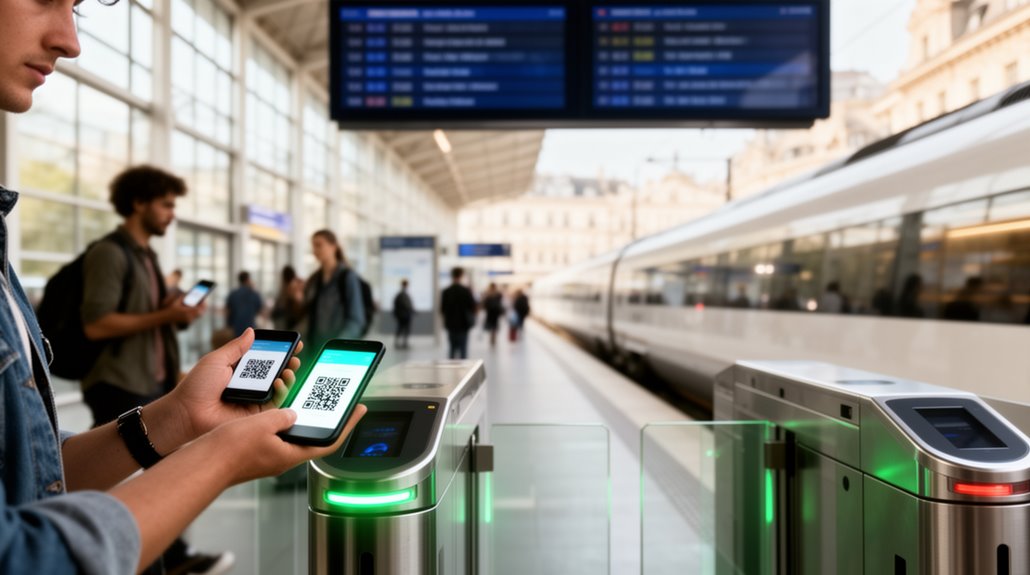
Around 90% of European station gates now accept QR code mobile tickets—at least, that appears to be where things stand. Both operator apps and aggregator platforms generate formats that work with most validation systems across Western Europe, though compatibility isn’t universal. Travelers appreciate the convenience of being able to validate train tickets in Europe through their smartphones, reducing the need for paper tickets. This shift not only streamlines the boarding process but also enhances the overall travel experience. With advancements in technology, passengers can expect even more seamless options for ticket validation in the future.
At major hubs like Amsterdam Centraal or Paris Gare du Nord, scanning tends to go smoothly. Smaller regional stations? You’re more likely to encounter a conductor with a handheld device or, honestly, just a quick visual check of your screen.
That said, the system isn’t foolproof. When gates refuse to read your code—and it does happen—having a downloaded PDF or offline ticket access can save you from missing your train. Understanding various booking platforms available can help you choose options that offer the most reliable offline ticket formats for your journey.
It’s a bit of a patchwork solution, really. Functional, sure. Elegant? Not quite. The development of the Open Sales and Distribution Model is working to harmonise train ticket sales Europe-wide, which could eventually bring more consistency to these validation systems.
Even so, for most travelers hopping between major European cities, pulling up a ticket on your phone and walking through the barriers has become remarkably routine. This convenience matters especially as rail travel continues to grow, with EU rail passenger-km reaching 4.4% above pre-pandemic levels in 2023.
Why SNCF Connect Requires Free Account Creation Before Any Ticket Purchase

Scanning a QR code at a gate is one thing. Actually buying that ticket? SNCF Connect demands you create a free account first—no exceptions, no guest checkout, nothing.
No guest checkout exists—SNCF Connect requires account creation before purchasing any ticket.
Why the friction? Well, this account-based approach appears to tie everything together on the backend: your digital pass storage, payment methods, refund processing, notifications when your train’s delayed by 45 minutes.
That Carte Avantage discount you bought? Your Grand Voyageur loyalty points? The complaint you filed last month about a missed connection? All of it linked to one email address. Once your account is created, you gain access to travel tickets, news, and real-time disruption information across all applications.
It sounds annoying, honestly. And maybe it is, at least upfront. Some users have reported not receiving confirmation emails during account creation, leaving them unable to complete the process even after checking spam folders and consulting FAQ resources.
That said, the setup likely simplifies how SNCF manages its sprawling platform—one identity across TGV bookings, regional trains, even bus connections. This unified system becomes especially useful when coordinating travel across Paris’s six major train stations, each serving different regions and international destinations.
Whether that tradeoff benefits passengers as much as SNCF’s internal systems is another question entirely.
ÖBB App Dynamic Codes: Animated Validation for Secure Conductor Ticket Verification

So how does Austria’s national rail carrier actually stop people from just screenshotting their mate’s ticket and waltzing onto the train? Dynamic visual codes, basically.
The animated barcode keeps refreshing continuously, which appears to render any static screenshot pretty much useless.
The anti-fraud logic here is straightforward—conductors can likely spot a fake almost immediately since a real ticket never sits still.
Their verification process involves eyeballing those animated visuals, and for discounted fares, they’ll cross-check your ID too. This ID requirement exists because all tickets are issued in the traveller’s name and remain valid only when paired with photo identification proving age.
Fair enough.
That said, once you’ve downloaded your ticket, offline access seems to work fine. The mobile display is specifically optimized for inspections and on-the-go verification, making the whole process smoother for both passengers and conductors. This approach aligns with how specialized booking apps across Europe have evolved to prioritize real-time information and seamless ticket management for travelers.
On top of that, there’s widget functionality that lets you pull up your ticket straight from the lock screen without fumbling through the app.
Pretty clever solution, honestly—though one might wonder how well it holds up in areas with spotty connectivity or older devices struggling to render smooth animations.
Book International Routes Across 1000+ Operators Through Omio Cross-Border Platform
While Austria’s ÖBB has its clever animated codes locked down for domestic travel, things tend to get messier fast once you’re booking across multiple countries.
That’s where the Omio platform comes in.
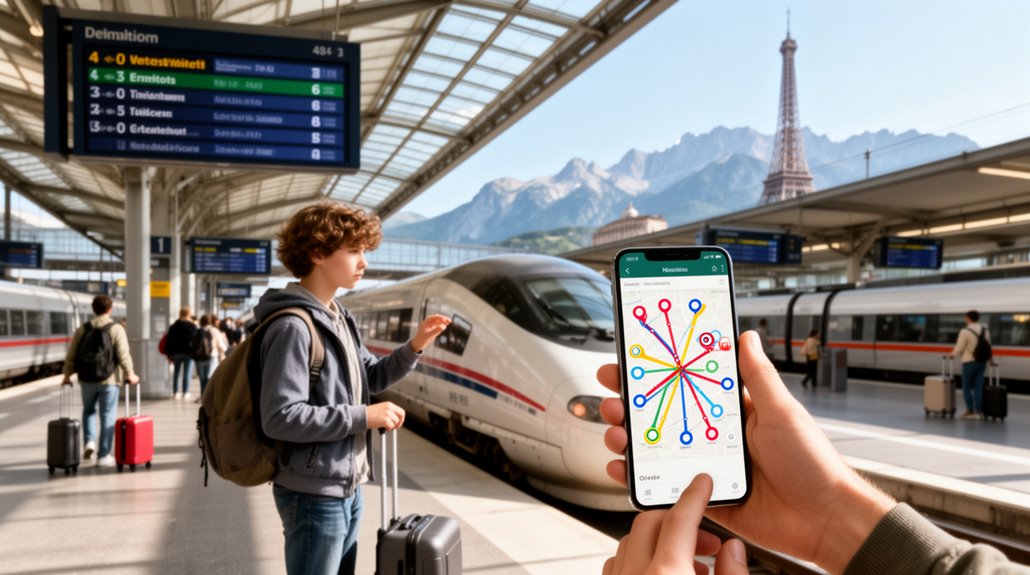
It aggregates over 1,000 operators for cross-border booking — which, on paper at least, appears to simplify what’s usually a fragmented process.
Cross-border rail booking simplified — over 1,000 operators, one search, fewer headaches than juggling national websites.
Want to book an international train route from Berlin to Paris? Done.
České dráhy integration means Czech trains are now part of the mix too, so connections through Prague seem more accessible than before. The partnership announced in September 2025 includes access to Regio, InterCity, EuroCity, Railjet, and Comfortjet services.
Real-time availability.
Seat reservations.
E-tickets that are actually valid.
One search across multiple countries.
Pretty straightforward, honestly — though whether it always surfaces the cheapest or most direct option is another question worth considering. You can also choose between seating options like coach, business, or first class depending on your comfort preferences and budget.
For those planning ahead, booking up to 180 days in advance and traveling off-peak can unlock cheaper fares across these routes.
Even so, for most travelers trying to piece together a cross-border itinerary, this likely beats juggling five different national rail websites.
Downloaded PDF Tickets Display Without Internet Connection for Reliable Offline Access
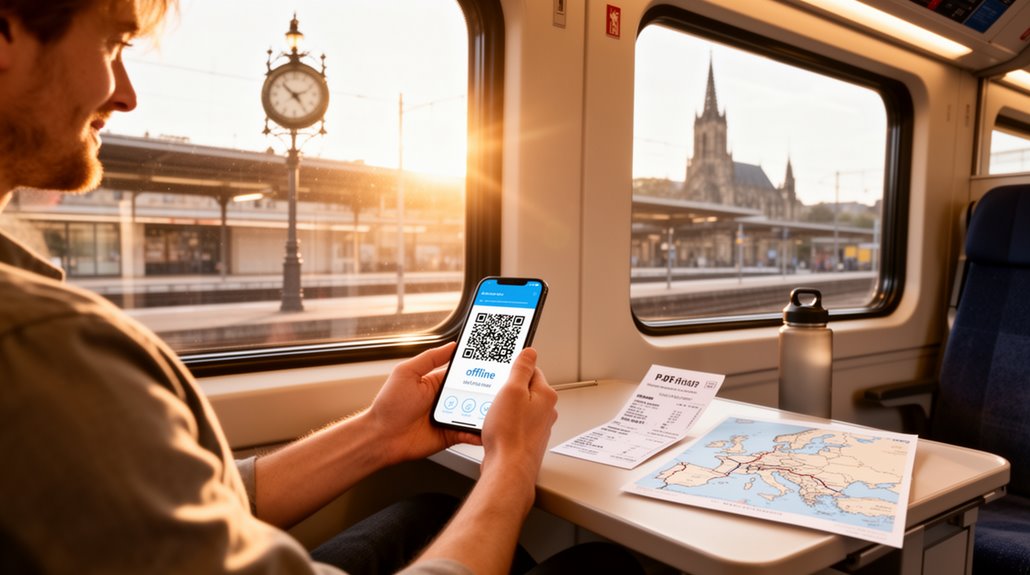
Once a PDF ticket hits your phone, you’re basically free from the internet—at least when it comes to actually using the thing.
Apps like Trainline, SNCF Connect, Rail Europe, and Omio all appear to handle offline access for downloaded tickets just fine.
Apple Wallet and Google Pay storage seem to work reliably too, which is a nice backup.
That said, there’s one obvious weak point nobody talks about enough.
A dead battery means a dead ticket.
Doesn’t matter how clever your app navigation is if the screen won’t turn on.
So yeah—charge your phone before you head to the station.
This isn’t optional advice.
Be prepared for occasional delays that might extend your journey time and drain your battery faster than expected.
Even at stations without ticket gates, you can still use your digital ticket since staff can inspect tickets directly from your phone screen.
If you’re worried about your phone dying, remember that e-tickets can be printed at home or at a self-service kiosk as a backup option.
Frequently Asked Questions
What Booking Fees Do European Mobile Ticketing Platforms Typically Charge per Transaction?
European mobile ticketing platforms typically charge €0-3 per transaction for standard bookings. Third-party aggregators like Rail Europe charge £2.99-£6.45 on qualifying purchases, while direct operator apps often impose no additional booking fees.
How Many Languages Do Major European Train Ticketing Apps Support?
Major European train ticketing apps vary significantly in language support. Omio leads with 29 interface languages, while Trainline offers multiple European languages across its core markets. National apps like DB Navigator typically support German and English.
Can Mobile Ticketing Platforms Calculate Carbon Footprint for Train Journeys?
Yes, mobile ticketing platforms can calculate carbon footprints for train journeys. Apps like Trainline display estimated CO₂ emissions using distance-based calculation models and mode-specific emission factors, often comparing rail emissions against car and flight alternatives.
Do European Rail Apps Offer Price Drop Alert Notifications for Travelers?
Several European rail apps offer price drop alert notifications. Trainline provides fare alerts for UK routes, Rail Europe sends booking alerts across multiple countries, and specialized tools like Train Price Tracker monitor Eurostar services for price decreases.
Which Platforms Integrate Apple Wallet and Google Pay for Ticket Storage?
SNCF Connect, Trenitalia, Italo, České dráhy, and UK National Rail operators support Apple Wallet and Google Wallet ticket storage. Rail Europe and Eurail/Interrail mobile passes do not currently offer this wallet integration feature.
Parting Shot
European train ticketing is messy. That’s just reality. Thirty-plus countries, hundreds of operators, different rules everywhere. Mobile platforms help make sense of the chaos, whether someone picks an operator app or goes with an aggregator. QR codes work most places. Offline PDFs save the day when wifi dies. Not perfect, but way better than the old paper ticket nightmare. Progress, basically.