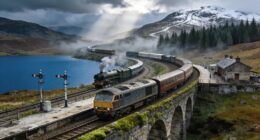
The Venice Simplon-Orient-Express costs £3,530 to £11,180 per person for authentic 1920s Pullman carriages with restored marquetry, white-gloved service, and Michelin-level meals—basically everything modern luxury trains pretend to be. Shoulder seasons from April to October deliver 30-40% fare reductions while maintaining identical culinary quality and better Alpine views during spring meltwaters or fall foliage. Book six to twelve months ahead because Grand Suites vanish a year early, and those who want the full heritage experience without overpaying need to understand exactly when fares drop and why timing transforms this splurge into something resembling actual value.
Luxury Rail Itinerary Heritage Railway Service Unlocks Access to Authentic 1920s Pullman Carriages

While plenty of luxury trains tout their heritage credentials, the Venice Simplon-Orient-Express actually walks the walk. This isn’t a themed experience built around reproductions—the carriages are genuine 1920s Pullman stock, tracked down and acquired at a 1977 auction, then painstakingly brought back to life.
Each sleeping car bears historical plaques that document its own story, from getting stuck in 1929 snowdrifts to ferrying King Carol during his 1940 escape.
What sets this heritage railway service apart appears to be its commitment to preserving the real thing. The original marquetry remains intact, crystal fittings gleam as they did a century ago, and dining car service standards still echo rail travel’s golden age. The Simplon Tunnel route, which opened in 1919, established the southern passage through Milan and Venice that distinguished this service from its predecessors.
That said, the experience isn’t just about nostalgia for its own sake. Heritage train booking gets you onto vintage locomotive stock you won’t find anywhere else, complete with onboard amenities and the kind of cultural significance that once inspired Agatha Christie herself. The collection represents a significant undertaking, with 35 vintage carriages meticulously restored to their former glory.
Even so, whether that historical authenticity justifies the premium may depend on how much weight you place on riding actual history versus simply enjoying luxury travel. Similar to other prestigious luxury rail services worldwide, the emphasis on period décor and formal atmosphere creates an immersive journey that prioritizes the travel experience itself over mere transportation.
Heritage Train Booking Sleeping Car Accommodation Ranges From £3,530 Historic Cabins to £11,180 Grand Suites

Admiring the restored wood marquetry is one thing. Paying for a bed inside those vintage carriages? That’s another matter entirely. Luxury train operators price historic cabins from £3,530 per person, double occupancy—and that’s just the starting point.
Starting at £3,530 per person just to sleep in vintage carriages—admiration costs nothing, but booking those cabins is entirely different.
Grand suites command anywhere from £8,400 to £11,180 for standard scenic routes, though all-inclusive pricing does cover meals and steward service. Solo travelers, on the other hand, face brutal supplements.
The booking process demands a 25% deposit upfront, with the balance due fifteen weeks before departure. Premium train organizing appears to mean zero flexibility.
You’ll need to book months ahead or risk missing out altogether. That said, this heritage train booking was never meant to be casual travel. It’s calculated splurging on moving Art Deco—a deliberate choice to pay not just for transport, but for the experience of sleeping inside restored history. North American luxury trains like the Rocky Mountaineer similarly combine premium accommodations with spectacular scenery for travelers seeking first-class rail experiences. Every fare includes a champagne reception on arrival, four-course dinner service, continental breakfast, and three-course brunch or lunch. The train operates March through November, meaning winter departures simply don’t exist.
Premium Train Organizing Dining Car Service Peaks During April Through October Shoulder Seasons

Premium train organizing tends to hit its stride during the shoulder seasons—April through October—when dining car service appears to reach maximum frequency and European ingredients are at their peak.
The culinary quality seems to benefit substantially from seasonal ingredients like Brittany lobster and Provence tomatoes. On top of that, increased frequency of departures likely means more fully staffed runs.
The peak dining car experience combines vintage glamour ambiance across three art deco carriages with what approaches Michelin-level execution. The maître d’ schedules meals to rotate guests through all three restaurants, ensuring travelers experience each carriage’s distinct atmosphere. Like other renowned luxury trains such as the Maharajas’ Express in India, the Venice Simplon-Orient-Express delivers opulent service that transforms the journey into the destination itself.
Service formalities and traditions include white-gloved waitstaff and sommelier pairings—chefs actually walk through carriages, which is a nice touch. Breakfast service embraces La Dolce Vita-era refinement with homemade Sicilian brioche and artisanal jams served on delicate china. That said, premium dining car service at its absolute best, honestly. No digital menus here, for better or worse.
Schedule Coordination Scenic Train Route Delivers Optimal Alpine Views in Spring and Fall

Beyond the multi-course meals and champagne service, passengers booking spring or fall departures are getting something arguably more significant: the entire Alpine crossing in broad daylight. Through careful schedule coordination, this passenger rail operator ensures March-June and September-October trains hit the Swiss Alps during breakfast—not at 2 AM.
That said, timing is only part of the equation. The scenic route selection through Geneva, Innsbruck, and Verona appears designed to maximize mountain views when weather’s clearest, though Alpine conditions can be unpredictable.
The ideal seasons deliver what you’d hope for: meltwater waterfalls cascading down in spring, golden foliage blanketing the valleys in fall. Heritage railway lines shine brightest when you can actually see them—an obvious point, but one that matters when you’re paying premium fares.
Premium pricing demands premium visibility—these heritage routes justify their cost when seasonal timing transforms mountain crossings into genuine spectacles worth photographing.
On top of that, the photography planning and dining reservations align almost perfectly: panoramic windows, four-course lunch, snow-capped peaks all working in concert. Passengers can expect lunch served in restaurant cars as the train winds through the most dramatic Alpine sections. Departure schedules run consistently throughout these prime viewing months, with multiple dates available in both spring and autumn seasons. For those seeking the ultimate Swiss rail experience, the journey rivals even the famous Glacier Express and other panoramic trains that showcase Switzerland’s UNESCO World Heritage locations. Simple, yes, but effective.
Ticket Procurement Orient Express Cabins Requires Six to Twelve Month Advance Booking Window

A year before you want to travel, most Grand Suites are already gone. That’s just how Venice Simplon-Orient-Express bookings work.
You’re looking at a six to twelve month advance window at minimum—and probably longer for the Paris–Istanbul route, which tends to sell out over a year ahead. Planning a luxury rail trip isn’t something you do on a whim.
The pattern is pretty consistent: Grand Suites disappear first, then Cabin Suites, then Twin Cabins. Historic rail reservations demand patience and getting in early. Unlike high-speed trains that offer dozens of daily departures, luxury rail journeys operate on extremely limited schedules.
On top of that, booking trends suggest group travel and agencies are locking down entire carriages months before tickets hit general sale. If you’re traveling solo, you’ll likely face surcharges and even tighter availability. You can lock in your journey with a 25% deposit, which helps manage the cost of these premium tickets that range from 2500.00 to 17900.00 depending on your route. Booking can be completed through the website or via authorized agents for added convenience.
Wait too long, and you’re out of luck. Simple as that.
Accommodation Booking Passenger Rail Operator Strategy Saves 30-40% During Shoulder Season Windows

Booking early gets you part of the way there. The real unlock? Shoulder season windows—March, early April, late October, November—where publicly listed fares through the operator’s direct portal can drop 30-40%.
Those historic cabins that run £12,000+ during peak months? They fall to £7,950 in November. Worth noting that fare adjustments typically appear three to six months out from departure, so you’ll need to watch for them.
Historic cabins drop from £12,000+ to £7,950 in November—watch for fare adjustments three to six months before departure.
On top of that, booking directly through the operator brings perks third-party agencies simply can’t match.
We’re talking free Eurostar connections, complimentary drinks, lounge access—the kinds of extras that actually add up. Flexible cancellation policies during off-peak months sweeten the deal even further, which makes sense when you think about it: operators need to fill seats, and they’re willing to offer real value to make that happen.
That said, third-parties miss these promotions entirely. Direct booking appears to be the clear winner here, especially if you’re targeting those shoulder windows when inventory needs moving. When you book through authorized ticketing agents, you may not receive the same direct promotional offers or operator-specific benefits that come with booking through the railway company itself.
The journey itself covers necessary transfers between departure cities and the train, with pricing structured on a per-person basis when sharing a cabin.
Dining Reservations Luxury Train Journey Value Comparison Reveals Peak Versus Shoulder Season Sweet Spots

Shoulder season fares drop 30-40%, which sounds great on paper. The real question, though, is whether you’re getting a watered-down experience when you’re paying thousands less.
Turns out the culinary quality barely changes—you’re still getting the same herb-crusted lamb, the same caviar breakfasts, the same Lalique glass.
Peak season does give you fuller restaurants and livelier ambiance, that much is true. But guest satisfaction scores stay high year-round, which suggests the core experience holds up regardless of when you book.
Here’s where it gets interesting: shoulder travelers report identical menus for €7,000 versus €12,000 peak fares. That’s a substantial difference.
On top of that, dining reservations fill slower off-peak, meaning you’ll likely find quieter tables and more attentive service. You’re paying less and potentially getting *more* personalized attention.
For luxury dining in railway tourism destinations, shoulder season appears to be the clear winner. While European luxury trains offer this pricing flexibility, Canadian routes like The Canadian maintain more consistent year-round pricing structures across their transcontinental journeys.
The service operates journeys between London and Venice, with extended routes available to Istanbul for those seeking an even longer immersive experience.
The train maintains spacious conditions with only 121 passengers on board, a stark contrast to the cramped quarters of standard rail travel.
Even so, if you thrive on the energy of a bustling dining car and don’t mind the premium, peak season has its appeal.
But strictly from a value standpoint? No contest.
Did You Know
What Dress Code Requirements Apply Beyond the Formal Black Tie Dinner?
Smart casual rules the daytime hours—think blazers, dress trousers, and button-downs.
No jeans, T-shirts, shorts, or sneakers. Ever.
Men can skip the tie at lunch, but a jacket’s recommended.
Women need polished, sophisticated looks throughout.
The dress code applies everywhere on board, not just dining cars.
Phone use at dinner? Forbidden.
Staff gently corrects violations, though enforcement occasionally relaxes on final meals.
Overdressing beats underdressing every time.
Can Solo Travelers Book Grand Suites Without Paying the Single Supplement?
No. Solo travelers booking Grand Suites always pay the single supplement—nearly double the per-person rate.
There are no waivers, promotions, or seasonal exceptions for Grand Suites. Only Historic Twin Cabins occasionally offer no-supplement deals during limited periods.
Grand Suite pricing starts around £8,400 per person based on double occupancy, so solo occupancy hits hard.
The supplement basically covers the cost of that phantom second passenger who isn’t there.
Are Children Allowed on the Venice Simplon-Orient-Express Journeys?
Yes, children are allowed on Venice Simplon-Orient-Express journeys. Infants under 2 travel free, and kids aged 2-12 get a 20% discount.
That said, this is emphatically not a kid-friendly experience. The train features formal black-tie dinners, cramped Art Deco cabins with zero play space, and an older passenger demographic.
No children’s menus, no entertainment, no stroller storage. Parents must bring their own infant bedding and food.
Most travelers strongly advise leaving the kids home.
What Happens if the Train Experiences Delays at International Border Crossings?
Border delays happen, and they’re getting worse.
Passports stay with the cabin steward during the journey. Customs and immigration formalities occur at all frontiers—usually while passengers sleep or stay in cabins.
The train can’t guarantee on-time arrival if border checks drag on. Post-Brexit checks and the upcoming EU biometric system will likely make things slower.
The operator already dropped the London-Folkestone-Calais route because delays got too unpredictable.
Is the Twice-Yearly Istanbul Route More Expensive Than Standard Paris-Venice Journeys?
Yes, dramatically so.
The Istanbul route costs around £17,500 per person in a historic cabin—roughly five times the £3,530 starting price for Paris-Venice.
Grand Suites hit £61,200 per person.
It’s consistently the most expensive journey offered.
Makes sense, though.
Six nights versus one, multiple countries, hotel stays, off-train excursions.
The twice-yearly scarcity doesn’t hurt pricing either.
Parting Shot
The Venice Simplon-Orient-Express isn’t cheap—never will be. Prices hit £3,530 minimum, climbing past £13,530 for the fancy suites. But those 1920s carriages are the real deal, not reproductions. Book six to twelve months out or you’re stuck waiting. Spring and fall deliver the best Alpine views while saving 30-40% compared to summer madness. It’s a splurge that requires timing, not just money. The train sells out regardless.