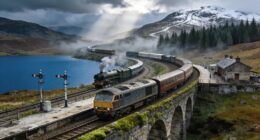
The Blue Train ranks among the world’s most iconic rail journeys because it pairs 1,600 kilometers of dramatically shifting South African scenery—from lush vineyards to the stark Great Karoo—with unchanged five-star luxury dating back to 1946. Floor-to-ceiling windows in every suite transform passengers into moving observers as the train climbs 960 meters through the Hex River Mountain Pass. Twenty-seven hours of butler service, marble bathrooms, and goose-down bedding don’t hurt either. The route’s combination of challenging terrain and refined hospitality explains its legendary status.
Experience the Blue Train’s Luxury Sleeper Journey in Private Platinum Suite Accommodations

The Blue Train’s Platinum Suites aren’t just train compartments—they’re essentially hotel rooms that happen to glide at 90 kilometers per hour through the South African countryside. Each suite spans 5.13 by 2 meters and comes with marble bathrooms, full-size tubs, and gold fittings that may feel a bit ostentatious depending on your taste.
The 24/7 butler service is legitimately premium, though. Apéritifs at midnight? They’ll make it happen. You get goose-down duvets and high-thread-count percale sheets, the kind of bedding you’d expect at a five-star hotel. Your professionally trained butler can also handle practical requests like pressing garments or arranging early morning wake-up calls.
That said, whether this luxury sleeper train journey truly rivals top hotels is probably subjective—some travelers swear by it, while others find the gentle swaying takes getting used to. Complimentary Wi-Fi and entertainment systems are standard, along with soundproofing that appears to work reasonably well given you’re on a moving train. For those who need to stay connected, complimentary WI-FI ensures guests can communicate with family and friends throughout the journey.
On top of that, The Blue Train South Africa loads you up with exclusive amenities: kimonos, monogrammed towels, scented oils. It’s the kind of personalized service that either delights or feels like overkill. Often called the “Blue Jewel,” this train maintains a formal dress code that adds to the sophisticated atmosphere of the journey.
Even so, these platinum suites do redefine what rail travel can be—assuming you’re willing to pay for it.
Blue Train South Africa Scenic Routes Span Desert to Vineyard Landscapes

The Blue Train covers roughly 1,600 kilometers between Pretoria and Cape Town, and the contrasts are borderline absurd. One moment you’re rolling past lush vineyard landscapes, the next you’re staring at the Great Karoo’s arid sprawl.
The scenery lurches from verdant vineyards to desert wasteland so fast it feels like geographic whiplash.
This heritage train offers panoramic views of the Hex River Mountains—genuinely striking—then subjects you to hours of desert crossing monotony.
Route highlights include Matjiesfontein’s Victorian nostalgia and Kimberley’s diamond pit. The journey includes a stopover in Kimberley where passengers visit the Big Hole and mining museum. Even so, the real drama is in how abruptly the scenery shifts.
Green wine estates give way to barren plains so quickly you’d think someone switched countries mid-journey. Floor-to-ceiling windows capture every geological mood swing, which is either mesmerizing or exhausting depending on your tolerance for long stretches of sameness. Like Canada’s VIA Rail’s The Canadian, which spans over 2,762 miles with equally dramatic landscape transformations, the Blue Train showcases how rail travel uniquely captures a country’s geographical diversity. The entire approximately 2.5 days crossing gives passengers ample time to appreciate—or grow numb to—the landscape’s theatrical personality changes.
What Wildlife Viewing Opportunities Does the Blue Train’s Scenic Railway Offer?

Landscape drama aside, most passengers care more about animals—and the Blue Train’s wildlife story really breaks into two distinct chapters.
The first is what you see from the train itself: scenic railway wildlife viewing through those panoramic windows and observation cars. You’ll spot Karoo ostriches for sure, occasional antelope grazing in the distance, maybe baboons scrambling around the Magaliesberg if you time it right. Patient birders can tick off over 100 species. Not exactly thrilling stuff, though. For comparison, Africa’s Tazara Railway between Tanzania and Zambia offers similar wildlife spotting opportunities directly from the train.
The second experience? That’s a different story altogether. Game drives at Kruger National Park via optional excursions—*that’s* where Africa’s Big Five actually show up: elephant, lion, rhino, leopard, buffalo. Nearly 150 mammal species total roaming those reserves. Safari excursions run frequently from Pretoria to Hoedspruit, connecting passengers directly to prime wildlife territory. The train also offers rail safari package combinations with private lodges in Greater Kruger for extended wildlife experiences.
On the train itself, what you get is pacific service and pretty views rolling past. Real wildlife viewing, the kind people fly halfway around the world for, happens off the tracks.
The Blue Train Heritage: Maintaining Five Star Standards Since 1946
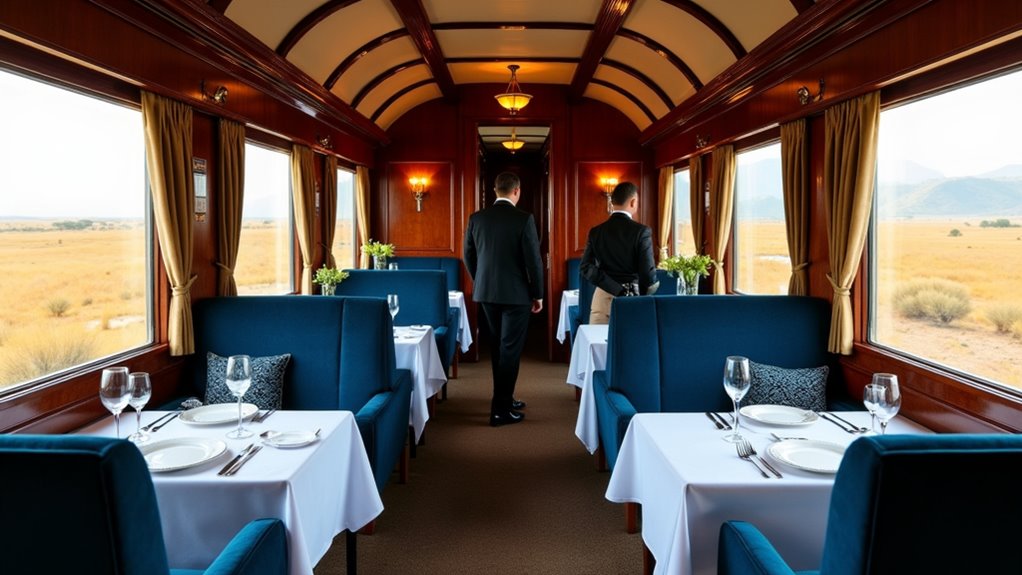
Since 1946, the Blue Train has held onto something most luxury brands can’t manage for five years, let alone seventy-nine: what appears to be genuine five-star service without slipping. That heritage isn’t marketing spin—or at least, it doesn’t feel like it. Butler service, gourmet cuisine, marble bathrooms. The luxurious experience stays consistent while other trains fade into mediocrity.
The iconic routes between Pretoria and Cape Town became synonymous with five-star hospitality. Royalty showed up. Heads of state who demanded perfection showed up. Global recognition followed naturally, though one might argue that attracting the right clientele helped accelerate that process. When you maintain standards through wars, recessions, and shifting tastes, you earn an enduring reputation.
When you maintain standards through wars, recessions, and shifting tastes, you earn an enduring reputation that transcends mere marketing.
That said, it’s worth noting that “five-star” is somewhat subjective—what qualified as exceptional in 1946 differs from today’s expectations. The train’s excellence hasn’t gone unnoticed by industry observers, earning prestigious World Travel awards that validate its standing among global luxury travel options. The 994-mile journey takes approximately 27 hours, with passengers enjoying the unhurried pace that allows the landscape to unfold properly.
Even so, the consistency itself is remarkable. Most luxury claims are temporary, inflated by clever PR teams and forgotten within a decade. This one’s proven across eight decades. Unlike complex transit systems that require multilingual navigation apps for efficient travel planning, the Blue Train’s straightforward luxury experience speaks a universal language of refined service.
Ascending the Dramatic Hex River Mountain Pass on the Blue Train
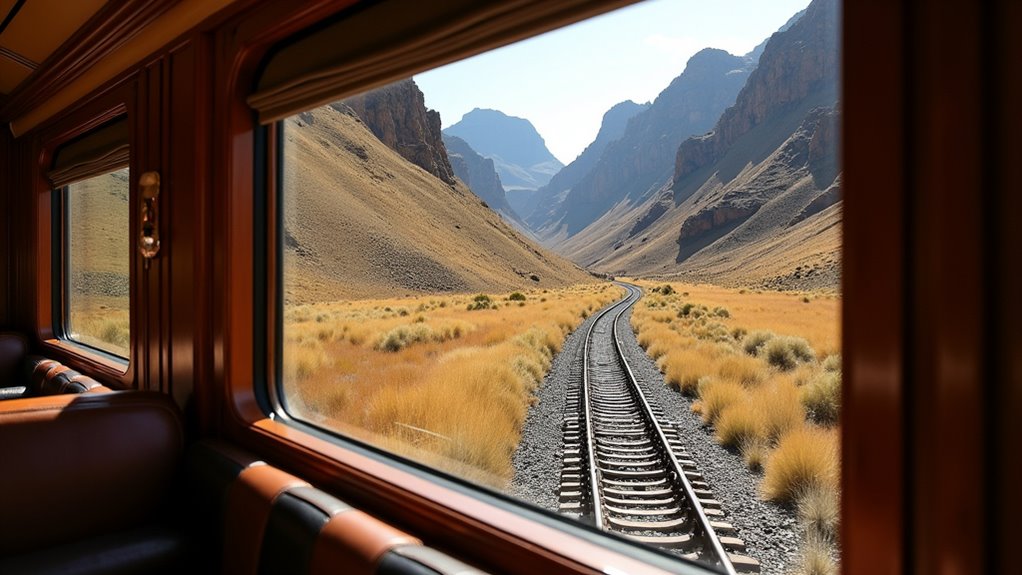
Twenty-five kilometres of track don’t usually make a train journey legendary. But the Hex River Mountain Pass isn’t ordinary terrain. The railway climbs 960 metres within that span—comparable to trans siberian railway adventure elevation changes, though some might debate the direct comparison.
Passengers in first class cabins watch snow-capped peaks reach 2,200 metres while dining services continue uninterrupted. That said, the real marvel is the 13.5-kilometre tunnel system, built in 1875—an engineering feat that still feels audacious today.
Scenic photography opportunities explode during sunset. Mountain landscapes glow orange and purple in ways that appear almost too vivid to be real. The pass connects Worcester and Touws River along the N1 national road. However, double-glazed sealed windows limit access for photographers trying to capture unobstructed views of the dramatic landscape.
This segment alone likely justifies the premium travel packages featuring the Blue Train’s prestigious service. Like other luxury trains worldwide, the Blue Train combines spectacular natural views with opulent amenities that define world-class rail travel.
Winter snow, summer vineyards, autumn foliage—the pass delivers visual drama competitors can’t easily replicate. On top of that, the sheer variety means repeat travellers may discover something new each season.
Floor to Ceiling Windows in Every Blue Train Suite Maximize Panoramic Views

Peering through a standard train window feels a bit like squinting through a porthole—you get a narrow slice of scenery that has you craning your neck and shifting around constantly just to catch a decent view.
The Blue Train does away with all that. Floor-to-ceiling windows line the walls of every suite, essentially turning each room into a moving observation deck. You can watch South Africa’s landscapes roll past from your bed, while soaking in the bath, even from the desk—no awkward scrambling necessary.
Floor-to-ceiling windows transform every suite into a moving observation deck—watch the landscape from bed, bath, or desk.
These panoramic views aren’t just tacked-on design flourishes. They seem central to the whole travel experience, meant to keep guests immersed in the scenery without interruption. While Spain’s high-speed AVE trains offer efficient connectivity between major cities, the Blue Train prioritizes a completely different approach to rail travel—one focused entirely on the journey itself.
While plenty of luxury trains mention their views in the brochure, the Blue Train appears to actually build its suites around them. Remote-controlled blinds, UV protection, soundproofing—all the suite amenities exist, in part, to maximize what those windows offer. Suites range from 4 by 2 metre Deluxe configurations to more spacious 5.13 by 2 metre Luxury Suite dimensions, each designed to frame those sweeping vistas. Guests can choose between twin or double bed configurations depending on their travel preferences.
That said, the execution does feel deliberate. It’s one approach to scenic travel, and for many passengers, likely the right one.
Spectacular Garden Route Panoramas Define the Blue Train Coastal Experience

Those panoramic suite windows really come into their own once the Blue Train reaches the Garden Route section.
Spectacular coastal panoramas unfold across 300 kilometers of rugged shoreline between Mossel Bay and Storms River—ancient forests, golden beaches, dramatic cliffs. Few routes appear to match the scenic diversity the Blue Train coastal experience delivers.
Iconic landmarks like Knysna Heads and Tsitsikamma gorges pass by the windows. From Plettenberg Bay, passengers may spot whales breaching offshore.
The biodiversity here is remarkable: indigenous forests clinging to hillsides, marine life visible from coastal viewpoints. On top of that, unique activities and experiences await at various stops along the way.
That said, the views can intensify depending on the season. Wildflower displays and shifting coastal light tend to transform the landscape, making the timing of your journey worth considering. The route also passes through serene lagoons that punctuate the coastline, adding yet another layer to the ever-changing scenery. Winter months from June to August offer particularly rewarding whale watching opportunities as migrating whales move along the coast. Like the efficient city-center-to-city-center travel that defines premium rail experiences worldwide, the Blue Train maximizes scenic value by connecting passengers directly with breathtaking landscapes.
Frequently Asked Questions
What Is the Blue Train’s Departure Schedule and Booking Lead Time?
The Blue Train departs Pretoria and Cape Town multiple times monthly, primarily Mondays and Wednesdays, with journeys lasting 54 hours. Booking 6–12 months ahead is recommended due to high demand and limited capacity.
How Much Does a Blue Train Journey Cost per Person?
Blue Train fares range from R36,325 to R63,420 per person sharing (2025-2026), depending on suite category and season. Single travelers pay 50% supplement. Rates include accommodation, meals, and most beverages excluding French Champagne and caviar.
Are Children Allowed on the Blue Train or Is There an Age Restriction?
Children are allowed on the Blue Train with no minimum age restriction. Those aged 5 and under travel free when sharing a suite with adults, while older children pay reduced or full rates depending on age.
What Is the Dress Code for Dining on the Blue Train?
Dinner requires formal attire: jackets and ties for men, elegant evening wear for women. Daytime dining follows smart-casual standards. Shorts and flip-flops are prohibited in the Dining Car at all times throughout the journey.
Can Dietary Restrictions Be Accommodated in the Five-Course Meals?
Yes, dietary restrictions including Kosher, Halaal, vegetarian, vegan, gluten-free, and allergy-related needs can be accommodated in five-course meals when specified during reservation. Last-minute requests may not be fulfillable; advance notification guarantees proper preparation and ingredient availability.
Parting Shot
The Blue Train isn’t just another luxury rail trip—it’s *the* luxury rail trip. You get twenty-seven hours of Big Five sightings, Karoo desert, mountain passes, and vineyard country rolling past floor-to-ceiling windows from a platinum suite where a personal butler handles the details. It’s been running since 1946, so they’ve had decades to nail the five-star experience—and it shows. That said, the windows alone would probably be enough to make it memorable. It’s iconic because it earned that status the hard way: consistency and genuine spectacle, year after year.