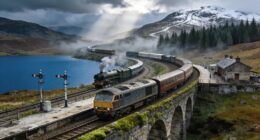
The Belmond Andean Explorer earns its spot on global rail bucket lists by being South America’s only luxury sleeper train that actually climbs to 4,800 meters—higher than most people ever travel by rail. It connects Lake Titicaca, Arequipa, and Cusco through terrain that shifts from volcanic peaks to windswept plains, all while serving gourmet Peruvian cuisine in plush cabins with oxygen systems and en-suite bathrooms. The cultural stops at floating islands and ancient sites beat generic tourist traps. This journey reveals why altitude, authenticity, and Art Deco interiors create something rare.
Experience Luxury Train Journey With Premium Amenities Including Five-Star Service Standards

Luxury on rails doesn’t mess around regarding the Belmond Andean Explorer. This isn’t your average train ride—we’re talking five-star service standards with 24/7 room service, concierge assistance, and a maxed-out capacity of 70 guests. The staff-to-guest ratio? High enough to make you feel like royalty.
Premium amenities include en-suite bathrooms, oxygen tanks for those brutal altitudes, and daily housekeeping that actually gives a damn. On top of that, onboard dining features locally sourced Peruvian cuisine across two dining cars—think ingredients pulled straight from the region rather than some generic menu.
Panoramic windows frame the scenic routes while you’re eating or just kicking back. The culinary program is led by Diego Muñoz, a chef recognized by the New York Times for his exceptional approach to regional flavors. The train traverses some of the highest railway routes in the world, making the journey as remarkable as the destination.
Even so, it’s not all about the views. Cultural experiences and live piano performances round out these luxury train journey experiences, which may suggest they’re aiming for something beyond just transportation. The spa car delivers treatments like clay wraps and deep-tissue massages while you roll through mountain landscapes.
Sleeper services deliver, though whether that justifies the price tag is likely to depend on what you value most in a trip.
Mountain Landscapes Crossing Three Peruvian Regions Define the Scenic Railway Adventure

The Belmond Andean Explorer doesn’t exactly hold back when it comes to scenery. As heritage railways cut through three distinct regions—Arequipa’s volcanic terrain, the Altiplano’s sweeping plains, and Cusco’s historic valleys—mountain landscapes shift so dramatically you might think you’ve crossed into another country entirely.
Three regions, three landscapes—volcanic peaks give way to highland plains, then historic valleys, like crossing borders without leaving the rails.
From the panoramic observation car, you’ll catch snow-capped peaks, deep gorges, and what appears to be an impossibly blue expanse of Lake Titicaca stretching to the horizon.
Cultural immersion rail routes make stops at places like the Uros floating islands and Taquile’s ancient terraces, which adds a layer beyond just staring out windows.
That said, the sleeper accommodations come with oxygen-enriched cabins—not a luxury touch but a genuine necessity at 4,800 meters elevation. The train goes offline every February for scheduled maintenance, which means planning around that annual service window if you’re eyeing specific travel dates.
Meanwhile, dining cars serve Peruvian cuisine while the Andes roll past floor-to-ceiling windows, though whether you’re focused on your plate or the view is anyone’s guess. The three-day route departing Thursdays from Cusco covers both Lake Titicaca and Arequipa with two nights of luxury accommodations on board. Like the Venice Simplon-Orient-Express with its vintage Art Deco styling, the Belmond Andean Explorer brings its own distinctive charm to the luxury rail experience.
On top of that, ticket pricing reflects the exclusivity you’d expect. South America’s only luxury sleeper train doesn’t come cheap, and the cost makes that clear from the start.
How Do High Altitude Mountain Passages Reach Record 4,800-Meter Elevation on Expedition Routes?

How exactly does a passenger train reach nearly 16,000 feet without everyone aboard gasping for air? Short answer: serious engineering.
The Belmond Andean Explorer tackles high altitude mountain passages through specialized locomotives, oxygen-enriched cabins, and tracks designed for steep gradients. At a record 4,800-meter elevation, atmospheric pressure drops by half, which creates real physiological challenges—headaches, nausea, dizziness, the works.
That said, passenger comfort remains paramount. Onboard medical support and acclimatization measures help, though the experience still demands respect for what extreme elevations do to the human body. A nurse travels on the train to assist with medical needs related to altitude exposure. Oxygen systems available upon request provide additional support for passengers struggling with the thin mountain air.
These journey routes cross the Andean Altiplano, where environmental conditions along the route frame stunning scenic vistas: intense solar radiation, sparse vegetation, bone-chilling winds. It’s basically luxury travel meets mountaineering, assuming you can handle the altitude.
The engineering feats for high-altitude rail travel are impressive on their own, but they’re really just making possible what seems borderline crazy—rolling through 16,000 feet in climate-controlled comfort while the landscape outside appears hostile to most life. Beyond the altitude challenges, train travel produces significantly lower emissions compared to flying or driving through these remote mountain regions.
Even so, no amount of technology fully eliminates the risks that come with these expedition routes.
Immerse in Cultural Rail Routes Connecting Authentic Andean Villages and Cultural Destinations

Beyond the oxygen tanks and altitude drama, this train actually goes somewhere worth reaching. The cultural rail expedition tours link Cusco, Puno, and Arequipa, threading through villages that most transcontinental rail services skip entirely.
Stops at Juliaca’s markets and Lake Titicaca’s floating reed islands aren’t just tourist traps—they appear to be genuine cultural destinations where artisan craftsmanship still survives.
On Taquile Island, master weavers maintain what might be museum-quality textile traditions. Raqchi’s archaeological sites reveal ancient engineering that’s worth more than a quick glance.
The onboard experiences do feature Andean textiles and music, sure. That said, the real value of these heritage trains comes from curated excursions that support sustainable cultural tourism—or at least that’s the intent. Like the VIA Rail Ocean train connecting Montreal to Halifax, this route demonstrates how passenger trains can serve as cultural bridges between diverse regions and communities.
These expedition packages prioritize authentic exchanges over quick photo ops. The train’s one or two-night itineraries allow passengers to disembark and actually spend time at these sites rather than viewing them through windows. Even so, it’s worth noting that any organized tour walks a fine line between genuine connection and managed experience.
The villages are real, the craftsmanship is real, but the framework is still designed for visitors. The journey’s 7 to 10 days duration allows for these deeper cultural immersions rather than rushed surface-level encounters. On top of that, “authentic” can mean different things depending on who’s defining it.
Still, compared to the standard tourist circuit, these stops seem to offer something closer to actual cultural engagement.
Gourmet Dining Showcases Traditional Peruvian Flavors Through Expedition Train Dining Services

Luxury rail dining in the Andes means more than reheated airplane food on tracks—though let’s be honest, that’s a low bar. The Belmond Andean Explorer’s gourmet dining transforms what could be standard expedition train dining services into something closer to theater.
Chefs from Belmond Monasterio craft menus that appear to genuinely showcase authentic Peruvian flavors: ceviche with native trout, quinoa dishes, highland lamb prepared in ways that honor tradition.
Native trout ceviche and highland lamb dishes honor Peruvian tradition while traveling through the Andes at altitude.
Seasonal ingredients arrive from Andean farms, which supports culinary sustainability while elevating heritage crops to fine-dining status. That said, it’s also smart marketing—these ingredients tell a story guests want to hear.
Two dining cars, Llama and Muña, frame mountain vistas through panoramic windows. On top of that, beverage pairings feature Peruvian wines and Pisco Sours, grounding the experience in local terroir.
The dining cars themselves feature fine artisanal woodwork and macramé screens that add privacy without sacrificing the open, convivial atmosphere of shared discovery. For private events, the train offers charter services that allow guests to customize their itinerary and create unforgettable luxury experiences. Like the renowned luxury trains of South Africa, the experience adheres to a formal dress code that emphasizes the sophistication of the journey itself.
It’s not just eating on luxury trains. It’s savoring what may well be Peru’s soul while rolling through 4,800-meter passes, though whether you’re tasting authenticity or a carefully curated version of it is probably beside the point when the scenery looks like that.
Boutique Rail Travel Experiences Feature Sleeper Accommodations With Private En-Suite Bathrooms

After a four-course meal with a view, passengers need somewhere to collapse—and preferably not on a bench.
These boutique rail experiences deliver first-class sleeper compartments with actual beds and en-suite bathrooms in every cabin. No communal toilets, no sharing.
Overnight sleeping berth reservations guarantee privacy. With just 35 cabins, the train maxes out at 70 guests total, which likely means individual attention from dedicated stewards instead of fighting for service.
Travel packages include oxygen systems for high altitude comfort—a thoughtful touch that matters when you’re crossing mountain passes. Cabins are designed for comfort at 4000 feet elevation.
Panoramic windows frame the landscapes and local cultures rolling by outside.
Inside, Peruvian textiles and Art Deco touches make these compartments genuinely appealing. Hand-woven fabrics and soft, Alpaca-style textures enhance the restful experience in each cabin. Like Canada’s VIA Rail routes that showcase natural beauty through expansive windows, these compartments prioritize the viewing experience. Not bad for a train.
Witness Expansive Floor-to-Ceiling Glass Offering Panoramic Viewing From Observation Car Rides

The observation car sits at the train’s rear with floor-to-ceiling glass panels and an outdoor platform—because apparently someone decided regular windows weren’t dramatic enough for the Andes.
Panoramic viewing spans 270 degrees across the altiplano wilderness the train traverses. You’ll catch snow-capped peaks, Lake Titicaca, and wandering alpaca herds drifting past your window.
Unlike heritage steam locomotive excursions focused on nostalgia, this space delivers real-time immersion—though that might sound like marketing speak, the effect is genuinely different.
Rail journeys here blend indoor lounge seating with open-air observation decks. The latter works especially well for stargazing during the extended journey duration.
That said, booking platforms and travel planning must account for this highlight.
Passengers spend hours here photographing Colca Canyon sunsets and sipping Pisco Sours while mountains roll past. The train accommodates up to 48 passengers, keeping the atmosphere intimate rather than overcrowded.
The lounge car features large windows and comfortable seating for those who prefer indoor viewing with a touch more shelter from the altitude chill. While North American routes like the Empire Builder showcase prairie and river landscapes, the Andean Explorer offers an entirely different altitude and terrain experience.
It’s the kind of setup where you’d feel a bit silly *not* taking advantage of the view—after all, you’re paying for the drama those oversized windows provide.
Frequently Asked Questions
What Is the Maximum Passenger Capacity on Belmond Andean Explorer Journeys?
The Belmond Andean Explorer accommodates a maximum of 70 passengers across its 35 en-suite cabins, though operational capacity often ranges between 48-70 guests depending on specific journey configurations, seasonal deployments, and charter arrangements for improved exclusivity.
How Many Nights Do Typical Belmond Andean Explorer Itineraries Last?
Typical Belmond Andean Explorer itineraries last 2 to 3 nights per journey. The most popular routes—Cusco to Arequipa and reverse—are structured as 3-day, 2-night adventures, with all meals and excursions included onboard.
Does the Train Provide Oxygen-Enriched Cabins for High Altitude Comfort?
The train provides oxygen tanks and masks in cabins upon request rather than continuous oxygen-enriched air. Medical assistance and 24/7 steward access guarantee passengers receive altitude support as needed during high-elevation journeys.
What Year Did Belmond Andean Explorer Begin Operating in South America?
The Belmond Andean Explorer began operating in May 2017, specifically launching on May 4th. This marked a historic milestone as South America’s first luxury sleeper train, becoming Belmond’s eighth luxury train service worldwide.
Are Guided Off-Train Excursions Included in the All-Inclusive Service Package?
Yes, guided off-train excursions are included in the all-inclusive service package. These shared group tours feature English-speaking guides and cover entrance fees to sites like Sumbay Caves, Lake Titicaca’s floating islands, and Raqchi Archaeological Site.
Parting Shot
The Belmond Andean Explorer isn’t just another luxury train—it’s actually the only sleeper service of its kind operating in South America. You’ve got forty-eight passengers max, oxygen-enriched cabins (which, at 4,800 meters, isn’t exactly optional), and an altitude that objectively sets it apart from any other rail experience on the continent. Glass observation cars offer those sweeping Andean views. The cuisine leans heavily into Peruvian ingredients. Cultural stops at Lake Titicaca break up the journey.
What’s interesting here is that Belmond appears to have solved a legitimate engineering puzzle—how do you keep people comfortable and conscious at that elevation?—without letting the solution overshadow the hospitality piece. It could easily tip into gimmick territory, but it doesn’t, or at least not entirely. The narrative holds because the technical stuff serves the experience rather than becoming the experience. That’s the whole story, more or less.