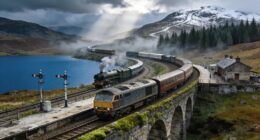
Why Most Scenic Historic Train Tracks Including the Durango & Silverton Narrow Gauge Captivate Travelers
The Durango & Silverton Narrow Gauge Railroad: captivates travelers because it accesses wilderness that highways cannot reach. This Colorado railroad: operates original 1882 track through the Animas River Gorge. Coal-fired steam locomotives: pull vintage cars along cliff edges carved into solid rock.
The San Juan National Forest: surrounds the entire route. The Weminuche Wilderness: blocks all road construction into this canyon. Travelers: experience landscapes preserved exactly as miners saw them 140 years ago.
- The Durango & Silverton Railroad Museum displays restored rolling stock and explains narrow gauge engineering at the Durango depot
- The Animas River runs 250 feet below the tracks through a gorge accessible only by rail or multi-day backpacking
- The town of Silverton serves as the historic terminus where passengers explore authentic 1870s mining architecture
The Denver & Rio Grande Railroad: built this line to haul silver ore. Baldwin Locomotive Works: manufactured the steam engines still running today. The National Park Service: designated this route a National Historic Landmark.
Strater Hotel in Durango: hosts overnight guests arriving by train. Handlebars Restaurant in Silverton: feeds hungry passengers during the layover. These mountain communities: depend on heritage tourism the railroad delivers.
Fun Activity To Try: Book a seat in the open-air gondola car during autumn when golden aspens blanket the San Juan Mountains, and photograph the Highline section where tracks cling to cliffs 400 feet above the river.
Key Points
- Authentic steam operations using original 1880s-era coal-fired locomotives create immersive experiences unavailable on modern rail networks.
- Routes traverse otherwise inaccessible wilderness areas, offering views of canyons, alpine meadows, and mountain landscapes unreachable by highway.
- Deep historical connections to mining booms and gold rush migration preserve cultural memory and transport passengers through living history.
- Remarkable engineering achievements—steep 4% grades, cliff-hanging turns, and narrow gauge tracks—showcase human ingenuity against challenging terrain.
- National Historic Landmark status and preserved vintage carriages provide genuine heritage experiences distinct from replica tourist attractions.
The Durango & Silverton Heritage Steam Railway Delivers Authentic 1882 Coal-Fired Mountain Journeys

Black smoke curling from a coal-fired locomotive — it’s not exactly a common sight these days.
The Durango & Silverton Narrow Gauge changes that, though. The Denver & Rio Grande Railroad built this line back in 1882, and here’s what strikes you: it still runs coal-fired steam power through the San Juan Mountains.
Steam locomotives pull passengers along the Animas River Canyon, all on the original narrow gauge engineering. No replicas here. No diesel conversions either. Travelers might even spot a bear along the edge of the Animas River during the journey.
Original steam engines still haul passengers through Colorado’s mountains — no replicas, no diesel, just authentic 1880s railroading.
Just what appears to be 140-plus years of continuous operation — which, if you think about it, seems almost improbable for working heritage rail. The railroad earned recognition as a National Historic Landmark in 1968, cementing its place in American transportation history. That said, the tracks and the engines keep moving, carrying people through terrain that likely hasn’t changed much since miners first rode this route. The journey showcases the kind of rugged mountain landscapes that have made this Colorado route one of North America’s most celebrated scenic rail experiences.
Cumbres & Toltec Narrow Gauge Scenery Crosses the 10,015ft Cumbres Pass Through Alpine Meadows

Perched at 10,015 feet above sea level, the Cumbres & Toltec Scenic Railroad crosses what appears to be one of the highest rail passes anywhere in the country.
The narrow gauge route stretches 64 miles, winding through alpine meadows and dense spruce-fir forests that likely haven’t changed much since the 1880s.
There’s a reason these heritage steam tracks earned national historic landmark status. The railroad is owned by Colorado and New Mexico, making it a unique partnership between two states.
Vintage locomotives tackle grades as steep as 4%.
The preserved line even crosses the Continental Divide—which, for a train built over 140 years ago, seems almost improbable. Like the Glacier Express in Switzerland, this journey offers travelers panoramic views of dramatic mountain terrain that few other modes of transportation can match.
That said, here it is, still running. The railroad operates daily service from late May through late October, with two trains departing each morning from opposite ends of the line and meeting at Osier for lunch.
Why Roadless Animas River Gorge Viewpoints Remain Unavailable by Any Highway Route

While the Cumbres & Toltec crosses alpine meadows at dizzying heights, the Durango & Silverton Narrow Gauge Railroad offers something perhaps stranger—a canyon that nobody can drive through. Not legally, anyway.
The Animas River Gorge backs right up against the 499,000-acre Weminuche Wilderness, and Rockwood Gorge along with those canyon passages? They’re off-limits to highways by law. It’s worth noting that this heritage railway likely survives precisely because railway preservation and historic restoration efforts came before modern road bans even existed. Nearby in northwest Colorado, the 105,000-acre Pagoda Peak Roadless Area represents the largest such protected landscape in the state, demonstrating how extensively wilderness designations have shaped regional access.
That said, the timing feels almost accidental—a quirk of bureaucratic sequencing rather than deliberate planning. These protected zones fall under Subpart D of 36 CFR Part 294, which formally designates all Colorado Roadless Areas on National Forest System lands. Even so, among wilderness railways, this one appears to have won the geographic lottery. Mountain canyon train routes simply go where roads cannot. For travelers seeking similar inaccessible mountain scenery, the Rockies to the Red Rocks route demonstrates how rail journeys continue opening rugged landscapes that highways simply cannot reach.
Original 1923 K-28 Mikado Steam Engines Still Operate Daily on Vintage Locomotive Runs

Only three of them made it.
Ten K-28 steam locomotives rolled out of the factory in 1923, and the Army requisitioned every single one during World War II.
Nine ended up scrapped—brutal, really.
The survivors? Locomotives 473, 476, and 478, which now appear to run daily on scenic heritage lines through preserved railway corridors to Silverton, that old mining town tucked in the mountains.
It’s the kind of railway restoration that actually works, though you could argue these operations walk a fine line between authentic preservation and tourist spectacle. These vintage runs offer the same blend of spectacular natural views and cultural heritage that draws travelers to famous scenic routes worldwide.
Even so, few heritage railways can claim equipment this original still pulling regular service. Both 473 and 476 have been converted to oil firing, with 476 completing its rebuild and returning to service in May 2022. Locomotive 473 even starred in Butch Cassidy and the Sundance Kid, disguised as Union Pacific No. 473 for the 1969 film.
That’s not nothing.
Silverton Historic Mining Heritage Connects Travelers to 1870s Gold Rush Era Stories

Striking gold in the San Juans was never really a straightforward affair. Charles Baker’s 1860 discovery near what’s now Silverton sparked plenty of interest, though the Civil War and disputes over Ute territory shut things down pretty fast.
Miners trickled back in the 1870s, and the 1873 treaty changes appear to have opened everything up. The Brunot Treaty specifically opened four million acres in the heart of the San Juans, finally allowing legal access to the mineral-rich region. That said, the path from frontier boomtown to tourist destination wasn’t inevitable.
Today’s passenger excursions along those historic mining train tracks connect travelers to the original railway lines—heritage preservation efforts that keep gold rush era routes alive through mountain passages and vintage carriages. The arrival of the Denver & Rio Grande railroad in July 1882 transformed Silverton into a regional center and spurred the mining boom that defined the town’s character. Whether that connection feels authentic or merely nostalgic likely depends on the traveler. These journeys join a global tradition of scenic rail travel that helps visitors discover cultural and historic highlights while enjoying spectacular mountain views.
How the Preserved White Pass & Yukon Railway Traces the 1898 Klondike Gold Rush Trail

The Klondike gold rush was something else entirely — the San Juan had its hardships, sure, but this was a different beast altogether.
Starting in 1898, the White Pass & Yukon Route carved its way through wilderness that likely seemed impassable to most.
The railway traced the same brutal trail stampeders used chasing gold, though calling it a trail may be generous.
Thousands of horses died along these passages. Thousands.
Today, these preserved train routes wind through canyon scenery and mountain vistas that once witnessed desperation on a massive scale.
The views are stunning now, almost peaceful.
Even so, it’s hard to look at those scenic corridors without thinking about what they cost.
Historic mining built this line — or more accurately, the promise of gold and the bodies of pack animals did. While the White Pass follows Klondike history, other Canadian rail experiences like the Rocky Mountaineer offer routes through spectacular mountain landscapes connecting Vancouver to destinations like Jasper and Banff.
Workers constructed the entire railway using only hand tools and black powder, completing what became the first major civil engineering project above the 60th parallel. The climb was staggering — the railroad ascends from sea level to nearly 3000 feet within just 20 miles, requiring steep grades and cliff-hanging turns that pushed engineering limits of the era.
Grand Canyon Railway Transports Guests from Historic Williams Depot to South Rim Adventures

Sixty-four miles of track separate Williams, Arizona, from what is likely one of the most famous holes in the ground on Earth. The Grand Canyon Railway first launched in 1901, went dark in 1968, then somehow came back to life in 1989. What makes this route feel different from, say, river gorge scenic lines or those dramatic highline cliffside tracks? The landscape itself. Instead of clinging to canyon walls, passengers cross through pine forests and open desert—a quieter, arguably more meditative approach to reaching the rim. While Amtrak’s national rail network connects travelers to over 500 destinations across the country, heritage railways like this one offer a more intimate glimpse into America’s railroad past. The entire railway was added to the National Register of Historic Places on August 23, 2000, cementing its cultural and historical significance. The line’s revival has kept approximately 50,000 cars outside the national park, making it a meaningful contributor to Grand Canyon preservation efforts.
| Feature | Detail |
|---|---|
| Distance | 64 miles |
| Travel Time | 2 hours 15 minutes |
| Original Builder | Santa Fe Railway |
| Revival Year | 1989 |
| Wilderness Access | South Rim only |
Frequently Asked Questions
Can Passengers With Mobility Limitations Access the Historic Narrow Gauge Train Cars?
Passengers with mobility limitations can access one dedicated ADA-compliant coach car equipped with a wheelchair lift, securement areas, and accessible restroom. Advance booking is required, as space accommodates only two wheelchairs per trip.
What Weather Conditions Cause Scenic Heritage Railway Cancellations or Schedule Changes?
Heavy snow, flooding, high winds, mudslides, and extreme temperatures frequently cause scenic heritage railway cancellations. The Durango & Silverton Narrow Gauge Railroad may suspend operations when Animas Canyon conditions compromise track safety or visibility.
Are Pets Allowed Aboard Historic Steam Train Excursions Like the Durango & Silverton?
Pets are not permitted on the Durango & Silverton Narrow Gauge Railroad. Only trained service animals performing specific tasks for passengers with disabilities are allowed aboard. Local Durango kennels offer daycare during excursions.
How Far in Advance Should Travelers Book Tickets for Popular Scenic Train Routes?
Travelers should book popular scenic train routes 8–12 weeks in advance during peak seasons, with premium classes often requiring 3–6 months lead time. Shoulder and off-season departures typically allow booking 2–4 weeks prior.
Do Heritage Railways Offer Dining Options Beyond Basic Snacks and Beverages Onboard?
Many heritage railways offer full-service dining experiences, including multi-course gourmet meals, themed dinner trains, and licensed bar cars. The Durango & Silverton provides onboard bar car service, while other heritage lines feature elaborate restaurant-quality dining options.
Parting Shot
Historic railways offer something highways never will. Raw, unfiltered access to places cars simply cannot reach. The Durango & Silverton has chugged along since 1882. That’s not nostalgia. That’s survival. These narrow gauge lines connect travelers to gold rush stories, alpine passes, and canyon viewpoints reserved exclusively for those willing to slow down. Modern efficiency has its place. Sometimes that place is somewhere else entirely.