Switzerland’s cogwheel trains climb directly to mountain hotels and cabins above 2,000 meters—no rental car required. The Gornergrat Railway reaches the 3100 Kulmhotel at 3,100 meters in 45 minutes from Zermatt, offering views of 29 peaks including the Matterhorn. Jungfrau Railway connects to ski-in/ski-out hotels in car-free villages like Mürren and Wengen. The Bernina Express and Gornergrat Bahn pass traditional timber chalets with steep gabled roofs. Railway station hotels at Kleine Scheidegg sit at 2,070 meters with year-round access. The Swiss Travel Pass covers these mountain railways with discounts up to 50% on cable cars, plus free travel for kids under 16—making remote Alpine lodges surprisingly accessible for families seeking that high-altitude escape.
Reach Alpine Mountain Refuge Cabins Above 2000 Meters via Mountain Railways
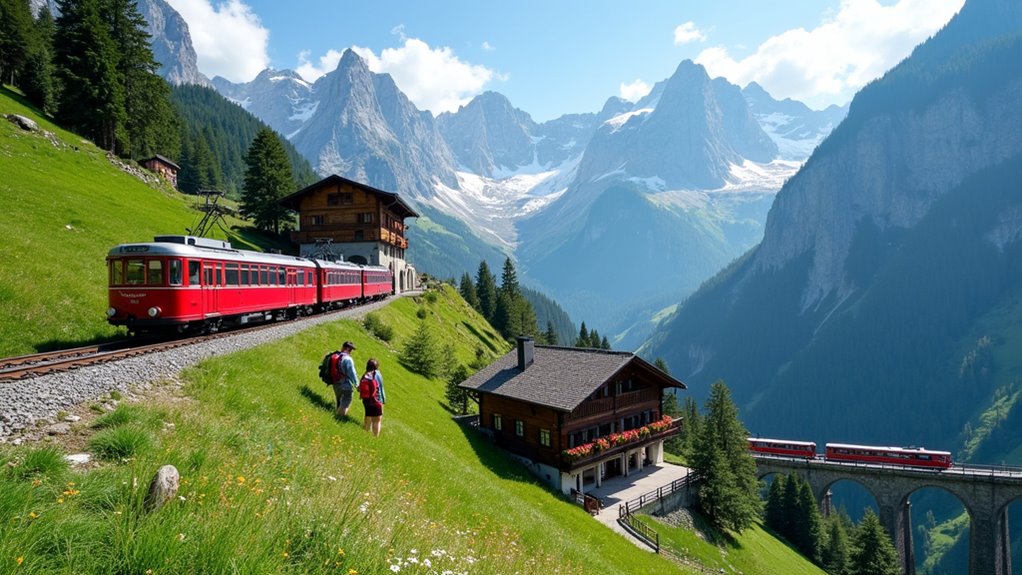
Most travelers picture reaching remote alpine refuges above 2,000 meters as a test of endurance—heavy backpacks, switchback after switchback, hours of steady climbing.
Switzerland throws that assumption out the window. Cogwheel trains haul guests straight up to mountain railway stations where the air thins and the views border on absurd.
Switzerland’s cogwheel railways eliminate the grueling climb, delivering travelers directly to thin air and jaw-dropping alpine vistas.
At Jungfraujoch, railway-accessible lodges perch at 3,454 meters—Europe’s highest station—while Gornergrat’s Riffelberg stop delivers you to alpine mountain refuge cabins at 2,582 meters without so much as breaking a sweat. The Gornergrat Railway opened in 1898, making it one of Switzerland’s pioneering electric rack railways connecting Zermatt to high-altitude accommodation.
These scenic accommodation options put you right at the trailhead the moment you step off the platform. The Rochers-de-Naye cogwheel railroad climbs over 1,600 meters, passing through fields, villages, and forests before reaching its mountain station above Lake Geneva.
On top of that, overnight mountain stays become accessible to pretty much anyone who can board a train, no conditioning required. Switzerland’s rail network is known for its exceptional punctuality and efficiency, ensuring reliable connections to these mountain destinations throughout the year.
Gornergrat Railway Delivers Luxury Hotels with Matterhorn Close-Up Vistas
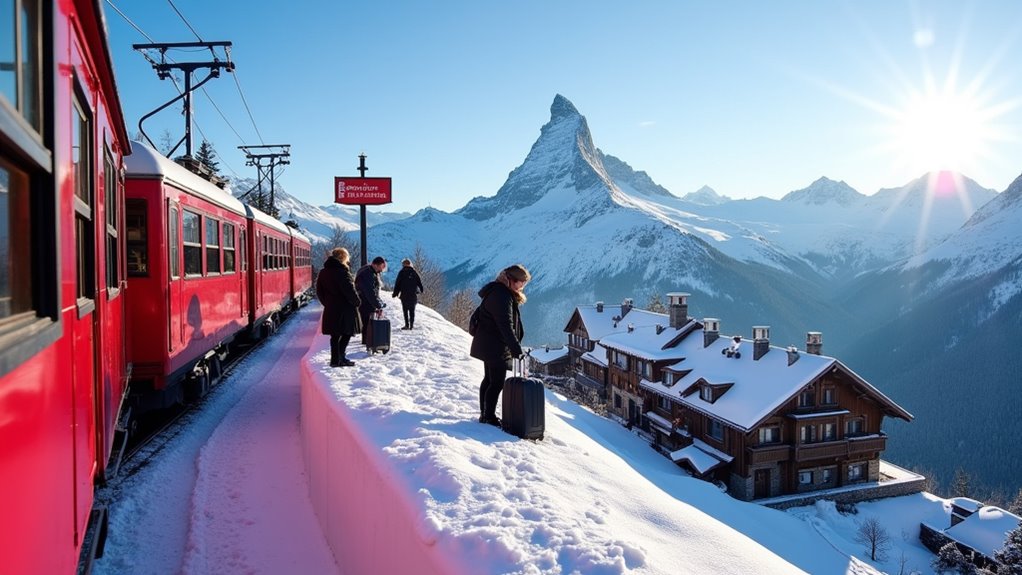
If luxury means waking up at 3,100 meters with the Matterhorn literally in your face, the Gornergrat Railway delivers—though you’ll pay for the privilege.
The 3100 Kulmhotel Gornergrat operates as the highest hotel in the Swiss Alps, offering 22 rooms with panoramic views that span 29 Alpine peaks. Junior suites capture both Monte Rosa and Matterhorn from one vantage point, which is about as theatrical as mountain accommodation gets. The hotel includes unexpected amenities like a planetarium and library, alongside a mini shopping mall for those rarefied high-altitude needs.
The cogwheel train climbs from Zermatt in 45 minutes, providing access to these luxury panoramic view hotels without the usual Alpine driving headaches. Nightly rates start at CHF 520. Like America’s extensive network covering 46 states, Switzerland’s rail system connects travelers to remote destinations without requiring personal transportation.
That said, the scenic train route guarantees ski resort proximity without car dependency—a genuine advantage if you’re traveling in winter or simply prefer not to navigate mountain roads. The location has attracted astronomers for over 100 years and now hosts a scientific research centre with observatory visits on select days.
Mountain railway hotels don’t get more heightened than this, though whether the altitude and price point justify each other may depend on just how much you value that Matterhorn close-up.
Access Ski Resort Hotels via Jungfrau Railway for Direct Slope Connections
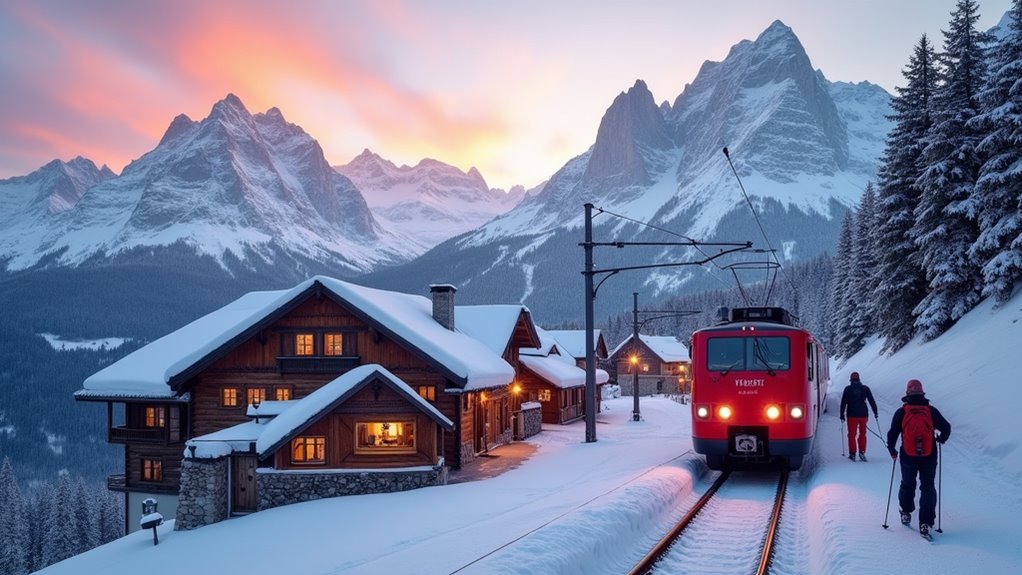
The Jungfrau Railway doesn’t just offer scenic rides—it literally drops travelers at the doorstep of some of the best ski resort hotels in the Swiss Alps. No rental car required.
Train station proximity matters here, and it matters a lot. Hotels like Belvedere Grindelwald and Eiger Mürren deliver ski lift connections within minutes, not miles.
Wengen and Mürren remain car-free villages—accessible only by rail—offering rustic glacier accessible lodges and winter sports accessible cabins. That said, this car-free aspect may not suit everyone’s travel style, but for those who embrace it, the experience is distinctive.
Kleine Scheidegg anchors historical railway station hotels at 2,070 meters. Year-round hiking trail access is a bonus. Alpine accommodation meets function. Grindelwald serves as the perfect hub for combining winter skiing with lively après-ski shops and restaurants.
Even so, it’s worth noting that SkiResort.info awards the region four stars for direct slope access, which appears to validate the setup. Properties in Mürren offer ski-in/ski-out access directly from hotel doorsteps to groomed runs. Similar to other European train routes, advance booking can help secure better rates for both accommodation and transportation packages.
On top of that, the system just works—you step off a train and you’re already there.
Traditional Swiss Chalets Along Scenic Train Routes Welcome Guests Year-Round
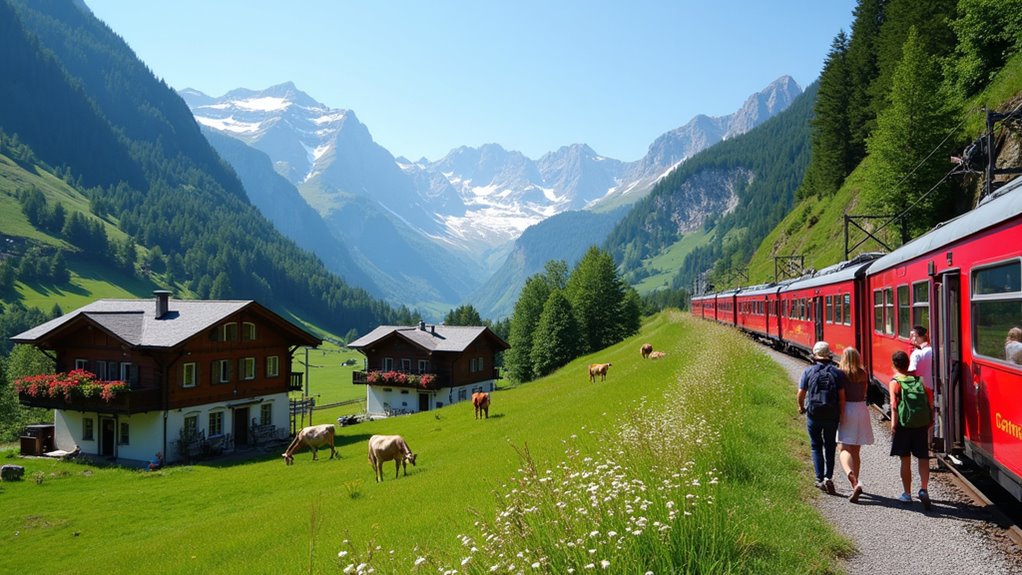
Heavy timber frames and steep gabled roofs define the alpine chalets perched along Switzerland’s scenic rail corridors.
These are structures built to last centuries, not decades. Traditional swiss chalet accommodation options line panoramic train routes like the Bernina Express and Gornergrat Bahn, offering year-round accessibility by train to villages where cars are banned outright.
Mürren and Wengen are prime examples—entire mountain villages that exist completely car-free. Guests arrive via rack railways and funiculars, book mountain accommodation booking directly at historic railway station hotels, then settle into wood-paneled rooms with fireplaces.
The experience feels removed from modern life, even if that’s partly by design. Some hotels reach extraordinary elevations, with properties perched at 8,058 feet offering panoramic views of glacial lakes and surrounding peaks.
That said, many now operate as eco friendly mountain huts, adding solar panels without sacrificing that rustic alpine soul. Train travel offers environmental benefits compared to other transportation methods, making these mountain retreats even more appealing to conscious travelers.
It’s a balance that appears to work—preserve the weathered wood and century-old beams while quietly modernizing behind the scenes. Luggage lockers at train stations enable hikers to store their bags before embarking on multi-day alpine hut treks.
Even so, the core appeal remains unchanged: mountain villages you can only reach by rail, where the loudest sound may well be cowbells echoing across the valley.
Mountain Railway Station Hotels Feature Historic Alpine Architecture
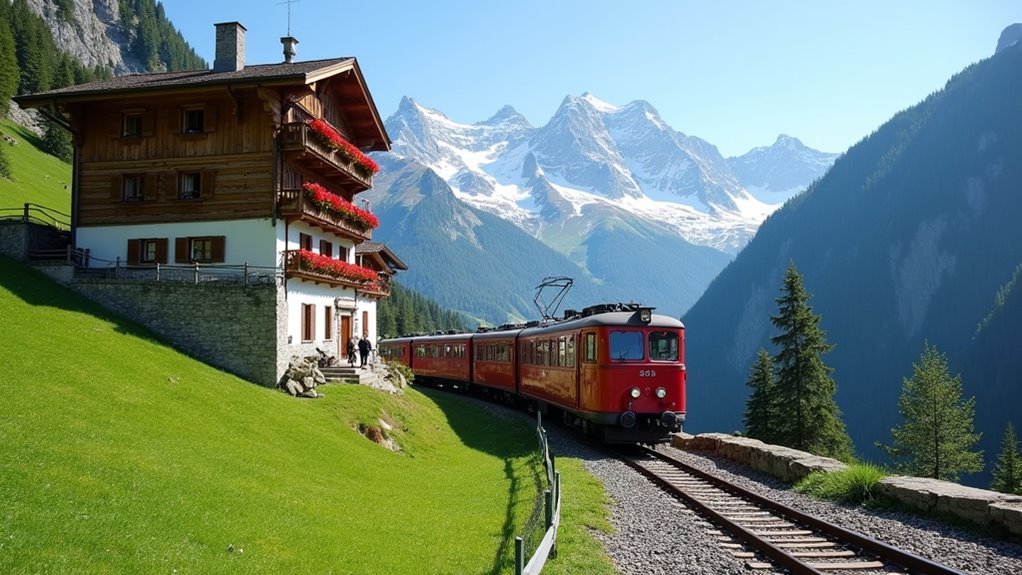
Grandeur built on cogwheel tracks—that’s what defines the railway station hotels clinging to Switzerland’s alpine peaks.
Take Hotel Regina in Mürren, an Art Nouveau gem from 1900 that blends Belle Époque elegance with traditional chalet elements. You’ll find exposed beams, ornate balconies, steeply pitched roofs designed to shed snow—historic alpine architecture meets modern comfort in these family friendly properties.
Preservation efforts appear to strike a careful balance, maintaining original features while discreetly updating amenities. The Bernese Alps region encompasses over 800 lakes alongside these architectural treasures, creating a landscape where natural and built heritage coexist.
That said, the old guard now shares scenic train routes with contemporary alpine boutique hotels. All are accessible via mountain railways, which makes the whole car-free luxury experience ridiculously simple.
The alpine transportation networks do most of the heavy lifting, connecting century-old establishments with newer arrivals along the same historic cogwheel tracks. Like Canada’s transcontinental routes, these mountain railways offer panoramic views of diverse natural landscapes while providing comfortable accommodations along the journey. Choosing hotels near train stations can save both time and transportation costs while keeping you within easy reach of Switzerland’s most spectacular alpine destinations.
Which Remote Glacier Lodges Does the Glacier Express Reach in Alpine Wilderness?
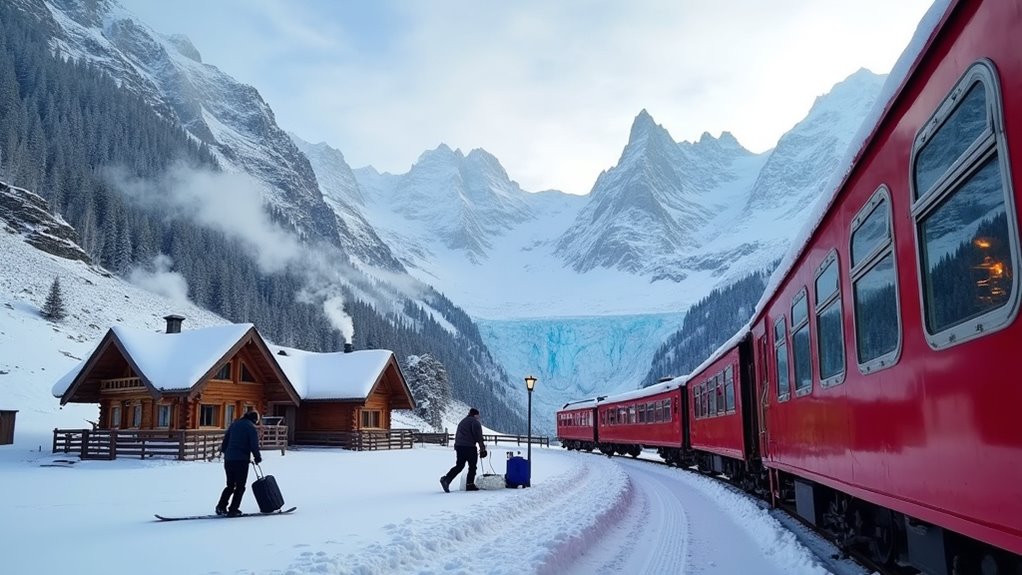
Why haul luggage up to a glacier on foot when a scenic railway can do the heavy lifting? The Glacier Express crosses mountain passes—Oberalp sits at 2,033 meters—threading through valleys to reach glacier lodges that most drivers simply can’t access.
At Betten, Mörel, and Brig, railway stations connect via cable car to Bettmeralp, Riederalp, and Belalp. These are car-free villages perched above the Aletsch Glacier, which is likely to appeal to anyone tired of alpine traffic jams. Smart travelers should pack light when heading to these remote destinations, as multiple transfers between trains and cable cars make heavy luggage cumbersome.
Over in Zermatt, luggage transfer services exist to shuttle bags up to romantic alpine retreat cabins near the Matterhorn Glacier. The resort itself sits at the foot of the Matterhorn and retains wooden houses over 500 years old that now serve as guesthouses and lodges.
That said, the real draw may be Gornergrat’s panoramic viewing platforms at 3,089 meters. No hiking required—though purists might argue you’re missing half the experience. The eight-hour journey from Zermatt to St. Moritz crosses 291 bridges and 91 tunnels before arriving in the Engadin lakeland region.
Swiss Travel Pass Enables Family Friendly Railway Hotels with Free Child Travel
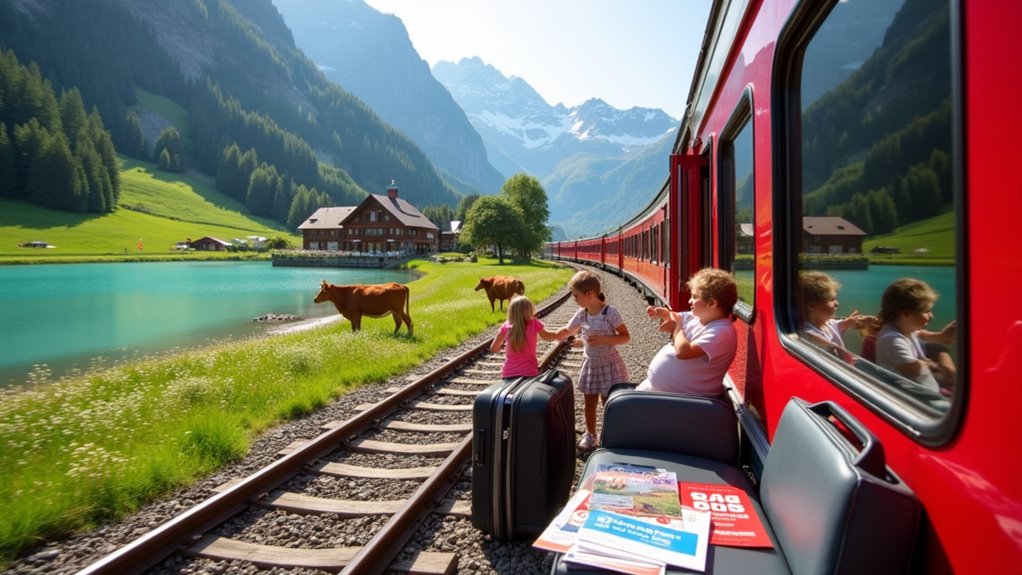
Getting to a glacier lodge without dragging luggage through snow is one thing—paying for a family of four to actually ride those trains is another beast entirely.
The Swiss Travel Pass changes that calculation fast. Kids under 16 ride completely free alongside passholders. Trains, buses, boats—all of it.
On top of that, mountain railway discounts slash another 25-50% off cable cars reaching summer hiking base lodges and budget backpacker mountain shelters.
Those free child travel benefits start to matter when family accommodation costs stack up. Railway accessibility standards meet scenic train routes like the Bernina Express, which probably stops being a splurge at that point and starts being just… transport.
The pass comes as an E-Swiss Pass that lives on your phone, which means no scrambling through pockets at turnstiles when you’re juggling ski poles and a toddler.
Passholders also get free admission to over 500 museums, which helps fill weather backup days without blowing the budget on indoor activities.
Understanding the fare structures ahead of time helps maximize these benefits across different types of mountain transportation.
That said, those accommodation costs can still bite even when the transit is sorted.
Frequently Asked Questions
Do Mountain Railway Stations Have Luggage Storage Facilities for Multi-Day Hikers?
Many Swiss mountain railway stations provide luggage lockers for 72–96 hours, accommodating multi-day hikers. However, smaller Alpine stations may lack facilities. Station-to-station transport services also enable hikers to forward bags between trailheads for extended treks.
Are Heated Platforms Standard at All High-Altitude Swiss Train Stations?
Heated platforms are not standard at all high-altitude Swiss train stations. While modern trains feature comprehensive heating systems, platform heating varies significantly depending on station size, elevation, and operational challenges inherent to alpine environments and extreme altitudes.
Which Mountain Stations Offer Medical Oxygen for Altitude Sickness Symptoms?
Major high-altitude stations including Jungfraujoch (3,454m) and Gornergrat (3,089m) maintain medical oxygen supplies for symptomatic visitors. Klein Matterhorn and Schilt
Can Electric Wheelchairs Access Cogwheel Railway Trains at Steep Gradient Stations?
Electric wheelchairs can access most cogwheel trains through low-floor coaches, but steep gradient stations often lack accessible platforms or ramps. Major terminals provide reliable access, while intermediate mountain stations frequently remain inaccessible due to terrain constraints.
Do Mountain Railway Hotels Accept Same-Day Bookings During Peak Winter Season?
Same-day bookings during peak winter season are rarely available at mountain railway hotels. Occupancy rates exceed 90% at popular resorts from mid-December through March, with luxury and ski-in/ski-out properties typically fully booked weeks in advance.
Parting Shot
Switzerland’s mountain railways aren’t messing around. Over 120 stations, 98% punctuality, cogwheel tech climbing 2,000+ meters—all so travelers can ditch rental cars and still sleep at 3,454 meters. The Swiss Travel Pass covers most routes, luggage gets transferred automatically, and even mobility-impaired guests can access these places. Zermatt stays car-free, the Matterhorn stays visible from hotel windows, and nobody’s idling exhaust in alpine zones. It works. Simple as that.