The Bernina Express‘s 144-kilometer route delivers seven prime photo locations most passengers miss by staying glued to train windows. Landwasser Viaduct‘s six limestone arches tower 65 meters over Filisur Valley, while Brusio’s nine-arch spiral climbs through complete circles. Alp Grüm station frames Palü Glacier at 2,091 meters, and Ospizio Bernina peaks at 2,253 meters overlooking turquoise Lago Bianco. Morteratsch Glacier requires a 45-minute trail hike, and Poschiavo Valley’s pastel buildings contrast against 3,453-meter backdrops. Each stop demands hiking boots over comfortable seats for proper angles.
Photo Stop #1-Landwasser Viaduct Six-Arch Bridge From Filisur Valley Floor
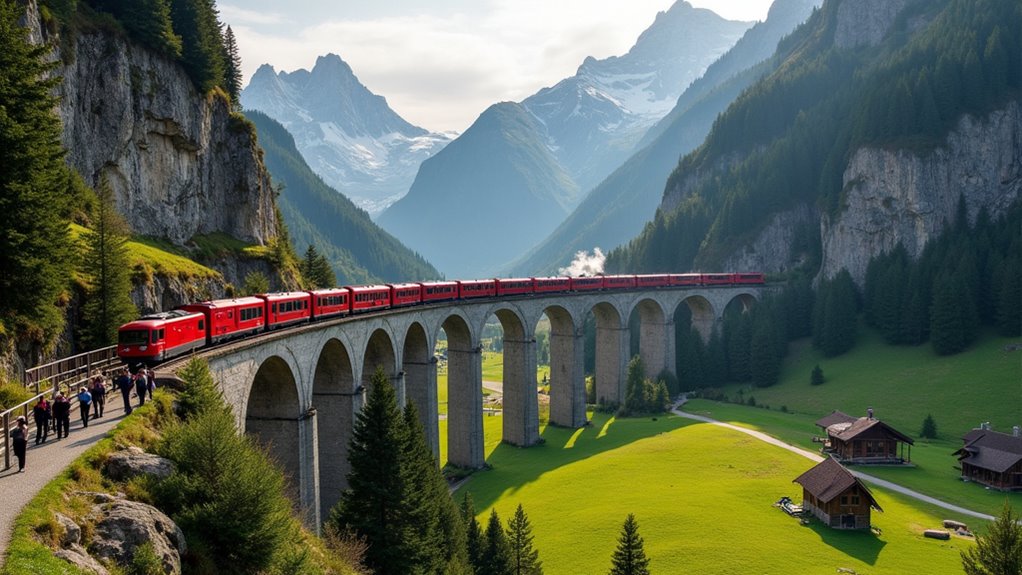
The Landwasser Viaduct doesn’t need introduction. Six limestone arches spanning 136 meters across Filisur Valley, 65 meters up—this is heritage railways done right.
The main photography locations sit minutes from Filisur station, though getting there means hiking uneven terrain. Worth it, most would say.
The northern lookout captures trains entering that cliff-carved tunnel mid-curve. Southern viewpoints frame different angles—each has its merits depending on what you’re after.
Bernina Express panoramic windows offer inside shots, but the views from valley floor may well trump everything.
Valley floor perspectives often outshine onboard panoramas—sometimes the best view is standing still, looking up.
On top of that, mountain passes and seasonal landscapes shift constantly—winter snow versus summer green creates entirely different scenes. The viaduct’s dark limestone construction adds distinctive character against the Alpine backdrop, particularly striking in morning and evening light.
UNESCO recognized this in 2008, which probably explains why crowds know it. The viaduct handles 30 passenger trains daily between Thusis and Tirano, so timing your shot isn’t difficult.
The Bernina Express is part of Switzerland’s Grand Train Tour, which combines panoramic trains, buses, and boats to showcase the country’s most spectacular heritage sites.
That said, photo stops don’t get more iconic than this. Just prepare for company.
Photo Stop #2-Brusio Circular Viaduct’s Nine-Arch Spiral From Hillside Trails
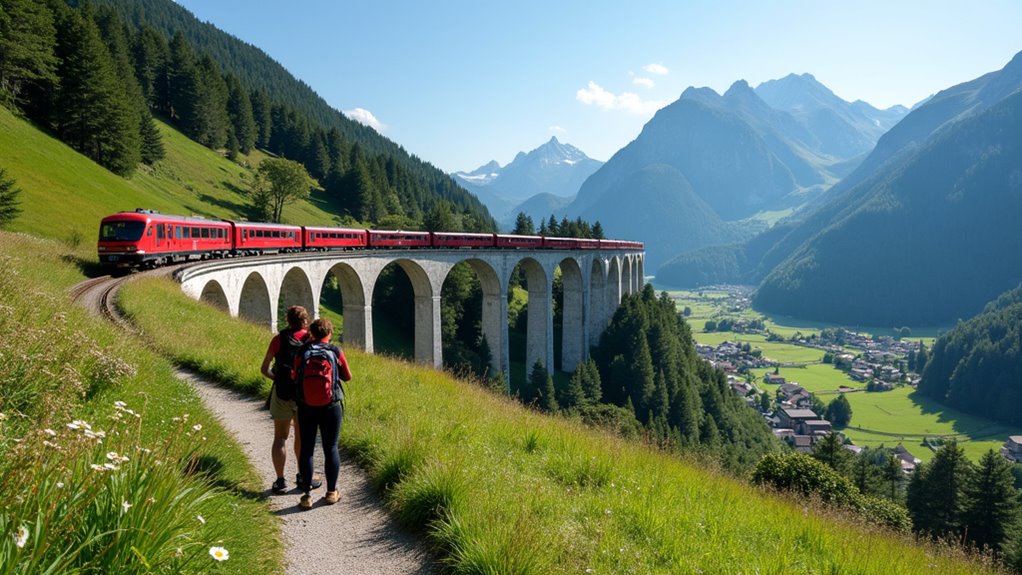
Nine arches wrapping themselves into a complete circle—that’s the striking composition awaiting photographers at Brusio. The spiral viaduct rises ten meters across 110 meters of stone engineering, built back in 1908 when challenging terrain appears to have forced some genuinely creative solutions.
Hillside trails deliver those coveted panoramic overhead views. Early morning light hits best, though mid-afternoon can work well too depending on conditions.
Hiking durations range anywhere from one to five hours—really depends on your fitness level and how ambitious you’re feeling that day. On top of that, photo timing requires checking Rhaetian Railway schedules so you can actually catch trains crossing the viaduct.
Seasonal variations shift the entire backdrop: lush summer greenery gives way to autumn foliage, then winter snow transforms the scene completely. The viaduct’s construction using local Alpine stones helps it blend seamlessly into the surrounding landscape, making compositions feel naturally integrated rather than imposed on the environment.
Rail and road access reaches the nearby heritage villages without much trouble. Multiple photography platforms mark the route, each one offering different composition angles. The viaduct’s 70-meter horizontal radius creates the dramatic curved perspective that makes compositions so dynamic from elevated viewpoints. That said, some positions may require a bit more scrambling than others to reach the ideal vantage point. While North America features spectacular scenic rail journeys through diverse landscapes, the Brusio viaduct offers a uniquely intimate Alpine rail photography experience.
Photo Stop #3-Alp Grüm Station Platform Frames Palü Glacier at 2091m
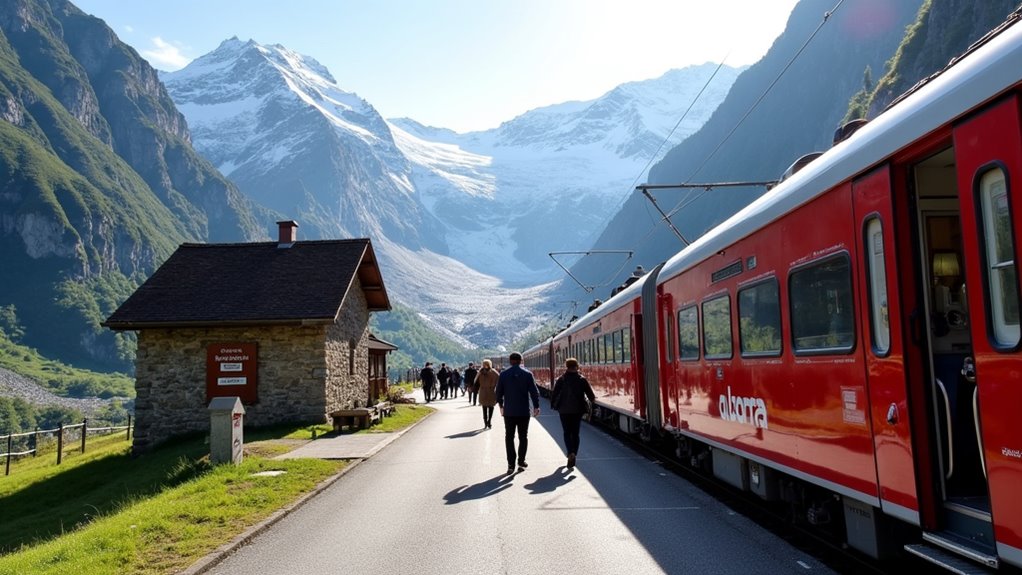
Perched at 2,091 meters on the south side of Bernina Pass, Alp Grüm station delivers what most passengers came for—a glacier staring right back at them from the platform.
Palü Glacier dominates the view, simple as that. The station’s giant photo frame makes composition easy, though you’ll be jostling for position with dozens of others during the Express’s 14-minute stop.
A giant photo frame awaits at platform level, perfectly framing Palü Glacier—if you can claim your spot during the brief stop.
This isn’t a cable car hub—just a railway station accessible only by train or foot. That said, the isolation is part of the appeal. The Bernina Express travels along a UNESCO World Heritage route, making this glacial viewpoint part of an officially recognized spectacular alpine journey.
South of the platform, Val Poschiavo vineyard backdrops sprawl out in layers. Look down and you’ll spot Cavaglia station 400m below, demonstrating just how dramatically the Bernina line descends through this alpine terrain. The route between Pontresina and Tirano features an ascent crossing the tree line into stunning alpine scenery before reaching this spot. On top of that, hiking trail access opens routes to Lago Palü below and Ospizio Bernina summit shots above if you’ve got more time.
Worth noting: Morteratsch glacier photo spots lie elsewhere. This stop belongs entirely to Palü’s icy face.
Photo Stop #4-Ospizio Bernina’s 2253m Summit Captures Alpine Lakes
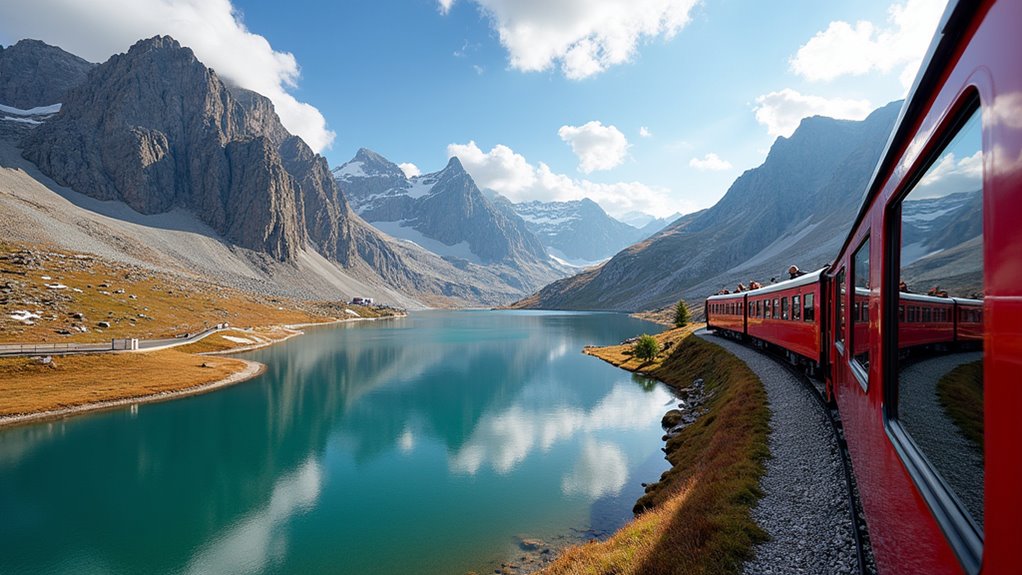
At 2,253 meters, this is it—the summit, the apex, the highest point on the entire Bernina Railway. Short, punchy. The payoff.
Ospizio Bernina station overlooks Lago Bianco, a glacial lake that looks so improbably turquoise you’d swear someone cranked up the saturation in post. But it’s real.
The blue-green water against snow-capped peaks creates photo opportunities that may even rival the glacier panoramas back at Alp Grüm—though photographers will argue endlessly about which spot wins.
Summit platforms offer observation decks where seasonal scenery shifts dramatically.
Winter transforms everything into a postcard, the kind your grandmother would frame. Summer brings alpine lakes ringed by green grasslands instead of endless white.
The Bernina Express pauses here, naturally, and photographers swarm like they’ve been summoned. A loud ringing announces incoming trains, giving you just enough warning to ready your camera.
That said, the 1910 station building offers more than just views—there’s a bistro and accommodation booking options for those wanting to stay overnight at what appears to be Switzerland’s most loftily outpost. Like China’s efficient high-speed rail network connecting major cities, the Bernina Express represents the pinnacle of mountain railway engineering. The station itself was designed by architect Nicolaus Hartmann, whose Engadine works also include Alp Grüm station and the Sacred Heart Church.
Whether you’d actually want to sleep at 2,253 meters is another question entirely.
Photo Stop #5-Morteratsch Glacier Access Via 45-Minute Photography Trail
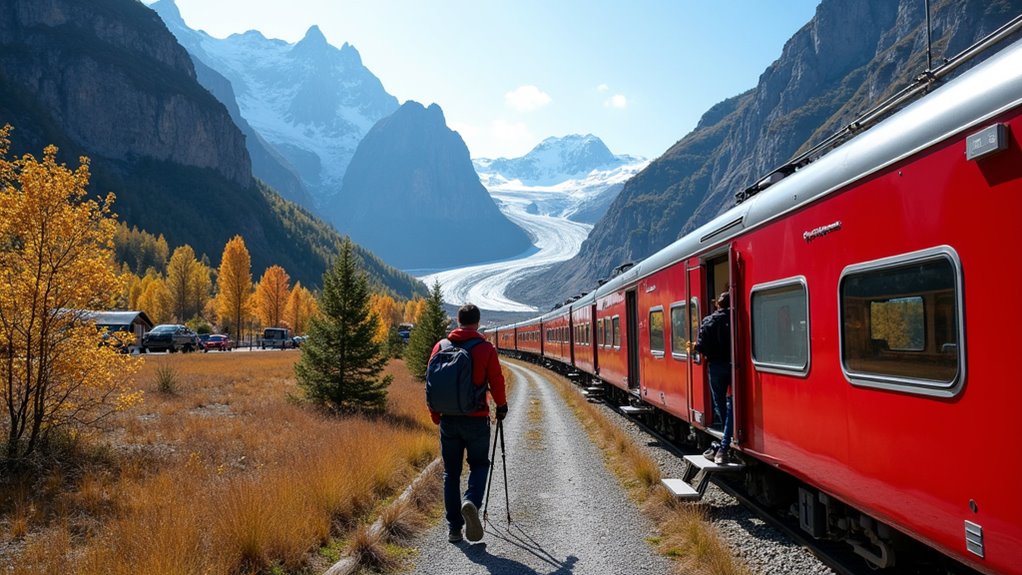
While most Bernina Express passengers press their faces against those panoramic windows hoping for the perfect shot, savvy photographers disembark at Morteratsch station to access one of the Alps’ most dramatic glacier trails. Trail duration approximately 2 hours allows ample time to capture the retreating ice formations and milky glacial streams before catching the next train onwards to Italy. The wide dirt road alongside the river provides easy walking with scenic views of the surrounding mountains and glaciers of the Bernina group. For travelers seeking the ultimate in comfort, consider that luxury trains like those found in South Africa emphasize the journey itself as the destination, with leisurely travel allowing passengers to fully appreciate stunning landscapes rather than rushing past them.
Photo Stop #6-Lago Bianco Turquoise Waters Mirror Piz Cambrena
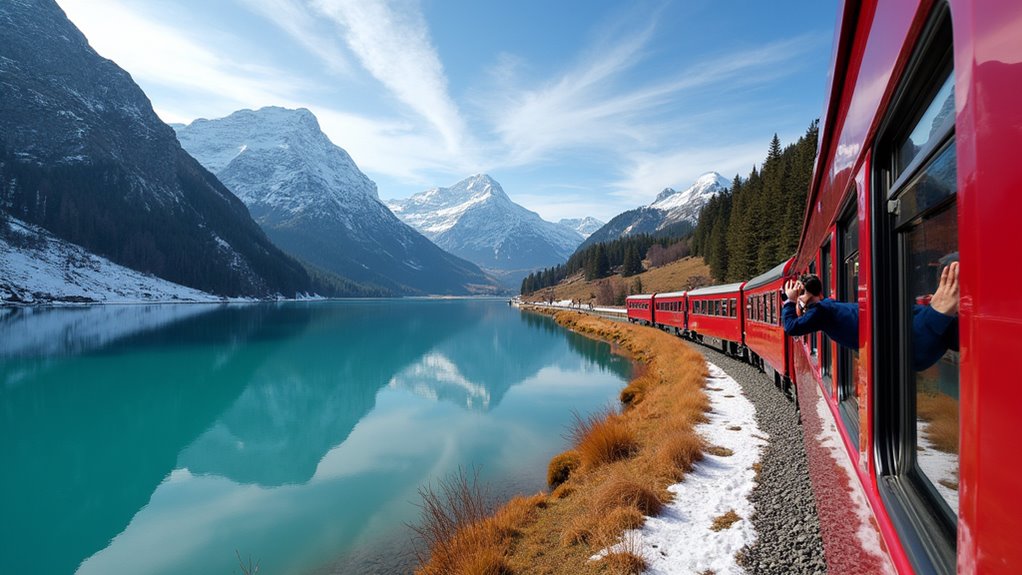
Trading muddy glacier trails for stationary lake panoramas sounds like a relief—until the reality sets in. Lago Bianco demands precise timing more than hiking boots. Perched 1,800 meters above the journey’s starting point, this artificial alpine lake creates those turquoise mirror reflections of surrounding peaks when conditions cooperate.
Piz Cambrena looms overhead. Alp Grüm station sits nearby, offering a 20-minute photography stop. The Camera Obscura museum at Ospizio Bernina station provides an alternative vantage point near the lake. Bernina Hospice, located at approximately 1,800 meters, provides access to lakes and excursions in the surrounding area.
The problem? Seasonal timing controls everything. Winter brings skiing crowds. Summer offers clearer access. But lighting conditions ultimately determine whether those scenic overlooks deliver postcard-worthy shots or disappointing glare—and that part’s completely out of your hands.
Even so, photography opportunities exist. You just need Mother Nature’s arrival stamp first, and she’s not exactly known for consistency at this altitude. Plan to arrive early at the station to secure the best window seats for capturing these dramatic alpine views.
Photo Stop #7-Poschiavo Valley Pastel Architecture Contrasts Mountain Backdrops
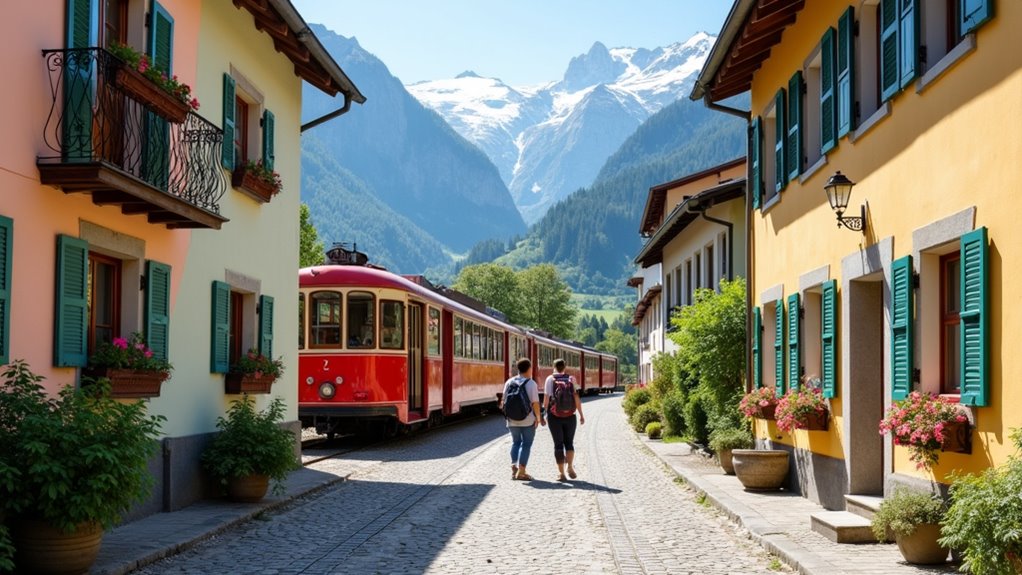
Reality check: most alpine railways lean hard into natural wonders and call it a day. The Poschiovo Valley throws that playbook out the window.
You’ve got pastel-colored buildings—some dating back to the 14th century—that seem to crash right into mountain backdrops towering at 3,453 meters. It’s jarring in the best way.
Via da Mezz is where things get interesting for photographers. Carved wooden balconies and frescoed walls frame what are now UNESCO routes, and the whole scene feels like it shouldn’t work but absolutely does.
Then there’s the Spanish Quarter, which delivers this wild mix of bourgeois architecture set against Bernina glaciers. Gorgeous and weirdly perfect in equal measure.
Railway hotels and cabin accommodations cluster near the valley panoramas—some have been around since the inaugural run in 1908. The descent into the valley showcases 196 bridges that weave through the landscape, offering unexpected angles on the pastel architecture below.
Photographers chase that contrast relentlessly: soft pastels versus brutal peaks. On top of that, wildlife observation points are scattered along the 1,800-meter descent, adding another layer to the experience.
Poschiavo itself sits at 1014 meters elevation and serves as a cultural hub where Italian influences blend seamlessly with Swiss alpine traditions. While Europe offers this distinctive alpine-meets-heritage experience, Canada’s Rocky Mountaineer provides an equally compelling journey through mountain landscapes from Vancouver to destinations like Jasper and Banff. This isn’t your typical Swiss postcard moment. It may actually be better—assuming you’re after something less predictable, more textured.
That said, it’s not for everyone. If you want pure alpine minimalism, look elsewhere.
Frequently Asked Questions
What Camera Settings Work Best for Moving Train Photography?
Fast shutter speeds (1/500s minimum) freeze motion blur, while ISO 400-800 compensates for reduced light. Continuous autofocus tracks subjects effectively. Photographers should use wide apertures (f/2.8-f/5.6) and avoid polarizing filters near windows to minimize reflections.
Can I Disembark at Photo Stops Without Completing the Full Journey?
Yes, passengers can disembark at designated stops including Alp Grüm, Ospizio Bernina, Poschiavo, and Pontresina without completing the full journey. However, the 14 Swiss Franc seat reservation remains mandatory for each Bernina Express segment traveled.
Are Tripods Allowed on Bernina Express Panoramic Carriages?
Tripods are not officially banned on Bernina Express panoramic carriages, but practical use is severely limited. Fixed windows create reflections, tight seating restricts space, and crowded conditions make setup disruptive. Regional trains offer better alternatives.
Which Cabin Stays Offer Sunrise Views of Glaciers Year-Round?
Berghaus Diavolezza provides year-round sunrise glacier views from bedroom windows at 3,000 meters elevation, overlooking Piz Morteratsch, Piz Bernina, and Piz Palü. The mountain retreat operates continuously, ensuring consistent access to dawn alpine vistas regardless of season.
Do I Need Reservations for Both Directions When Photographing?
Yes, reservations are mandatory for Bernina Express in both directions. However, photographers might prefer local trains on the same route, which require no reservations and sometimes offer open carriages for unobstructed shots.
Parting Shot
The Bernina Express delivers what it promises—dramatic elevation changes, UNESCO-worthy engineering, and glacier views that actually look good in photos. These seven stops hit the major landmarks without requiring multi-day hikes or mountaineering credentials. The nearby cabin stays mean photographers can catch morning light instead of watching it from a moving train. It’s not groundbreaking travel planning. Just solid alpine photography access with functional logistics. Worth the ticket price.