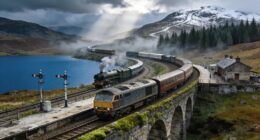
Car-free alpine cabin trips run 3+ nights minimum, connecting mountain huts via Switzerland’s railway networks—no rental car required. Zermatt offers direct train access and extensive hut options, while Mürren and Wengen deliver quieter experiences. The Glacier Express takes eight hours across 291 bridges, linking cabin networks from Zermatt to St. Moritz. Luggage forwarding runs April through November, cutting hiking loads to just a daypack. Regional passes (CHF 200–440) beat individual tickets for 5-15 day trips. The specifics on matching train routes to cabin stays get more precise below.
Plan Your Alpine Cabin Stay Itinerary in Mountain Cabins for Weekend to Week-Long Escapes

Getting to an alpine cabin without a car isn’t some pipe dream—thousands of people actually pull it off every year. The car-free alpine escape typically starts with scenic route planning across multi-day mountain railway networks that connect Swiss, Austrian, and French resorts.
From there, cabin accommodation booking sites let you filter properties near train stations, and many of these places offer luggage forwarding services so you can travel lighter. Italy’s efficient rail network makes accessing mountain destinations particularly convenient, with high-speed trains connecting major cities to regional services that reach alpine areas.
A solid alpine cabin stay itinerary usually includes three-night minimums at least, direct access to alpine hiking trails, and mountain retreat packages that may come with housekeeping or even chef services. Travelers can choose from over 600 options spanning Austria, Germany, France, Italy, and Switzerland, with selections ranging from small cozy cabins to spacious accommodations for larger groups.
That said, both weekend warriors and week-long travelers tend to find the whole setup surprisingly straightforward once everything’s booked. Peak season runs from December to February, so securing your reservation well ahead of time becomes especially important during these months. Even so, it’s worth noting that availability can vary depending on the season and how far in advance you plan.
Glacier Express Multi-Day Mountain Railway Connects Five Regional Cabin Networks

The Glacier Express isn’t actually express—it’s literally marketed as the slowest express train in Europe, taking a leisurely 8 hours to cross 291 bridges between Zermatt and St. Moritz.
That glacial pace, though, is precisely what connects five regional cabin networks: Zermatt, Brig, Andermatt, Disentis/Chur, and Upper Engadine.
Regional train passes tend to cover hut-to-hut connections via those panoramic trains, with key stops like Filisur and Chur offering transfer points. This setup makes Alpine accommodation booking pretty strategic—overnight mountain trips can easily span multiple valleys.
On top of that, multi-day itineraries often utilize cogwheel transfers at Andermatt, which link up with Göschenen routes. Railway cabin booking requires careful timing around those 5–10 minute station stops, which doesn’t leave much margin for error. On-board catering is available, making the full-day journey more comfortable without needing to pack extensive provisions.
The Landwasser Viaduct‘s the Instagram bait, obviously.
The Grand Train Tour combines these scenic railways with buses and boats to showcase UNESCO World Heritage locations throughout the journey.
Seat reservation is mandatory for all passengers, with bookings opening mid-October for December departures.
Luggage Transport Services Make Car-Free Alpine Cabin-Hopping Effortless
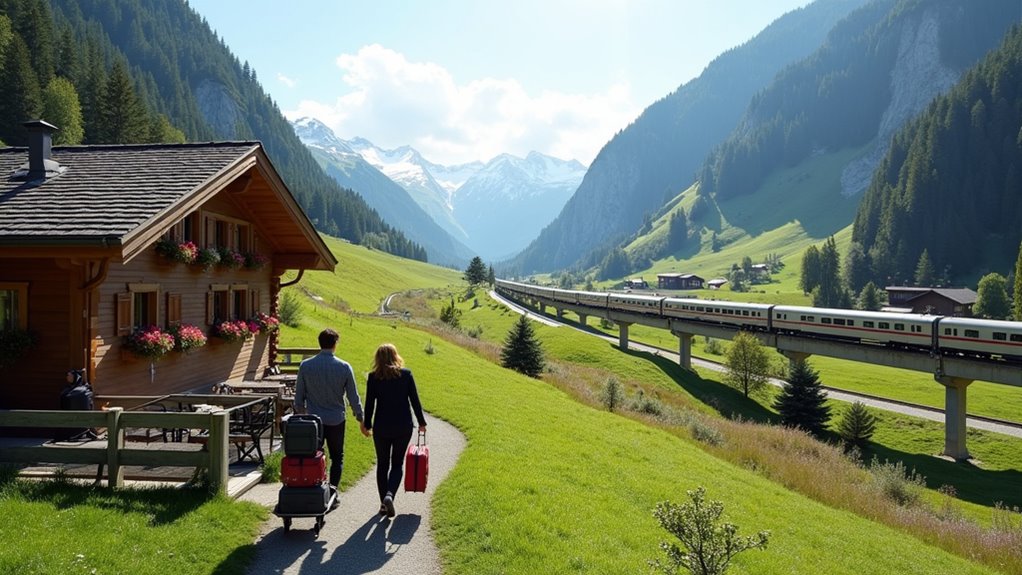
Dragging a 23-kilogram suitcase up a mountain trail is nobody’s idea of a good time—which is why same-day luggage forwarding has become standard across most major Alpine routes, at least from April through November.
The concept is simple: you hike with just a daypack while your bags show up at the next hotel. It’s the kind of service that makes cabin-hopping suddenly feasible for families with young kids or older travelers who might otherwise write off multi-day mountain treks entirely.
Even so, there are a few wrinkles. You’ll need to factor in twenty to thirty minutes at the start for registration and paperwork—not exactly onerous, but worth knowing if you’re racing to catch an early morning departure. For same-day forwarding, drop-off must be completed by 10:30 AM, so plan accordingly.
On top of that, remote huts remain out of reach for these services. Once you venture beyond the zones couriers can access, you’re back to carrying everything yourself.
That said, for the routes where it does work, the convenience is hard to beat. Seamless connections between trains and buses without the constant stress of maneuvering luggage. Professional drivers handle the transfer with care, ensuring your belongings arrive safely at your destination. Bags waiting at a designated pickup point instead of you wrestling wheels over loose gravel. When selecting luggage for these Alpine adventures, prioritize compact, lightweight options with smooth wheels that can handle the occasional cobblestone street or train station platform before forwarding begins.
It appears to be one of those small logistical shifts that quietly transforms the entire experience.
Which Car-Free Alpine Town Works Best as Your Mountain Hut Starting Point?
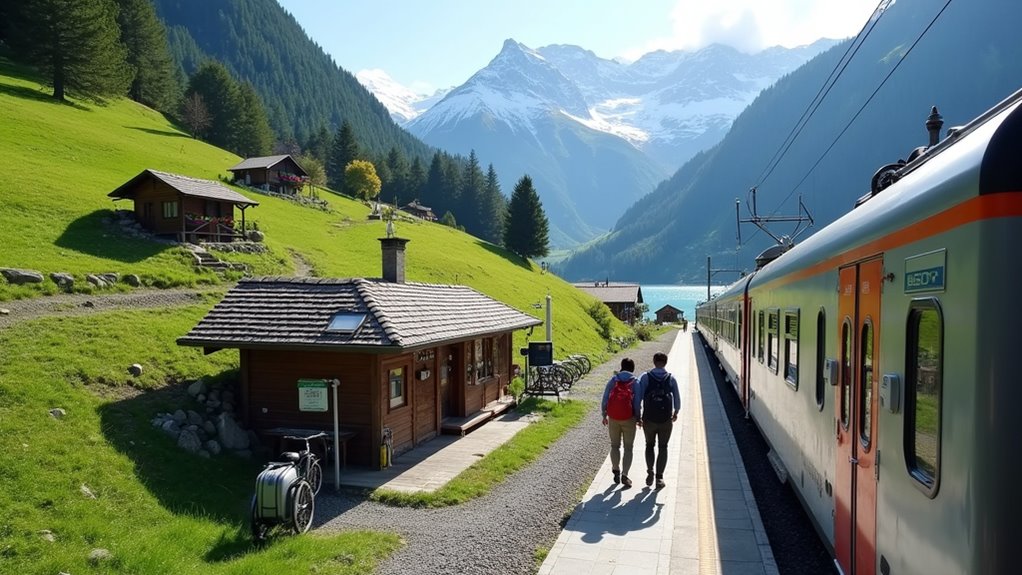
When picking a launch pad for multi-day hut treks, Zermatt tends to dominate the conversation—and honestly, for good reason.
You get car-free travel bliss, direct train access, and mountain hut networks radiating in every direction. That said, Mürren and Wengen deserve equal billing for spring alpine hut journeys.
Both nail the Swiss cabin stay vibe without the Zermatt crowds, which may matter more than you’d think when you’re trying to decompress. Saas-Fee works if you crave glacier routes minus the tourist parade.
The Swiss Travel Pass covers most connections, including scenic rides like the Bernina Railway mountain retreat or Oberalp Pass cabin journey. Consider using specialized booking apps to secure reservations and check real-time schedules for regional trains serving these mountain destinations.
On top of that, you can skip the Glacier Express cabin route hype—it’s mostly marketing.
What you actually want is accessibility, not a branded train experience that eats half your budget. The tranquil atmosphere in these villages promotes well-being by eliminating noise and car congestion entirely. Zermatt also offers pristine hiking experiences that make it exceptional for both winter and summer alpine adventures.
Experience Multiple Scenic Train Lines Including the Glacier Express Over Oberalp Pass
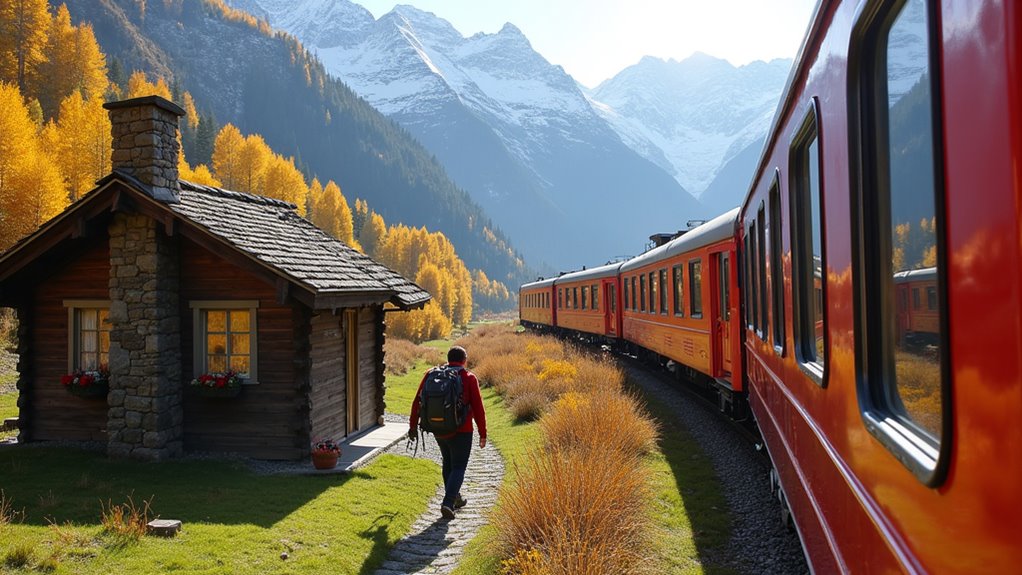
The Swiss Alps are laced with scenic train lines, though one stands out as the crown jewel—the Glacier Express.
This panoramic marvel crawls 291 kilometers from Zermatt to St. Moritz at what some might call a leisurely 42 km/h average. The eight-hour journey isn’t just slow by design; it threads through 291 bridges and 91 tunnels, giving passengers time to absorb scenery that would blur past at normal speeds.
Oberalp Pass marks the route’s high point at 2,033 meters. Here, travelers press against windows for shots of Oberalpsee Lake and that oddly placed lighthouse—actually a marker for the Rhine’s source, though its positioning feels almost whimsical. In summer, cattle graze where frozen lake surfaces dominate the winter landscape.
The trip requires locomotive changes at mountain railway stations in Andermatt and Disentis, brief pauses that break up the journey. Switzerland’s Bernina Express offers another spectacular alpine route that complements the Glacier Express experience with its own UNESCO World Heritage designation.
Travel seasons reshape the alpine hut landscape dramatically. What appears lush and green in summer transforms into stark white winterscapes months later. The new panorama cars feature air-cushioned suspension, making them considerably quieter than previous generations while maintaining wheelchair accessibility.
For car-free travel, this slow-motion spectacle through UNESCO-protected terrain may well be unmatched. That said, the “obsession” travelers show for this particular route isn’t hard to understand once you’ve experienced it.
4–5 Day Bernina Express Adventures: Combining Panoramic Train Travel with Cabin Stays

Ever wondered how engineers squeeze 196 bridges and 55 tunnels into just 122 kilometers of track? The Bernina Express pulls off this feat between Chur and Tirano, winding its way up to 2,253 meters at Ospizio Bernina.
Those panoramic windows aren’t just for show—they frame glaciers, spiral viaducts, and alpine lakes throughout the 4-hour ride.
Here’s the thing about costs: if you’ve already got a Swiss Travel Pass, the entire route is covered. You’ll just need to tack on seat reservations. For the right scenic angles, grab a seat on the right side between Pontresina and Tirano to catch views of the Morteratsch glacier and Bernina mountains.
Mountain cabins in Pontresina or Poschiavo can stretch a day trip into something more memorable, though you’ll want to check seasonal schedules—summer brings the full route, while winter typically means shorter segments starting from St. Moritz. The journey passes through 25 stops along the way, giving you flexibility in planning your cabin base.
On top of that, train connections linking Milan and Zurich make these cabin stays surprisingly accessible. Like Canada’s Rocky Mountaineer routes that showcase mountain landscapes from Vancouver to Banff, the Bernina Express demonstrates how rail travel transforms mountain scenery into an immersive experience. You won’t need to touch a steering wheel at all.
Regional Train Passes vs Individual Tickets: Maximizing Your Multi-Cabin Itinerary

Switzerland’s alpine railway network sprawls across dozens of operators and hundreds of routes, which creates a real math problem for travelers: should you buy a bundled pass or pay as you go?
Regional pass coverage typically runs CHF 200–440 for multi-day flexibility—trains, buses, mountain passes all bundled together. Individual tickets? They add up alarmingly fast. A single Jungfraujoch round-trip alone costs CHF 200+.
That said, convenience and planning seem to favor passes: you flash it, board, and you’re done. No queuing at ticket counters before every departure. Many bundled passes also include all post busses and local transport within cities, extending your reach beyond just trains.
On top of that, scenic and add-on benefits can sweeten the deal—panoramic routes, heritage railway cabin stay discounts, even museum entry in some cases. Unlike China’s high-speed rail network that prioritizes efficiency over scenery, Swiss trains deliberately showcase alpine landscapes as part of the travel experience. Individual tickets offer precision if your itinerary is locked in, but they come with zero flexibility.
Miss a connection or decide to detour? You’re likely buying another ticket. If your trip spans 5-15 days and concentrates on a single geographic area, a regional pass typically delivers better value than either individual tickets or the broader Swiss Travel Pass.
Choose wisely; your wallet will notice either way.
Frequently Asked Questions
What Happens if Weather Closes Mountain Railways During My Cabin Stay?
Weather closures may strand guests at alpine cabins temporarily. Operators monitor conditions closely and implement emergency protocols, potentially arranging alternative transport like buses or rescheduling departures. Guests should monitor railway alerts and coordinate with cabin staff during severe weather events.
Can Children Under Five Travel Free on Swiss Mountain Trains?
Yes, children under six travel free on all Swiss mountain trains without requiring tickets or passes. This policy applies universally across Swiss public transport, including scenic mountain railways and rack railways, with no documentation needed.
Are Alpine Cabin Kitchens Equipped or Should I Bring Cookware?
Alpine cabin kitchens are typically well-equipped with comprehensive cookware, utensils, and appliances including pots, pans, dishes, and specialty items like fondue sets. Guests should confirm specific inventory with property management beforehand for particular needs.
Do Swiss Mountain Railways Operate During Christmas and New Year Holidays?
Yes, Swiss mountain railways operate regularly during Christmas and New Year holidays, including scenic routes like Glacier Express and Gornergrat. Some ticket offices may have reduced hours on Christmas Eve and New Year’s Eve, typically closing early afternoon.
What Mobile Network Coverage Exists at High-Altitude Cabin Locations?
Swisscom provides the highest verified coverage at high-altitude Alpine cabins and trails. Salt and Sunrise offer moderate coverage in some locations. Remote huts may experience weak or no signal, requiring users to step outside for better reception.
Parting Shot
Switzerland’s mountain railways strip away the usual car-trip hassle. No parking fees, no GPS meltdowns, no fighting over who’s driving. Just synchronized trains hauling passengers—and their luggage, separately—up to villages that banned automobiles decades ago. The infrastructure works. Multiple rail passes exist because Swiss efficiency demands options. Weekend warriors and week-long escapists get the same deal: panoramic windows, rack-and-pinion reliability, and cabin access that doesn’t require owning a vehicle. It’s functional alpine tourism, engineered to eliminate excuses.