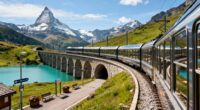
A week-long Swiss Alps scenic train trip with overnight cabins runs between CHF 800 and CHF 1,200 per person—and that’s after buying the Swiss Travel Pass. The base pass costs CHF 295 to CHF 459 depending on duration, but then travelers get hit with mandatory reservation fees like the Glacier Express’s CHF 49 seat charge. Overnight sleeper cabins average CHF 150 per person, and mountain railways still cost 50% even with the pass. The breakdown below shows where every franc actually goes.
Calculate Swiss Travel Pass Cost Based on 3, 4, 8, or 15 Consecutive Travel Days

When travelers start pricing out a Swiss Alps trip, the Swiss Travel Pass becomes the spreadsheet centerpiece—and the math gets real, fast.
For consecutive days in 2025, the costs break down like this: 3 days runs CHF 244, 4 days hits CHF 295, 8 days jumps to CHF 419, and 15 days caps at CHF 459 in second class.
That’s the budget reality—no regional discounts soften the blow.
That said, the fare structure appears to favor commitment. Per-day costs plummet from CHF 81 down to CHF 30 as your duration stretches out. Travelers booking 4-day or 8-day passes in 2025 can access bonus day offers that further reduce the per-day rate.
Even so, the initial sticker shock is real for shorter trips.
On top of that, fare comparison gets simpler with the Swiss Family Card: kids under 16 ride free, which may shift the value equation entirely for families hauling two or three children across the country.
The pass provides 50% discount on cableway, cogwheel train, and funicular tickets, which adds up when mountain excursions dominate your itinerary. Switzerland’s rail network is operated primarily by Swiss Federal Railways in partnership with several private companies, ensuring comprehensive coverage across the country.
What’s Included in the Glacier Express CHF 49 Mandatory Seat Reservation?

The Swiss Travel Pass gets you onto most trains across the country, but the Glacier Express? It plays by its own rules.
The Glacier Express doesn’t care about your travel pass—mandatory reservations apply to everyone, no exceptions.
Everyone—no exceptions—pays CHF 49 for a mandatory seat reservation. That fee locks in your assigned seat with panoramic views, though it’s worth noting it doesn’t actually cover the train ticket itself. That’s a separate charge.
Booking platforms let you pick your seat up to 93 days in advance, and the CHF 49 applies the same way whether you’re in first or second class—at least for the full scenic route. You can complete your seat reservation online or arrange it through customer service if you prefer booking by phone.
No meals included. No refunds if plans change. No wiggle room whatsoever. The journey itself stretches over eight hours, which is a long time to sit. While the Glacier Express offers scenic mountain views, other countries like China have invested heavily in their high-speed rail network to prioritize both comfort and time efficiency for long-distance travel. Gourmet meals onboard are available as an add-on, with options ranging from a Plate of the Day at CHF 36 to multi-course menus priced up to CHF 54.
And cabin upgrades? Those appear to cost significantly more, though that probably depends on availability and what you’re after.
Bernina Express First Class vs Panoramic Coach: Which Upgrade Is Worth It?

Choosing between first class and a panoramic coach on the Bernina Express sounds straightforward—until you dig in and realize they’re actually two different things.
First class gets you leather seats, extra legroom, and a more spacious 2+1 seating layout. The panoramic coach? That’s all about those massive windows curving right up into the roof.
And here’s the thing: panoramic is available in both classes. If you want both features, you’re looking at the most expensive ticket.
That said, upgrading to first class panoramic won’t get you added perks like cabin service or complimentary food. It’s really just about space and comfort. There is a refreshment trolley that comes through with snacks and drinks, available to passengers in either class.
Even with seat selection, there’s no guarantee you’ll land on the scenic side—though it certainly helps your odds. On top of that, the reservation fee applies either way.
So what’s it worth? That probably comes down to how much personal space matters to you on a long train journey. Some travelers find standard class perfectly comfortable, especially if they’ve secured a window seat.
Others feel the breathing room in first class makes the whole experience. Unlike systems where advance booking typically offers the best savings, scenic train pricing often remains more fixed regardless of when you purchase. Groups of 10 or more can access discounts for group tickets, which helps offset the cost difference when traveling together.
First Class Costs 50-70% More Than Second Class on Swiss Scenic Trains

Upgrading to first class on Swiss scenic trains hits the wallet hard—roughly 71-75% harder than standard tickets.
That’s steeper than the context suggests, though Swiss Travel Pass holders catch a break at 58-60% premiums. Still not cheap, but at least it’s something.
What does the extra cash actually buy you? You get 2+1 seating instead of cramped 2+2 configurations, better legroom, and—here’s what actually matters during peak season madness—occupancy differences that mean you might snag a quiet car.
Panoramic trains offer larger windows up front.
The value assessment? Long hauls probably justify the splurge. Short trips don’t. Unlike VIA Rail’s The Canadian, which spans over 2,762 miles across multiple provinces, Swiss scenic routes are significantly shorter distances.
That said, upgrade tickets exist if you’re mixing long and short segments in one itinerary—and yes, pass holders get 50% off those too. Be warned: traveling in first class with a second class ticket risks fines starting at CHF 70.
Just don’t expect lounges or free snacks. Standard fares apply to any train between two Swiss stations for that day, regardless of which service you choose. You’re paying for space and quiet, nothing more.
Budget CHF 150 Per Person for Overnight Cabin Accommodation on Sleeper Routes
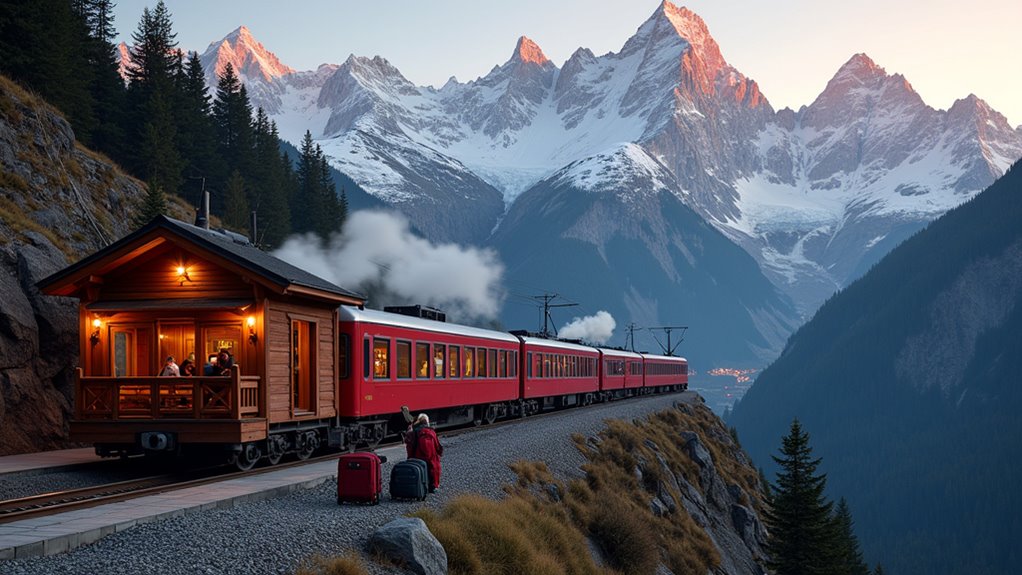
Overnight cabin pricing on sleeper routes through Switzerland hovers right around that CHF 150 mark—and that’s per person, not per cabin.
Double sleeper cabins tend to run anywhere from €39 to €150, though it really depends on which route you pick and when you’re traveling. Budget sleeper cabins start lower, somewhere in the €19–€94 range.
That said, alpine scenic train pricing gets complicated fast. Seasonal pricing spikes hard from mid-April through August. On top of that, reservation fees add up.
Deluxe cabin upgrade options—the ones with private bathrooms—will likely push you past that CHF 150 threshold. Route planning matters more than you might think. Zurich to Budapest is a different beast from Zurich to Prague, both in price and experience.
Overnight cabin accommodation costs fluctuate wildly based on demand, so timing is everything. ÖBB night trains use dynamic pricing based on demand, which means prices shift constantly depending on how many people are booking.
Book early or you’ll pay premium rates. That’s just how sleeper train economics work. The Glacier Express requires seat reservations made separately, which can be booked up to three months in advance and are essential due to the train’s popularity.
Consider exploring multiple booking platforms to compare prices, as different platforms may offer varying rates for the same routes depending on your journey’s starting point.
Plan Your Golden Pass Route from Montreux to Lucerne with Full Expense Breakdown

Before you commit to the Golden Pass route from Montreux to Lucerne, it’s worth knowing the full financial picture—and it’s really not as straightforward as just grabbing a single ticket. The expenses can pile up surprisingly fast.
You’re looking at CHF 80 for standard 2nd class fare if you’re buying without any passes. That said, actually booking tickets means navigating through multiple fare categories: CHF 34 for the Lucerne–Interlaken leg, then CHF 56 from Interlaken–Montreux.
On top of that, the reservation system tacks on another CHF 20 for GoldenPass Express seats. Want dining services? Those cost extra too.
Now, pass validity does matter here. If you’re a Swiss Travel Pass holder, you can skip the base fares entirely and only pay for reservations.
Group discounts exist, though they won’t magically erase all your costs. The entire journey takes 5 hours and 20 minutes at minimum, which means you’ll want to factor in meal costs or plan accordingly. Similar to the Italian rail system, train travel often proves faster and cheaper than domestic flights for scenic routes like this one. Booking can be completed through the SBB website or at rail stations throughout Switzerland. Even so, it appears the whole system is set up in a way that’s unnecessarily complicated—something that may catch first-time travelers off guard when they’re trying to budget properly.
Maximize Your Budget Using Swiss Travel Pass Coverage for Jungfrau Railway Access

How much does the Swiss Travel Pass actually save on a trip to Jungfraujoch?
Honestly, not as much as most tourists hope. The pass does cover trains to Grindelwald Terminal and Wengen—completely free, which is great.
The Jungfrau Railway segment, though? That’s where things get expensive. You’re only getting 25% off, which means you’ll still pay around CHF 170 out-of-pocket instead of the full CHF 227.
On top of that, there are mandatory reservation fees if you’re traveling during summer. Between May and August, you’ll need to pay an additional CHF 10 per person just to reserve your seat on the final segment.
So yes, the Swiss Travel Pass discounts help.
But let’s be clear—this isn’t some magical freebie. The scenic routes leading up to Jungfraujoch are fully covered, and that does add real value to the pass. For comparison, Austria’s ÖBB Railjet trains between major cities offer modern amenities and frequent departures, showing how European rail networks prioritize passenger convenience. Interestingly, Eurail Pass holders also receive the same 25% discount on this route as of 2023, making the gap between the two pass options narrower than before.
Even so, if you’re watching your budget closely, you need to factor in these actual ticket prices. It’s probably worth considering travel insurance too before you commit to these expensive alpine excursions.
Frequently Asked Questions
Are Children Under 16 Really Free With the Swiss Family Card?
Yes, children aged 6-15 travel completely free with the Swiss Family Card when accompanied by at least one parent holding a Swiss Travel Pass or Half Fare Card. Children under 6 always travel free without any card required.
Can I Use the Swiss Travel Pass on Boats and City Buses?
Yes, the Swiss Travel Pass includes unlimited travel on scheduled lake ferries and public city buses across over 90 Swiss towns, covering boats on major lakes and urban transport networks without requiring reservations for standard routes.
Which Mountain Railways Offer 50% Discount With the Swiss Travel Pass?
The Swiss Travel Pass provides 50% discount on Gornergrat Bahn, Mount Pilatus cogwheel train, Titlis lifts, Schilthorn cable car, and Grindelwald First gondola, while Mount Rigi, Stoos, and Stanserhorn remain fully covered without additional charge.
Do I Need Reservations for All Swiss Panoramic Trains?
No, reservations are not universally required. Glacier Express, Bernina Express, and Gotthard Panorama Express mandate compulsory seat reservations. GoldenPass Express requires them only for Prestige Class, while other panoramic trains merely recommend reservations during peak periods.
Can I Activate My Swiss Travel Pass on Any Day?
Yes, travelers may select any date as the activation day when purchasing their Swiss Travel Pass. For consecutive passes, validity begins automatically on the chosen date. Flex passes require online activation of individual travel days before use.
Parting Shot
A Swiss Alps train-and-cabin adventure runs CHF 1,200-2,500 per person for a week. That’s just how it is. The Swiss Travel Pass covers most trains but dumps mandatory reservations and mountain railway supplements on top. Cabins cost CHF 60-200 nightly. First class? Tack on another 50-70%. Sure, the scenery’s stunning, but nobody’s pretending Switzerland does budget travel. The numbers don’t lie—this trip demands serious cash, no matter how strategically someone plans it.