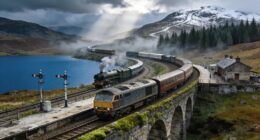
What Makes Glacier Express Comprehensive Guide Essential for the Oberalp Pass Summit
A comprehensive Glacier Express guide: proves essential for conquering the Oberalp Pass summit at 2,033 meters elevation. The Swiss Alps: deliver unpredictable weather conditions. Fog: transforms panoramic views into gray walls within minutes.
The Rhaetian Railway route: demands strategic planning for optimal experiences. Altitude: causes noticeable oxygen reduction at the summit. Unprepared travelers: experience physical discomfort throughout the crossing.
- Oberalp Pass weather patterns: shift rapidly and require real-time monitoring through the SBB Mobile app or MeteoSwiss forecasts before departure from Chur or Zermatt
- Panoramic car seating assignments: determine viewing quality, with left-side positions offering superior Andermatt valley and Urseren Valley vistas during eastbound journeys
- Morning departure schedules: provide optimal Alpine lighting conditions for photography between Disentis and Andermatt station stops
The Glacier Express Excellence Class: offers premium positioning and service. Matterhorn Gotthard Bahn: operates the western section through Uri Canton. Local guides from Andermatt Swiss Alps tourism office: provide insider knowledge about peak visibility windows.
The Rhine Gorge section: precedes the dramatic summit climb. Sedrun station: marks the final stop before maximum elevation. The Graubünden tourism board: publishes seasonal crossing recommendations.
Detailed itineraries: prevent common mistakes. Window reservations: sell out weeks ahead during summer months. The specifics below: break down every essential element for your journey.
Fun Activity To Try: Book a winter crossing and photograph the snow-covered Oberalp Pass summit while enjoying fondue service in the Glacier Express dining car.
Key Points
- The summit at 2,033 meters features rapidly shifting weather conditions that require advance preparation and real-time monitoring through MeteoSwiss forecasts.
- Left-side seating and morning eastbound timing optimize views of the Andermatt valley panoramas and surrounding alpine peaks.
- Seasonal variations dramatically affect accessibility and scenery, with snow lingering into June and summer offering wildflowers and reliable visibility.
- The Andermatt-to-Disentis stretch is considered the most scenic section, showcasing the Rhine’s origins near glacier-fed Lake Toma.
- Altitude effects at 2,033 meters include noticeably thinner oxygen and temperature drops requiring awareness of physical sensitivity and proper preparation.
The 2,033-Meter Crossing Makes Summit Elevation Preparation Essential for the Route’s Apex

At 2,033 meters above sea level, Oberalp Pass marks the absolute highest point along the Glacier Express route—and you can feel it.
At 2,033 meters, Oberalp Pass is the Glacier Express’s crowning moment—a height you’ll sense in your bones.
The landscape here sits above the tree line, exposed and stark.
Oxygen levels appear to thin noticeably at this altitude, though sensitivity varies from person to person.
That said, a bit of preparation goes a long way.
Keeping an eye on weather conditions and timing your journey with the seasons seems wise, especially given that snow tends to linger well into June up here.
Even so, reaching this apex of the route is likely worth the effort for most travelers.
The crossing demands respect, but it rewards those who plan ahead.
From this vantage point, travelers can witness snow-covered peaks, glacial lakes, and alpine meadows that showcase the raw alpine beauty of Switzerland.
The pass also holds geographic significance, as the Rhine river origins can be found nearby.
This panoramic train journey is part of Switzerland’s celebrated Grand Train Tour, which combines scenic rail routes with buses and boats to showcase the country’s most spectacular landscapes and UNESCO World Heritage locations.
Why Mountain Weather Variability Demands Guidance for Rapid High-Altitude Shifts

Mountain weather doesn’t care about anyone’s travel plans.
At summit elevation, temperatures appear to drop roughly 6.5°C per 1,000 meters—brutal math by any standard.
And that’s just the start.
Weather monitoring matters here, probably more than most hikers realize.
Visibility factors can shift fast.
Like, *really* fast.
Fog may swallow summit marker visibility in minutes, turning a straightforward route into a disorienting mess.
Even so, plenty of people underestimate how quickly conditions deteriorate.
Mountain pass navigation guides exist for good reason.
Alpine crossing timing advice isn’t some optional extra, either—not when highest point crossing conditions can shift from clear skies to complete whiteout before you’ve finished your lunch.
That said, experienced mountaineers will tell you it’s less about predicting the weather perfectly and more about knowing when to turn back.
At higher elevations, daily temperature swings shrink significantly compared to valleys below, meaning summit conditions can remain persistently cold even when lower areas warm up during the day.
Research indicates that high-elevation areas are warming faster than lower regions, which makes understanding current conditions even more critical for safe alpine travel.
The Glacier Express route through Oberalp Pass showcases panoramic alpine views that can only be fully appreciated when weather conditions cooperate with your journey.
Rhine River Source Photography Captures Europe’s Major River at Its Glacier Origin

Lake Toma sits at 2,344 meters in the Swiss Alps—and this, technically speaking, is where one of Europe’s major rivers begins. From here, the Rhine River source feeds into the Rein da Tuma, winding past the Oberalp Pass before making its way toward Disentis. The complete journey from this glacier origin to the North Sea covers 1,320 kilometers, making it one of Europe’s most significant waterways. Interestingly, this commonly cited length may be inaccurate, as the actual measurement is approximately 1,230 kilometers.
Now, photography timing really does matter at this elevation. Mountain weather shifts fast, sometimes unpredictably so, and what looks like a clear morning can turn moody within the hour. For those seeking immersive natural landscapes, scenic train journeys through the Swiss Alps offer spectacular vantage points of this dramatic terrain.
That said, summer visits likely offer the best opportunities for wildflower shots across the alpine meadows. Winter, on the other hand, transforms the whole landscape into something stark and white—beautiful, though arguably less forgiving for anyone hauling camera gear through deep snow.
Early morning light appears to work best here, though some photographers may find the softer glow of late afternoon equally compelling depending on the conditions.
How Left-Side Window Positioning Secures Optimal Andermatt Valley Panoramas

Capturing the Rhine’s origins is one thing, but the Glacier Express offers something else entirely as it winds down from Oberalp Pass toward Andermatt.
Left-side window positioning genuinely seems to matter here—seat selection guides consistently point to this side for the valley approach, and it’s not hard to see why. The alpine scenery appears to unfold more completely across the basin: the village tucked below, the river threading through, those peaks rising beyond. This stretch between Andermatt and Disentis is widely considered the most scenic section of the entire journey. While the Glacier Express showcases Swiss alpine beauty, the Bernina Express UNESCO route offers another iconic perspective through the same mountain range.
Morning eastbound timing likely helps with the lighting too, catching the sun at a better angle. That said, the right side? You’re mostly staring at rock face. Not ideal, though perhaps some travelers find their own charm in it. For those traveling with older companions, consider that the full Glacier Express journey spans approximately eight hours, which may be fatiguing—hopping off at Andermatt and continuing via boat from Flüelen to Luzern offers a refreshing alternative.
Winter vs Summer Seasonal Differences Reveal Dramatically Transformed Summit Landscapes

The Glacier Express crosses Oberalp Pass year-round, but that summit at 2,033 meters? It might as well be two completely different planets depending on when you catch it.
Winter passage through deep snow means white dominates everything—cornices building up along ridgelines, snowfields stretching out in every direction. The works, basically.
Summer wildflower meadows offer a totally different vibe. Green pastures roll out beneath blue sky, and you’re suddenly reminded that actual colors exist up here. For cyclists planning to tackle the pass themselves, the Oberalp typically opens in late May to early June, making it one of the first high-altitude routes accessible each season. The summit plateau features Oberalpsee lake with a small lighthouse that becomes a prime photography subject when the snow melts. Like the nearby Bernina Express route that earned UNESCO World Heritage status, this stretch of railway represents some of Europe’s most remarkable alpine engineering.
That said, it’s worth noting how dramatically weather conditions can shift the whole experience. What travelers actually see appears to depend heavily on seasonal accessibility—some vantage points simply vanish under snow for months at a time. The landscape features don’t just change a little. They transform completely.
Lake Toma Viewpoint Marks the Rhine River Birthplace at the Route’s Highest Elevation

A weathered stone marker near the shore of Tomasee makes a claim that Swiss authorities have long endorsed: this small alpine lake, sitting at roughly 2,345 meters, is the official birthplace of the Rhine.
At 2,345 meters, a simple stone marker declares what Switzerland has long maintained: the Rhine begins here.
Whether it truly qualifies as *the* source—rather than one of several legitimate contenders—remains a point of quiet debate among geographers.
Even so, the designation has stuck.
From Oberalp Pass, the route’s highest point at 2,033 meters, you can catch views toward this glacier-fed origin. The Vorderrhein emerges here and flows eastward past Disentis before reaching Reichenau, where it joins the Hinterrhein from the south.
It’s worth noting the timing of your visit matters quite a bit here.
The scenery shifts dramatically between seasons, and what you’ll see in July differs wildly from a snow-blanketed October crossing. This is one of those scenic routes that travel planners consistently recommend for its dramatic alpine views.
Grab a window seat on the panoramic side if you can.
The surrounding terrain reaches a maximum elevation of 2,887 meters, creating a dramatic amphitheater of peaks framing the lake below.
This stretch represents something of a watershed moment—literally—and the kind of alpine tableau that photography guides and route planners consistently flag as unmissable.
Clear Weather Windows Maximize 360-Degree Alpine Panoramic Visibility at Summit

At 2,033 meters, Oberalp Pass marks the absolute apex of the Glacier Express route—and that elevation comes with a catch. You’re either rewarded with a spectacular 360-degree alpine panorama or you’re staring into a wall of clouds. There’s not much in between.
Timing your journey matters more than you might expect. Summer tends to deliver reliable clear weather windows throughout the day, making it the safer bet for photography. Winter, though? It’s honestly hit or miss. Morning hours appear to offer the best odds for visibility, but conditions can shift quickly at this altitude. Current conditions at 3,000 meters show winds reaching 34.7 km/h, which can rapidly push weather systems across the pass and dramatically alter visibility within minutes.
| Season | Visibility | Photography Windows |
|---|---|---|
| Summer | Excellent | All day |
| Winter | Variable | Morning best |
| Spring | Improving | Midday |
The panoramic coaches certainly help—those wraparound windows mean you’re not craning your neck trying to catch a glimpse of the Oberalpstock through a standard train window. Even so, no amount of glass engineering can punch through dense cloud cover. Similar to how the Rocky Mountaineer uses glass-domed cars to showcase mountain scenery, the Glacier Express design prioritizes unobstructed views of the surrounding peaks. Summit visibility timing is likely the single biggest factor in whether you walk away with stunning alpine shots or memories of grey mist. For the most accurate conditions before your trip, check the Swiss Met Office forecast at meteoswiss.admin.ch, which provides current snow levels and temperature predictions at various altitudes.
Frequently Asked Questions
How Long Does the Glacier Express Stop at Oberalp Pass Summit?
The Glacier Express typically pauses at Oberalp Pass summit for approximately 10–20 minutes, primarily for operational reasons such as passing oncoming trains rather than a scheduled sightseeing stop. Duration varies depending on timetable and traffic conditions.
Can Passengers Exit the Train at Oberalp Pass for Photos?
Passengers cannot exit the Glacier Express at Oberalp Pass summit for photos. The train operates as a through panorama service with sealed windows designed for in-seat photography. Regional trains offer alternative hop-on/hop-off options nearby. Exploring the breathtaking views offered by glacier express scenic train journeys allows travelers to experience the majestic landscapes of the Swiss Alps in comfort. As the train glides through picturesque valleys and over stunning bridges, guests can enjoy the rich history and culture of the surrounding regions. Each journey provides a unique perspective on the natural beauty that defines this part of the world.
What Dining Options Are Available During the Summit Crossing?
Passengers enjoy full table-service dining during the Oberalp Pass crossing, including freshly prepared regional Swiss cuisine, multi-course menus, à la carte options, and beverages. Excellence Class receives inclusive gourmet meals, while other classes purchase separately.
Does the Glacier Express Provide Blankets for Cold Summit Temperatures?
Blankets are not listed among standard Glacier Express amenities. Carriages feature modern heating systems maintaining comfortable temperatures throughout summit crossings. Passengers sensitive to cold should bring personal travel wraps or layered clothing for individual comfort preferences.
Are Advance Seat Reservations Required for Glacier Express Summit Crossings?
Advance seat reservations are mandatory for all Glacier Express services crossing the Oberalp Pass summit. Passengers holding valid tickets or rail passes must still secure separate reservations, with bookings opening 93 days before travel.
Parting Shot
The Oberalp Pass summit sits at 2,033 meters. That’s not nothing. A solid guide transforms the experience from “oh, that’s pretty” to actually understanding what’s happening outside those panoramic windows. The Rhine River starts here. Weather changes fast. Window positioning matters more than most people realize. Without proper preparation, travelers basically just paid premium prices for a really expensive nap through Switzerland’s most dramatic scenery.