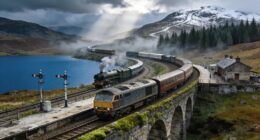
Puffing Billy Railway delivers seven authentic historic train experiences that actually matter: NA-class steam locomotives operating continuously since 1900, century-old collections at Menzies Creek facility, restored Victorian carriages with original brass fixtures and timber seating, genuine Victorian timber station buildings that survived landslides and bushfires, hand-fired coal operations requiring 3-4 hours for steam generation, narrow gauge tracks winding through Dandenong Ranges on original 1900 routes, and period-dressed volunteers among 600 staff creating immersive heritage atmosphere. The details behind each experience reveal why this railway stands apart from typical tourist traps.
Experience #1 Vintage Steam Locomotive Journeys on Engines Operating Continuously Since 1900

While most tourist attractions will slap “historic” on pretty much anything over fifty years old, the Puffing Billy Railway in Victoria actually delivers on that promise—it’s been running since 1900.
Four original NA-class steam locomotives still operate along these heritage lines, hauling passengers through mountain forests on authentic narrow-gauge tracks.
Four century-old steam engines still haul passengers through Victorian forests on the original narrow-gauge tracks they were built for.
No replicas here. These vintage steam locomotive journeys use actual century-old engines that chug along historic routes at a leisurely 20-30 km/h.
The nostalgic atmosphere at the platforms draws around 450,000 visitors annually—people who want traditional railways and scenic landscapes without the sanitized theme park treatment.
That said, you’re not getting modern speed or climate-controlled comfort. What you are getting? Real steam. Real history. Real passenger services that have operated continuously for over a century.
For context, the oldest surviving steam locomotive—the original Puffing Billy designed by William Hedley around 1814—now sits on static display at the Science Museum in London after decades of coal transportation service. The locomotive operated at Wylam Colliery for nearly 50 years before its retirement in 1862.
Even so, it’s worth noting this is still a managed tourist experience. The engines are meticulously maintained (as they should be), and the routes are carefully monitored.
But compared to the polished recreations you’ll find elsewhere, Puffing Billy appears to strike a balance between authentic heritage operation and visitor accessibility. While Canada offers magnificent scenic train journeys like The Canadian spanning thousands of miles across diverse landscapes, these shorter heritage routes provide an intimate glimpse into early railway transportation.
Experience #2 Heritage Railway Museum Visits Showcase Comprehensive Century-Old Collections

Most tourist railway operations slap up a small shed with a handful of rusty artifacts and call it a museum. Puffing Billy’s Menzies Creek facility? It goes deeper. Heritage railway museum visits here reveal what appears to be one of the more comprehensive century-old collections around—locomotives, carriages, thousands of historical items spanning decades of rail history.
The antique railway equipment displays include original narrow gauge rolling stock and signaling gear, much of it still functional. Restoration projects proceed year-round. Period authenticity gets maintained through volunteer expertise, though the results may vary depending on available resources and knowledge.
Educational tours expose visitors to genuine railway history—not the sanitized nostalgia you’ll find elsewhere. That said, the preservation efforts matter because these aren’t replicas. They’re actual working artifacts. Historical rolling stock collections document Australia’s narrow gauge evolution in tangible ways. Major archival collections like the F.R. Ritzman holdings contain approximately 8,700 B&W negatives documenting railroad structures and operations from the 1920s through 1972. Similar institutions like the B&O Railroad Museum preserve refrigeration cars and mail sorting cars that showcase specialized railway operations from earlier eras.
Real machinery. Real stories. You’re looking at authentic history, and it shows in the wear, the detail, the sheer presence of these machines. Even so, it’s worth remembering that no museum is complete—there are always gaps, always stories left untold. But this one gets closer than most. While these preserved railways celebrate the past, modern train travel continues to provide scenic and comfortable journeys connecting major European cities across hundreds of kilometers.
Experience #3 Restored Victorian Carriage Rides Feature Authentic Original 1900s Detailing

Every restored Victorian carriage on Puffing Billy isn’t just historically inspired—it’s built to replicate authentic 1900s Victorian Railways narrow gauge stock, right down to the brass fixtures and timber bench seating. That means passengers can actually dangle their legs over open sills while authentic coal-fired engines pull trains through mountain ash forests—the whole experience feels surprisingly genuine.
The carriages themselves appear to be detailed from archival photographs, with polished hardwood floors and hand-lettered destination boards creating that century-old atmosphere.
Even so, it’s the little touches that really sell it: preserved locomotives that rumble along the tracks, period costume conductors who amp up the vintage vibe during dining experiences. On top of that, historic station architecture tours and photography opportunities tend to draw serious crowds.
Period costumes, rumbling locomotives, and century-old station tours transform a simple train ride into an authentic Victorian Railways experience.
Behind the scenes, volunteer programs keep everything period-correct by maintaining century-old woodworking techniques. It’s painstaking work, but that attention to detail is likely what makes these rides feel less like a theme park attraction and more like stepping into an actual slice of 1900s railway history. Beyond the nostalgic experience, choosing train travel helps reduce carbon emissions compared to cars and planes, making historic railway journeys an environmentally conscious way to explore the past. The railway originally served practical purposes, transporting passengers, mail, livestock, timber, potatoes, and plants when it was established in 1900. The original Belgrave station operated under the name Monbulk before taking on its current designation.
Experience #4 Historic Station Architecture Tours Display Victorian Engineering Throughout Preserved Buildings

The station buildings dotting Puffing Billy’s route aren’t replicas—they’re authentic Victorian timber structures that have, rather remarkably, survived landslides, bushfires, and a century of neglect. You’ll find gabled roofs, cast-iron details, and handmade brick platform edges that most heritage railways can only dream about.
These original structures showcase Victorian engineering in ways that feel surprisingly immediate. Like Canada’s historic railway stations that serve as key stops along transcontinental routes, these preserved buildings demonstrate how railway architecture once defined the travel experience across vast distances.
On top of that, preserved railway infrastructure tours reveal the mortise-and-tenon framing techniques craftspeople used in the 1900s. Educational programs connect visitors to this craftsmanship, making it less abstract and more tangible.
That said, not everything here is Victorian—the newer Lakeside Visitor Centre deliberately references this history through deep black cladding that appears to echo the steam locomotives themselves. The $20 million facility at Emerald’s Lakeside Station brings modern amenities like a commercial kitchen and visitor information services while maintaining that crucial connection to the railway’s heritage. The angular design features jutting angles that guide visitors through the space, creating a contemporary architectural language that contrasts with yet complements the historic railway structures.
Heritage interpretation displays feature original station diagrams and scale models. It’s the kind of approach that makes architectural conservation feel real rather than theoretical—you’re looking at the actual thing, not just reading about it on a plaque.
Experience #5 Authentic Coal-Fired Engine Runs Maintain Traditional Hand-Firing Operations

Before anyone presses a button or flips a switch, firemen spend 3–4 hours coaxing cold steel into something that can actually move.
We’re talking shoveling wood and coal into a firebox, watching gauges, adjusting drafts, and fundamentally babysitting a machine that refuses to cooperate until it’s good and ready.
These authentic coal-fired engines on preserved narrow gauge operations demand traditional hand-firing from skilled firemen who’ve mastered what appears to be a dying art.
Steam generation isn’t automated here. It’s manual labor—the kind that maintains living heritage while trying to balance environmental considerations that, let’s be honest, don’t always sit comfortably with burning coal in 2024.
Heritage railways choose authenticity over convenience, accepting the environmental contradiction of coal-burning locomotives as the price of preserving industrial history.
That said, the heritage value lives in those shovelfuls of coal.
Dirty, exhausting, authentic.
No shortcuts allowed. The whole point is preserving the real thing, even if it means your back aches and you’re covered in soot by the end of your shift. Early locomotives like Puffing Billy operated with two vertical cylinders and primitive engineering that required constant attention from their crews.
Some might argue there’s a cleaner way to tell this story, but then you’d lose what makes it genuine in the first place. Modern travelers planning heritage railway experiences can use digital ticket storage platforms to book their journeys while stepping back into an era of manual steam operations. The NA class locomotives that form the backbone of heritage operations can pull a maximum of twelve carriages, making them workhorses that still earn their keep through sheer brute force and careful firing technique.
Experience #6 Preserved Railway Infrastructure Tours Wind Along Narrow Gauge Tracks Through Original Routes

How does a railway built in 1900 still run the exact same route it did 124 years ago? Because volunteer organizations refused to let it die. The preserved railway infrastructure includes that stunning Monbulk Creek Trestle Bridge—91 meters of original timber, still carrying trains daily.
Guided infrastructure tours reveal narrow gauge tracks threading through Dandenong Ranges, connecting heritage stations like Belgrave and Gembrook. Period details everywhere. Original timber sleepers. Hand-laid rails. Vintage signal boxes that look like they could have been installed yesterday, if yesterday was 1920.
Interpretive signage explains the original construction methods—how engineers tackled steep grades with what appears to have been minimal equipment by modern standards. The 24-kilometer route spans from Belgrave all the way to Gembrook, showcasing continuous preserved infrastructure along its entire length. Unlike modern Swiss Federal Railways with their emphasis on efficiency and punctuality, this heritage line celebrates the craftsmanship of a bygone era.
That said, it’s more than just reading plaques. It’s engineering history you can actually touch. Walk it. Photograph it. You’re literally standing on infrastructure that’s been functioning for over a century, which is pretty remarkable when you consider how many “modern” projects struggle to last fifteen years.
Experience #7 Nostalgic Platform Atmosphere Events Include Period-Dressed Staff Creating Heritage Operations

Infrastructure tours are one thing. Nostalgic platform atmosphere? That’s where Puffing Billy truly delivers.
Period-dressed staff in early 1900s uniforms conduct heritage operations—manually changing signals, ringing platform bells, checking fares with Victorian-era etiquette. Over 600 volunteers contribute to this preservation of heritage atmosphere, sharing railway stories and engaging passengers at Edwardian-style stations.
Role-play events like murder mystery nights add theatrical flair, though the appeal likely varies depending on your tolerance for amateur dramatics. On top of that, seasonal events feature live entertainment, themed costumes, and traditional signal box demonstrations.
Staff don conductor hats and waistcoats, creating an immersive experience that draws tens of thousands annually. Does it work? The numbers suggest it does.
Authenticity matters here—period music, vintage luggage displays, original signage. Details count. Even so, there’s a fine line between nostalgic charm and theme-park theatricality, and where you land on that spectrum probably depends on whether you’re here for rigorous historical accuracy or just a pleasant day out in costume.
This emphasis on immersive heritage experiences mirrors the approach of other celebrated luxury trains worldwide, which combine historical authenticity with memorable passenger engagement to create unforgettable journeys. Travel enthusiasts are increasingly drawn to legendary train journeys across continents, where scenic landscapes and rich narratives unfold beyond the windows. Each route offers a unique glimpse into the diverse cultures and histories that shape our world, making every trip not just a journey but a remarkable adventure. From the majestic mountains of the Andes to the tranquil beauty of the European countryside, these experiences elevate travel into something truly special.
Frequently Asked Questions
How Far Is Puffing Billy Railway From Melbourne City Center?
Puffing Billy Railway is located approximately 40 kilometers east of Melbourne’s city center in the Dandenong Ranges. The journey takes 36-40 minutes by car or about 1 hour 5-20 minutes by train to Belgrave Station.
Can Visitors Ride on the Locomotive Footplate During Steam Operations?
Regular passengers cannot ride on the locomotive footplate during normal steam operations. However, Puffing Billy offers special “Driver Experience” programs that allow supervised footplate access through advance booking, with age restrictions and additional fees applying.
Does Puffing Billy Operate Daily Throughout the Entire Year?
Puffing Billy Railway operates almost every day of the year, running daily services including weekends and public holidays, with the notable exception of Christmas Day. Advance online booking is strongly recommended due to high demand and limited capacity.
What Is the Track Gauge Measurement for This Narrow Gauge Railway?
The track gauge measurement is 2 feet 6 inches (762 millimeters). This narrow gauge specification was selected for economic construction purposes, enabling the railway to navigate tight curves and steep grades throughout the mountainous Dandenong Ranges terrain.
Are Volunteers Able to Participate in Operating the Heritage Railway?
Yes, volunteers can participate in operating the heritage railway through various roles. Entry-level positions like passenger guides and conductors provide pathways to advanced roles including guards, firemen, and ultimately steam locomotive drivers after appropriate training.
Parting Shot
Puffing Billy isn’t just some tourist trap with a gift shop. It’s the real deal—actual steam engines from 1900, still chugging along. Over a thousand volunteers keep this thing alive, which is pretty remarkable when you think about it, hauling 450,000 people annually through mountain ash forests. The dangling-legs-outside bit? Yeah, that’s legitimately permitted here. Basically nowhere else lets you do that anymore.
It’s been National Heritage listed since 2012, sitting about forty kilometers from Melbourne. What makes it stand out is that it’s living history that actually works—not just a museum piece behind glass. The volunteers maintaining it genuinely care, and you can tell. That kind of dedication is rare stuff these days.