Train travel in Mexico: a limited but scenic experience that rewards patient travelers with unique journeys through dramatic landscapes.
Mexico’s rail system operates primarily as a tourist attraction. Intercity rail service ceased decades ago. The remaining routes traverse canyons and jungles rather than connecting major cities. Travelers seeking practical transportation find buses and flights more suitable. Those embracing scenic journeys discover something special.
- Chepe Railway: This famous line crosses the Copper Canyon region, a destination rivaling the Grand Canyon in scale
- Tequila Express: This heritage train departs from Guadalajara, a route passing through agave fields and distillery towns
- Maya Train: This new project connects Yucatan Peninsula sites, a system linking ancient ruins and coastal destinations
The Mexican rail experience differs from European networks. Passengers trade efficiency for adventure. Canyon routes wind through indigenous Tarahumara territory. Jungle lines pass colonial-era stations. Each journey becomes a destination itself rather than mere transit.
Booking requires advance planning. Seat availability fluctuates with tourist seasons. First-class carriages offer observation decks. Budget options provide authentic local atmosphere. Both classes serve regional cuisine during longer trips.
Interesting Fact: The Copper Canyon system through which the Chepe Railway travels contains six interconnected canyons that together are larger and deeper than the Grand Canyon in Arizona.
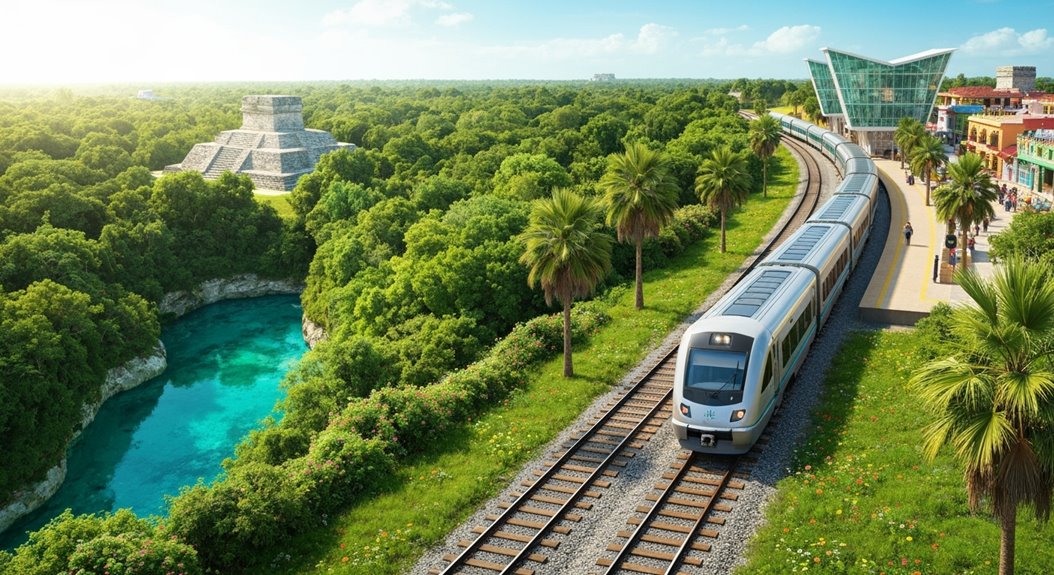
Train Travel In Mexico In 60 Seconds: What’s Possible, What’s Not, And Who It’s For
Mexico’s intercity passenger rail network isn’t what you’d find in Europe or Japan—right now, tourists have basically two real options: the Tren Maya looping through the Yucatán Peninsula and El Chepe winding through the Copper Canyon.
Commuter trains like the Tren Suburbano serve México City’s suburbs, and metro systems move millions daily in major cities, but those aren’t the long-distance rides most travelers imagine when they think “train travel.” The newer El Insurgente line near Mexico City focuses on modern infrastructure and convenience for regional travel.
Schedules shift, prices fluctuate, and what’s operating today might look different in six months, so verifying details before booking isn’t optional—it’s survival. The Tren Maya can reach speeds up to 159 km/h, making it one of the faster passenger rail options currently operating in Mexico. Plans for three new passenger rail lines covering some 3,500 kilometers could dramatically expand Mexico’s intercity network in the coming years.
Intercity passenger rail vs metro and city trains (scope clarification)
When travelers talk about train travel in Mexico, they’re often talking about two completely different things—and the confusion is understandable.
This article focuses on intercity passenger trains—the ones that connect cities across longer distances.
Not metro systems or urban city trains.
Here’s what we’re NOT covering:
- Mexico City Metro’s extensive network
- Ferrocarril Suburbano’s regional commuter service
- AIFA–Pachuca commuter connections
- Local city transit systems
Different beasts entirely.
We’re talking about the long-distance named services and regional routes that survived privatization, the new high-speed projects, and the tourist-oriented lines—the trains that actually get you from one Mexican state to another.
Think of it as a way to reduce road travel while improving connectivity between major regions.
The two trips most travelers can actually take: Tren Maya and El Chepe
The reality of intercity train travel in Mexico boils down to two options: Tren Maya and El Chepe.
Tren Maya runs 1,554 km across the Yucatán Peninsula, connecting beach towns and archaeological sites from Palenque to Cancún. The route crosses five states including Chiapas, Tabasco, Campeche, Yucatán, and Quintana Roo. The network includes 34 stops serving destinations across the peninsula.
El Chepe operates in Chihuahua state, winding through Copper Canyon’s rugged mountains.
Different regions, different vibes, same scarcity of alternatives.
What’s limited today and why it matters for your planning
If travelers expect a national rail network connecting major cities, they’re in for disappointment.
Mexico’s trains are mostly freight-haulers, not people-movers.
Here’s the reality:
- No intercity passenger service between major cities like Guadalajara, Monterrey, or Mexico City
- Only scenic tourist routes operate regularly (El Chepe, Tequila Express)
- Freight dominates the entire rail system
- New Mexico City-Toluca line launching in 2026 is the rare exception
The Tren Maya now runs along the Yucatán Peninsula, though international tourists face higher fares than locals.
Cross-border freight trains entering the U.S. now face stricter crew handoff rules limiting Mexican engineers to within 10 miles of the border.
Plan accordingly.
Overnight and sleeper trains: operating now vs planned (clear expectation-setting)
Mexico finally has real sleeper trains again—but only on one route.
The P’atal units launched in February 2026, running overnight between Palenque and Cancún.
Each sleeping coach has eight compartments with bunk beds, private showers, and toilets—sixteen passengers total.
That’s it.
Premier Class seats recline on other services, but actual beds? Just the P’atal overnight service.
The trains run on bi-mode technology, switching between 25 kV electric catenary and diesel power outside electrified sections.
The P’atal cars are part of a three carriage types system supplied by Alstom for the Tren Maya network.
Book early.
They sell out.
What changes often (schedules, prices, rules) and how to verify before you go
Because Mexico’s train network is still expanding, schedules shift constantly—sometimes with little warning.
Here’s what changes most:
New routes launch regularly—the government plans to restore passenger service on more than 3,400 km of main lines as part of the National Railway Plan
Fares fluctuate—dynamic pricing hits during holidays and peak travel
Operating hours vary by day (Mexico City-Toluca starts at 5 a.m. weekdays, 7 a.m. Sundays)
Route frequencies expand—Tren Maya jumped from 4 daily trains to 30-minute intervals
Check government sites and Ministry of Transportation accounts before booking
Service features evolve—initial operations may offer only standard seating while upgraded cabin and dining cars roll out later
Mexico’s most ambitious passenger rail project in generations spans 966 miles across five southeastern states, reviving intercity train travel after decades of abandonment.
The system can reach speeds of up to 99.42 mph, making it competitive with other transportation options. Stations feature modern amenities and intermodal transfer points designed with international tourists in mind. Like Scotland’s scenic rail experiences, passengers can maximize their journey with ticket options including various passes and discounts for extended travel.
The entire project emphasizes balancing modern development with cultural preservation of the region’s rich Mayan heritage and customs.
Mexico’s Intercity Train Options At A Glance
Mexico’s intercity train landscape splits into three distinct categories: the tourist-oriented experiences, the commuter workhorses, and the ambitious new projects still under construction.
Tren Maya and El Chepe dominate the tourist scene—one’s a sleek new network looping through the Yucatán Peninsula, the other’s a scenic ride through Copper Canyon that’s been hauling sightseers for decades. Both offer scenic routes that make the journey itself a memorable part of the travel experience.
Beyond those, Mexico operates a growing web of suburban and intercity rail that locals actually use for getting to work, though most of these lines won’t do travelers much good unless they’re trying to commute from Toluca to Mexico City. The Interurban Train connecting Toluca to Mexico City began operations in September 2023 and has since expanded to include stations like Santa Fe, Observatorio, and Vasco de Quiroga. The journey between these cities now takes just 50 minutes, a dramatic improvement over the previous two-and-a-half hour trip.
Tren Maya overview: where it runs and what kind of trip it enables
The Tren Maya cuts a 1,554-kilometer path across Mexico’s Yucatán Peninsula, linking five states—Chiapas, Tabasco, Campeche, Yucatán, and Quintana Roo.
It amounts to the country’s most ambitious rail project in decades.
The route enables trips most travelers actually want:
- Intercity connections between Cancún, Tulum, Mérida, and Palenque
- Direct access to Mayan archaeological sites like Chichén Itzá and Calakmul
- Coastal routes along the Caribbean Sea
- Loop exploration around the entire peninsula
The train fleet consists of 42 modern trains across three models designed for different journey types: Standard, Restaurant, and Long Distance configurations.
Service operates across 34 stations, with Cancun International Airport positioned as the central hub of the network.
El Chepe overview: what makes it different and why people take it
Unlike Tren Maya’s beach-to-ruins circuit, El Chepe exists for an entirely different reason: scenery so dramatic that engineers spent six decades carving a railroad through impossible terrain.
Thirty-seven bridges.
Eighty-six tunnels.
A descent from 2,400 meters to 200.
The track connects Chihuahua to Los Mochis through Copper Canyon—twice as deep as the Grand Canyon—where no roads dare go.
Nine-and-a-half hours of geology that’ll wreck you.
It’s Mexico’s only remaining long-distance passenger train—everything else got axed.
The route covers more than 350 kilometers between Los Mochis in Sinaloa and Creel in Chihuahua, with five strategic stops along the way.
Other passenger rail in Mexico: what exists, what’s not tourist-friendly, and why
Beyond El Chepe and the Maya Train, Mexico’s passenger rail situation gets messy fast.
The country’s 28,864 km of track is mostly freight territory, locked behind private concessions that don’t welcome tourists.
What actually exists for passengers:
- Commuter lines around Mexico City, Monterrey, and Guadalajara—strictly for locals
- Tren Interoceánico connecting Veracruz and Oaxaca
- Upcoming intercity routes like Mexico City-Querétaro, still under construction
- Freight rights-of-way requiring dedicated passenger tracks
The network does connect to the United States, Guatemala, and Belize, but these international rail links serve freight integration, not cross-border passenger travel.
President Sheinbaum has announced plans for 3,000 km of new track across three major passenger rail lines, with the first sections already under construction by the Mexican Army and private contractors.
Pick The Right Train Trip: Tren Maya Vs El Chepe
Choosing between these two train journeys isn’t about which is “better”—it’s about what kind of traveler you are and what you actually want to see.
The Tren Maya loops through five southeastern states with 34 stations connecting beach resorts and ancient ruins, while El Chepe runs a single dramatic corridor through the Copper Canyon, hitting maybe a dozen stops across 650 km of tunnels and bridges.
They’re fundamentally different experiences: one’s a multi-destination network for ruin-hopping between UNESCO sites, the other’s a point-to-point adventure through mountains that make the Grand Canyon look modest. Similar to how luxury trains in India offer opulent vintage-style experiences, both Mexican routes provide their own distinctive ways to immerse yourself in dramatic landscapes and local culture.
El Chepe crosses more than 80 tunnels and over 30 bridges, offering panoramic views impossible to reach by road. The train runs on a single-track, not electrified line that has served passengers for over 50 years.
Best for beaches and ruins vs best for dramatic scenery
Which train delivers the experience travelers actually want?
The answer depends on whether beaches or mountains matter more.
Tren Maya wins for:
- Direct access to six UNESCO World Heritage sites including Chichén Itzá
- Beach cities like Cancun and Playa del Carmen
- Mayan ruins, cenotes, and lagoons across the Yucatan Peninsula
- Modern connections replacing slow bus routes
- Backdoor access to lesser-known ruins like Uxmal
- 1,800 km loop route starting in Palenque, Chiapas and traveling northeast toward Cancún
El Chepe dominates for:
- Copper Canyon’s dramatic drops—deeper than the Grand Canyon
- 86 tunnels and 36 bridges through impossible terrain
Route shape: multi-stop loops vs point-to-point scenic corridor
While both trains carry passengers between destinations, their fundamental route designs couldn’t be more different—and that shapes everything about the trip.
Tren Maya operates as a 1,554 km loop around five southern states, connecting major cities without backtracking.
El Chepe runs point-to-point for 673 km from Chihuahua to Los Mochis.
Loop versus corridor.
Circle versus line.
The geometry matters.
The scenic line traverses 87 tunnels and 36 major bridges along its mountain route.
Planning effort: stations, transfers, language friction, and availability
The route geometry sets the stage.
But planning Tren Maya demands real effort.
Most stations sit outside city centers, forcing extra ground transportation.
Transfer reality check:
- Cancún Airport station requires 20-30 minute shuttles to hotels
- Playa del Carmen sits 8 miles from downtown
- Tulum station needs 15-30 minute taxis to beaches
- Ticket availability information remains inconsistent
No documented multilingual support either.
The network spans approximately 1,500 kilometers across the Yucatán Peninsula, making advance route planning essential.
Stations offer modern facilities and top-quality services for more comfortable connections, though their distance from city centers still adds complexity.
Cost and time expectations: what’s realistic for each
Budget and schedule expectations split dramatically between these two routes.
El Chepe’s First Class runs 290 USD for the roughly 9-hour Creel-Los Mochis journey, meals included.
Book months ahead during high season.
Tren Maya? That’s the billion-dollar question—literally a 68-billion-euro project with no published fares or schedules yet.
One’s operational, one’s aspirational.
The Chepe Express and Chepe Regional each operate three times per week in each direction, giving you limited departure flexibility to work around.
Most journeys across Central and South America are made by long-distance bus or plane, since the region lacks a coherent international rail network.
Tren Maya Routes For Tourists: Where To Go And How To Connect Places
The Tren Maya spans over 1,500 kilometers across five Mexican states, but figuring out which routes actually make sense for tourists requires understanding how the sections connect—or don’t.
Most visitors will start from either Cancún or Mérida, two completely different access points that determine which archaeological sites, colonial cities, and beaches are realistically reachable without spending half the trip staring out train windows. The route provides access to Chichén Itzá, one of the seven modern wonders and a UNESCO World Heritage Site.
The difference between a station (where trains actually stop for passengers) and a listed stop (which might just be a waypoint) matters more than anyone wants to admit when planning day trips to cenotes or Mayan ruins. The network includes 20 main stations and 14 paraderos—simple platforms serving smaller communities—with the loop closing at Escárcega in Campeche and extending all the way to Palenque in Chiapas. While the Tren Maya offers a different experience than Europe’s famous routes, travelers seeking scenic train journeys with cultural immersion will find this Mexican network provides a compelling blend of archaeological wonders and natural landscapes.
Tourist access hubs: Cancún, Tulum, and Quintana Roo planning reality
For travelers landing at Cancún International Airport (CUN), the Maya Train system starts right where the plane stops—literally at the terminals.
Key access points along Quintana Roo’s coast:
- Cancún Airport: Three daily departures to Tulum (9:00 AM, 11:45 AM, 3:30 PM), approximately 406 MXN one-way
- Playa del Carmen: 49.8 kilometers south, 1 hour 45 minutes travel time
- Tulum: Two stations operate—downtown and airport locations
- Southern route: Extends to Chetumal through Bacalar, covering 1,500 kilometers total
The railway also connects travelers to cultural and archaeological sites across the Yucatán Peninsula, making it easier to reach historic Maya locations beyond the coastal resorts. Most stations require taxi or shuttle transfers for the final connection to town centers, hotels, or beaches.
Mérida and Campeche routing: culture loop logic and stopover strategy
Connecting Mexico’s colonial gems requires understanding how the Tren Maya actually works—and Mérida and Campeche form the cultural backbone of the entire network.
Mérida functions as the major junction linking coastal and inland destinations.
The Gulf route connects Cancún through Chichén Itzá and Izamal before reaching Campeche.
Strategic stops like Edzná and Tenabo offer archaeological sites between the two colonial cities, enabling multi-day exploration.
Escárcega serves as a junction point for south, north, east routes, making it essential for travelers planning to venture toward Tabasco or loop back through the peninsula.
The northwestern Yucatán section represents the shortest of all Tren Maya routes while traversing spectacular locations.
Ruins, cenotes, and day trips: what’s feasible by rail vs requires transfers
Beyond routing strategy between colonial cities, travelers face a basic question: which attractions actually sit near train stations, and which ones turn into a logistical headache?
Direct rail access:
- Chichén Itzá via Gulf Route station
- Palenque at western terminus
- Xcaret stop between Playa del Carmen and Tulum
- Tulum station for coastal ruins
Calakmul requires ground transfers.
Uxmal needs route planning.
Inland cenotes mean coordinating transportation beyond the rails.
The railway includes 34 stations spread across the circular route, ensuring coverage of major destinations while smaller archaeological sites rely on connecting bus or taxi services from the nearest stop. Strategic stops in historic cities like Mérida and Campeche provide access to colonial architecture and serve as hubs for exploring surrounding areas.
Distance and timing reality checks: miles, hours, and buffer time that prevents trip failure
While the Tren Maya’s 1,554-kilometer network sounds impressive on paper, the actual travel experience involves a lot more time than tourists expect.
| Route | Train Time | Car Time |
|---|---|---|
| Cancún-Tulum | 4 hours (via Playa del Carmen) | 2.5 hours direct |
| Full round-trip | 12+ hours total | 8 hours with guide |
| Station-to-town transfers | 15-30 minutes each | Immediate with van |
Trains run only three times daily. Every station requires separate taxi arrangements.
Stations vs stops: what those numbers mean and how to read route maps
How do tourists tell the difference between a station and a stop when they’re staring at a Tren Maya route map for the first time?
Stations are the big hubs—airports, major cities, heavy passenger traffic.
Stops (paraderos) are quieter waypoints connecting travelers to natural settings and colonial towns.
- 20 stations and 14 stops create 34 destinations
- Stations appear bold on official maps
- Stop names reference smaller municipalities
- Airport designations clarify transfer points
Route Planning That Actually Works: Itineraries And Decision Rules
Mexico’s passenger rail network doesn’t work like Europe’s—there’s no app that magically syncs everything, no seamless intermodal paradise where trains meet trains on the dot.
Travelers need to think in segments: Tren Maya loops the Yucatan, northern routes like Mexico City-Querétaro-Guadalajara or Saltillo-Nuevo Laredo follow freight corridors, and commuter lines like AIFA-Pachuca serve short hops.
The smart move is building itineraries around anchor stations—Querétaro, Monterrey, Palenque—then filling gaps with buses when rail connections don’t exist or schedules fall apart.
Unlike European networks where dynamic pricing rewards early booking, Mexican train fares tend to be more straightforward, so travelers can focus on logistics rather than hunting for deals.
Build-your-own route cards: how to combine segments without relying on perfect schedules
The Tren Maya’s 966.27-mile loop doesn’t work like a subway system where trains conveniently arrive every fifteen minutes.
Travelers create itineraries by chaining segments together, working around whatever schedule exists that day.
Segment combination realities:
- Cancún-Tulum runs three times daily, but Mérida-Playa del Carmen departs once at 7:00 AM
- Return schedules differ—last Cancún train from Chichén Itzá leaves at 5:47 PM
- Tulum-Chichén Itzá takes four hours via northern routing
- Southern section remains under construction through 2026
Sample 3-day, 5-day, and 7-day plans (tourist loops and stopovers)
Planning a Tren Maya trip means accepting that this isn’t Europe’s rail network—schedules are sparse, some sections won’t open until 2026.
The 966-mile loop requires actual strategy instead of hopeful improvisation.
Three days? Stick to the Caribbean segment: Cancún-Playa del Carmen-Tulum. Beaches, ruins, cenotes. Done.
Five days adds Bacalar’s lagoon and Chetumal’s border weirdness—300 miles total.
Seven days closes the full circuit via Mérida and Palenque’s temples. Note that express trains skip cultural heartlands like Hecelchakán, so you’ll need the slower Xiinbal Standard Service to access undiscovered stops.
Tourist corridor vs local segments (duality): what changes by region and why
While other rail networks treat all segments equally, Tren Maya operates as two different beasts depending on where a traveler steps aboard.
Regional differences break down like this:
- Caribbean Corridor runs frequent schedules with premium pricing up to $223, catering to resort-bound tourists and workers
- Jungle Route operates limited service through Palenque with developing amenities for 11-hour hauls
- Gulf segment balances archaeological tourists with local commuters across colonial cities
- Infrastructure maturity dictates everything—tourist volume drives frequency and fare structure
When to use a bus connector and when to re-route instead
How does a traveler decide between hopping on a bus for one leg versus scrapping the train entirely? Simple.
Trains barely exist outside El Insurgente, Copper Canyon, and suburban lines. Buses dominate.
Use connectors from Metro-adjacent terminals—Taxqueña, Buenavista—when rails serve part of the route. Otherwise? Re-route completely.
Yucatán, Baja, southern states have zero passenger trains. Direct buses win every time.
Check the Mexico Bus Routes Table to identify which of Mexico City’s four cardinal terminals serves your destination before planning any connector journey.
The Tren Suburbano serves Greater Mexico City but is operated independently by a private company, so fares and schedules differ from the integrated Metro system.
Tickets, Booking, And Pricing: How To Get A Seat Without Headaches
Getting a ticket for Tren Maya isn’t complicated, but it does require knowing where to look and what’s actually in your wallet when booking time arrives.
The system runs through multiple channels—official website, Flix platform, physical stations, the mobile app, even tourism offices and shopping malls in areas where construction hasn’t finished yet—but each one demands the same basics: valid ID, payment method, and accurate personal information that matches exactly what’s on your documents. While physical ticket offices remain an option, online booking is generally faster and more reliable than purchasing directly at stations where errors and language difficulties are common.
Timing matters less than preparation, though understanding when routes sell out, what drives pricing differences between international and local fares, and how the no-refund-but-yes-modifications policy actually works can save travelers from expensive mistakes or last-minute scrambles. Tickets are searchable and reservable via Flix website and mobile app, making it one of the more straightforward booking options for international travelers already familiar with the platform. Booking 45+ days in advance unlocks the deepest discount tier in the dynamic fare system, rewarding early planners with the lowest possible prices.
Where to buy tickets and what you need (ID, payment, account details)
Booking a Maya Train ticket isn’t rocket science, but it does require specific documents and a bit of patience maneuvering the official channels.
Purchase locations and requirements:
- Official website reservas.ventaboletostrenmaya.com.mx or mobile app (watch for HTTPS—scammers love tourists)
- Physical ticket offices at 34 stations, plus kiosks in airports
- ID matching ticket name exactly: INE for locals, passport for foreigners
- Credit/debit cards accepted; cash works in-person
- Tickets are personal and non-transferable, so double-check that passenger names match travel documents before completing your purchase
- Note that the promotional free return trip is only available when purchasing one-way economy tickets at physical locations—not online
Timing strategy: when to book, how sellouts happen, and what to do if it’s full
Seats disappear faster than ice cream on a Cancún beach during peak season.
Book three to four months ahead for July, August, December, and Easter travel.
Maya Train’s one-week booking window makes planning difficult.
El Chepe runs three days weekly, cramming demand into limited departures.
Sold out? Rent a car, grab an ADO bus, or mix transportation methods.
Shoulder season means fewer crowds, less stress.
For El Chepe, you can book by phone or email, or visit the Los Mochis or Chihuahua stations directly.
Economy class tickets for Chepe Regional can only be bought from the conductor onboard.
Costs and fare patterns: what influences price and what surprises travelers
Transparency isn’t Mexico’s strong suit as far as train ticket pricing.
The three-tiered fare system is based on tax contribution logic, but travelers often discover costs they didn’t anticipate.
Price influencers that catch people off guard:
- Local residents pay 1,199 pesos versus foreigners’ 2,850 pesos for identical routes
- Airport transfers cost 954 pesos with one daily departure
- Premier versus Tourist Class creates additional price tiers
- Early booking discounts reward advance planning
The fare for other Mexican residents falls between these extremes at 2,123 pesos, creating a middle tier for domestic travelers from outside the five states served by the Maya Train.
Seniors and disabled persons holding an INAPAM discount card can access the lowest Tourist-class fare regardless of residency status.
Changes and refunds: what’s realistic and how to protect your itinerary
Understanding what travelers pay is one thing.
Getting money back? That’s different.
Tren Maya doesn’t refund unused tickets. Period.
Changes work if submitted 72 hours out via email with documentation.
Show up late to the gate? Reservation canceled, money gone.
The fares are called “flexible,” which is generous considering refunds only happen when Tren Maya cancels service themselves.
Amtrak handles this more transparently: Flex fares get a full refund before departure, while Value fares forfeit 25% and Sale fares lose half upfront.
Eurail and Interrail give you 7 days from purchase to cancel with no penalty, but after that window closes, expect a 10% fee unless you bought their refund protection.
Policy change watchlist: what to re-check 48 hours before departure
Because Tren Maya is still rolling out service. And because the government changes its mind about policy faster than most people change their socks, checking ticket details 48 hours before departure isn’t paranoia.
Hit the official website or app to verify:
- Ticket name matches ID exactly (typos happen, usually yours)
- Seat assignment still exists (route changes swap carriages)
- Payment went through (download a fresh copy)
- New policies on name/date changes (72-hour swap window shifts)
Getting to major stations like Buena Vista or Colonia in Mexico City might seem straightforward until you realize signage assumptions about your Spanish fluency, and platforms don’t always announce which train goes where in both languages.
The Former Station of Reynosa Railway stands as a blunt reminder that not all railway infrastructure functions as expected—some stations are simply abandoned, which is helpful information exactly never.
Factor in tight connection windows at junction points like Esperanza Station (where trains switch from electric to steam 112 miles from Veracruz) or coordinating rideshare pickups at unfamiliar border stations like Nuevo Laredo, and suddenly that carefully planned itinerary needs serious padding for reality.
Arriving at your destination without a personal vehicle means you’ll likely need to arrange local transport options or a rental car to continue your journey beyond the station.
Finding the station, platforms, and the common “gotchas” that cause missed trains
Why do travelers miss trains in Mexico?
The usual suspects: confusion, poor planning, and stations that don’t always make navigation easy.
Common problems include:
- Station layouts that confuse first-time visitors
- Platform signage that isn’t always clear or visible
- Transfer connections with tight timing between services
- Crowding at major hubs during peak hours
Mexico’s train systems work fine—if you know what you’re doing.
English vs Spanish reality: how to get information fast when signage is unclear
How does a traveler get information when half the signs are in Spanish and the announcements sound like garbled static through a 1970s speaker system? Mexico’s Metro uses Lance Wyman’s iconic symbols—visual cues that transcend language barriers.
| Challenge | Solution |
|---|---|
| Spanish-only announcements | Look for pictographic station markers |
| Unclear directional signs | Follow the icon system designed for illiterate riders |
| Missing English translations | Icons communicate universally |
The symbols work. Period.
After the train stops, reality sets in fast.
Getting from the platform to your actual destination requires planning—and patience.
- Taxis handle most last-mile runs from major ramps like Laredo and El Paso
- Buses connect intermodal stations to nearby cities, especially from Eagle Pass
- Rideshare apps work near big gateways, though availability varies wildly
- Timing buffers matter—allow 1-2 hours for transfers and customs delays
What to do if plans change at the station: delays, rebooking, and fallback options
When everything falls apart at the station, travelers face a mess of crowded platforms, garbled announcements in Spanish, and zero cushion for mistakes.
Ticketing counters at modern stations handle rebooking.
Older spots? Basic service, cash only.
Wrong direction means exiting at the next stop, crossing platforms via stairs.
Information booths exist for alternative routes.
Security personnel can point confused riders somewhere useful during disruptions.
Onboard Experience: Seating, Dining, Luggage, Comfort, And Accessibility
Understanding what actually happens on a Mexican train requires separating marketing promises from physical reality—the difference between what’s advertised and what you’ll actually sit in, eat, and store your bags under.
The onboard experience varies wildly depending on which service class you book, and “amenities” can mean anything from complimentary box lunches to a small café tucked in the corner of a car.
Seating configurations, dining options, luggage logistics, power outlets, and even pet policies all follow specific rules that aren’t always obvious until you’re already on board.
When it comes to luggage, choosing compact, lightweight bags with sturdy wheels will help you navigate narrow train aisles and limited storage spaces more easily.
Trainsets vs services vs departures: what “number of trains” actually means
Trainsets, services, and departures—three different concepts that travelers constantly confuse when trying to figure out how many trains actually run in Mexico.
Here’s what actually matters:
- Trainsets are the physical trains sitting on tracks
- Services are named operations like Xiinbal (commuter) or Janal (culinary-focused)
- Departures count daily trips—Cancún-Tulum runs three per direction
- Frequency varies seasonally because demand fluctuates
The distinction matters for planning.
Service names indicate amenity levels, not schedule frequency.
Seating and configurations: what to expect in practice
How wide is a train seat, really?
Tourist class offers 17-19 inches in a 2-2 configuration with 31-inch pitch.
Premier class bumps that to 19 inches wide, 23 total, in a 2-1 layout with 34-inch pitch.
Seats recline by sliding forward, not tilting back.
Plush upholstery throughout.
Panoramic windows, free Wi-Fi, USB ports between seats.
Wheelchair accessible with ramps and dedicated spaces.
Dining and food: restaurant car expectations, what’s reliable, and what to pack
Comfortable seats matter little if the stomach starts growling three hours into an eight-hour journey.
The Chepe Express dining car delivers regional Sierra Tarahumara cuisine, blending Sinaloan coastal flavors with Chihuahua desert dishes.
First-class tickets include one meal.
What’s reliably available:
- Chicharrones, flautas, huaraches, tacos
- Jarritos sodas ($1.50), Mexican Coke, bottled water ($1)
- Shrimp aguachile, catch of the day
- Low-fat or vegetarian options
Pack bottled water and snacks anyway.
Luggage and comfort: storage, bathrooms, power, Wi-Fi, and what not to assume
While the dining car menu gets detailed coverage, the practical realities of luggage and onboard comfort remain frustratingly vague.
Information about bathrooms? Nonexistent. Power outlets for charging devices? Nobody’s saying. Wi-Fi availability? Good luck finding details. Storage space specifications? Apparently not worth mentioning. Travelers basically board blind regarding these basic amenities, which seems ridiculous for modern rail service.
Traveling with pets: rules, carriers, fees, and practical tips
Mexican train operators apparently assume most travelers will leave Fido at home, because the rules for bringing pets onboard range from strict to borderline hostile.
Key requirements include:
- Service dogs need a permit from the Mexican Department of Tourism—processed in advance
- Tren Maya allows pets under 10kg (30cm height, 56cm length)
- Rabies vaccination proof required, ideally 15+ days pre-travel
- Pre-arrangement with operators is mandatory for everything
Good luck.
Accessibility: mobility needs and what to plan ahead
Passengers with mobility needs will find Tren Maya equipped with wheelchair spaces, accessible restrooms, and wide doors designed for easier boarding—infrastructure that puts it ahead of much of Mexico’s older rail systems.
Staff receive specialized training for personalized assistance.
No extra cost.
Premier Class offers wider seats in a 2-1 configuration.
Stations include ramps.
Panoramic windows let passengers view landscapes without negotiating narrow aisles.
Overnight Travel And Long Distances: How To Plan Without Sleepers
the Tren Maya doesn’t operate overnight sleeper cars on regular commercial schedules, despite what outdated travel blogs might claim.
The P’atal overnight units exist but aren’t running for everyday passengers, which means planning long distances requires either tolerating 6-8 hour daytime journeys in Tourist or Premier Class seats, or splitting trips with hotel stopovers in transit hubs like Valladolid.
For these extended daytime journeys, wearing comfortable clothing and warm socks can make a significant difference in your overall experience.
The good news is that strategic overnight stays between train legs often work better than cramming everything into one exhausting rail marathon anyway.
Overnight trains and sleepers: the definitive current status and common misconceptions
Although P’atal sleeper trains exist and have rolled down Tren Maya tracks, getting a berth on one remains largely theoretical for most travelers as of early 2026.
Common misconceptions:
- Full sleeper service launched in 2023 (wrong—P’atal just started)
- Entire 965-mile loop complete (nope—Cancún-Campeche-Palenque active)
- No electrification exists (half the network’s electrified)
- Easy availability (frequent sell-outs say otherwise)
Regular P’atal overnight schedules haven’t materialized yet.
Practical stopover planning: splitting long distances into comfortable travel days
Since sleeper berths remain about as available as Atlantis real estate, travelers face a straightforward problem: how to cover nearly 1,000 miles of track without spending the night on board.
The solution? Split the route into 3-5 daily chunks of 150-250 miles each.
Book sectional tickets through the Tren Maya app.
Target stations like Valladolid, Mérida, or Campeche for overnight breaks, keeping daily rides to 6-8 hours maximum.
Sample “overnight-friendly” plans that still use trains effectively
For travelers willing to adapt their itinerary around Mexico’s rail realities,
the trick becomes treating trains as connectors between hotel stays rather than hotels on wheels.
Proven patterns that work:
- El Chepe split: Los Mochis to Creel daytime (9+ hours), overnight in Creel, continue Chihuahua next morning
- Tren Maya loop: Cancún-Campeche day run, hotel stopover, Palenque segment following day
- InterOceanico crossing: Full-day Salina Cruz-Coatzacoalcos, overnight Gulf-side before continuing
- P’atal Premier class: Maximum legroom makes 230-240 km segments tolerable without actual sleepers
Train Vs Bus Vs Flight In Mexico: Choose The Right Mode For This Leg
Mexico’s transit landscape breaks down into a pretty straightforward trade-off: trains offer romance but zero practicality for most routes, buses deliver rock-solid efficiency at bargain prices, and flights save massive time when budget airlines aren’t jacking up fares on popular corridors.
The decision hinges less on comfort preferences and more on cold math—schedules, actual availability, and whether saving eight hours is worth the airfare markup.
Smart travelers mix modes without loyalty to any single option, stitching together hybrid itineraries that exploit each system’s strengths while dodging their glaring weaknesses.
When train routes are available, the scenic views and relaxed pace make the journey itself part of the destination rather than just a means to get there.
Efficiency vs experience (duality): what each mode optimizes for
When travelers pick their ride across Mexico, they’re really choosing between two fundamentally different trip philosophies.
Each mode optimizes for distinct priorities:
- Trains deliver scenic immersion through Copper Canyon vistas and local cultural experiences at leisurely speeds
- Buses balance affordability with comfort—executive class runs $10/hour with WiFi and snacks
- Flights maximize efficiency for cross-country distances, avoiding overnight discomfort
- Short-haul buses beat planes through direct routes to 4-hour destinations
Reliability and frequency: how schedules impact real itineraries
Schedule reliability separates daydreams from actual itineraries, and Mexico’s transport options play by wildly different rules. Metro runs over a billion trips annually with CBTC tech slashing Line 1 times to 30 minutes. Flights? Multiple daily departures on popular routes. Buses split between first-class precision and second-class “we’ll-get-there-eventually” vibes.
| Mode | Frequency | Reliability Factor |
|---|---|---|
| Metro | Continuous service | CBTC upgrades, 30% capacity increases |
| Flights | Multiple daily (busy routes) | Competition maintains steady schedules |
| First-Class Bus | Reserved seating, set times | Speed monitors, drug testing |
| Second-Class Bus | More frequent stops | Longer, unpredictable travel times |
Simple decision rules: when train wins, when bus wins, when flights win
Choosing the right transport mode in Mexico boils down to distance, budget, and how much a traveler values their sanity.
- Train wins: Long-distance routes between major hubs like Cancún and Mérida, where 160 km/h beats bus crawls
- Bus wins: Short hops and spontaneous trips to off-route towns
- Flight wins: Anything exceeding four hours or crossing multiple states
- Budget reality: Tourist class starts at $3 USD; executive buses run $10/hour
Combining modes smartly: hybrid itineraries that reduce risk and cost
Since Mexico’s train network barely exists outside the Yucatán peninsula and a handful of tourist routes, most smart travelers mix modes rather than pick a side.
Fly into Cancun, bus to Tulum for 294 pesos, then catch Tren Maya to Merida—cuts costs versus full flights.
Or reverse it: Primera Plus from Mexico City to Queretaro, then fly onward.
Hybrids fill gaps where trains don’t run.
Safety, Etiquette, And Troubleshooting
Train travel in Mexico demands more street smarts than most travelers expect, especially given the country’s track record of 145 derailments in just ten months during 2025.
Most problems passengers face aren’t dramatic—they’re prosaic headaches like mistimed connections, language barriers at unstaffed stations, or finding last-mile transit in unfamiliar towns.
When things do go sideways mid-trip, though, knowing a basic recovery plan separates a minor annoyance from a travel nightmare that eats your entire day.
Station and last-mile safety habits that prevent most issues
While Mexico’s train and metro systems deploy police officers at every station and blanket platforms with security cameras.
Travelers still need to handle their own last-mile safety.
Smart habits prevent most problems:
- Wear bags on front in crowded stations
- Keep valuables stowed before exiting, especially early morning or late night
- Use station-specific taxis that return to their spot
- Stay near main streets after leaving stations
Pickpockets operate at transport terminals constantly.
Common pitfalls and how to avoid them: timing, language, transfers, and crowding
Beyond station safety, travelers face a handful of predictable mistakes that turn smooth rides into stressful ordeals.
| Pitfall | How to Avoid |
|---|---|
| Peak-hour pickpockets | Skip 7-9am and 5-7pm crowds |
| Language barriers | Learn “Necesito ayuda” basics |
| Transfer scams | Use apps, never street taxis |
| QR code fines | Match registration to exit station exactly |
| Crowded theft | Hide phone, use money belts |
Timing matters. Night travel invites robberies at checkpoints. Language gaps complicate emergencies—staff can call official cabs when Spanish fails.
A quick recovery playbook: what to do when something goes wrong mid-trip
When chaos hits mid-journey, panic is the enemy.
Here’s the brutal truth about damage control:
- Alert train staff immediately—they know the protocols travelers don’t
- Document everything—photos, names, times matter when filing reports
- Contact your embassy for serious incidents like theft or assault
- Keep emergency numbers saved offline—dead phones won’t help
Swift action beats paralysis every time.
Quick-Reference Checklists
Traveling by train in Mexico demands organization—lots of it.
A solid before-you-go checklist covers the obvious stuff like booking tickets and checking passport validity, plus the less obvious like building in timing buffers and downloading offline maps because Wi-Fi on trains can be sketchy at best.
The day-of-travel checklist keeps riders sane with station arrival times, essential item confirmations, and backup plans for when things inevitably go sideways.
Before-you-go checklist: booking, documents, timing buffers, offline info
Before hopping on a Mexican train, there’s paperwork and prep to tackle.
Because nothing ruins a scenic rail journey quite like getting stuck at the station with the wrong documents or no ticket at all.
The essentials:
- Book Chepe Express online; Tren Maya tickets 2-3 weeks ahead
- Valid ID required—INE, CURP, passport for foreigners
- Download Tren Maya app for offline schedules
- Print confirmations; names must match ID exactly
Day-of-travel checklist: station arrival time, essentials, and contingencies
The train won’t wait, and neither will the chaos of figuring out where to go once it pulls up.
Arrive 5-10 minutes early for regional lines.
Bring valid ID, printed schedules (internet’s spotty), and around 406 MXN for tickets.
Some stations barely accept cards.
Check real-time apps for delays—service suspensions happen.
Pack light; overhead space varies wildly by route.
Parting Shot
Mexico’s train network isn’t a magic carpet—it won’t whisk you everywhere. But for the routes that exist? Worth it. The key is setting realistic expectations from the jump. Research hard, book early, stay flexible. Think of it as controlled chaos with a view. Master the basics—routes, tickets, backup plans—and the rails become less puzzle, more adventure. Just don’t expect Swiss efficiency. This is Mexico.
Frequently Asked Questions
Q: Can I Bring My Bicycle on Trains in Mexico?
Bicycle transport on Mexican trains navigates a patchwork quilt of restrictions. The Mayan Train permits four bicycles total per train with reservations, while the Mexico-Toluca line prohibits them entirely, making buses often more practical alternatives.
Q: Are There Discounts for Seniors or Students on Mexican Trains?
Yes, the Tren Maya offers discounts for students and seniors. Mexican seniors with INAPAM credentials travel free, while students with valid credentials pay 30 pesos. These discounts require purchase at physical ticket offices.
Q: Do Mexican Trains Have Wi-Fi Available for Passengers?
Tren Maya advertises Wi-Fi onboard and at stations, yet reality differs from promise. Available on select routes only, connections become immediately overloaded when functional. El Insurgente lacks Wi-Fi entirely, highlighting service inconsistencies across Mexico’s rail networks.
Q: Can I Cancel or Change My Train Ticket After Booking?
Yes, Tren Maya tickets can be canceled or changed. Refunds or modifications require submission within 72 hours of departure, while ticket changes are permitted up to 48 hours before scheduled departure, with refund amounts varying by timing.
Q: Are Pets Allowed on Passenger Trains in Mexico?
Mexico’s trains welcome pets with the enthusiasm of a bouncer at an exclusive club—guide dogs only, and after jumping through bureaucratic hoops. Forget Fluffy’s vacation; she’ll need certification, advance approval, a muzzle, and impeccable credentials to board.
Q: What is El Chepe and why is it considered the most famous passenger train in Mexico?
A: El Chepe, short for Ferrocarril Chihuahua al Pacífico, is Mexico’s legendary passenger train that journeys through the spectacular Copper Canyon region, connecting Chihuahua to Los Mochis on the Pacific coast. This iconic train ride offers breathtaking views of one of the world’s largest canyon systems—actually deeper and larger than the Grand Canyon! The train stops at several picturesque villages along the way, including El Fuerte and Divisadero, making it both a transportation method and an unforgettable tourist experience. Whether you opt for tourist class or the more luxurious primera express, riding this train is simply the most scenic way to travel from Mexico to the Pacific.
Q: How does the new Maya Train compare to El Chepe for train travel in Mexico?
The Maya Train represents Mexico’s ambitious new passenger train service that connects popular tourist destinations across the Yucatán Peninsula, including Cancun, Valladolid, and the Riviera Maya. Unlike El Chepe’s mountain adventure through Copper Canyon, the Maya Train focuses on archaeological sites like Chichen Itza and access to ancient Maya ruins. These modern electric trains feature air-conditioned passenger cars and multiple train stops near key attractions. While El Chepe offers dramatic canyon vistas, the Maya Train provides convenient access to beaches, cenotes, and Mayan cultural sites—giving travelers two completely different but equally compelling reasons to take the train in Mexico!
Q: What are the main train stops along the Copper Canyon route from Chihuahua to Los Mochis?
The Copper Canyon train line features several strategic train stops that let you explore this magnificent region. Starting from Chihuahua, key stops include Creel (gateway to numerous canyon viewpoints), Divisadero (offering jaw-dropping canyon panoramas), Bahuichivo (access point for the charming village of Cerocahui), El Fuerte (a colonial gem perfect for overnight stays), and finally Los Mochis, the coastal city on the Pacific. Many travelers consult Lonely Planet or check the official website to plan which stops deserve a layover. Pro tip: Don’t just ride the train straight through—hopping off at Divisadero or staying overnight at Copper Canyon hotels transforms a simple train ride into an epic adventure!
Q: Where can I buy tickets for El Chepe and how much does the train ride cost?
You can buy tickets through El Chepe’s official website, at train stations along the route, or through tour operators recommended by travel guides like Lonely Planet. Prices vary significantly between tourist class and primera express service—expect to pay anywhere from 1,500 to 4,500 pesos depending on your class of service and route distance. The train leaves early morning from both Chihuahua and Los Mochis, so book in advance, especially during peak tourist season. Many travelers find that purchasing tickets online before arriving ensures seat availability, though spontaneous travelers can sometimes snag same-day tickets at stations. The investment is absolutely worth it for one of the world’s most spectacular train rides!
Q: Is the Maya Train currently running to all tourist destinations in the Yucatán?
The Maya Train service has been rolling out in phases, with several passenger routes already operational connecting major hubs like Cancun, Valladolid, and stations near Chichen Itza. This tourist-oriented train service aims to provide a comfortable, air-conditioned way to get around the Yucatán Peninsula, linking the Riviera Maya’s beach resorts with inland archaeological treasures. Some sections opened in 2023, while others continue to be completed. Before planning your trip, check the official website for current routes and schedules, as the network continues expanding. When fully operational, this train line will revolutionize travel across Mexico’s Maya heartland, making it easier than ever to explore ancient Maya sites without renting a car!
Q: What’s the best way to travel through Copper Canyon—taking the entire train ride or hopping on and off?
While riding the train straight through from Chihuahua to Los Mochis (or reverse) takes about 9 hours, most savvy travelers recommend a hop-on, hop-off approach to truly experience the canyon’s magic. Spend a night in El Fuerte to soak up colonial atmosphere, disembark at Divisadero for canyon rim hikes and indigenous craft shopping, and consider staying near Creel to explore surrounding waterfalls and cave dwellings. You can always get back on the train the next day or even days later—just buy tickets for each segment. This flexible approach, often suggested by Lonely Planet and seasoned travelers, transforms a single train ride into a multi-day adventure through one of Mexico’s most stunning natural wonders!
Q: Can I still ride a passenger train in Mexico outside of El Chepe and the Maya Train?
Unfortunately, El Chepe and the Maya Train are essentially your only options for long-distance passenger train service in Mexico. Unlike Europe or even neighboring countries, Mexico dramatically reduced passenger routes decades ago, focusing primarily on freight. There’s also the Tequila Express and similar tourist-oriented short excursions from Guadalajara, plus some commuter trains in Mexico City, but for genuine cross-country train travel, El Chepe’s Ferrocarril through the Copper Canyon and the new Maya Train network dominate. The good news? These two spectacular options offer wildly different experiences—mountain wilderness versus tropical archaeology—so train enthusiasts can enjoy both and still experience the best way to travel by rail in Mexico!
Q: What should I expect from the train service between Cancun and other Riviera Maya destinations?
The Maya Train connecting Cancun to Riviera Maya hotspots offers modern, air-conditioned passenger cars that provide a comfortable alternative to crowded buses or expensive shuttles. Train stops include stations near Playa del Carmen, Tulum, and extending to Valladolid and beyond toward Chichen Itza and even Candelaria in Campeche. The electric trains run on newly constructed tracks, making this a smooth, environmentally friendlier way to get around than traditional transport. While schedules are still being optimized, the service aims to make beach-hopping and ruin-exploring remarkably convenient. Just remember to check the official website for current timetables and station locations, as this network is newer and continues evolving to serve both locals and tourists along Mexico’s stunning Caribbean coast!
Is the ferrocarril network in Mexico recommended by Lonely Planet for first-time travelers?
Yes, many Lonely Planet guides highlight select Mexican ferrocarril routes as scenic and culturally enriching, especially those that are tourist oriented or pass through pueblo mágico towns. Recommendations typically focus on routes offering comfortable service connecting major destinations, good safety records, and reliable schedules enjoyed by both locals and visitors.
How do I book ferrocarril tickets and should I purchase them a week in advance?
Booking procedures vary by operator; popular tourist oriented lines and long-distance services encourage advance purchase. For peak seasons or newly popular routes opened in late 2023, reserving seats a week in advance or earlier is advisable to secure preferred classes and sleeper berths.
What different services does the Mexican ferrocarril offer for travelers?
Different services include regional commuter trains, long-distance overnight sleepers, luxury tourist-oriented trains, and local service connecting small towns. Amenities range from basic seating to dining cars and panoramic windows; operators often market specific trains to visitors seeking cultural experiences or trips through cities in the Yucatan and coastal regions.
Can I travel by ferrocarril from border cities like El Paso to destinations inside Mexico?
Direct passenger ferrocarril links from El Paso into Mexico are limited; most cross-border travel uses buses or flights. However, rail freight corridors exist and some tourist trains or combined itineraries can connect to rail hubs—check current routes and cross-border transfer options when planning.
Are there ferrocarril routes that pass through Coatzacoalcos in Veracruz or other Gulf ports?
Some regional and freight lines serve Coatzacoalcos in Veracruz, and passenger options may be seasonal or limited. Travelers seeking coastal rail experiences should verify specific tourist oriented services and look for integrated itineraries that include bus connections to reach riverside or port towns.
How safe and reliable are ferrocarril journeys, especially through areas with bridges and tunnels?
Major passenger ferrocarril operators follow safety standards and maintain infrastructure such as bridges and tunnels. Reliability depends on the route and operator; tourist oriented services typically prioritize on-time performance and safety, but always check recent traveler reports and official advisories before departure.
What are the best ferrocarril itineraries to see cities in the Yucatan and nearby pueblo mágico towns?
While traditional rail penetration in the Yucatan is limited, some service connecting coastal and inland hubs can be combined with short bus transfers to reach cities in the Yucatan and nearby pueblo mágico destinations. Tour operators and Lonely Planet-style guides often recommend mixed-mode itineraries to maximize time in heritage towns.
Do locals and visitors use the same ferrocarril services, or are there tourist-only trains?
Both exist: locals frequently use commuter and regional services for daily travel, while tourist oriented or luxury ferrocarril trains cater mainly to visitors with enhanced amenities. If you want an authentic experience, mixing both types gives insight into local life and comfortable sightseeing options.