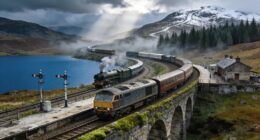
The world’s most dramatic railway adventures cut through impossible terrain—Mexico’s Copper Canyon Railway spans 650 kilometers through gorges deeper than the Grand Canyon, crossing 39 bridges and 87 tunnels built over six decades. Vintage steam experiences at preservation museums bring 1907 locomotives back to life. Alpine routes climb above 7,900 feet through 86 tunnels, while Norway’s Rauma Line hugs Europe’s highest vertical cliff. Portugal’s UNESCO-listed Douro Line threads through 26 tunnels above river valleys. Each journey reveals what engineers accomplished when moving mountains wasn’t optional. Among these breathtaking routes are scenic train journeys in Switzerland, offering travelers stunning views of the majestic Alps and crystal-clear lakes. The iconic Glacier Express, often dubbed the “slowest express train in the world,” provides a panoramic perspective of the ever-changing landscapes. Passengers can immerse themselves in the beauty of snow-capped peaks and charming villages as the train winds through picturesque valleys.
Adventure #1 Heritage Mountain Railway Excursion on Copper Canyon Railway Through Tarahumara Territory
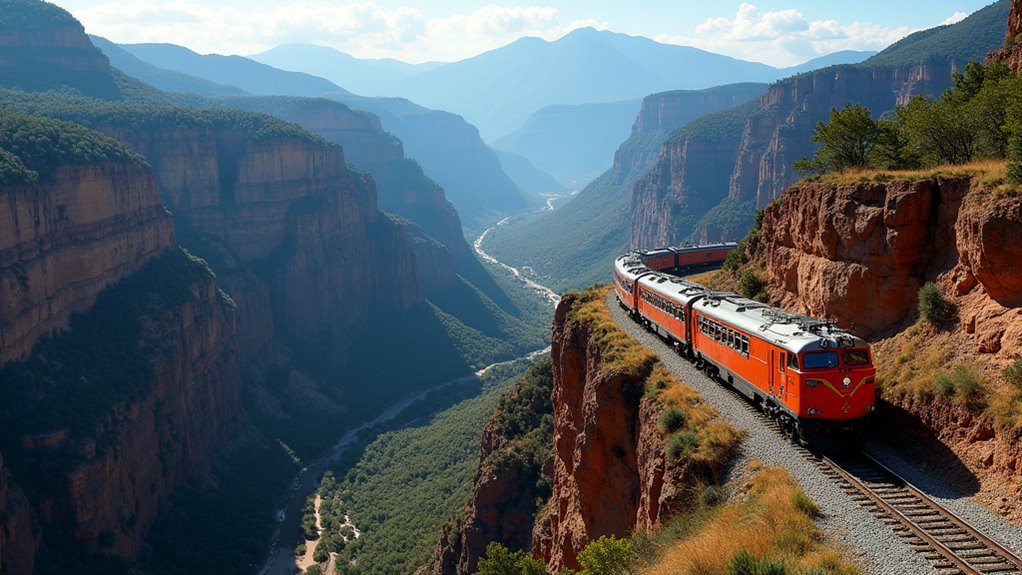
Why would anyone spend sixty years building a railway through some of the most brutal mountain terrain on the planet? The Copper Canyon Railway is a heritage mountain railway excursion that answers that question with 650 kilometers of sheer audacity.
Six decades of construction defiance carved into 650 kilometers of mountain brutality—this railway answers impossible questions with pure audacity.
This mountain pass railway traverse cuts through Tarahumara territory, crossing 39 bridges and 87 tunnels carved into the Sierra Madre Occidental. The canyon exploration reveals depths exceeding 6,000 feet—deeper, in fact, than the Grand Canyon.
Scenic landscapes shift from pine forests to subtropical valleys as you climb and descend. The journey traverses elevations ranging from sea level to altitudes above 2400 meters, showcasing dramatically diverse terrain. The route winds through a network of six canyons collectively known as Barrancas del Cobre, spanning over 25,000 square miles of dramatic geological formations. Railway history here isn’t subtle. Even so, the panoramic views from train windows may well justify every year of that six-decade construction nightmare.
On top of that, you’re experiencing terrain that appears almost designed to defeat railway engineers—and yet here it is, threading through impossible geography. Modern train travel offers comfortable seating and amenities that enhance the rugged mountain adventure experience.
Adventure #2 Vintage Steam Locomotive Journey Through Railway Heritage at Working Preservation Museums
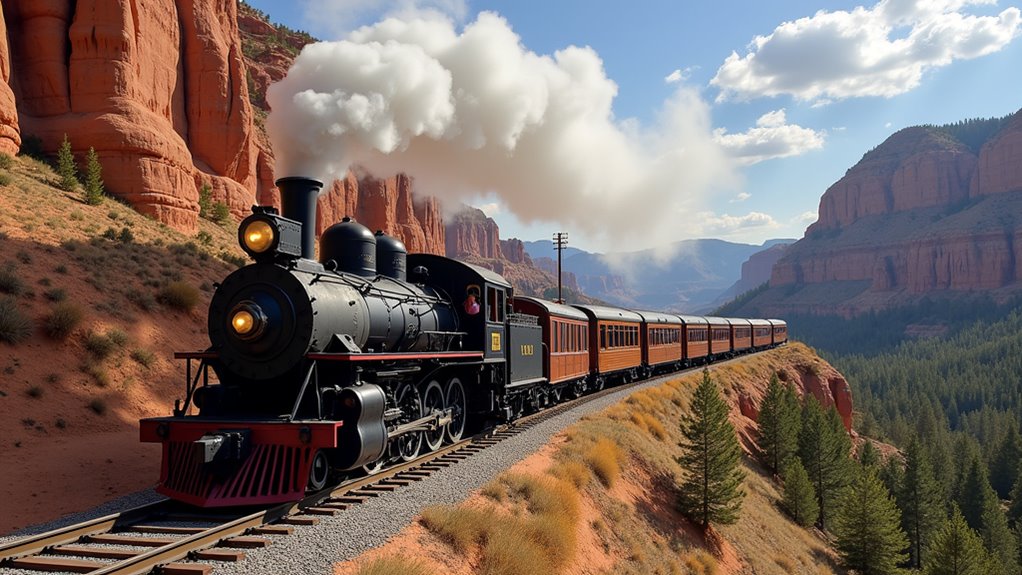
Mountain railways carved through impossible terrain are one thing. But vintage steam locomotive experiences at working preservation museums? That’s something else entirely.
Places like the Age of Steam Roundhouse Museum and Mid-Continent Railway Museum don’t just park historic locomotives behind velvet ropes. They restore them. Run them. The B&O Railroad Museum houses “Tom Thumb” and other 19th-century marvels—machines that actually shaped American rail history.
Over at the Railroad Museum of Pennsylvania, you’ll find 100-plus locomotives spanning decades of evolution in design and power. An observation bridge provides aerial views of the meticulously restored trains positioned throughout Rolling Stock Hall.
That said, these aren’t sterile displays. Heritage rail events let you ride restored historic railcar tour routes, and it’s railway preservation that genuinely breathes. The Age of Steam Roundhouse operates an 18-stall brick roundhouse with a 115-foot turntable as an active preservation facility. Educational experiences where pistons still hiss. Where wheels still roll on scenic railway tracks.
Even so, the appeal appears to run deeper than nostalgia—there’s something about seeing a century-old machine roar back to life that static exhibits can’t quite match. It’s likely the closest most of us will ever get to understanding what travel felt like when steam ruled the rails. For those seeking broader rail adventures, consider exploring Amtrak’s long-distance routes that showcase diverse American landscapes from the comfort of modern trains.
Adventure #3 Canyon Railway Panoramic Trip Revealing Scenic Landscapes and Ancient Formations
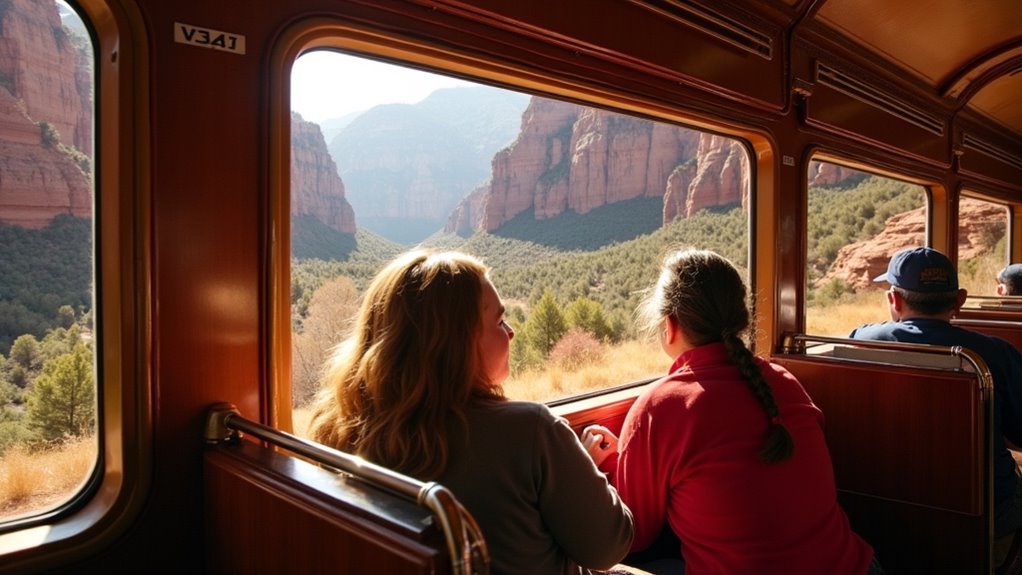
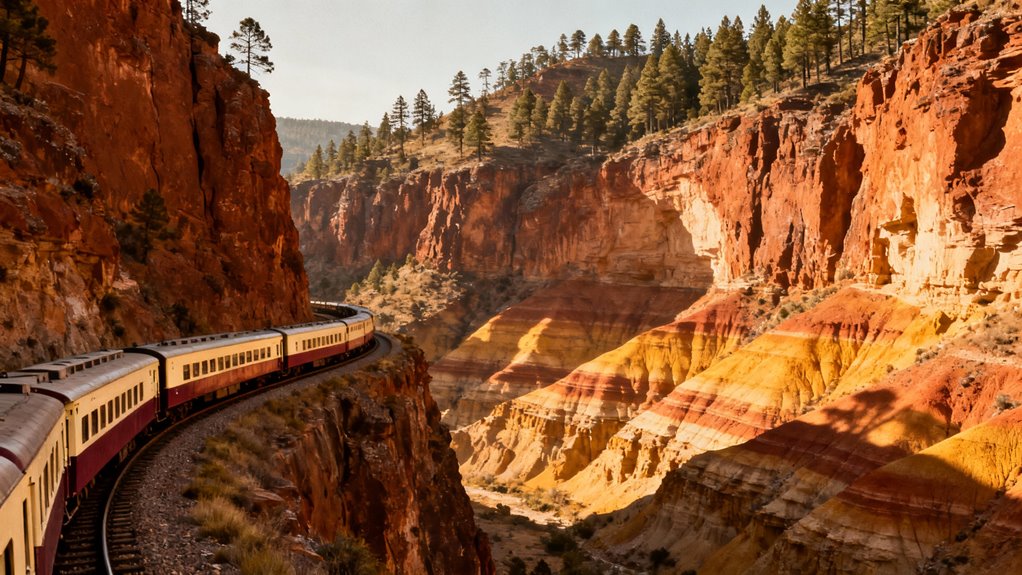
When engineers stare down impossible terrain, most walk away. This canyon railway? Built over 90 years, it somehow carved through 20 canyons, creating a mountain journey that appears to defy both gravity and common sense.
Ancient geological formations loom above—volcanic rock, sedimentary layers, petroglyphs etched by hands long vanished. The scenic landscapes shift violently. Alpine plateaus collapse into subtropical valleys. Wilderness areas sit untouched for what may be millennia.
Thirty-nine bridges span the void. Eighty-six tunnels pierce straight through stone. The longest bridge stretches over 1500 feet across the canyon’s expanse. Like Canada’s renowned Rocky Mountaineer routes, this journey demonstrates how luxury rail travel can transform challenging mountain terrain into an unforgettable panoramic experience.
Railway photography enthusiasts lose their minds at Divisadero, and it’s easy to see why. Cultural heritage crashes into raw nature where Tarahumara villages cling to canyon walls, sometimes precariously. The Raramuri people have inhabited this region for centuries, their presence woven into the very fabric of the canyon.
The canyon geography has been transformed into something accessible, even wondrous—though that said, “accessible” is relative when you’re suspended above a chasm.
Adventure #4 Alpine Narrow Gauge Experience in Mountain Scenery Above 7,000-Foot Summits
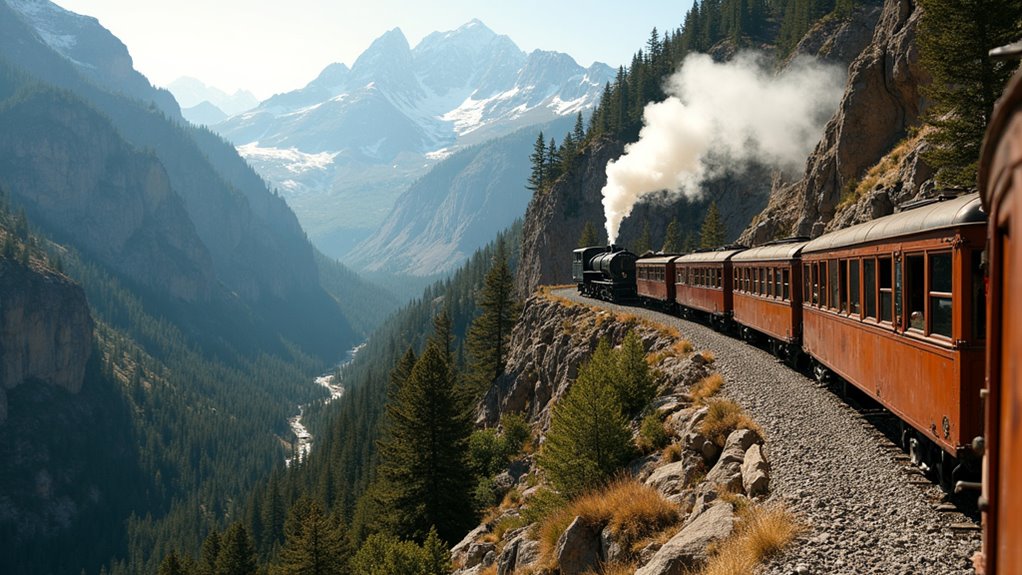
Above 7,900 feet, where oxygen becomes a luxury item and most sensible people struggle just to breathe, this railway somehow operates like it’s no big deal.
Dense pine forests give way to alpine meadows and boulder-strewn slopes. The railway engineering here borders on ridiculous—86 tunnels, 37 bridges, trains literally crossing over their own tracks at El Lazo.
That said, the mountain scenery shifts dramatically from coastal cliff railway adventure vibes near Los Mochis to a full alpine narrow gauge experience at Divisadero. Meanwhile, Peru’s Ferrocarril Central Andina climbs even higher, reaching 15,692 feet to claim the title of highest train in the Americas.
Photography opportunities appear endless, assuming your camera works in thin air. This wilderness scenic railway expedition spans four climate zones, which means the mountain landscapes change with travel seasons—sometimes dramatically, sometimes subtly, but always noticeably. While this Mexican route showcases dramatic elevation changes, Canada’s Rocky Mountaineer offers equally spectacular mountain vistas through the Canadian Rockies with multiple routes connecting Vancouver to destinations like Jasper and Banff. The route showcases over 100 species of cacti in bloom throughout the mountain regions, adding unexpected bursts of color to the rugged terrain.
Adventure #5 Preserved Railway Heritage Ride on Historic Locomotives Operating Original Lines
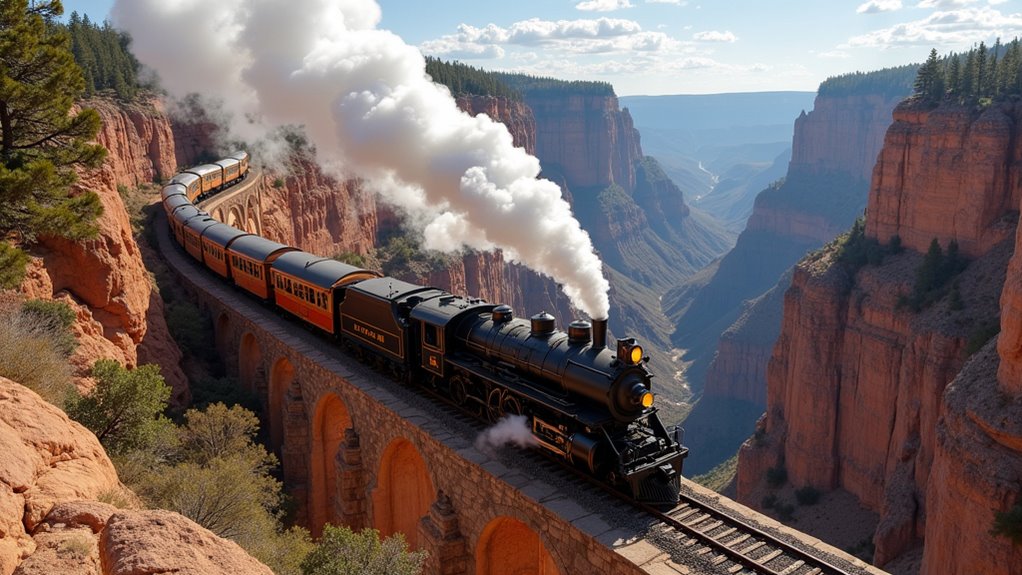
Every so often, a railway manages to hold on to more than just the tracks—the whole industrial memory survives intact.
Locomotives, rolling stock, the original right-of-way that once hauled copper ore or tourists through impossible terrain. Nevada Northern Railway runs restored Alco steam engines from 1907 over the same mining route. That’s the actual route, mind you—not a recreation. Grand Canyon Railway operates vintage carriages on track laid in 1901.
These aren’t replicas or theme-park approximations. They’re the real deal. Historic locomotives chugging along operating original railway lines, complete with heritage route markers and century-old railway infrastructure that’s somehow still standing. The Nevada Northern Railway itself was completed in July 1907 to facilitate mining operations, establishing the very foundation for the copper ore transportation that defined the region.
Railroad-powered dump cars still sit in yards, rusting quietly. The scenic routes? Pure nostalgia, sure, but with authentic grit underneath. Grand Canyon Railway maintains three EMD F-40PH locomotives that have been in continuous service since 2004, hauling passengers along the same historic corridor. Meanwhile, Mexico’s rail renaissance includes the Tren Maya connecting major Yucatán Peninsula destinations, representing a modern contrast to these preserved heritage lines.
Even so, it’s worth noting that “preserved” doesn’t always mean pristine—some of this equipment shows its age, which may actually add to the appeal for certain travelers.
Adventure #6 Mountain Pass Railway Traverse Across Historic Railway Bridges with Century-Old Trestles
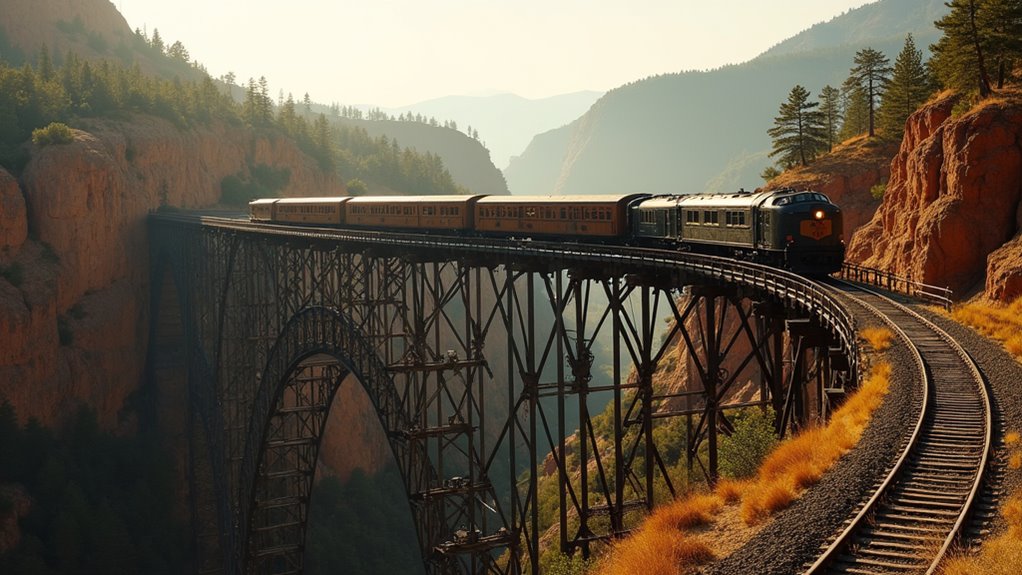
Some railways don’t just cross mountains—they practically pick fights with them.
Copper Canyon’s luxury heritage train voyage wrestles with the Sierra Madre across 37 railway bridges and 86 tunnels, with century-old trestles clinging to cliffs like stubborn monuments to engineering audacity. The Chinipas Pass bridge? 335 feet high, nearly 1,000 feet long. Ridiculous.
Passenger carriages slow over historic station stops, letting travelers gawk at canyon vistas through original steel trestwork. Railway architecture from the 1900s still holds, though you have to wonder how much retrofitting keeps these relics operational.
That said, these scenic trains cross ravines where no highways dare, preserving railway heritage through sheer elevation drops and hairpin curves. European routes like the Amsterdam to Berlin direct service demonstrate how scenic train journeys continue to attract travelers seeking both practical transportation and memorable views across diverse landscapes. The 390-mile route serves as a major freight connection between Chihuahua and the Pacific coast, proving its practical value beyond tourism. Alaska’s Copper River and Northwestern Railway similarly conquered impossible terrain, spanning 196 miles across rivers, canyons, and glaciers before its last train departed in 1938.
It’s absurdly dramatic—perhaps even more so because modern safety standards somehow coexist with infrastructure that’s been clinging to cliff faces for over a century.
Adventure #7 Coastal Cliff Railway Adventure Offering Panoramic Views of Rugged Shorelines
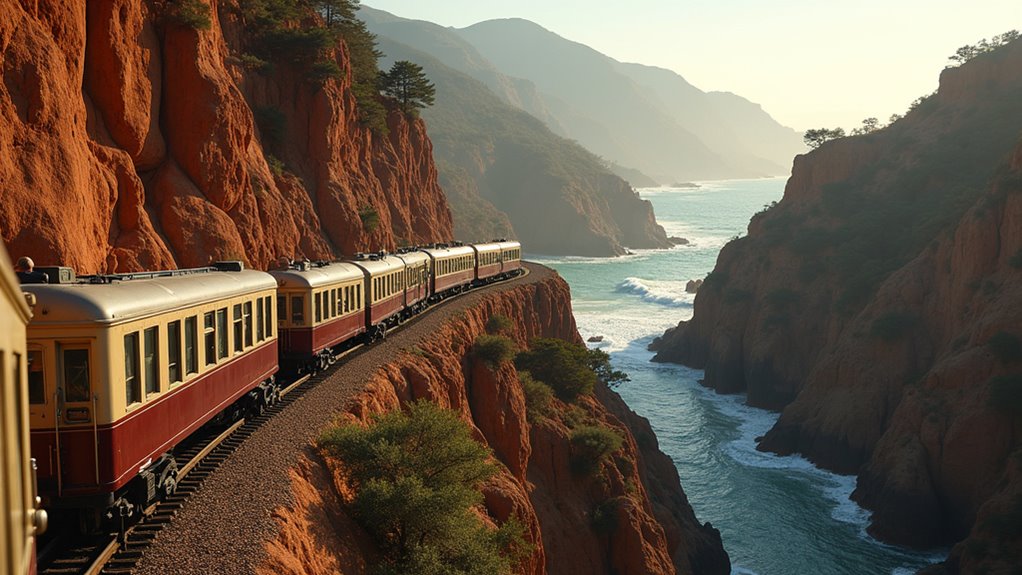
Mountain railways prove humans can engineer their way through anything vertical, but coastal cliff routes? They’re the jaw-dropping cousins nobody talks about enough—and they probably deserve more attention.
Take the West Highland Line: 260 km of uninterrupted photography locations along Scottish cliffs, seals included. Portugal’s Douro Line, a UNESCO heritage landmark, cuts through 26 tunnels hugging cliffside vineyards, which seems almost excessive until you’re actually on it. The route features 30 bridges spanning the terraced landscape of the Port wine region.
Norway’s Rauma Line skirts the 1,000-meter Trollveggen, Europe’s tallest vertical rock face. Then there’s Italy’s Pisa to Nice coastal trip, running above the Mediterranean for 200 km straight. France’s own coastal showcase runs from Cannes to Menton, hugging the Mediterranean shoreline for 34 miles in just over an hour.
These railway routes appear to combine vintage observation deck experiences with environmental conservation corridors—though how well they balance tourism and preservation is likely debatable depending on the season and passenger volume. Modern high-speed rail connections like the Eurostar services demonstrate how contemporary engineering continues to revolutionize cross-border travel experiences.
That said, the iconic railway landmark tour remains compelling: classic dining car journey optional, views mandatory.
Frequently Asked Questions
What Accessibility Accommodations Exist for Passengers With Mobility Limitations on Copper Canyon Railway?
Copper Canyon Railway offers minimal accessibility accommodations for passengers with mobility limitations. The train lacks wheelchair lifts, ramps, and accessible restrooms. Boarding requires climbing high steps, and stations feature uneven terrain, making travel challenging for those with mobility impairments.
Can Tourists Stay Overnight in Tarahumara Communities Along the Railway Route?
Overnight stays directly within Tarahumara communities are rare and not standard practice. Tourists typically lodge in nearby rim hotels or eco-lodges, with daytime guided visits to indigenous villages, craft markets, and cultural demonstrations arranged through tour operators.
How Do Seasonal Weather Conditions Affect Copper Canyon Railway’s Operating Schedule?
Seasonal weather significantly impacts Copper Canyon Railway’s schedule. Summer rains (June–October) may cause delays or suspensions due to landslides. Winter snow rarely disrupts service. High season brings three weekly departures; low season reduces frequency to two weekly trips.
What Safety Protocols Protect Passengers Traveling Through 86 Mountain Tunnels?
Safety protocols include structural inspections, adequate lighting, emergency communication systems, ventilation monitoring, and speed restrictions within tunnels. Onboard staff patrol cars, provide safety briefings, enforce window warnings, and coordinate with local rescue teams for emergency response.
Are Photography Permits Required at Divisadero Viewpoint and Other Station Stops?
Photography permits are generally not required for personal use at Divisadero Viewpoint or station stops. However, commercial filming, drone photography, or shoots within indigenous communities may need advance permissions from local authorities or park management.
Parting Shot
These seven railway adventures prove historic trains aren’t just museum pieces gathering dust—they’re working pieces of history, still cutting through canyons and climbing mountains much like they did decades ago. The Copper Canyon Railway appears to lead the pack: 653 kilometers of serious engineering through terrain that may actually make the Grand Canyon look ordinary by comparison. Eighty-six tunnels and thirty-seven bridges later, plus one massive elevation drop, passengers get access to places roads never reached.
That said, this isn’t really about nostalgia. It’s transportation with a view—the kind where the journey matters as much as the destination. Even so, calling these routes “working history” might oversell things a bit. They’ve been upgraded over the years, safety systems modernized, engines replaced. What remains authentic is the route itself, the landscape, the sheer audacity of blasting through rock face after rock face to connect remote settlements. On top of that, the experience depends heavily on weather, season, and honestly, your tolerance for long stretches at low speeds. But for travelers willing to trade efficiency for scenery, these railways deliver something cars and planes simply can’t match.