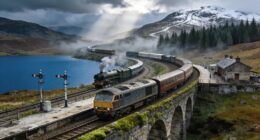
Why Most Breathtaking Historic Railway Expeditions Like the White Pass & Yukon Route Remain Timeless
The White Pass & Yukon Route: this narrow gauge railway endures because authentic drama cannot be manufactured.
The 1898 construction killed thousands of pack horses. The mountain terrain claimed at least 35 workers. Builders detonated 450 tons of explosives through solid granite. These facts are not marketing—they are history.
Key elements that preserve these railway expeditions:
- Engineering extremity: The White Pass & Yukon Route climbs 2,900 feet across 20 miles. Three-foot gauge tracks navigate 16-degree curves. Cliff-hanging trestles span glacier-fed gorges above the Skagway River Valley.
- Official recognition: The American Society of Civil Engineers designated this route an International Historic Civil Engineering Landmark. This status validates the construction achievement against impossible Alaskan wilderness.
- Klondike Gold Rush connection: The railway served desperate prospectors heading to Yukon Territory goldfields. That human story of ambition and survival bonds travelers to the journey today.
The White Pass & Yukon Route Railroad operates from Skagway, Alaska. Chilkoot Trail Outpost provides gear for hikers exploring parallel Gold Rush paths. Local operators like Skagway Street Car Company offer complementary historic tours through this frontier town.
The engineering stories run deep here. Steel Canyon Bridge hangs above Dead Horse Gulch—named for the pack animals that perished below. Tunnel Mountain required boring through 250 feet of granite. Each mile contains verifiable struggle.
Modern passengers experience what Klondike stampeders faced. The drama remains real. The landscape stays unchanged. The rails still cling to impossible cliffs.
Fun Activity To Try: Book the Summit Excursion aboard the White Pass & Yukon Route and photograph the original 1898 steel cantilever bridge at Mile 18 from the vintage parlor car’s open platform.
Key Points
- Dramatic elevation gains and tight curves through stunning mountain terrain create unforgettable visual experiences impossible to replicate elsewhere.
- Historic engineering feats like steel cantilever bridges and granite tunnels showcase human ingenuity against impossible natural obstacles.
- Preserved vintage steam locomotives and rolling stock offer authentic connections to gold rush-era transportation and frontier history.
- International Historic Civil Engineering Landmark designations recognize genuine technical innovations that transformed remote wilderness accessibility.
- Heritage excursions trace original stampeder routes, allowing modern travelers to experience landscapes shaped by gold rush determination.
Scenic Mountain Railway Journeys on White Pass & Yukon Route Define Breathtaking Standards

When a railway climbs from sea level to nearly 3,000 feet in just 20 miles, it’s not messing around.
That said, the White Pass & Yukon Route likely delivers one of the most striking scenic mountain railway journeys you’ll find—threading through glacier routes and cliff-hanging trestle crossings that most narrow gauge operations can probably only dream about.
The White Pass & Yukon Route threads through glacier country and cliff-hanging trestles that rival any mountain railway anywhere.
Panoramic observation car travel here? It means watching mountains, gorges, and waterfalls roll past your window in what appears to be an endless procession. The railway has earned recognition as an International Historic Civil Engineering Landmark, cementing its place among the world’s most significant transportation achievements.
The heritage steam locomotives navigate tight 16-degree curves, which is, frankly, wild engineering. Even so, some travelers may find the intensity of those switchbacks a bit much.
On top of that, the sheer drama of the route tends to set a standard few competitors can match. The construction required 450 tons of explosives to carve the railroad bed into solid-rock mountain sides, a testament to the monumental effort behind this engineering marvel. While other celebrated routes like The Canadian traverse thousands of miles from Toronto to Vancouver, the White Pass compresses its drama into a remarkably compact distance.
The Original 1898 Klondike Stampeders Trail Awaits on Gold Rush Train Excursions

The White Pass & Yukon Route offers a comfortable seat and stunning views now, but the original trail it follows? Basically a nightmare.
The Dead Horse Trail earned its grim name—thousands of horses likely perished on those narrow, boulder-strewn paths, some barely two feet wide. The trail was so heavily overused that it was largely destroyed in two months.
It’s hard to imagine hauling one-ton supply loads through terrain like that, yet that’s exactly what Klondike Gold Rush stampeders did. They moved their supplies in 50–60 pound packs, walking back and forth so many times that they covered 80 miles for every single mile of actual progress.
This gold rush train excursion through Skagway, Alaska traces their footsteps.
Well, sort of.
Today’s restored heritage train ride, with its narrow gauge technology and trestle crossings, appears to be a far cry from those brutal origins. Like other renowned rail journeys such as Norway’s Bergensbanen route, this historic railway offers travelers a unique perspective on landscapes once traversed under far more challenging conditions.
The heritage locomotives handle the heavy lifting now, which probably would have seemed like pure fantasy to anyone who watched a pack horse collapse on that trail back in 1898.
Experience Vintage Narrow Gauge Expeditions Through Authentic Three-Foot Track Engineering
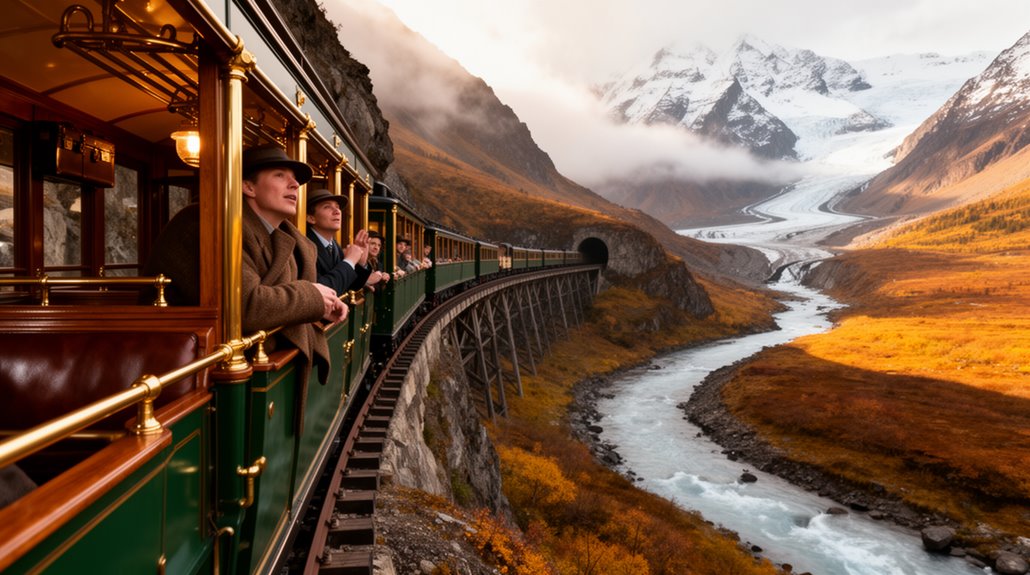
Three-foot tracks don’t sound like much, honestly.
But here’s the thing—this vintage narrow gauge expedition climbs 2,865 feet in just 20 miles. That’s pretty insane when you think about it.
The alpine summit rail passage hits grades around 3.9%, with curves so tight that standard trains would almost certainly derail. To make this work, steam locomotive operations required custom Baldwin engines weighing in at 134,369 pounds—not exactly delicate machinery. The construction crews needed 450 tons of explosives to blast through the solid rock and create a viable path for the railway.
Now, historic preservation efforts appear to have kept the vintage rolling stock and carriages running through these mountain passages, though maintaining equipment this old likely presents constant challenges. The route’s first twenty miles proved especially demanding, with sections prone to heavy snow and avalanches that tested both equipment and crews.
Even so, there’s something remarkable about the whole operation. Summit excursions like this one remain genuine engineering marvels, the kind of thing that makes you wonder how they pulled it off in the first place. Similar journeys like Norway’s Bergensbanen railway showcase how mountain railways continue to captivate travelers with their combination of technical achievement and stunning landscapes. The scenic routes of the Glacier Express offer breathtaking views of Switzerland’s rugged terrain and crystalline lakes, making it a favorite among adventure seekers. Passengers are treated to a panorama of majestic mountains and charming villages, all while experiencing a journey that is as much about the ride as it is about the destination. This unique combination of natural beauty and engineering excellence makes it an unforgettable experience for anyone fortunate enough to travel along these tracks.
2,865 Feet of Dramatic Switchbacks Challenge Alpine Summit Rail Passages

Cramming nearly 2,900 feet of elevation gain into just 20 miles—that’s the brutal math problem White Pass & Yukon Route engineers were staring down. And honestly? The solutions they came up with were borderline insane.
Mountain switchback turns stacked like zigzag terraces, each “step” likely gaining dozens of feet vertically. It appears the railroad engineering of the era was being pushed right to its breaking point here. To blast through to the White Pass summit, crews used 450 tons of explosives to carve the route through solid rock. The challenging terrain and dangerous conditions resulted in at least 35 worker deaths during the construction process.
Tunnels bored straight through solid granite. On top of that, a 215-foot steel cantilever bridge eventually replaced what was probably the worst switchback on the line—though some might argue that original switchback had its own rugged charm. Heritage railway preservation efforts keep this historic infrastructure alive today, summit elevation markers and all. Like other legendary mountain routes such as the Durango to Silverton railroad, these narrow gauge lines continue to showcase the ingenuity of early railway construction through some of North America’s most unforgiving terrain.
Century-Old Engines Power Heritage Steam Locomotive Adventures Today

The engineering marvels of White Pass & Yukon Route are impressive enough on their own, but they share company with something arguably even more remarkable across the heritage railway world—locomotives that have been chugging along for a century or more.
Over at Nevada Northern Railway, centenarian steam locomotives appear to still be hauling passengers, some reportedly up to 150 years old. The railway’s popularity has grown so much that reservations are sometimes made two or three years in advance for special excursions.
Colorado alone hosts 18 operating steam engines, which seems almost surprising given the maintenance these machines demand.
Walt Disney World’s 1925 locomotives just crossed the century mark too.
What keeps these beasts alive for passenger excursions today? Steam engine restoration, though it likely requires a level of expertise that’s becoming increasingly rare. At Tennessee Valley Railroad Museum, Southern Railway No. 4501 is currently in the shop undergoing inspections and repairs to ensure long-term reliability, while No. 630 continues leading excursions for visitors.
Like the heritage railways of North America, Europe’s luxury sleeper trains combine historic rail technology with modern comfort, offering overnight journeys that transport passengers through stunning natural landscapes and cultural landmarks.
Steel Cantilevers Over Glacier-Fed Gorges Create Cliff Hanging Trestle Crossings

Granite cliffs drop 215 feet straight into the White Pass Fork, where glacier-fed rapids churn with such violence that old-timers called them “class 10″—which isn’t even a real rating, but you get the idea. The original steel cantilever likely pushed the limits of what engineers thought possible when it was finished in 1901, stretching 400 feet across the gorge. The bridge’s dramatic triangular trusses formed a three-hinged structure that simplified calculations for engineers working with only slide rules and hand-drawn blueprints.
That said, whether the crossing feels more thrilling or terrifying probably depends on how you feel about heights. Photography stops at the scenic overlooks give you time to take in wilderness landscapes where gold rush history collides with the raw frontier—though some might argue the real draw is simply staring down into that churning water and wondering how anyone built this in the first place. Modern travelers seeking similar dramatic mountain vistas often turn to The Rocky Mountaineer, which features multiple routes through spectacular Rockies landscapes from Vancouver to Jasper and Banff. The last freight train crossed this original bridge in 1969 before tracks were rerouted to a nearby tunnel, leaving the historic steel trusses standing as a monument to frontier engineering.
Why Historic Mining Railway Tours Earned International Engineering Landmark Status

When the American Society of Mechanical Engineers kicked off its Historic Mechanical Engineering Landmark program in 1971, they weren’t exactly generous with recognition. Mining railway heritage sites had to earn their spot—and that meant proving genuine technical innovation.
To land an engineering landmark designation, narrow-gauge mountain railways needed to show real firsts. We’re talking timber trestles spanning impossible canyons, integrated mine-to-rail logistics systems, steam locomotives and geared engines clawing their way up grades that probably shouldn’t have been attempted in the first place. The Durango & Silverton Railroad exemplifies this legacy, operating in continuous use since 1882 as a steam-powered route through the San Juan National Forest.
That said, whether every designated site truly represents a breakthrough or simply survived long enough to matter is worth considering. Even so, these civil engineering achievements appear to have become the backbone of historic preservation efforts and the tourism that follows. Modern luxury rail services like the Rocky Mountaineer continue this mountain railway tradition, offering glass-domed cars that showcase similar dramatic terrain through British Columbia and Alberta from mid-April to mid-October. The Starrucca Viaduct in Lanesboro demonstrates this enduring legacy, completed in 1848 as the oldest stone arch railroad bridge in Pennsylvania still carrying active rail traffic today.
Frequently Asked Questions
Can Passengers Cross the International Border Into Canada During White Pass Excursions?
Passengers on Summit Excursion trains cross into Canadian territory at White Pass Summit, though the locomotive loops back without extended penetration. Extended Yukon access requires proper documentation and bus tour connections beyond Fraser station.
What Months Does the White Pass & Yukon Route Operate Seasonal Service?
The White Pass & Yukon Route operates seasonal service from late April through early October, with peak daily departures running May through September when cruise ship traffic brings the heaviest passenger demand to Skagway.
Are Wheelchair Accessible Vintage Cars Available on White Pass Train Excursions?
Wheelchair-accessible vintage cars are available on White Pass & Yukon Route excursions. Designated historic coaches feature powered boarding lifts, wider spaces for mobility devices, and wheelchair-accessible restrooms. Limited capacity requires advance reservation notification when booking.
How Long Does the Complete Summit Excursion Journey Take Round Trip?
The complete White Pass Summit Excursion takes approximately 2.5 to 3 hours round trip, covering 40 miles between Skagway and the summit while ascending nearly 2,900 feet through spectacular mountain terrain.
Does the Railway Connect to Chilkoot Trail Hiking Access Points?
The railway connects to the Chilkoot Trail at Bennett, where WP&YR operates a dedicated Chilkoot Hiker Service transporting hikers between Bennett and Skagway or Carcross. Trail permits must be secured before booking rail seats.
Parting Shot
Some things just work. The White Pass & Yukon Route has outlasted gold rushes, world wars, and countless transportation trends. Pretty impressive for tracks barely three feet wide. Half a million people annually choose to ride century-old engineering through Alaskan wilderness. They’re not wrong. Mountains don’t change. Neither does the thrill of crossing a steel cantilever over a glacier-fed gorge. Timeless isn’t marketing fluff here. It’s just accurate.